
 Apple Podcasts

 Spotify

 Castro

 RSS Feed

 Goodpods

 YouTube

 iHeartRadio
164. Is Your Dog's Breath Killing You? Try THIS

One of the more difficult things to keep up with when it comes to our dogs and cats is their dental care.
Brushing their teeth is difficult, not just because it's a tiny space, but because they don't want us doing it!
Even so, good dental hygiene is crucial for your pets overall health.
Emily Stein, the creator of TEEF, joins the podcast this week to tell us all about how different this product really is and why it works so well not just on dental health, but downstream too!
🐶 🐱 Nutrition & Holistic Health Consults: https://jessicalfisher.com/product-category/holistic-pet-health-nutrition/
💜 Follow Jessica on Instagram https://www.instagram.com/thepetparentingreset/
📩 Get email notifications for new episodes:
https://jessicalfisher.kartra.com/page/tpprnotify
0:00 Welcome back pet parents. If you remember back to earlier this year, I had Doctor Katie Kangas on for Dental Health Month, which was back in February and we did a whole episode on our pets dental health, which was so informative. I'm still like, she's one of my favorite people in the whole world now because she does such a good job relating this information to like the average person like me. And one of the things that she introduced us to, I started using with my dog and I have been trying to figure out ways to incorporate it in my cat's life as well. It's a product called Teeth now teeth there, that's the animal side of it.
0:42 There's also a human side of it. And on today's episode I have Emily Stein with us, who is the Co founder and CEO of Primal. What is it? Tell me what it is. It's primal something technology, Primal health, Primal health, which is the parent company for teeth, teeth and then the human. We'll, we'll get all of this information from her. But I have actually noticed a huge difference in my dog's oral health, which was what I was going for, because she does not like to chew on things. She especially raw meaty bones. They have to be very, very, she's very particular about anything she chews on. She is a Princess in that regard.
1:23 And I have tried so many things. I was really so happy when Doctor Kangas introduced me to this. So really quick before we get into it, if you are new here, if this is the first time that you are hearing me, my name is Jessica. I am a canine nutritionist, a pet health coach and the host of the podcast you're listening to right now, the Pet Parenting Reset. And on this podcast, we talk about all things health and quality of life for your pets. So the idea is that when we know better, we can do better. So Emily, thank you so much for being here with us today. How are you doing? It's. My pleasure. I'm doing quite well, thank you. So teef is just the animal branch, which is why that's kind of my thing.
2:05 We talk all about animals. You gave me some of the samples at Super Zoo for the tabs for humans to use after you eat. And they are, they're yummy. Like they're pepperminti, they're yummy. I love them. So we'll, we'll talk a little bit about that too. But can you tell us a little bit about how you got into this, how you have become so like ingrained in dental health for pets and people? Yeah, yeah. No, it was definitely not my chosen career move. I was a microbiology nerd for the longest time, and then autoimmune disease runs in my family, so I wanted to pursue a career in in rheumatology research.
2:50 And my grandmother who had rheumatoid arthritis actually had a stroke one day from a tooth extraction the day before. So it turns out that, yeah, they've done analysis now and Medicaid populations, Medicare, we're talking 50 to 60,000 Americans each study. And it's showing that if we get a tooth pulled or a dental implant placed, there's a 50% increased risk of a heart attack or a stroke that that increased risk lasts for four weeks after the procedure and doesn't normalize back to 0 baseline until six months after. And, and what we know is that, OK, something bad is going on in that mouth if you have to get a tooth fold or a dental implant placed. And those microbes, it turns out, are a driving force for causing cavities and gum disease. And they don't just stay in the mouth. And so when you pull a tooth, they can go inside and cause problems as well.
3:47 And dogs can have strokes if they get a tooth extracted. I've met with several pet parents that that that's happened to. Long story short, I biohacked my grandma, came up with a naturally safe approach that was not toxic because microbes can design around antibiotics and antiseptics all day long. But we're speaking the language that they understand, which is nutrition, and we're trying to repopulate the mouth with a diverse repertoire of microbes that keep each other in check. And the way we're able to do that is literally by cutting off their carbon source, sugar, carbohydrate, and then telling them to go keto just in the mouth, not not anywhere else. A couple years after grandma, I rescued a 10 year old Cocker spaniel and she almost died of a bloodstream infection from tooth problems.
4:37 So within the 1st 36 hours after 2 to 36 to 48 hours after I got her, we were in the emergency department extracting 21 teeth, pumping her body full of antibiotics to save her life, $6000 on my credit card. That was a really rough weekend and it just highlights the the pervasive. Problem that is so interesting and the only things like I just kept thinking about as you were talking were all the times especially with my cats at it's like I did correlate that OK, they just got their teeth cleaned. Especially in my elderly cats, I just got their teeth cleaned and 30 days later, now I'm dealing with another problem that's like, wait, what happened? They were perfectly fine.
5:23 Their blood work was great 30 days ago when they went in for this teeth cleaning. And now I'm dealing with IBD or I'm dealing with cancer or I'm dealing with like there's so much that I mean, me personally, I'm sure everybody out there listening is like, Oh my gosh, yes. Like I've dealt with this too. And it doesn't. I mean, it makes sense because everything in the body is connected. Yeah. Even though a lot of traditional doctors may not work that way. We have a lot of specialists, especially in human medicine, where, like, one part doesn't want to talk to the other part for some reason. It's like, no, you weren't together. I know, I know, I like, I talk to Dennis all the time. And they're like, wait, what?
6:09 Because when someone has a stroke, they don't go back to their dentist, right? They go to the emergency department and then see a cardiologist. And so it's only now that the payers like Medicaid, Medicare insurance providers are forcing this oral systemic discussion and dialogue is because the data is there. It's been there for 30 to 40 years and we need to pay attention to it. And I've literally right before I got on this podcast, I'm writing up a NIH grant because we're working on the the certain microbes that inhabit the mouths of dogs, cats and humans that are linked to head and neck and colon cancer. Oh, wow. Yeah. Wow, well and I so 3.
6:53 Has it been three years, three years ago switched to a holistic or some people call them biological dentist and it has made for me a big difference in I've always had fear of the dentist. I still do to some degree, like I, I can't, I can have my teeth cleaned now and I'm OK. But if I have to have any like work done, because I've had a ton of dental work done as a child and I've had braces twice in my life and all the things like so much. And so if I actually have to have work done, I have to have Valium. I have to, they're they're giving me gas on top of that, like I can't, I have a hard time, but I I'm having an easier time.
7:33 I have found with my holistic dentist, I think in the way that he approaches things and the fact that I just feel more comfortable, even though I still don't like needles and all of that. He uses ozone in the water for when we, you know, rinse and do all like there, there are so many different practices that he, he evaluated all of my fillings to make sure I didn't need to have any of them replaced with, you know, if they were whatever the junky fillings are it. And I did also when I was in my late 20s, have a root canal, which interestingly, we had a cavity filled and literally the week after I'm like screaming in pain and I'm calling the dentist like what is going on?
8:19 They're like, this is completely unrelated. And I'm like, no, I don't believe that it's unrelated. No, what we now know is inside every single tooth, it has its own distinct microbiome. And it can be a good one to keep the tooth healthy, but it can also be a bad one that causes cavities. And when they dig into the tooth and drill, they can't get all the lateral canals inside. So if it's a bad community causing problems, they can't get to all those microbes. They try the best they can and dig, dig it out and then they feel it. But it's nearly impossible to to get them all out. And so that's why our philosophy is to really just grow your inherent good. Yeah.
9:02 So what can you tell me a little bit about, since we're so like we're talking so much about human stuff, let's start with the human product. I imagine they're pretty similar, but can you tell me a little bit about the human product and then we'll talk about? The pet product, yeah, the human products built for my well, it was built for my grandmother. So we originally put the ingredients in a lozenge because she couldn't brush her teeth because her rheumatoid was so bad she couldn't hold a toothbrush anymore. And she had so green syndrome, so her body killed all of her salivary glands. So her mouth was a hot mess and she had perio. And because rheumatoid arthritis and perio are actually quite linked. And, and so we, you know, I, when I biohacked my grandmother, just taking a step back, like I grabbed her biofoam, holtered it up and bought every single naturally safe ingredient I could find on the market, did high throughput screening. It's come up with a naturally safe combination of ingredients that would block per microbes from causing problems and a lot that actually had a lot to do with carbohydrate then eating carbohydrate.
10:10 So when people eat certain diets, we skew for microbes that can eat that diet because we don't eat our food. The microbes in US eat the food and they secrete the waste products that we actually eat. And so it turned out grandma liked her sweets. She'd go to the bakery and all this stuff, and then her microbes reflected that. And So what works for her, Turns out it works quite well for most human beings. And then sadly, dogs and cats, because more and more carbohydrates are being used as cheap fillers in treats and chews and feed and it's causing, it's growing the same problematic microbes that are driving the disease process or, or downstream disease processes.
10:57 So, so our approach was literally, hey, let's put these active ingredients that puts the oral microbes on a keto diet in a lozenge so that grandma can just suck on it after she, she eats something or drinks her coffee with a little bit of sugar and milk in it, right. And that worked, that worked quite well. And we've done numerous clinical studies in humans, both in memory care, older independently living adults, kiddos with orthodontic appliances and now just we're doing a study right now and a big swath of a population between 18 and 80 years old. So showing that this approach has long term benefits not just within the mouth, but perhaps beyond the mouth.
11:43 Beyond the mouth is something I want to talk about later on, actually. So for let me go back to my dog Kim. Sure she's going to be 11 this year and actually next month she's going to be 11. It's an arbitrary birthday, but that is what it is. I always celebrate her birthday on Halloween. So she'll be 11 and she has never. I adopted her when she was 2 1/2. She has been raw fed ever since. Now that she's getting older, sometimes she'll go through bouts for like she wants her food cooked so still is a gently cooked food. But she has never ever, ever and I have tried for years. She doesn't like to chew on things, which is not typical of a dog. Like most dogs, it's just innate for them to chew on things. And I have tried so many things and gosh, I would love for her too, but she just doesn't.
12:36 So when I had her last check up in March of this year, because she gets every six months, I, I have a full check. I mean, she's getting into her senior years. I have a full check up blood panel, heartworm test. All the things, not all the things we don't over vaccinate, just FY. But the vet was like, you know, her gums still look good, but she's got build up on her teeth and it's starting to look kind of gnarly. And I, I like, I'm just going to be honest. I am that busy pet parent like everybody else who is not good at brushing their dog's teeth. And when I do, it's something natural like a coconut oil and I might add some like natural like essential oils or something to it.
13:16 And the teeth. I feel she's going to have another check up in October, but I can already see difference just in adding this to her water. So what exactly what it's called the teeth product. I was looking on the website, it's called protecting what exactly? So it's these you're blocking bacteria from eating the carbohydrates to fuel them. Can you like? That's what how I understand it, but I just want to be. Sure, I understand it. Yeah, Yeah. So I'll channel the way microbes think just a minute. So that might help. Related to dental. So microbes always make a home. It's called human medicine. We call it biofilm.
13:58 But in microbiology, it's just it. We call it biofilm too, but it's more just their home. But they make their, you know, either they use bricks or they use on wood. And so in the mouth they're using sugar. And when they build up that sugar, it's actually a pretty protective barrier and Shields them from digestive enzyme, Shields them from being cleaned out and rinsed away by saliva. It's very protective and it's super charged, and that is hard for things that are commonly found in dental products for dogs and cats to even penetrate. So you're just wasting a lot of money when you're buying a lot of dental products on the market.
14:42 What we're doing is actually changing what they're eating so they're not able to use that sugar in a diet and convert it into the house material that's super durable, like a brick house. Instead, it's a thinner, more fragile environment that can be cleaned away with the wipe of a finger over time. But importantly, what they make their their house out of is no longer something that causes inflammation, demineralization, decay, and and gum disease. Instead, it's more neutral and it doesn't cause dental problems. And so because we want, we know from years and years of work in rheumatology that if you, if you kill the microbes in the mouth, you're going to wind up with big problems. And you're going to if, if you kill if like a lot of the products on the market for dental contain these very powerful antiseptics which kill very good bacteria and they ingest it, right.
15:43 And so then it's screwing up their gut microbiomes too. And that's why we're also, it's contributing to allergies and problems downstream. And so our approach is really, hey, let's work with the microbes, let's just change what they're eating so that they're not causing disease associated problems. They're in fact at least neutral or beneficial. And so that's the whole goal. And we found that over a ton of years of research is that putting them on a keto diet in the mouth is a really good. Thing so OK, I get the biofilm thing because it can be very difficult to penetrate, which is why my dentist uses ozonated water because that can kind of penetrate the penetrate the.
16:32 First couple layers and then the ozone gets turned into oxygen. So when we think about how it could possibly be affecting other parts of the body because they're ingesting it, they're drinking it, we know what it's doing in the mouth. You mentioned you're kind of studying benefits and maybe the digestive system as well. Could it still be doing the same thing? Because I know with a lot of dogs that I work with that have very severe food sensitivities, they have a lot of GI issues. It is difficult. Like everybody wants, there's always trends and always fads, right? Everybody wants to go to fecal transplant capsules and all. And I'm like, doesn't work.
17:20 But if, yeah, if that biofilm in the gut isn't like it's not going to penetrate that. We've got to be able to so, so many people find that it doesn't work. Not that that therapy itself isn't beneficial, it, it definitely is. But we've got to get the gut to a place that can accept it. Yeah. And. And just to like to interrupt a little bit is like we've been doing fecal transplant in humans way longer than companion animals, except for the experimental animal dog group, which let's not even go there. Like it doesn't except for C diff, it doesn't work for IBD, it doesn't work for IBS, it doesn't work for Crohn's. And that's because we cannot eradicate our own seed.
18:02 We have somewhere in us what we were born with that gets fixed humans by the age of three, dogs much earlier in their life. And then we kind of, it kind of changes baseline exposures to stress drugs, antibiotics, antiseptics. But like, you can eat you, you can take a fecal transplant, but then your own seed will grow back. Yeah. And so that's how powerful your own microbial fingerprint is. And so that's why we've only ever, we're not introducing microbes into the equation. We're working with a dog's own microbes or a cat's own microbes and just trying to get them to be a little bit better.
18:43 Interesting. So one question I do have, and this can kind of segue us into the new treat line for dogs and cats that that teeth just came out with was as I was prepping for this interview, I was thinking lot because I've been a cat mom a lot longer than I've been a dog mom and I have been through so much more with my cat. I like I've been through a good amount with my dogs in my lifetime, but I feel like I've been through it was much more with my cats and it is different. Like they're not the type of animals that are just naturally gravitated to drinking a whole lot of water. They need their moisture in their diet for sure.
19:25 And so while cats that do drink whatever they do drink this, you know, the powder in the water absolutely can be beneficial. But what I was wondering is if I were to take like a Mason jar and put my filtered water into it and add my teeth to it and then pour that each day into say their wet food or their raw food, is it going to have the same benefit? Yeah, yeah, because the way cats eat, it's a little bit different than dogs. Cats will coggle, but their tongues have these little hairs on them, and those appendages actually increase the surface area significantly.
20:06 And then if they're curved? I don't, I can't like for that much, but if that's the back and that's the front and so behind there is actually saliva and microbes. Well, microbes are coating the entire tongue, but like and like, so every little, like every little bite will definitely help. In our studies we're at, we've done where we're adding it to wet food or to the lick pads with like the furball stuff or you name it. You can even put the powder in your hand. I've seen kittens lick it right out of my hand. So there's those things. Anytime you can coat the tongue, that's a great way to start to distribute it and get it in the saliva and get it working. OK, so I think that could be a good tip for people because I, I was putting it in my cat's water and they're not drinking it. And I'm like, even though they don't really drink water, I always have water available for them. And I'm like, I'm just wasting this, right? Yeah.
21:02 So I was, I was like, how else can I get this in them? Yeah. We have some customers that fill a syringe, just give them a give them a dose. We're working on a fast dissolve tablet that you can just put in their cheek and it just dissolves. We are working on stuff. It's just in a gel but just takes time to roll these things out. Yeah. So tell me a little bit about these treats that you're coming out with or. Have to, yeah. So the treats, again, are built solely focused on keeping those microbes trained on that keto diet because honestly, cats should never come into contact with carbohydrates, right? And dogs definitely shouldn't really either. Maybe chewed up grasses and green things because they've historically eaten rabbits and things like that that process greens.
21:57 But the microbes that we're seeing in the mouths of dogs and cats these days are very, very, very similar, nearly identical to the human signature. So they really are becoming omnivores. But their guts, their whole Physiology is not built for that. But their microbiomes, which are the unspoken organ system in their body, has already changed. And so there's this disconnect. And So what we're trying to do with the treats, because cats and small dogs don't drink a lot of water, the water is the easiest way, easiest vehicle for us to get this diet program going. And the thought was originally a, we'll just put in their water, they'll drink throughout the day, and then the micros will be trained throughout that day so they don't go off keto. Well, it turns out it's not that easy. Dogs and cats this, you know, are more difficult and every, everyone is different and what how much water they take in every day.
22:57 And so we've had to come up with a different approach. And it's been very long time in the making of finding the right animal proteins and A and we're freeze drying them. So they go from raw frozen immediately into a freeze dried modality coated with our teeth powder. And then the only preservative on board is a little bit of vitamin E, and so it's as clean as you can get and it keeps those microbes on that keto dive. It is so interesting and I think doable for people. Yeah, doable, because everybody likes to get give treats to their pets, right? Eventually we're going to come out with toppers too. That's the next phase.
23:38 Oh nice that that would be great. So feel like I overheard Dr. Katie Kangas talking to somebody at Super Zoo about their dog and they were she had so they this dog, I'm not going to get too much into detail about this dog, but boy, it is a French bulldog. So we can imagine, we can imagine and, and the person who owns this dog, by the way, has done wonders with this dog. But, and I think this year especially, so many pet parents have noticed the seasonal allergies are like off the charts. Don't know what that's about. But for whatever reason, this year that's kind of been the trend.
24:22 And so this dog was like itching, licking paws again, It's like, no, because you know, you work so hard to get to a point where the the dog is good. And I feel like Doctor Kangas was like, add teeth. And from July to August, I feel like I overheard that the dog was doing better. Yeah. I mean this. Is something we've now been pulled into particularly the French Bulldogs, you know because they don't get birth in a natural way. And so they inherit they get inoculated with the microbiome of the environment that they're birthed into not their mom's microbiome as much. And then the way that the the face is structured, they have a lot of post nasal drip. And so they get a lot of sinus funk in their mouth and they have a lot of dental problems and then they swallow. So we all swallow microbes every day dogs, cats, humans, for instance, beyond on average we swallow about 3 * 10 to the 10th.
25:21 I mean not billions into microbes every day, right? That that has an influence downstream. And if you don't have enough good beneficial microbes, guess what hurts the most Believe it or not, it's actually your mast cells. And so mast cells are the ones responsible for allergy and asthma. And if we don't have enough beneficial microbes, it turns out that our mast cells are super hyperactive. And if we have harmful inflammatory microbes, they keep on poking the bear. And So what we've been finding is that by treating dogs mouths and then spraying the same water on their hot spots that the hot spots go down.
26:04 But if we, you know, if you just inundate the dogs with the teeth during that allergy season, because on the East Coast it's a different time frame than the West Coast for some reason that we can really take down that inflammation. Just so interesting and the idea that you can use like a a spray bottle for the hot spots, that's incredible. Yeah, a lot of the microbes on the skin are sugar lovers, so by putting them on the keto diet, they'll just start to ratchet up the diversity, and then that quiets down the immune response. Wow. So there are three different products on the website. There's a dog, a cat, and then one that's for all pets, yes. Can you tell me the difference in? Those Yeah.
26:53 So all pets is really all pets with like kidney disease because dogs and cats can have kidney disease. That's what we call it K + K, OK, protecting 42. Protecting 42 was our original formula. That's the one we've identified in high throughput screening and validation clinical studies that works the best in dog. It's almost identical to humans, but we made a couple of key tweaks which make it super fast acting because literally there is very little difference in the mouth of a older dog with advanced gum disease and in Alzheimer's patient in memory care. Wow.
27:34 And a small dog that's maybe 7 or 8 years old, small dogs have big problems. So, so protective 42 was the original formula that highly concentrated. It's only pure human grade high active, which is why you don't need a lot. You just need a little because you're just dosing the mouth and it's very concentrated. The K version, we're missing the bicarbonate, which is really good at balancing the microbial acids immediately. But we found that a lot of dogs and cats with tummy issues don't like bicarb for some reason. Plus it doesn't have any sodium, which is sodium bicarbonate. So that people very careful about like what their dogs and cats take, You know, that extra 2% sodium is nominal, but there's still a healthy fear of, of, of it. So we just ripped it out of the formula and that's what the all pet is.
28:34 And then the protecting 30 is the optimized version for cats. And we've done now years of work in almost 200 cats of all kinds of breeds, socioeconomic status in diets in disease states. And we found that boy, they need a little bit extra help. And so P30 Protectant 30 is built specifically tailored to address the needs that cats have because their microbiomes are a little bit different and they have a lot more fungal problems then then we. Recognize OK that's interesting yeah that is very interesting so if somebody just say had both dogs and cats in the house and. All pets.
29:22 Easy. Do that all pet and you're good probably. Yeah, Yep, definitely if they have a cat with stomatitis or aggressive kidney disease that keep the protectant 30 cat version is something to put think about putting on their cat food. I mean, my dog drinks the cat version in his water. You know, once in a while I switch him on to the cat version because the the binding agent we have is the cell wall of a green allergy called chlorella. And that is a great antioxidant and binding agent for a lot of these neurotoxins that the fungus is making in their mouths, which can cause downstream kidney problems, liver issues and stuff like.
30:05 That very, very interesting. I can see how this could be something that obviously you're introduced to, like somebody like me is introduced to for dental health, but it really does have so many other benefits in the body. Yeah, our case study data is pretty profound, like we're seeing downstream benefit and urinary and gut and skin. So it does seem the mouth really does seem to be at the gateway to the body. Yeah, well, I'm definitely going to start adding it in a little bit of water to my cat's food.
30:49 I have, I'm down down to three kitties. I don't know it will anybody out there that knows me, that's listening. I the most I've ever had indoors was 12, which is crazy, I know. And I'm down to three, which is very, very sad, but also like, I'm tired. And that's horrible to say. But literally since the day I turned 18 and moved out, I have always had at least one cat. And I'm just, I'm tired. And I think I feel like they're tired. They're all 16. And they're like various things happening and going on. And as I was talking about earlier, one of my cats in February of this year had just a routine dental cleaning, like no extractions, just a routine dental cleaning for being at the time he was 15 years old. Literally the next month I'm calling the vet going, I need to have blood work redone because he has lost 3 lbs in a month. Like what is going on?
31:54 And they diagnosed him. You know, I took him for an ultrasound, diagnosed him with IBD, which isn't really a diagnosis, but, you know, that's what veterinarians do. And I'm just like, how did this happen? One month? But you know, we're messing around in the mouth and obviously things happen. Yeah, I mean, the amount of microbes we swallow and it's fake news that we were always taught that the stomach acids kill everything. That's not true. They get through, they're alive and they are having an impact. And so if this is becoming unhealthy, there will be a downstream unhealthiness, particularly when you put an animal under, you go through a transient stress response, which means that they're kind of immunocompromised.
32:45 And then boom, one of those microbes can really, we call it bloom, bloom in the GI tract and take over and really go towards a dysbiotic environment, which means the harmful ones take over, the healthy ones are really suppressed. And so then you see health problems. Well, and that's one of the reasons why I'm liking more and more the more you describe this. It is changing. Changing what those microbes are eating instead of trying to change the microbes. Yeah. I and I talked to so many other people that do what I do because I actually do like one-on-one consults with with pet parents for their pets. And it is it's never a hill, the bad quote UN quote bad bacteria. It's like that doesn't ever work. It never were anybody going in trying to do that. It never works like you have to crowd them out with more beneficial bacteria.
33:45 But in this case, it just seems so much more seems like a more holistic approach to and personalized, yeah, to yes, to working with the individual and what they have going on in their body instead of trying to force change. Because I think that's how especially today, like in in like our Western culture, we're just like change it, change it, change it. And we're trying to force things to happen. And it's like that just doesn't that doesn't always. Work the language that microbes speak quite well and have for the beginning of life on Earth is taking in certain nutrient sources, deriving energy from it and secreting waste products, you know, and so that's the language we're working with. And it's just us examining what cats and dogs are being fed these days.
34:42 And you can have the best raw diet, you think, but there will be residual sugars always you can't I mean sugars and bone marrow sugar gets calculated is something else in muscle, but you can still be derived from muscle tissue. It's just not reported that way. But it's, it's like microbes are really good at figuring out how to how to eat. And so we're literally speaking their language by what we're doing. And we're not killing, we are just causing. Nutrient pressure, so interesting and definitely something I'm going to use a lot more, not just with my pets, but with my clients pets because first, first of all, how can you go wrong, right?
35:25 Yeah, I mean the adverse event, it's like, OK, maybe you might have more frequent urination for a day as you start shedding the downstream, the harmful microbes and yeast from your general urinary tractor. OK, maybe you had to had a loose stool event maybe once after three days, but then everything is fine. You know what we find is there is a shedding event. So lacrimal secretions clear up a little bit over time. Some animals might you know, because the sinuses are really close to the mouth and the microbes Burrow through the palate and go into the sinuses. So that gets cleaned up a little bit.
36:07 Downstream is cleaning up the gut microbiome definitely re diversifies and improves in general urinary. So there is this whole shift that occurs and some microbes don't like to go easy. Yeah. So you might find on the human side, you're craving sugar more because the microbes are telling you that they're starving of sugar and then they're telling you that, hey, I need to get fed and I'm craving, I'm craving this piece of pie or this ice cream, right for a reason. And then on the animal side, transient aggression, we've heard, or transient hunger, more hunger or drinking more water. But that's, you know, that's the, that's the only thing we've heard about.
36:51 But that's where you actually realize how we're the puppets and they're the puppeteers. Yeah. So on the human side, what is your recommendation if people do get like a sweet tooth after using the product? Yeah, just chase it with another lozenge or we now came out with the human version of our water additive or pet. So you could just add it and you're drinking water and just sip on it throughout the day. Oh interesting, I might have to do that because I'm definitely AI drink a ton of water every day. That's my it's. So important. Water is so good. Oh my gosh. More cats drink water, They'd be so much better off. They would.
37:33 I know you're right. I mean, we can cut it with like goat smell or bone broth or you can cut it with that if that helps. But there's some cats that just refuse to drink water, yeah. I think a lot, a lot of cat. I actually knew somebody a long time ago that like gave her cat. She was a vet tech, so she gave her cat fluids at home and got to the point where she just didn't even put a water bowl down anymore. And I'm like but still like. I know. The guilt. The guilt. I don't think I could do that. I know. I don't think I could just pick up the water bowl and be like, Oh well, no water. I know. But I mean, if your pet is not drinking water, don't don't necessarily waste your money on teeth adding it to water. Try other mechanisms methods of getting it in like in the summer months on dogs.
38:25 On this dog side of the equation, we like you can make ice with teeth water or I talked about the syringe. A lot of people, some people who actually do brush their pet's teeth and can just put the powder on a wetted the bristles on a toothbrush and start brushing right away. That's you can do that too. Or, you know, just any way to get it in their mouths once a day at least is is going to be a good thing. So freeze resistant, is it? It's hot like heat resistant too, is it? Yeah. You can't boil it for more than like 20 minutes and then you'll kill the the the vitamin on board, but which is doing a lot of that a go keto side of the equation because that's the essential cofactor required for the enzymes that bacteria use to breakdown protein.
39:19 But but it can tolerate a lot. Oh good. That's good to know. Because I know people do like, especially with our dogs, a lot of enrichment. And I could see somebody like adding it into like if they're going to do freeze, freeze molds of something or. They can do that. Tongs or you know, whatever they're doing and just absolutely sprinkle it in and. Yeah, you can even put a tiny bit of peanut butter on a lick pad and then sprinkle the powder on top of that or something like that. It's a good way to get it really administered to the tongue. Interesting. Well, I think this is an absolutely incredible product, both for humans and for pets, and I definitely encourage people to check it out. So it is, what is it?
40:08 Teeth? health.com. Yeah, we call it. Teeth for teeth for life because the goal is to keep every tooth in the in the mouth of an animal for their lifetime. Because if you lose a tooth, you lose lifespan. So our, our real true goal is to love them longer. That's so sweet. I I love that. And where can people find the human product? From our company website, you can just go to primalhealthllc.com. We're rebranding it. It's going to be called Bio Neva, so stay tuned. Yeah, it's so hard to name products these days on the human dental side because everything is like taken. So I think that took us six months. Wow, yeah, I appreciate, I mean, obviously I appreciate it for pets, but I appreciate it for the the human product as well. Because like I said, I've just had, I mean, ever since I was a kid, like I literally my childhood, most of, like so many of my childhood memories are sitting in a dentist office. And Donald, trauma is real.
41:06 Yeah, yeah, for sure. I remember being that kid that, you know, the, the dental text hated because I always refused fluoride. And I'm like, no, you're not putting that in my mouth. And so like, I, you know, going to the same dentist forever growing up came to like an agreement that I only did it every so often. But now I look back and I'm like, thank goodness. Like fluoride is so bad for a. Fire accumulates, Yep. But what I can tell you is that customers definitely come back to us after they've been on our product for like 6 solid months to a year. They're like, hey, I was in and out of my hygiene chair and 15 to 20 minutes and I Genesis like, what are you doing differently?
41:53 You know, so if microbes make a home that is not built out of sugar, you won't have as much black and you won't have as much. I love that. Who wants to be in a dental chair? Like nobody, nobody, nobody. Yeah, so I am definitely going to after because I just found out that there was a human product at Super Zoo. So of all places, I know I'm definitely going to onboard it because I mean, I, I, I noticed with changes that I have made in my adult life, like things do go easy, especially at my holistic dentist, things do go easier for me now that I have made a lot of adjustments in my diet and, and things. But I just want to do everything I can to like not be in the dentist office.
42:39 So this is definitely something I'm going to, yeah. I mean. It's definitely not cheap, right? Yeah, yeah. Delaying those lot of those big costs are important. Yeah. So are there also social pages to follow? Where? Where? Yeah. So you can Google Teeth for Life and you'll see us or Teeth, you might pull up a rock band. I guess in Germany and I, we didn't realize it translates to bitch in Dutch, but I guess it's kind of appropriate to being an animal company. But yeah, Teeth, you'll find us. We're on Amazon, we're on Chewy, and we're also on our own website. Awesome guys check out teeth. Thank you so much for your time and your knowledge, your wisdom, all of the things you have done Emily, and for your grandmother for sending you down this pile.
43:28 Yeah, Grandma kind of along. She, she would never imagine where we are now. I mean, we are treating seal sea lions with gingivitis. Her product that I, you know, built for her has been up in the International Space Station. Oh wow. Military mouths like dementia patients. Yeah. Kiddos with orthodontic appliances. She's really helping a lot of people. That's amazing and I love I love knowing that story as well. But thank you so much for everything that you do and for providing this product for pets and people. And guys, go check it out. Thank you again, Emily. Thank you so much. Thank you so much for listening to today's episode. Make sure that you're following the show so you never miss an episode.
44:15 And please take a moment to rate the show on your podcast app. I'd also love it if you'd share this podcast with your friends and family so that they can benefit from the information to help their pets live long, happy lives too. Don't forget to take advantage of this special discount as a listener today and get access to over 100 online videos and my online dog training The Furry Family Coach. Just go to the Furry Family coach.com and use Code Podcast at checkout to get your first month for only $7.00. That's the Furry Family coach.com and use Code Podcast at checkout to get your first month for only $7.00.
44:55 I can't wait to have you join and see you on the inside. Yeah.
CEO
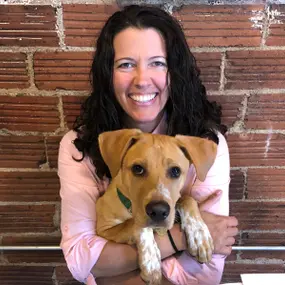
Emily Stein, Ph.D. is co-founder and CEO of Primal Health LLC, a company aiming to improve human and animal health with a focus on addressing the root cause of biofilm-related oral diseases so we can love our pets and people longer.
She completed her Post-Doctoral Fellowship in the Department of Immunology & Rheumatology at Stanford University School of Medicine, where she studied the role of the neuroendocrine-immune axis in rheumatoid arthritis and other autoimmune diseases.
She earned her PhD in Microbiology from the University of California at Berkeley where she studied bacterial signaling pathways involved in nutrient sensing and stress response pathways in bacteria and biofilm development. Dr. Stein received a B.A. in Anthropology and a B.S. in Microbiology and Immunology at the University of Iowa where she studied the interaction between M. tuberculosis and the innate immune system.