

 Apple Podcasts

 Spotify

 Castro

 RSS Feed

 Goodpods

 YouTube

 iHeartRadio
176. Spirituality in Dog Training with Denise Mange

It's no secret that I've avoided having dog trainers come on the show in the past because I'm very passionate about positive reinforcement training and there are so many trainers who use methods that I can't condone. When I spoke with Denise before recording, I knew this would be a great fit! She's not only a dog trainer, but she uses spirituality in her training sessions, which I absolutely love! She's put it all in a book, which I hope you'll grab! https://amzn.to/3BtZeXQ Send us a tex...
It's no secret that I've avoided having dog trainers come on the show in the past because I'm very passionate about positive reinforcement training and there are so many trainers who use methods that I can't condone.
When I spoke with Denise before recording, I knew this would be a great fit!
She's not only a dog trainer, but she uses spirituality in her training sessions, which I absolutely love!
She's put it all in a book, which I hope you'll grab! https://amzn.to/3BtZeXQ
🐶 🐱 Nutrition & Holistic Health Consults: https://jessicalfisher.com/product-category/holistic-pet-health-nutrition/
💜 Follow Jessica on Instagram https://www.instagram.com/thepetparentingreset/
📩 Get email notifications for new episodes:
https://jessicalfisher.kartra.com/page/tpprnotify
0:00 Welcome back, pet parent. I have been pretty reluctant to bring dog trainers on the show, and that's because I was a dog trainer myself for a number of years and it's a very polarizing topic. There are lots of different methods for dog training and many of them I personally don't agree with. And so it's been difficult for me to open myself up to bring any dog trainers to you because I want to make sure that I'm bringing you the best information and information that I know not only resonates with me, but I feel like it's going to resonate for you. Like if you're here listening to me, it's because you are what we like to call a 2.0 pet parent and you want to do everything that you possibly can for your pets.
0:47 And so when today's guest reached out to me, I, you know, booked a call and wanted to kind of feel her out. But what really interested me is that she's not only a dog trainer, she's an animal communicator. She does pet numerology, which was new to me. And she she's the founder of petprana.com. She also recently came out with a book on translating your dog's behavior, which I find absolutely fascinating. I want to welcome on the show today, Denise Mond. Thank you so much for being here. Denise, how are you doing? I'm so excited to be here and I'm so honored that, you know, we connected and you're bringing me on. And I think your journey with dog training is so valid and something that really resonates with that parents because when you're bringing in a dog trainer into your home, there's so many different options out there.
1:41 There's so much information out there about dog training and a lot of it is conflicting, especially if you go online, there's so many different views and philosophies. So one thing I always remind my pet parents is that they are incredibly intuitive. And even though I'm an expert in dog training, they're an expert in their dog. And so anything, you know, whoever it is that they bring in to help them raise their their furry friend, if that person or if I, you know, bring in information or strategies that they know won't work for their path, trust their gut and take a page out of your dog's book to get your bark on, right? Let them know, you know, that just doesn't resonate for me. Are there any alternatives? Because just like for pets of, you know, human children, you're your dog's advocate.
2:26 That is so true. We say that all the time, actually in so many areas because it is with literally every area of your dog or your cat's life. You are their advocate. You are the final say. And I think it's really difficult for pet parents when dealing with professionals that like they know they don't have that skill. That's why they're hiring you, whether it's a veterinarian or a dog trainer or a groomer or somebody that they need to be able to trust that they certainly have a lot of respect for and they it can. I've just talked to so many people who like they even knew there was one that just came to mind when they, they were telling me that they paid for and went to this dog training class in a park and they didn't know until they got there that the trainer was requiring them to put prom collars on their dogs to train. And they were like, they hated it. They were so reluctant.
3:24 They really did not want to do it. But they were like, he's the expert. I already paid for this class, you know, and they did it. And then they felt so much regret afterwards. And I mean, I don't, I don't blame them for the regret. And I also don't blame them for the experience. I hopefully they learned a lot from that experience, not just for their dog, but for themselves. And, you know, finding that confidence to stand up and say, Nope, this isn't for me. This is not how I want to train my dog. This isn't, you know, this doesn't resonate with how we're raising our dog. So I, I think it would be kind of cool to talk a little bit about how you got started in the pet industry and like what led you to dog training in the first place.
4:14 Yeah, it's actually pretty wild. I'm the last person on earth you would expect to be a dog trainer growing up. You know, I grew up in Sao Paulo, Brazil, and an apartment. My dad wasn't particularly fond of, you know, having pets. So we never had a dog or a traditional pet. So growing up, you know, I brought in, you know, caterpillars and rolling pulleys, and then those were kind of my little furry friends. The interesting thing and the benefit of that is once I did step into dog training, I had to learn everything from scratch. So I'm not one of those people who's grown up and like, I've always grown up around dogs. I know everything about dogs. It's like second nature to me. I truly had to learn as tabla rasa. So I had no pets growing up. Always loved animals though.
4:55 Always wanted a dog, was so connected with animals on a general scale. Went to college, you know, pursued my career in advertising and I was on Madison Ave. for like 10 years. And for anyone who's worked in advertising, that's like dog years like that. A grind of an industry. You're working around the clock. It's kind of nuts. But one of the last accounts I worked on was Purina, and I was like, I just love talking about pets and the relationship that pets have with their pet parents and how it's different for each, you know, brand and how we segmented our audience. And I was just really into that. So when I decided I was going to leave advertising, I was like, what am I going to do? And I lived in New York City, so I was like, you know what, I've always want to work with pets.
5:40 Why don't I open a Docky daycare? That's something that everybody needs in New York. And I figured if I'm going to do that, I should really learn about dog behavior. So I signed up to do a dog training course. And during the practicum portion of the of the course, you know, there's a lot of one-on-one with, with pets and their pet parents and doing the training. And I fell in love. I said, Oh my gosh, I love this. I love working with humans. I love working with their, I love the collaboration between the two. Forget the brick and mortar of a doggy daycare. This is it. And so I began my practice in New York City working with pets and they're humans. And it was interesting because going into it, I was always, you know, there's a lot of dog trainers and you, you might relate to, you know, knowing some dog trainers like this who are really good with the pets, but what nothing to do with the pet parents. I was very much into like kind of the holistic aspect of the relationship.
6:37 And so, you know, I was working with pet parents and after a while I was like, you know, I'm kind of bored just bossing dogs around. Like there's got to be more to this. And that's when the whole world of animal communication opened up to me and I started kind of getting more information hits just senses and instincts about what was truly driving the pets behavior. And from that realization that, you know, the humans energy effects the pets energy and vice versa, and the energy of the home has an influence over what's going on in their dynamic, I created a road map that maps out common pet behaviors with different universal themes that we all experience in our lives. So with the dogs who had a lot of on leash reactivity, for example, you know, barking, lunging at dogs on the street, I realized that in the pet parents life, there seemed to be a lot of insecurity.
7:29 They weren't quite stable. Maybe they were between jobs or they weren't quite secure in their romantic relationships. And I started realizing how that kind of rubbed off on each other. And so that led me to the realization that unless we look at our pets behavior in the context of what's going on in the human's life as well, we can't create lasting change. And that's where I've developed what I think is the next, you know, ERA of dog training, which is a mindful approach to pet training, understanding that our energy, our life, our experiences shape our pets and vice versa, Our energies, a mesh. There's so much to unpack there, so much to unpack.
8:10 I definitely want to talk about the book and this new like evolution and dog training because it really, I feel like it might even rekindle that spark that I have. I've kind of lost the spark for dog training. And I think one of the reasons is exactly what you said. There is this idea that most people have going into any, I think animal centric occupation where it's like, I love the animals, I love the animals, I love working with the animals. And then you get in and you realize I have to deal with the human in order to work with the animal. And I, I know for me, like, I definitely got a lot better working with the humans. Initially, it was really, really, really tough for me. I'm being like really introverted, but I think so many people, so many animal loving introverts kind of go into animal animal centric occupations. And it 100% I, I learned that I wasn't there to train the dog. I'm there to train the human to interact with the dog in ways that's going to get the response they're actually looking for. And so that just wore on me so much because it's so much easier to just take the dog and train the dog, right? Actually teaching the human how to change their behavior to get the behavior they want out of their dog is exhausting to me. It's exhausting and so I
9:45 definitely lost the spark for it. I will still do it occasionally, but it's just not like front and Center for me at all by any means. So that was it. It's interesting to me that you're like, oh, I love working with the humans too. And I'm like, bless your heart. You know, and I love that point of view because it's true, a lot of us are introverted and you know, we we might feel a lot more comfortable and safe communicating and working with pets versus humans. But the same way that we started our conversation that, you know, dog training has evolved, we truly are in this bridge state. I feel, you know, we still have remnants and vestiges that we see of old school dog training, which was dominant based, fear based, force based, but we kind of graduated more to this really interesting aspect of positive reinforcement training, which is more based on collaboration, which feels to be a leadership style and kind of more conducive to leadership style that a lot of us are more comfortable with, especially as you know, females and sensitive people and empathic people.
10:49 And now we're bridging that gap into more mindful aspects of pet right into where we're, we realize our pets are mirrors. Our pets are picking up on our energy. So if we change ours, they'll change their energy as well and their perception of the world. The same way dog training has evolved. I truly believe the pet parent has evolved too, right In the past, pet parents are very much me versus the dog, the dogs outside the dogs, just an animal. We've really kind of built our our perception of our pets as being part of the family. And especially as we get into more, you know, newer and newer generations, it is very much that notion of my pets, my baby, my pets, my best friend. I'll do anything, I'll change anything about myself if it means my animal companion is going to be more happy, more well adjusted.
11:38 And I think part of it also is the times, right post 2020, you know, period of that kind of reset where we all were at home, we relied on our pets, a lot of us became a lot more introspective. So this notion of being mindful in other relationships in our lives and how we exercise and how we eat naturally translates to our pets. So I feel that, you know, I came into my own and dog training and this this notion of mindfulness around pet parenting at the perfect moment where pet parents and just our community in general was opening up to more of this self help, introspection, understanding energy and how it affects not only our animal companions, our human children, but ourselves.
12:22 Well, and that kind of opens up a little bit That happened. Thank you. The the kids across the street like this little electric like car. And I think she thinks it's a animal. My goodness, I love it. And this is what Parents Reset is all about right here. We all get, you know, the critical model dogs lock on our keyboards. It's all part of the problem. It is, and this is so something I actually didn't tell you before we started recording. Is that one of the one of the the visions I have for this podcast moving forward? And I'm just starting to kind of dabble in it a little bit with a couple of episodes here and there going into actually this is this is probably going to be the last episode of 2024. But going into 2025, I and I want to focus a little bit more on that like duality of, yes, we are doing everything we can to make our pets lives better, to improve and extend their health span.
13:32 We have to do the same for us because if we're not taking care of ourselves, we're not going to be able to show up for our pets in the way that we actually want to. And so there's a lot of there's a lot of self help out there, right? And I'm not, I don't even really like that term self help because I think we can get kind of caught it up in it. And I actually like the idea of putting our energy of finding a way to put our energy in ourselves, but kind of splitting that off into putting our energy into caring for someone or something else. Because one of the big things that I have learned in the past few years, especially dealing with like a little bit of depression, seeing other people in my life dealing with depression, is that if we solely focus on ourselves, that's where depression comes in. We have to be able to focus and do for others to kind of get out of our heads.
14:34 And I think that in a, in a lot of ways to me, that's kind of the downfall of the self help culture is that we're focusing too much on ourselves. So having pets, to me as a really great gateway to care for ourselves in the way that we need to, but also have something immediate right there that we also have to show up for and care for and not be all about ourselves. It kind of got off on a tangent there, but that's like the direction that I kind of see the podcast taking. Yeah. And. That's still important, right? I think our kids are extras of helping us find that balance.
15:14 Not only do they model that behavior for us, you know, they are very good about setting those boundaries, doing what they want in the moment, but also caring and nurturing for us when they see we need it. But they're also the perfect dress rehearsals for those kind of moments. You know, one of the big things that I found with pet parents is we do we often kind of shift in into extremes. And one of the biggest behaviors I find that help get us back into balance is separation anxiety. So if we're dealing with a pet with separation anxiety, a lot of times we feel really guilty leaving our pet alone. You know, we feel like, Oh my gosh, I can't leave them alone. Or I feel really like, Oh my gosh, I have no time for myself because I can't do anything for myself.
15:57 So the second I get a moment, I'm going to be all about me. So separation anxiety brings up a few themes that I think are so important for us as pet parents. The 1st is the aspect of over giving, right? And I love that we've got a little audience here saying, yes, right on, right on. Ladies, when we over give, we tend to deplete ourselves, right? And so with separation anxiety, our pets bring up a really helpful theme around being in service versus being in servitude, right? When I'm in servitude of everyone around me, I'm depleting myself. I'm over giving, I'm neglecting my own needs. I've got that martyr mentality going on. And then to overcompensate, I create barriers, not boundaries, right?
16:40 I create that barrier around me because I'm like, you know what, I can't say no. I give people an inch, they take a mile, that's it. And now I've cut myself off. And we would, we cut ourselves off for fear that we're not setting healthy boundaries. That's when we get isolated. We feel depressed. We don't feel renewed in that, that isolation. But what our pets teach us, especially through the exercise of working and managing separation anxiety and working on their independence training, is rather than being in servitude, we can be in service of others, but also ourselves. We can give a healthy amount. We can give sometimes, but not always. We can set those parameters of, sure, I can help you out between the hours of nine and 11:00, but after that, I'm heading to the gym. And they also teach us the importance of boundaries, of setting up that time where it's sort of like, you know, I can give you this much, but then that is too much. I can't go beyond that point.
17:34 When we're working with our pets, with separation, setting those loving boundaries are so essential. And us setting those on our pets, us setting up that time where they have to be alone and them protesting and barking at us and us having to stay strong in that boundary, that is the dress rehearsal for us to do it with other intimate relationships in our lives. So our animal companions through training them, through working with them are always going to be the perfect dress rehearsals to teach us to set and manage boundaries, to find our voice in leadership, to be really real about in our life and our careers and relationships and friendships. What are red flags?
18:14 And are we ignoring them? Because if we are kind of dodging those lessons, our animal companions were reflected in in their behavior and not let us off the hook. So Speaking of separation anxiety, I think it was already a problem, a pretty big problem before the pandemic. And it has just like blown up since the pandemic. And I know a lot of people really, really struggle with it and it's very misunderstood. Also, I, I know when I learned about it, I was like explaining to my husband what we needed to do with our dog and he's like, no, no, it seemed so counterintuitive. But when you're working with a dog with separation anxiety or really any dog, what are some of the biggest tips you have for pet parents out there who maybe are on the fence about? Do they need to hire a trainer or do they not need to hire a trainer or what is it that they can do with their dog themselves at home?
19:25 You know, people looking up videos on YouTube because I mean, I'm guilty. That's how I learn a lot of things. It's a rude person, right? Yeah. Emotion anxiety to me is one of the most interesting behaviors because it's one of the the hardest for pet parents to reverse. It requires a lot of patience, a lot of, you know, emotional and mental fortitude because it is about, you know, the small little steps forward, but then always, you know, step back. But to me, the most important thing about separation anxiety is understanding the motivation. And separation anxiety is actually what got me into pet numerology in the 1st place.
20:07 I was working in New York City and you might have seen this as a dog trainer as well. There was one month where, you know, it was all about on leash reactivity. You know all the clients were calling about on leash reactivity. Then this, you know, this one month I had like 5 new clients contact me and it was all about separation anxiety. I was like, what is going on? But OK, here's the patterns, right? And the interesting thing about that is like 4 out of five of those dogs were named Leo. And so I was like, that's really interesting. OK. And so I remember as in New York City, it was raining. I was between sessions. There was this little, like, spiritual, you know, bookshop that was like, looks so like, warm and inviting. I'm like, all right, I'm going to dodge in here, wait for the rain.
20:49 And for my next session. As I walked into that bookstore, I swear to you, this woman, I've never seen her before, never saw her after. And she was so ethereal. She was so tall, long black hair and all black. And she just flopped at me with a book on numerology. She just needs us. And I was like, whoa, OK, so I took it and I kind of read how to do numerology, you know, really quickly, like the formula. And I was like, I wonder what Leo stands for. So I pulled the numerology of Leo and it vibrated at the energy of five and five in numerology is the freedom loving adventure. And So what I came to realize was like, oh, that's so interesting. So the Leos that I'm working on with separation anxiety, they're not having separation anxiety because of codependence.
21:36 They're having it because of FOMO. They have fear of missing out on the adventure. And so the way that I approached separation anxiety with those clients versus with other pets, but it truly was rooted in deep sense of insecurity and issues around self worth was completely different with the those Leo's. It was all about variety and training variety and treats, taking them on a lot of adventures and letting them know, listen, little one, we'll be back and we'll do something really fun. I promise. I'm just going to work. You're not missing out on anything. So you know, I, I would say to pet parents, truly understanding your pet, your pets motivations and dispositions and tendencies is going to be critical in addressing any behavior, separation anxiety included, because when we understand what's at the root of the behavior, we can truly understand how to shift it. That is true in so many areas.
22:32 And yeah, I do see these, like, trends and not just with training clients, with the pet health coaching clients I have. I will get like five in a row, like you were saying, like five in a row of, you know, my dog is itchy, they're on Apoquel. And then I'll get like a handful of cats with urinary blockages. And I'm like, what? What's going on? What is the universe doing to me right now? We get our little mini intensives right. We're like, OK, now I'm doing a deep dive and specialization on this thing. Yes yes, so OK, you brought up the numerology and one thing I I'm so fascinated with animal communication with, I have not dug my feet in at all to numerology. I like astrology, I like you know it's it's also fascinating to me and I have actually spoken with quite a few animal communicators this year, some intentionally, some unintentionally.
23:30 It's like, again, the universe is telling me something, and I haven't said this out loud to anybody yet. I was talking to one of my cats a few days ago and like, for whatever reason, it had never happened to me before. I was just talking to him. And it was like I actually heard a response in my head. And I was like, wait, at the time I was just like carrying on a conversation. And then I got up and I was like, wait, what just happened? That so much and that's so, so representational of so many pet parents, right? Pet parents are incredibly attuned to their animal companions and nature and animals in general. And So what I tell my pet parents is, you know, a lot of times we expect communication to look a certain way, but some of us just empathically feel some of us here, like you do with the clear audience.
24:24 Some of us know, some of us see movie things. And it's interesting because also the sort of information we get is different with everyone. And you, you might have, you know, had these kind of conversations with the other animal communicators. I went into this thinking that animal communication was going to be like Doctor Dolittle. It was going to be like that, you know, like just talking to your best friend next to you. But for me, animal communication turned out to be very different, both in the messaging and in how I received the messages. The best way that I can explain how animals communicate with me is the first time that I watched ET where Elliot was feeling what was going on with ETI was like, yeah, I do that. So everyone does that.
25:07 OK, cool. Because I could just feel the energy of animals. It wasn't through words. It wasn't through anything. But just experience it, experiencing it as it, it was my own experience. And then the second movie, because I'm crazy about TV and movies and pop culture that I think for me and my experience really exemplified how animal communication works for me, is that movie with, I think her name is Amy Adams. The Arrival where the way that they showed how she got the messages through pieces, flashes, experiences, and she just knew how to weave it together into a message that to me really spoke to how I received messages. And a lot of times, because I love pop culture, the animals will drop in scenes from a movie, you know, like a scene from Goodwill hunting. I'll be like, OK, we're dealing around someone feeling like this was their fault.
25:59 Got it. We're going to move past that. So, and then as far as messaging goes, there's a lot of animal communicators who get information like, I like this toy, you know, I like this food. Or maybe they get a lot of intuitive information around physically what's going on in their bodies. Interestingly, for me, what comes through most strongly is what's going on in the human's life through the lens of the pet. So, you know, I, all of us receive informations and different information in different ways. The messages and information comes through. Some people it's really linear. Other people it's just messaging that you tend to kind of combine together and know what they're saying. And some do get direct communication of like chats with the pets.
26:39 Others get a lot of more esoteric information. So what I always remind my pet parents who are like, I really want to do animal communication is, one, odds are they're already doing it and they're just not realizing it. And two, having no expectation about what kinds of messages are coming in or how it looks. Because at the end of the day, we're all telepathically, intuitively enacted. And our animal companions just, you know, sometimes it's helpful to have that nudge to remember you're doing it already. Just trust those messages. Yeah, well, I'm glad you said that because that's actually one of the things that I always like to ask the animal communicators I talked to on on the podcast is like how you get those messages because it's always different.
27:22 And I like highlighting that because I didn't know that at first, right? Like I didn't know there were so many different ways. And I've, I've even had animal communicators say like they'll feel a pain somewhere on their body if that animal is feeling a pain in that place on their body or like a melancholy feeling, or, you know, just that they don't always get the same kind of information. So I actually find it could be beneficial to talk to many different animal communicators, even about the same pet, about the same situation, because they're going to get different things in different ways. What's what's, what's very interesting is that I personally think that we can also get different things in different ways from different animals because they have their own energy.
28:17 They have their own. I don't know how many times that soul has been on Earth, you know, like there's just so many different things that could be going on. So keeping yourself open to the idea of it's just that change in your energy or yeah, like maybe you did hear something in in your head and you're like thinking you're going crazy. But no, you never know. Kind of like reminding people also that as you evolve as a communicator, the ways you receive information, you know, the sorts of information you get evolves as well. But one way that I'd like to say, well, like if you're trying to figure out like, how do I get information? How do I receive information?
29:01 I always say thanks to what you had at lunch. What did you have for lunch and give you a second and then did you think about it? Did you see it? Did you taste it? Did you hear it? Did you, you know, like how did that come through or how do you remember birthdays or phone numbers? Do you hear it in your head? Do you see it written down on paper? Those are always interesting ways to kind of get a sense of how you are most prone to communicate. And then leveraging the tools out there, animal Oracle cards. I'm learning about symbolism of different animals because through that we create a really beautiful and rich lexicon with the universe to drop in signs and messaging for us. You know, we tend to think this is something new or special or unique, but if we look back to all of like the first peoples and native cultures, they all were so tied to animals and the messages and animals.
29:53 So if we have a jumping off point, you can then tailor and personalize it. But it's always helpful to have the beginning lexicon. I want to jump into the numerology because I'm so fascinated by it and have never spoken to anybody about it before. But before we do that, I'm curious for both the dog training and the the animal communication. And it could be one that included both or it could be different instances. But what were some of the like crazier, like, wow, how did I get, how did how did we get here? How did we get through this? Like things that you've been through? Yeah. So with numerology, it's interesting. I use it more as a jumping point. So for me, whenever I'm going into dog training session or I'm going into an animal communication session, I use tech numerology.
30:42 I've pulled the numerology of the human's name and the pet's name because then I'm able to see, you know, what are the motivations and tendencies in the humans, What numbers are they missing? And are those missing numbers in the pet's name? Because if you're missing a number, it means it's a lesson, a karmic lesson that you're here to learn. And if your pet has it, it means they're helping you with that. And I will say about numerology, I know enough to be dangerous. I'm not one of those people who follows the rules like crazy because to me, numerology is just another lexicon with the universe. So rather than adhering very dogmatically to, you know, the numbers, the formula of numerology, what interests me more is the patterns within the name.
31:26 So in numerology of people aren't, you know, totally familiar with it, we have the letters of the alphabet, one through, you know, A through Z, and each letter is assigned a number one through 9. So you know, A is 1B is 2C is 3. And when we get to the 12th number of the alphabet, 1 + 2 = 3, we're always going to kind of level it down to one through 9. So when I see numbers like nine and five side by side in a human's name or a pet's name or even both, to me that turns into a big healer number. They're big healers. They can ship vibrations. They're often processing the energy for the family or their pack.
32:11 So I know that their role there is to act as a healer to help kind of bring harmony and kind of pacify that 95 healers are able to put out that healing. If I see a 59 side by side, that's an empathic healer. So 5 is all about bringing, you know, things through your body, experiencing the world through your senses. So that empathic healer acts more like a Brita filter. So they have to bring whatever they're trying to like sort through the energy into their body and they put out higher vibrations. So if a human or a pet is a 59 healer, odds are it might be tough on their body or pet has a lot of accidents or, you know, they're filtering and eliminating at eliminating energy the only way they know how.
32:56 If I see six and nine side by side, to me that 69 as it's written out looks like a yin and Yang symbol. So in pets or humans, I'm like, that's a very balanced energy. They're self-sustaining, they're good. So for me, it's less about these crazy revelations and more about understanding the nuanced energy that pet's name or a human's name brings to the table. And of course there's in numerology, there's something called master vibrations, and there's three numbers, it's 1122 and 33. And when we encounter those, they're not simplified down to a single digit. Those just mean amplified version of the different things. So 11 has a lot to do with psychic, intuitive, kind of connected into the energy being able to see beyond the veils. By the way, Kimberly A is 11 / 2. So it, Kimberly starts off with that energy 22, that is AI, call it the CEO number.
33:54 It is new foundations in love. There's stability, there's balance. They're able to hold that stability for those in their path. 3rd and three is the cosmic error. They're basically, I call them the little lunatics out there because they're very tied into planetary cycles, moon cycles. And for a lot of the pets who hold that 33 energy in their name, we see accidents happening, happening like clockwork on like new moons or full moons because they're really tied to cosmic activity. So to me, numerology has been such a fun tool to understand the best way to approach what's going on in the training, but also to understand the relationship and dynamic between the demon and the. So when you're doing that with their name, are you using like a given name or what they're called most often? Because like we mostly call Kim Kim, not Kimberly. Like her name is Kimberly.
34:51 And we have all kinds of, and I'm sure most pet parents do too. You have all kinds of different like variations of the name that you say all the time, but like more often than not, we just call her Kim. I love that. So for me, you know, if if you were to adhere very strictly to me, morality is to be what's on your birth certificate. And you have to know the moment, you know, I like forget that my philosophy on this is that whatever name you use the most is what is in the energy, what you're projecting. So my name on my, you know, I have a middle name is Denise Digs much. I never use that. I used to use much. So that's what I would use. So in Kimberly's case, for example, Kim vibrates at a 24 / 6 and I love that energy because 6 is the nurturer caregiver number.
35:42 It is all about, you know, when we see pets that vibrate at the energy of 6, their home and their pack is their life. They don't really need to go out and play with so many other dogs. For them, it's all about their family. And even if you look at that number six, it looks like a woman looking down at her pregnant belly. So it also has to do for the pet parents. A lot of times it has to do with looking back at parenting. Now you're the parent putting yourself in your parents shoes and then, you know, automatically seem like, wow, as a parent, I do things very differently. I wish I'd been parented this way or that way. So our animal companions kind of give us this fresh look on how we were parented, what we want to replicate and what we would shift.
36:24 And as we make those shifts for our animal companions, we're also kind of re parenting ourselves in some ways. So Kim, with that energy of six, it's just so sweet, so nurturing. It's all about harmony in the home too. And six, when I look at the energy of six, a lot of times it has to do with accidents. So she might be one that if we're not clearing the energy of the home a lot, she might take it upon herself to eliminate the only way she knows how, which is through accidents. 6 is also the number of the six chakra, right? The third eye. So she helps you open up to your intuition, to your vision. So 6 pets are so sweet, so much here for us and they really help us kind of with our perception about our parenting, our reality, our home life and vision for our life and and trusting our intuition. So much of that is on point for everyone so I assume. But I don't like to do that.
37:25 So tell me with the book that you recently came out with on translating your pets behavior, you're combining all of these things together for the pet parent. Tell me a little bit about the book. So on this book, it was really meant to bridge the gap between dog training and personal development. Because what I realized as I start opening up to this mindful approach of, you know, pet parenting was, you know, there's a lot of information on dog training and then there's a lot of information about the esoteric roles that our pets play in our lives and animal communication. But no one was really bridging the gap and bringing the two together. So this book is premised on the notion that our pets are one of the most honest relationships in our lives. And as such, our energies are meshed and through their behavior, because we're so enmeshed, their behavior reflects our mindsets, attitudes, habits, not only with them, but more broadly in our lives and our relationships with our family, our friends, our career. So in this book I've translated exactly what your pets behavior is saying about themes in your life that you have to look at. So you know, when we understand that our actions and our beliefs affect our pets, if we're trying to ship their behavior, it only makes sense to ship ours as well. So this gives you a starting point because people might say, yeah, I get that my pet picks up on the behavior. I get that they reflect it, but what are they saying? Right?
38:56 And so this, this book, it doesn't necessarily teach you about numerology and teach you about animal communication, but it tells you, it helps you translate what your pet is saying so that you can open up to your own intuitive abilities as well. So with on leash reactivity, you know, there's practical training tips, but it also speaks to the first chakra of our, you know, our energy centers and the cool thing about our chakras that people know about our 7 main chakras, there are energy centers and they're tied to different parts of our body, but also different emotional themes that that we all experienced in our lives like safety and security, stability, boundaries, fear of loss, you know, intimacy, relationships to passion, all these things.
39:45 Our seven major chakras line up to our pets, seven major chakras. So it actually provides a perfect energetic mirror of what our pets are doing. So I've mapped out what specific behaviors like on leash reactivity, separation anxiety, unwanted behaviors like barking, nipping, chewing, jumping, house breaking, accidents, need for leadership, and even the moments of crisis with our pets like loss or transition or if they're sick, what those mean to us energetically. So the invitation becomes if your dog has on leash reactivity. Let's look at other areas in your life where you might be feeling insecure or unstable, or where do you lash out when you feel insecure? If we're looking at separation anxiety with our the invitation to you as the parent is to look at where are you not creating loving boundaries?
40:38 Where are you over giving? Where are you creating barriers versus boundaries and where do you feel that you have to over give and you're not worthy, your needs aren't worthy? When we're looking at managing unwanted behaviors, where are we not stepping into our power? Where are we not, you know, trusting our creative spark? Where are we not engaging in projects because we're worried about how they're going to be received out in the world? Where are we procrastinating? Where are we not stepping into our mastery? And so on. So it kind of goes on from there. So this book truly is you know I I know self help can be a loaded word, but I like to think of this philosophy as self help for my sake. Because through our pets behavior we see ourselves through different lights and when we create change for us it changes their behavior and their energy as well.
41:26 One of the reasons why this is so interesting to me is because I have actually been trying to figure this exact same thing out with my dog lately. In the past, not quite a year, I knew all of the practical things to do because she started acting like there are areas of the floor that she's scared to walk on and she will actually like, it's kind of crazy what she does. She she almost like, almost intentionally like her feet are sliding out from under her, like she's fine. And then all of a sudden she's like that and we have hard floors with like rugs all around. So she's like running from one rug to get to the next rug kind of thing.
42:10 And so I knew all the practical things to do, right, keeping her nails trimmed, keeping the fur around her paw pads trimmed and even trying other things like the booties. And there's so much rewarding her and encouraging her and like doing all the practical things. And yet there are still, it's not everywhere and it's not all the time. It's like certain areas. So then my mind is like, OK, energetically what is going on? And so that's something that I have been trying to figure out for a long time. And that's such a real world example, right? And you said a few things that are so key there as we move into a mindful approach to pet guardianship, as we look at the energy with our pets, it doesn't mean that we're walking away from the practical, right? That's why I'm so passionate about this book because it gives you training tools.
43:04 It talks about the mental, you know, like gives you kind of mindsets that you want to look at and change. And then it talks about the energetic connection of their behavior and what you might be experiencing in your life. So, you know, as we move forward with dog training, it's always about mind body energy, right? So making sure that physically they're OK, they have the training in place, mentally, they're getting the stimulation they need, they understand what's expected of them, then we can look at the energy. So in your case, what I would invite you to kind of start considering is, you know, as him is, you know, running and kind of slipping. That's such a beautiful example of that metaphor of the ground, the rug being pulled out from underneath us, right? Where do we feel like we were running along in life? And then all of a sudden how out of nowhere we lost our footing, we lost our grounding.
43:51 The floor was pulled out from underneath us. And so the invitation there would be, you know what think that when we talk about this thing, what comes to mind and how, you know, what kind of belief came from that? What behavior and habits were shaped from that? Did that happen anywhere else in your life earlier in childhood, anywhere else? And how can we change our mindset around that to have a more empowering 1? You know, one example that I always use to kind of walk through the steps that I recommend in this book is the 5th chakra. You know, my voice. That's always been a thing for me. Not only do I have thyroid issues, but I also feel like, you know, using my voice. Maybe, you know, I'm not always heard or received the way that I'd like.
44:35 And I remember back to, you know, the corporate world. And so, you know, if you think of your dog barking, for example, right, you want to ask yourself, where do you feel that in your body? When you think of your dog barking, where does it kind of restrict in your body? And for me, it was always right in the throat. I feel that construction right there. And so once you've identified that, you want to say, OK, where else in your life did you feel that construction? And so it might have been in a meeting, an appropriate setting where, you know, you said an idea and then someone next to you said the exact same thing. And everyone's like. Bravo. Absolutely. And you're like, I just said that. That's so bizarre. So then the question would be, what mindset was formed from that?
45:20 And it might be that my voice doesn't matter that I'm never heard. And then you say, OK, where else did I feel that I was never heard? And it might go back to childhood. It might harken back to, you know, people not making space or time to really hear your thoughts on a topic or how you're feeling. It was always kind of brushed under the breath. And so in those moments, the invitation would be, what's a more powering mindset that you adopt? What mantra can we speak into reality when we start feeling that constriction or the chakra? And it might be that my voice is powerful and authentic and received by those ready to hear it, right? So next time my dog starts barking, that's what I'm going to repeat. And if I'm working on my 5th chakra, my voice, I would actually repeat it out loud because I think it's really important for us to hear our voice and hear ourselves. See.
46:08 And what you'll notice through that is you end up changing the story, changing the outcomes, changing your perception, whether it's with your dog, whether it's in the boardroom. And as you learn to trust your voice and use it more authentically, odds are your dogs barking alongside with training of course, will you know dissipate and you guys work through that issue together. Yeah, I think so many women especially are definitely feeling that, that throat chakra right now. I that's I'm actually, I've been working on it. I wear blue a lot around my neck to remind me to like feel like Yep you can say what you need to say. And the interesting thing is the first course that I developed under the the banner of pet Prana when I started, you know, working with pet parents and, and kind of creating this philosophy is it was called healing with chakras. And it does, it goes through each behavior. And in that course, it does talk about not only the energy of each chakra and the themes of each chakra, but we talked about the archetypes of each chakra going from, you know, for the 5th chakra, it's about going from the silent child to the communicator.
47:21 And we talked about the sacred geometry attached to the fifth chakra, you know, the different shapes that can add more power, more symbolism. We talked about which crystals help amplify the energy of the 5th chakra. We talked about the numerology. And then we go into the training and the energetic and the mindsets because that true. I think in order to address our energy, their energy, it's so helpful to have all this energetic layering. They all can be points of reference that help us identify those patterns in other ways and other contexts in our lives. I'm also a huge fan of using crystals when we're doing genuine. So your dog has a lot of, you know, behaviors that are on barking, you know, a pet pendant with, you know, a blue crystal or even, you know, putting one in the space can be really powerful to help just amplify, set those intentions and, you know, assist us along the way.
48:16 I love that so much. So can you tell me a little bit more about what's available at petprana.com? So if you're in the Los Angeles area, you can always, you know what I want training with me. If you are not in the Los Angeles area, Ioffer remote training sessions as well. You know, post pandemic, everybody's familiar with Zoom. And I was doing it even before then to kind of work with my clients in New York when I moved to LA. There's on demand online classes for each of the pet behaviors, which tackles those pet behaviors with traditional training, but also outlining the energetic considerations and activities to do with your pets. And in those downloadable courses, there's how to videos, there's PBS, there's meditation.
49:05 So it's really kind of all-encompassing to however you learn. And then there's a lot of online courses that through animal communication, I learned, you know, it's just the relationship with pets and how they influence and how they help us expand really blossoms. So there's a course on numerology so you can learn to do numerology with your pets. There's a course on opening your intuition through pets, finding balance with your pets, and Labyrinth Healing the Chakras is on there as well, which is super comprehensive. So there's a little bit of everything on that website. But if you're interested in this more mindful approach to pet guardianship and you're part of this new vanguard of pet parents, you know, I think it's a fun place to sniff around and just check out and see what's available. And where can people find your?
49:56 So my books available on Amazon and it's translating your pets behavior or you can search Denise Monge, but it's on there. Yeah. I love that and thank you so much for taking the time to come on and talk, to talk to us. Always very enlightening. I think I say this all the time. I think I learn just as much, if not more as whoever is listening to every episode. I'm definitely I'm going to read this book because now that you've described it a little bit better, I'm like, I wonder if this could actually like reignite that spark I have for working with, you know, dog training parents again, because it it's, it's definitely something that has never left my mind, but has just felt so heavy, if that makes any sense. And I'm like, I just don't want the heaviness. I want it to feel light in it because I think going in, like if I bring that heaviness in, I'm not being effective and I don't, I don't want to do that.
51:05 I don't want to people to like not, not get out of it what they expect to get out of it. And so like I want, I want that joyful airiness back. And I felt that there was a moment that I tried to leave dog training for that very reason. I was like, this just feels kind of boring. We're bossing around dogs and I think I even sent out a couple resumes to get back into advertising. And I think at that moment the universe was like, oh, no, no, no, no. We got we got a real her back in. And that's when this all opened up. And now I can't imagine myself doing anything else. Like this is what I wake up and brings me so much joy. So I totally relate with sometimes when you're not, you know, certain things feel heavy, but when you get a new perspective, now you're reinvigorated. And I'm just so grateful for you for holding this platform for us to have these conversations.
52:00 Because when we can connect with a pack of like hearted parents, you know, this is where not only do we create change and transformation for ourselves, but we're kind of raising the vibrations of how people perceive and, you know, the possibilities and what they bring to our lives. So thank you for, you know, creating this beautiful space for us to share and celebrate our furry friends. You're so sweet. Thank you so much. I love it. So it's an easy thing for me to do. So guys, please do go check out Pet prana.com and look up Denise's book on Amazon. It's called Translating your pets behavior.
52:41 Learn what their behavior says about you to train smarter, not harder. I love that all of those marketing buzzwords love it so much, but it's so true, so very true. So thank you again, Denise, for everything that you do for our pets and pet parents. Thank you.
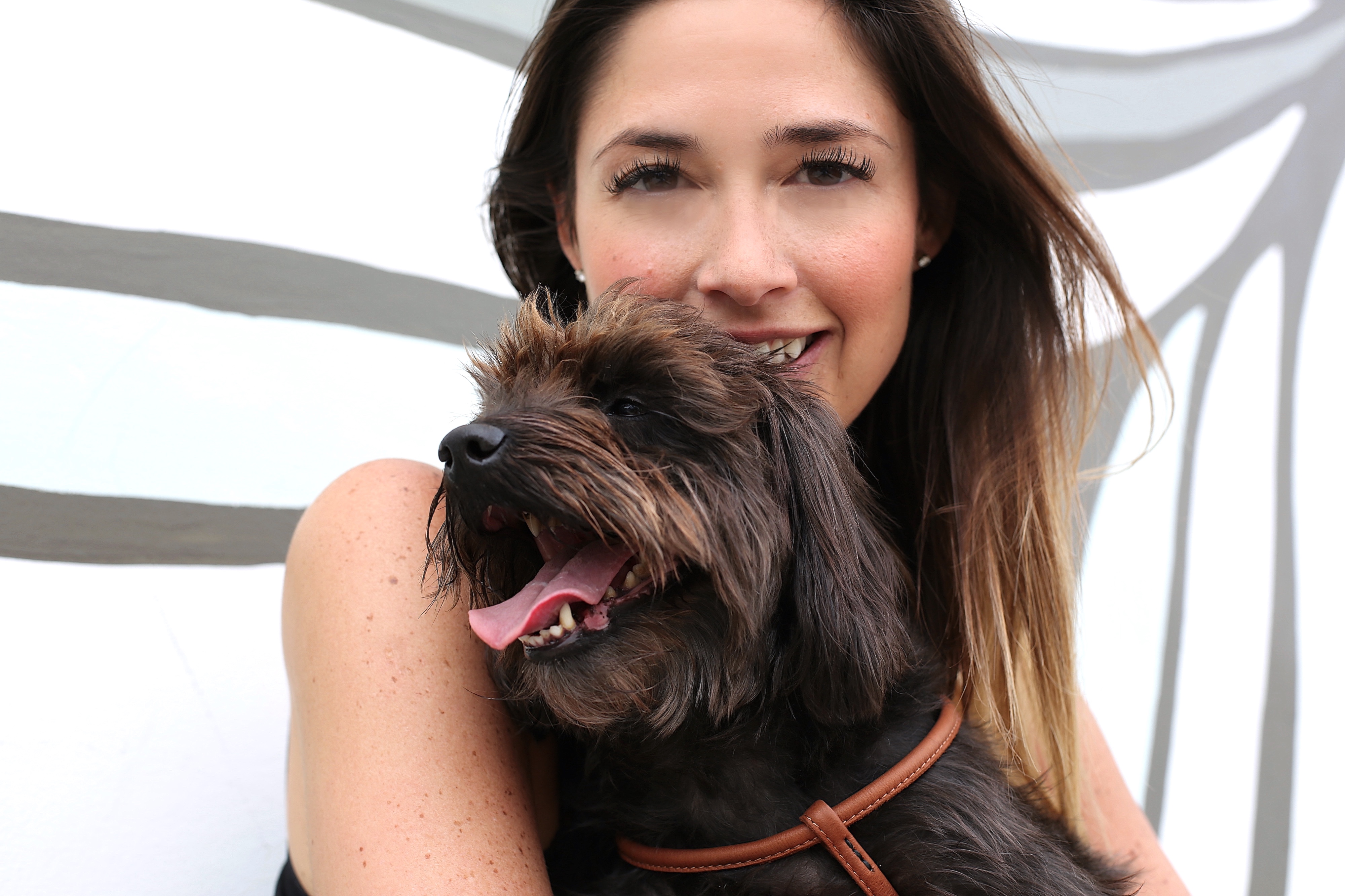
certified dog trainer, animal communicator, pet numerologist, and founder of Pet Prana., AUTHOR
Denise Mange is a certified dog trainer, animal communicator, pet numerologist, and founder of Pet Prana. Her mindful approach to pet training combines traditional training with energetic considerations of pet guardianship. She has been featured in publications spanning pet guardianship to conscious living, and has appeared on numerous radio shows and podcasts. Her new book, Translating Your Pet’s Behavior: A Mindful Approach to Dog Training is a #1 bestseller in its category on Amazon. Learn more at www.petprana.com