
 Apple Podcasts

 Spotify

 Castro

 RSS Feed

 Goodpods

 YouTube

 iHeartRadio
182. The Herbal Dog with Rita Hogan

Rita Hogan is a canine herbalist and one of the kindest human beings I've met. She has dedicated her life to learning about the use of herbs, specifically as they relate to dogs. Her new book, The Herbal Dog: Holistic Canine Herbalism Applications and Practice, will be released on February 4, 2025! You can pre-order your copy anywhere you buy books, and on Amazon! Send us a text 🐶 🐱 Nutrition & Holistic Health Consults: https://jessicalfisher.com/product-category/holistic-pet-health-nutr...
Rita Hogan is a canine herbalist and one of the kindest human beings I've met. She has dedicated her life to learning about the use of herbs, specifically as they relate to dogs. Her new book, The Herbal Dog: Holistic Canine Herbalism Applications and Practice, will be released on February 4, 2025!
You can pre-order your copy anywhere you buy books, and on Amazon!
🐶 🐱 Nutrition & Holistic Health Consults: https://jessicalfisher.com/product-category/holistic-pet-health-nutrition/
💜 Follow Jessica on Instagram https://www.instagram.com/thepetparentingreset/
📩 Get email notifications for new episodes:
https://jessicalfisher.kartra.com/page/tpprnotify
0:01 Welcome back, pet parent. So excited for today's guest. And I was actually laying awake in bed the other night thinking about how am I going to introduce her because she has been on the podcast before and I, you haven't listened to that episode. I'm going to absolutely recommend you go back and check it out. But one of the things that I was thinking about was nature. Just how many of us recently in the past, I don't know, handful of years are waking up and realizing that nature really does give us most of what we need like pharmaceutical, medical, everything that we have figured out in the last 100 years or so is amazing for emergencies, it's if you need your bone put back in place or if you absolutely need there's something crazy going on for emergency care.
0:51 It's amazing it it really has changed our lives. But when we're, when we think about just Wellness and caring for ourselves every day and being proactive and caring for ourselves, nature is going to give us everything we need. And herbs are one of those things in nature that really it's so abundant. It if you have a green thumb, unlike me, and then you can grow a lot of these things yourself. And it's, it's really one of the coolest things that I have found in my journey into learning more about nature and bringing nature into back into my life and realizing the connection between humans and nature. That's one of the things that I have really, really been focusing on, especially in the past year, is how much humans have disconnected ourselves from nature. And we kind of pride ourselves and how far we've come, like technologically speaking and industrially speaking. But in reality, all we're doing is like chasing the symptoms of pulling ourselves out of the cycle of nature. And so that was kind of the intro that I thought of laying there awake the other night to bring back on the absolutely incredible Rita Hogan.
2:07 Thank you so much for being back with us, Rita. And we're going to talk a little bit today about a book that is getting ready to come out that you have published that I am so excited for. So thank you again for being here. Welcome. Thank you for having me on. I love coming on your show. Love it. Thank you. I am, I really am. I'm so excited for your book. One of the things that, and I know I told you this at Super Zoo last year, is that I, one of my cat passed away in 2023 and I had two different animal communicators reach out to him not long after he passed. And both of the animal communicators not having known each other at all.
2:48 I don't, I don't think they know each other at all period. Both when they connected to him, brought you up to me, it was amazing. It was, it was just a really, really cool thing. And also, one of the reasons why I have on my list of things to do in 2025 is to learn a whole heck of a lot more from you specifically, but also just about herbs in general and bringing that back into my life. And I think that the timing of this book for me personally couldn't be better. And I'm really, really excited for it. And I would love for you to tell me a little bit about why you decided to write this book.
3:30 Oh, wow. Yeah. So I've been in herbalism in one facet or another over the last 21 years. I really started out in 2000, I made like my first herbal remedy in like 2003, I believe, started selling my wares locally, you know, doing those things and I boarded dogs and realized how sick they were and kind of dedicated my life to canine herbalism then. And, and I had a product company for a long time did that and, and then kind of parallel worked on canine herbalism for a long time and started writing and sharing my information, which was hard because I was quite kind of reclusive at the time and just kind of doing my work, you know, like mad scientist.
4:23 And I started teaching in, I think it was like 2015, 1415, I started teaching this group of women and a big group of women. And I think we started off with like 40 and, and then I taught them for 4 1/2 years. So, and it was every Thursday, every Thursday. We ended up with about 25 that made it all the way to, you know, for 4 1/2 years every week. It's a lot. It's a big commitment. And so I'm some of some of them are in practice right now, which is awesome.
5:08 And I had to show up. They showed up for me and I showed up for them and I had to show up every week, give or take. It was like, I think we've maybe missed about 10 weeks for the whole 4 1/2 years. I had to show up for them every week and I had to write a lesson and I had to explain to them from tip to toe or tail, you know, what's going on in the dog as an ecosystem and, and what that means and how the body works and then what type of plants can work for what. And I learned so much and they, they taught me so much and I taught them so much. The book is really a product of the, of that teaching moment. And of course my practice and what I've learned and what I found have like has worked for me with dogs.
5:53 And that's all, you know, that's all I can really speak to because it's not really mine. It is all the people that have come before me and my mentors and, you know, filtering through my like my brain and coming out the other side. You know, I did a lot of mapping canine Physiology, you know, like human herbalism on to canine Physiology and working with my mentors and refining things. And, you know, hopefully someone will take my book someday and re, you know, put it through their big brain and refine it even more. And I, you know, I can only hope for that. And so it's just been, it's been really awesome to write this book and put the time in because it took a long time to put, you know, your first book is huge.
6:39 I have four more books coming out. My next book is on canine oncology. And so, but this first book is just really kind of the prerequisite to reading my follow-ups because it does teach you the basics of holistic canine herbalism and it, it'll be a great reference for people. It will be, you know, and, and the cool thing about it is that it gives you dosages, It gives you places to start. It gives you guidance. It tells you what pharmaceuticals are interacting with certain herbs or any cautions and how to recover from surgery and how to recover from antibiotic use and how to deal with yeast. I even have a, a basic elimination diet in there that I use for, for yeasty dogs and leaky gut dogs. Some people would not agree with it, which is fine, but I've used it in my clinical practice for probably 15 years without ever a hitch.
7:32 You have to do some modifications towards an individual dog, but it's only a 12 week diet. So it's, it's not forever, you know, it's just a few weeks and it really does work well. I've, I've, you know, I've tried to give you as many tricks of the trade as I can, so I'm pretty excited about it. Gosh. That really does sound amazing and actually semi answers a lot of the question that I was going to ask you today. One of which is how much of this people can kind of translate onto themselves. But it sounds like you took like the human herbalism and for many, many years figured it out how it works on dogs. So kind of it'll kind of goes back and forth a little. Bit no, there's really great herbalism books for humans and all of my mentors except for Cheryl Schwartz and like Susan Nguyen, who I did not work with directly. But as you know, mentors through written the written word have been human herbalists.
8:33 The people that I've worked with directly have been human herbalists and, you know, with some knowledge of animals. But that's not that's not what we spoke about South. I had to look what was on market and I, you know, those books changed my life, like Susan Wynne's book veterinary herbalism and Barbara Fraguard shit, great book. It's a textbook. So it's for veterinarian. That's ones you know, and then I think that Julia de Barclay, Levy's book, the dog and cat herbal. Some people would just think that was that was just so crazy, right. But she, if you've read it, you know, there's lots of things in there that some people just go, Oh my God, like, I would never do that. But she really had a grasp of traditional herbalism and it worked well for her. So when I read that book, it just like blew my mind. And then Cheryl Swartz, the five pause, 5 directions. You know, everyone should have that book. It's absolutely amazing.
9:25 And now Cheryl and I are colleagues and it's come full circle, which I never thought would happen, right? Like, Oh my God, I've come full circle it with a lot of like all three of my big mentors, which were Greg Tilford, Cheryl Schwartz, and Matthew Wood. I've come full circle with them. Like I've been on Matthew Wood's podcast and I've helped Cheryl with one of her own pets and Greg Tilford and I are very close. So like a lot. 20 years ago, I could have never imagined that they were like these, you know, gods to me. Like, Oh my God, you know, like, you know, and now being their colleagues is just phenomenal. But you can find yourself in my book as a person.
10:08 There's hardly anything that doesn't apply to humans in here. Maybe the the I have a small section called food is medicine, but it still applies. It's just not that, you know, I'm not telling you to eat raw meat or I'm telling you, you know, but if you do eat cooked meat, I'm going to tell you to use digestive enzymes. Or if you do eat cooked food, which would, you know, I eat a lot of cooked food. It's easier on my gut. And so that might, you know, that still does apply. But other than that, I mean, we have longer digestive systems than gastrointestinal tracts than dogs do, so we tend to hold toxins longer. But you know, besides that, there isn't a lot that can't be applied to humans. Yeah.
10:50 Well, and one of the things that I want wanted to get your opinion on before I jump into any of the questions that are more specific to herbs and, and the book, because that's really, you know, the basis of of the book is, is herbalism for dogs. And one of the questions that I get asked more than anything with what I do being being a nutritionist, my first thought always comes to food and it the clients I have in the people I see online. One of, and I think this, this, a lot of this comes from probably the, you know, current medical industrial complex and pharmaceuticals where we expect take a pill and it gets better overnight.
11:32 We know that that it doesn't work the same way when we're using nature, when we're using natural things. But do you find is, is there benefit? I would imagine there is benefit, but how much loss is there? I guess is what, what I'm really getting at if we don't address the diet first, but we're we just start using herbs. I would imagine you want to do both, but how do you feel about that? What? Because I'm sure people have come to you as well with what herb is going to fix X, right? So one of the things that my book does, it meets people where they are. So I deal with kibble feeders. I deal with a raw feeders, gently cooked, freeze dried, wherever you're at. You know, I have ideas of what ideal diets look like. They're not for every dog.
12:16 Herbs can help a dog that's eating kibble. It can help the liver process that kibble better. It can help the gut digest better. It definitely can't. So you can use herbs if you know whatever diet you're using. But what I really like, what I find interesting is once someone starts to cross over into trying herbal medicine and getting, you know, they get to know one herb and they might add a second and might add a third and things like that. They tend, it tends to open them up to possibilities of eating closer to nature, you know, and being closer to nurture, right. So it's like when we nurture ourselves, we nurture our pets and when we nurture ourselves with good food, we feel better. And I think that that is being, I think that's being passed along pretty readily in social circles. The importance people are getting to, to understand the importance of, of quality food because the disease rates are skyrocketing and you know, we have our, we talked about EMF, you know, we have that in our house now. It is a factor.
13:26 But the cleaner we eat, the less EMF bothers us, right? When we have vitality and our cells are functioning at the proper frequency, which is affected by the food that we eat, processed foods has very little frequency. It has very little energy or what's called voltage in it. And when we eat foods that are alive, even cook gently cooked food can be have a much higher frequency than something that's been sitting in a box, right. So I think it just everything feeds, it feeds off of everything else. So when you incorporate natural medicine into your life and into your dog's life, I think it's it's a catalyst for feeling better, for doing better, for understanding nature, for even just getting outside more and connecting with the environment and connecting with your dog on a different level.
14:19 I love that answer and I love how you are being very intentional about meeting people where they are. That is, it's definitely something I had to learn and it it came a whole heck of a lot more quickly to me once I actually started working in with clients individually. But like now you, you really need to be able to meet people where they are and just help, help one step at a time. Whether that's a baby step or a giant leap, that's up to them. But one of them actually currently, as we're recording this reading Doctor Casey means book good energy. And it is exactly what I was thinking of when you were talking about how if we set our bodies up properly, then we can handle the outside world so much better, so much easier.
15:08 The same thing is true for for our pets. And that really is everything she talks about in this book is your cells are either producing good energy or they're producing bad energy. Yeah. Yes. Absolutely. Go please. Well, I mean, it's exact. She's exactly right, you know? And The thing is, is that a lot of people say that everything starts with diet, right? And as a nutritionist, you'd probably agree. However, I disagree, OK? And here's why I think diet is beyond important. I think it's one of the most important things that you can do for your health. But in the last 20 years, I've met many, many, many dogs that have been referred to me with certain ailments, right?
15:53 They're mild ailments. They eat the worst food that you can imagine, OK, but they're almost all of them have been close to 20. And one of the things that they have in common, I always look for commonalities and and like try to piece things together and you think like, well, the heck can they be almost 20 and eat the bottom of the barrel foods? I'm talking the last shelf at the Walmart. OK, just horrendous foods. They all have this in common. They're they all live rurally, OK, They live where they can run and they exercise and they interact.
16:35 They, they almost, I think not almost all of them had siblings like dogs and other dogs, multiple dogs, OK, they basically live outside. Some of them got to come in of sure, absolutely, of course, but some of them didn't. They were outdoor dogs, right? They're breathing fresh air all the time. They're moving their bodies, right? They're forging, they're eating wild foods, including animals. Whenever I got a dog like this, I would just start asking questions like, OK, you know, what is it? What's going on? You have to look at those factors and what they do, you know, clean air, clean water, clean food. They're eating a lot of clean food, much cleaner than what we're able to give them in a confined setting.
17:18 But that's an outdoor dog and a dog that has access to the outdoor pretty much unlimited. So when you bring that dog inside where I think, I think that those dogs should be fed really good food and really see like, OK, let's add the good food component and see how old they can get, right? And I think they'd probably live in like my dog Susie. She lived till she'll be able to like 24 to 27. We're still arguing about it and my family. But she was that dog. She wasn't all sided. She got to choose to come in and out. She, I usually find her behind the chair in my dad's chair in the living room in the morning. But she stayed out a long time and, and it was her choice. But like, and we lived on a farm and it was rural and it was safe and all those good things.
18:03 Like you can't do that now, right? So we're bringing these dogs inside. And what we need to do is we need to do the best job we can to mimic the outdoors, right? We need to open our windows. We need to get air cleaners in there. You know, Rodney talks about, Rodney and Karen talk about, you know, building your own little air filter. I, you know, they're not aesthetically pleasing, but if you are low on money, they rock. I have air filters in all of my rooms. My, my doors, my windows and doors are open whenever I can. Right now it's winter, so it's a little harder. But, you know, getting that fresh air diet is imperative for indoor dogs. Imperative, absolutely, because if you're not running free, if you're not running with your fellow dogs in community, you need to focus on exercise and diet and fresh air, fresh water.
18:58 Like those are the things that are definitely needed because the organs aren't getting the voltage they need to survive and to thrive, right? We have a lot of liver cancers. We have a lot of spleen, tons of splenectomies, right? Tons of spleen damage. And this is all from stagnation and stagnation happens when you sit on the couch for, I mean, my dogs and I week last weekend we did a marathon of ATV show, which I have not done. I can't even tell you. I can't remember the last time. I really, I don't watch a lot of TV, but I was like, I'm going to sit and watch this show and Oh my God, it was so good. And my dogs were with me. We went out for pee. We came back in, they were like, I'm going to lay all over you. We had a really good bonding moment. But if I were to do that all the time, we would see a decline, you know, because that stagnancy, if they're not moving their lymphatic system that and I talk about that in the book, you know, like the lymphatic system is really important. If your dog can't get out and exercise, you got to do that manually.
19:58 You got to you got to add herbs that help the lymphatic system move. And so, you know, not every dog can be on a farm running free and, you know, killing little rabbits, poor little rabbits and, you know, forging on berries and doing all those things, like Monsieur Bobby from Portugal, right? Like, not every dog has that life. So we really have to focus on things like I was working for, I was working with a woman that wanted to formulate a line for dogs in Singapore. OK, Dogs in Singapore, the majority of them, probably over 85% of all dogs in Singapore live in high rise, OK. They live in high rise apartments.
20:39 And the farther you are off of the ground, the more the issues are pertinent to yourself and your dog, right? When you live on the 15th floor, that grounding energy of the earth is nowhere to be found. And so, and you have dogs that, I mean, they go down the elevator, they do their poop and their pee and they go back up, you know, and it's a very, it's a, you know, it's a, it's a Singapore is like one of those cities where you have to import almost everything, right? So you have to look at what, what kind of dog do you have? Do you have an apartment dog? Do you have a regular house dog? Do you have a yard? Do you have a farm? You know, and you have to adjust accordingly.
21:19 So not to be controversial, Jessica, I do believe diet is everything. You already know that. But when you look at these dogs that don't have a good diet, what else do they have? And they have a lot of the things that the dogs with good diets don't have. So I think it's I think it's a combination of everything to increase longevity and herbs can help with that. But you know, my book is holistic canine herbalism, right? It's holistic canine herbalism applications and practice like holistic canine herbalism deals with the dog mind, body, spirit. That means food, exercise, our stress. I have a chapter in here called our dogs ourselves. Who are we being around our dogs? Are we stressing them?
22:06 And a lot of us are, you know, are we fighting with our significant others? Are we, you know, are we arguing with our children in front of them? Are we playing death pedals right in front of our dogs? It, it's very, there's been really critical research on sound and frequency around ourselves and our dogs and when animals and people are around the frequency of like heavy metal, like not just heavy metal, but like that speed metal and things like that. Therefore voltage and frequency goes way down and it plummets their immune systems. I think that's, you know, we just have to kind of reassess how we're living and if we care about longevity, you know, some people may not care, right? Yeah.
22:53 That's not the person reading my book, for sure. You know, and you can live however you want to. But I think the science is really starting to look at these things that holistic medicine has been looking at for a long time. And that is what we do with our minds, what we do with our body and what we do with our spirit and how those things come together. And food and herbs are a huge part of that, because herbs are food. Yes, well, and it's funny you bring up the music because just this morning I was reminded of some studies that were done on classical music, various symphonies and things from hundreds of years ago.
23:38 Mozart, Beethoven, all the, all the people, Salieri, they really do like they have studied people and how our cells function changes with these sounds, with these tones. And one of them, I want to, I want to say it was Beethoven Symphony #5 it said there was a study showing that it actually stopped cancer cell reproduction. It was amazing. And I'm not saying don't do anything that was right. But. And so I just this morning, I, I turned classical music on again for my cats because I was, you know, reminded of that really does everything in our environment really does matter. And we can use these things to enhance our well-being and our health and our health span. So I'm glad you brought that up.
24:24 Thank you. But it is true, you know, frequency and music can epigenetically change us like it can change our gene expression, it can change how our cells regulate in the body and our cells reproduce. So, you know, it may sound crazy, but again, science is starting to take notice of these types of healing modalities and you know, it's not going to hurt to, to what you're doing. I, I believe in all, I mean, I love frequency medicine. I love sound healing. I, I believe in it. I've seen it work miracles. I you know you can look at the App Store and that you will see tons of apps on frequency and sound. You know to go to bed, to go to sleep, to get deeper sleep. Cats purring can heal bones, right? Scientifically prove it.
25:23 You know, that study is amazing, but cats purring can help heal bones and it can help bone marrow because they purr at a certain frequency, right? So all that stuff is just fascinating. I don't deal with much frequency in my book, but I love frequency medicine. So I love all of everything I learned. That's one of the reasons why I love this podcast so much. But to bring it back around to herbs, which is something you know, quite a bit about, and I do think the last time I had you on, I asked you this, but I'd like to, just because of the book, I'd like to ask it again. Where in your opinion is a place where people who are like completely new to this, they're like, yes, I get it. I want to start with herbs.
26:11 Where can they start? How should they start? Well, I'll definitely tell you cat people should start with catnip in in fact, you've been an herbalist all along. You've been dealing with catnip is is so awesome for for a cat's nervous system beyond awesome. You should give it to your cat every day. But with dogs, I think just starting with one herb, you know, and like in the back of the book, I have a part called plants and fungi Monographs, right? And I believe it's like over 30 plants that I have made a resume for. Let's just call it a resume. Monograph is like a resume.
26:51 Like it starts with egg or money and it goes all the way. I mean, it has a lot of different things. I, I do cover mushrooms and it tells you all about that plant and what's its for, you know, what is it for and what you need to do with it, what it can do according to the book. I could only deal with the subjects I dealt with in the book. Otherwise the book would be 1000 pages. So, but how to use it, when to stop using it? I tell you how to build a protocol, but one herb at a time, just adding an herb, seeing if it's needs to be well indicated. And I help you figure that out in the book. But you need to get to know that herb, you know, like look it up.
27:34 I'll tell you right now, Google is one of the worst places to find any information about herbs. OK, You're going to find information that's not true. Like chamomile's bad for your dog or peppermint's bad for your dog, or garlic's bad for your dog. All those things are not true. They are based on research with such a high amount, almost a lethal dose of those remedies. It's just it's it's it's misguided. But if you're looking online, you can use the word monograph. Monograph to help learn different aspects of a plant and it needs to be written by an herbalist or a medical herbalist, either one, because an herbalist really knows their plants and an herbalist would would, would some years under their belt as well, right. So I think that's really important and you just start with one herb like I have this thing on my teaching platform, canineherbalism.com.
28:32 I have this course, it's kind of like a kind of, I have to call it a course, but it's an ongoing subscription kind of sort of it's called monthly monographs and we deal with one plant every month and then you have access to all those plants. I think we have like 27 plants in there right now. But if you just take one plant, learn about it, see if it's well indicated for your dog according to the symptoms that it deals with or what I call cofactors, and then try it out, give it for a few weeks, see how it does. A lot of times people are giving their dogs way too many herbs at a time, way too many supplements at a time. I you know, it's kitchen sinking, you know, trying to throw something at the wall and see what sticks. And that is with the best of intentions, right? People are just, they're looking for answers. They want an alternative to allopathic veterinary care and they are desperate to find answers and solutions for their dog.
29:26 So you read in this is a new breakthrough in arthritis. And then they, they start giving it all, they got another one, then they start giving that and pretty soon you don't know what's working, what's not working. So you just keep your dog on everything and your dog has to process that through their liver, everything that you put on and in them they have process. So you want to find out what's working and what's not working. And with herbs, I start out with one to like, you could do a formula, you know, a formula with a few herbs in it, or you could start with one herb and see over a period of four to six to eight weeks the differences that herb causes, as long as you're not negative, right? If they're negative, usually you're giving too much of it or it's just the incorrect formula or herb for your dog and then you just stop it.
30:14 But the goal of any herb or any herbal regimen formula is to move in a positive direction, right? So say your dog has a runny nose, right? That's dampness. And if they have a runny nose and you're giving a formula to help dry up some of that damp in six to eight maximum 12 weeks, we want that runny nose not to be there anymore, right? And then you figure out how long you have to give the herb so that you stop the herb and then the runny nose comes back and you might have to put them back on it. But you kind of do this trial. And there's a lot of Gray areas in herbalism, and I deal with that in my book and how to navigate it. I love that you do in the book because I think that's one of the reasons why I have found it So like just personally found it so like difficult to get started, difficult to implement, difficult to. And it is pretty easy to just take one thing like something you may already grow, like I happened to already grow parsley or I happened to already, you know, whatever you're already growing.
31:20 But I think the last time I spoke with you, I took some like, herbs out of my pantry and put them on a towel, just placed them on a towel and just let my dog go and like, see what she went to and what she didn't. And my dog's so funny. She's like, I'm not playing along with you. And she just looks and it's like, I'm not playing along with you. Yeah. Yeah. At least not while the camera's rolling. Right. That's how my dog. But I do like the idea of just starting with one thing. And it can be something you already have in your pantry. But learning, like you said, with with the monographs. But that's, again, another reason why I'm so excited for your book specifically to help guide us through, like, the all the questions that we have about like, what if. What?
32:07 If. So one of the things you'd mentioned was a runny nose and you had mentioned earlier about all these dogs that were really healthy, they lived outdoors. What are and they just came to you for like minor issues. So what are some of those, like really common things that you see in dogs that you're like, oh, there's an herb for that? Well, almost everything. Everything. You know, the, the most common things people contact me about as you know, arthritis mobility is a big one, drainage, yeast, things that I would call like our vaccine, like vaccine reactions, leaky gut, you know, the gut being completely IBD, which is I don't know what is wrong with your dog's gut.
32:53 That's my translation in there. You know, inflammation in general, getting a dog more comfortable, lumps, bumps, lots of lumps and bumps, cancers. By the time someone really gets to me, most of my clients, it's, it's you know, we have some urgency to a lot of things or we have, I have a few clients that do preventative medicine with me, which is great preventative, I mean herbal medicine with me. They want to prevent things, which is wonderful. A lot of times people are very upset about the current state of affairs and their dogs. And I work one of a lot of geriatric dogs.
33:34 You know, I work with a lot of dogs that are up in age between 14 and 17. Oh, and you're going to have right now with the state of affairs that our dogs are dealing with at that time, you're going to have some liver and kidney issues. You're going to have some mobility and pain issues. So, and I deal with all of that in my book. So I deal with a lot of it. Or getting to the, you know, holistic herbalism is about getting to the root cause of something, you know? But Jessica, one thing I do want to say, and this is I know this is confronting for some people, but because I get so much, I get a lot of kind of pushback sometimes on herbal medicine.
34:15 And I'm just going to use peppermint as an example, right? This week I had someone say, you know, I can't believe you reckon peppermint it it's terrible for dogs. And no, it's not. But you know, that same person that is questioning herbs in general has no problem giving their dog the leptosclerosis vaccine or giving their dog Bravecto, which kills hundreds of dogs, if not thousands of dogs a year. I don't know how many dogs, but I know it's most likely close to 1000. I mean, it's it's a very small percentage of the dogs that use the drug. But if you look at any drug that you use from the vet, whether it's a wormer, whether it's a flea in tech, whether it's a heartworm pill, if you look at the side effects on the box or in the little pamphlet, they are going to be so astronomically higher and more detrimental to your dog than any herb I can think of besides something that's just straight up poisonous like belladonna or hellebore. Right.
35:19 I deal with non-toxic herbs. Some have more toxicity than others. And toxicity just means doesn't mean that it's going to kill your dog. It means that they might vomit or they might get diarrhea or you need to really be careful with the dosage. You don't. They're much. They're more finicky, right. But most of the herbs that I deal with, you know, there really isn't a level in which they've been researched that will kill a dog. They're extremely non-toxic. Yeah, they can cause some. Every herb can cause a side effect. Anything can cause what it cures for the most part doesn't apply to everything, but a lot of things can't. You can kill yourself with water. We're drinking too much water, right?
36:00 So, you know, I think Joseph, we just been pharmaceutically conditioned and I, you know, pharmaceuticals can be a great bridge. I've had to use them before. They've saved my life. You know, surgery has saved my life in my I'm 53 years old. I've had some stuff happen, right? Hopefully not in the second-half of my life, but let's go. But like, you know, I, I am not anti pharmaceutical by no means. And especially when dogs are old, like when dogs are really like elderly kind of. And also the dogs that are kind of circling the funnel where things are starting to wind down, right? Things are starting to wind down.
36:40 All the lumps and bumps are showing. They're starting to get mobility issues. You know my little dog Lola's in that position, right? She's a 15 year old Basset Hound and she was traditionally raised. She's got a lot of lumps and bumps. They're not going to go away. There's too many of them. You know, some of the big ones kind of reduced, but you can do what you can. But you got to do what you can to make them comfortable. And sometimes that involves the pharmaceutical, they can really give them an excellent quality of life in that last year or two, right. And you support the body, you support the liver and kidneys at dealing with that pharmaceutical and some of their side effects. But I'm not anti pharmaceutical. I do look at them as a bridge in many ways, some of them, not all of them, but some of them. But you have to look at, you have to question kind of the paradigm in which you were raised. Some people are very familiar with the natural and some people are really scared of it.
37:39 But ask yourself, what are you really afraid of, right? Are you afraid that you don't know? And are you afraid that you don't have the answers? Or are you afraid that your dog is going to blow up if you give them some chamomile, right? And why don't you have that same fear of something that literally is telling you, like your dog's immune system is impaired, death could occur, a disease could happen in which could kill your dog on this Med, right? They have just horrendous side effects like human, human drugs do, right? And why are you not afraid to give your dog that remedy? I just think that we're just so far away from nature. And I hope that my book, because I, I tell you about what pharmaceuticals they interact with, I hope my book can create some comfort, create some confidence. You know, it definitely is for the advanced practitioner all the way down to I've never touched, I've never touched an urban in my life, right?
38:39 You can use it in many different ways, like Jessica, you're a health practitioner. You can use it in a different way than someone that that absolutely knows absolutely nothing, right? They can still utilize the book, learn a lot, but the first part of the book is about teaching. Now it's teaching you certain things. And the second part of the book is reference. Even if you just use the reference section, it's going to help you immensely. And you can start looking at different supplements in a different way and learn how to pick out supplements, learn about mushrooms and different types of. And I do, I do have a supplement section where I, and you know, I just, you know, I actually just used it the other day for myself, which I was cracking up because I was like, OK, I'm using my own book.
39:25 I have, I do, I have, I have a vitamin and minerals section that deals with all the different vitamins and minerals and what the synthetic versions are and dosages and all that good stuff and food sources of those vitamins and minerals. And then I have a section on supplements, you know, like I looked up the dosage for sodium butyrate for a dog and I was like, you know, I don't have that memorized, but let me look it up in the herbal doc. You know it deals with like a betaine hydrochloride black seed oil, bromelain, butyric acid, even CBD chlorella coenzyme Q10 colostrum different types of supplements that we use like cranberry D manos, greenlit muscle, green tea, humic and fulvic acid hunt raw honey hydrolonic acid. Large L glutamine, like I have it in the back. So that one, you know the dosages and two, you know a little bit about that supplement because they're very popular in the animal world and you might just kind of have that all in one spot.
40:25 They are. I can think of quite a few list, just of the ones you listed off that I used between me and my past since we're we're being confrontational and I happen to like that. One of the things that I saw you post on social media recently, and I was hoping to ask you about this because I actually learned about I, I have a pretty high level of comfort with essential oils. And I understand that that is a much more potent form of plant medicine. So dealing with the herbs themselves, as I understand it, is actually even safer. But what I think, if I remember correctly, what you were posting about is what it takes to get to that essential oil, like the actual processes that you have to go through.
41:15 And it isn't as sustainable, I guess is kind of the bottom line. So I was just curious if you'd like to touch on that a little bit and. You know, that goes back to what I just said. Like a lot of people are afraid of an like giving their dogs some peppermint tea, but they're not afraid of giving their dog a drop of peppermint essential oil. And one drop equals like 71 cups of tea, Like, and it's because of what I call the American marketing machine. You know, we've marketed these beautiful oils so hard and made them so commonplace and talked about them like that.
42:00 They're the end all save all of everything, right? And you should have much more care in using an essential oil than you would a regular plant. I think it's like 5 tons of rose petals go to like I think I don't have the exact like 1/2 an ounce of oil, 5 tons. Have you ever felt a rose petal? You can't even feel it on your hand. Imagine how many five. It would literally probably fill your house, right? So it. It is crazy to fathom how much plant material goes into all of the essential oils that are sold.
42:42 Not to mention so many of them are adulterated with other oils. I'm not brand loyal in my essential oils at all. I, you know, a company can have really great lavender on Gustafolia and have not so great German chamomile essential oil one year and not the next because the weather effects essential oils so much. Nowhere in nature is that amount of essential oil found. Each plant has just a little and they're in aromatic plants that need plants with a lot of scent, like lemon balm, which is one of the most. It takes so much lemon balm that it's like rose to create any oil. I've I've made my own lemon balm oil well with a group of people and I was just taken aback at how much plant material you had to use for like just one drop.
43:33 And so it's an eye opener and essential oils are not sustainable. That's why I love using them in in in sustainable means that one they decimate plant populations. So it takes so much plant material, but two, like for like say peppermint or lavender, which we can cultivate ourselves, they have a huge energy footprint. Picking those plants, processing those plants, distilling those plants, a huge, huge energy footprint. So what I like to recommend people do is buy very small bottles with reducer tops and use them how they're supposed to be used, which is aromatherapy, which is smelling.
44:15 Zoopharmacognosy is awesome because you can offer that essential oil to your dog and let them snip it. They'll let you know that they are not interested or if they are interested and then you could put the cap back on and you can have that oil for years and years. You don't need to purchase a large amount. I have used essential oils for the last 30 years. I used them a lot in saps in like a topical. I'm not saying I don't use them, but in my practice I don't hardly ever use them unless we have severe emotional trauma when other things aren't working right. Homeopathy. I love using homeopathy. That footprint is very low and sustainable.
44:55 I use phytoembryonic therapy which is plant stem cells, very sustainable, allows the plant to reproduce and and finish its life cycle. It doesn't affect the life cycle of the plant. And then, you know, regular herbalism. And then if there's an issue, I use essential oils. I also use flower essences. Those are also very sustainable. Don't even have to hurt the flower if you don't want to. And then essential oils are my last gig. But I've seen them work miracles, you know, in horses, in dogs, in cats, using zoo pharmacognosy. I have used them with cancer. Some of our great cancer essential oils are becoming extinct, which is sad. Like frankincense, right?
45:36 Those trees take 30 years to produce oil and a lot of them are on the plant savers endangered list now. So, and it's specifically due to essential oil production and a lot of them are adulterated. So yeah, I mean, from an herbalist perspective, I love essential oils. However, I use them with reverence. I use them with intention, they're not my first grab to go, but I implore everyone not to buy as much of them, only to buy what's needed. And really, you can use essentials very effectively with a half a DRAM or a DRAM which is just a wee bit right, and use them with self selection and zoopharmacomnosy. I'm not a huge fan of diffusion.
46:24 I don't diffuse. I don't recommend people diffuse. The reason why is that every single person or dog or cat is getting a medical treatment in that home. And essential oils are not meant to make your house smell better. You know, the forever dog life. It's a lovely kind of mix of different plants that you can put in water and let them simmer and it fills your house with great smell. I'd love, I love that instead of using essential oils, you know, orange, orange essential oil makes me feel so happy, right? I whiff it and I'm just like, Oh my God. And grapefruit, I love organic grapefruit. I go, you know, I get all like, oh, I love it. It makes me so happy. And but it's just a whiff. And when you diffuse, it goes into your bloodstream, it goes into your cat's bloodstream, it goes into your dog's bloodstream.
47:13 They may not need it. And orange has medicinal properties, lemon has medicinal properties. Peppermint I would not use around my dogs unless it's just giving them a stiff, having them choose it and then either walking away or or sitting down by it or wanting to sniff it a little more. Yeah. I mean, I think we need to be mindful of our plants and nature, and a lot of people don't understand the intensity that it takes to produce an oil and what that looks like. I have a few like I, I allude to it in my book, but you know, I know a couple of like I whenever essential oils come up, I always mention these people because they are, they are so wonderful in the the world of essential oils, it is Kathy and Florian Skipper. Kathy Skipper is a French trained aromatherapist with. I could I don't even think you could count the hours that she has put into her craft.
48:07 I, you know, I, I quote her in my book on essential oils, but her and her husband Florian go all around the world distilling their own oils very, in very small batches of different types of plants, stuff that you probably have never heard of in the essential oil market. And they use those oils to move trauma. They help people with generational trauma, with abuse, child abuse, sexual abuse, all of those things that essential oils are so good at, moving that energy and transforming that energy to get true healing for like some of the psychosomatic illnesses that we create for ourselves through emotion. And their work is phenomenal.
48:48 I missed one of their seminars a couple years ago and I just put a kick myself. I was like, how is this the only time that I can't do something? I obviously wasn't meant to do it at that time, but I plan on taking one of their seminars if I can get around to it in a couple years from now for sure. But yeah, they are amazing. And I always mention them. They don't. They don't know me, but I know that. Well, I mean, that's, that's important, right? That you know that. Yeah, I, I, I love that because I think the more, the more we do go down the rabbit hole, I always want to be aware that footprint that I have and, and what I'm doing, the more we learn about that, the better stewards of the planet we can be, which which is, is really important.
49:38 And one more question before we we wrap up. I am just curious and I don't know if you have any case studies in the book, but is there anything, maybe a story that comes to mind where you were just, you used some herbs for a dog, maybe one of your dogs and you were just like, wow, this is absolutely amazing. My entire career, yeah. I wouldn't be here if that, if that wasn't my manifestation. Like, I can't help everyone, for sure. You can't help everyone. You know, people and dogs are going to die when they're meant to, but they're in our lives for a purpose, you know, And every day is a gift. But there's been, you know, like Valley fever, I've done a couple of Valley Fever herbal protocols that have completely gotten rid of Valley fever where nothing was working.
50:27 Or, you know, I have a dog that I work with all the time that I've been working with the last four years. He had cancer when he came to me. He's still alive and thriving with cancer. It's very delicate because you don't know what the window you have. You know, the the shorter. I'm a cancer survivor. I've talked from experience, but when your window is tiny, you need to take huge action. You don't know how much, how big of a window. And this dog had a bigger window and we were able to help him and stop the progression of the cancer and he's doing really well. I deal with a lot of mast cell cancers, but recently I had a horse. I know this isn't a dog, but I just want to tell you about the horse. This was the most recent. This is just the most recent. Like just, I have this thing called the canine herbalist Advisory and I go in there and people ask me questions and I give them, you know, try this or do this or whatever. So I do like a live thing every month. And a few months ago I was all alive and someone asked me about their horse.
51:24 And I love it when people come back and say, Oh my God. And I don't hear about it. A lot of times I hear about things like years later, like, Oh yeah, I used her and she cured my. And I'm like, I would have loved to know, but this woman asked me about her horse and they were going to have to put the horse down because of its mobility. You know, when horses can't walk, it's a terrible thing. And I'm like, you know, I would try mountain pine. I rattled off on a like a starting dose for the horse. Most horses are between like 5 and 900 lbs and some big ones are over 1000. But you know, roughly. She said it was a medium sized horse. And so I rattled off a dosage and told her, you know, give it two to three times a day. Start out with once, then do twice and then see how it goes over the next, you know, a few weeks or whatever. And that horse was running around in like a few days and, you know, and that's what you call well indicated. And I, I didn't have a case history. I like, I didn't have a case built for him. I didn't have paperwork or nothing. And she just said, you know, can you tell me? And then I told her some homeopathy to add in like Aruda and Antarctica to had to add in later on. But I said, you know, when this stuff works, it works really well.
52:32 So just give it a try first and then, you know, tag me in the group and we can try other things. And and she's just like, Oh my God, it like I, my horse is doing so well. This is just crazy. And it was either her horse or her friend's horse. And that was like the just the lack. This happened just recently. And I was like, because, you know, those types of things are, are so important when all the chips have been played and there's not much else anyone can do. That's when I love to see herbs come to the rescue. But even things that make up make a like a difference in everyday life, like acid reflux, right? I deal with that in the book. There's all these different causes of acid reflux and finding that right remedy that stops your dog's acid reflux.
53:18 You know, a lot, a lot of times it's emotional behind with diet combined with an herb that's acid reflux for me. But recently my own dog, and this is just a really great like this is an everyday thing, right? So my Basset Hound that we talked about, she's circling the funnel in her last. She's seen her last days I believe. I'm hoping she makes it another year. But she has anal cancer and we don't do much with it. We don't even act like she's has anal cancer. We do what we can to for longevity every day. She is on an herbal support protocol. But one of the side effects of her anal cancer is diarrhea. And when I say diarrhea, I mean volcanic explosive, shoot it to the wall, nasty.
53:59 Everyone's crying while they clean it up. She had it during Christmas packages opening this year, which was lovely. Everyone's crying and going poor Lola and poor myself. You know, you get the nose plug, you're like Oh my God and got the sage stick, the whole thing. If Lola gets her BlackBerry leaf tincture every day, she does not have any diarrhea. Now of course it was Christmas and the night before, in the morning of, she missed 2 dosages. She didn't get it. And then she get it. She let everything let us know that. Nope, not going to work. Just something like that, right? That can add comfort to the dog, keep them living longer because chronic diarrhea will will cause a lot of horrible things happen to happen to your dog and making other, you know, dog owners and dog guardians a lot happier.
54:53 Like I know my life is better with BlackBerry leaf. You know, I mean, it is and it's just something so simple. She just gets it in the mouth one dropper twice a day, keeps the diarrhea away. And that's just what's called acute herbalism. But it's fantastic, right? And nothing else works that works. And it's just a product of what's going on in her system. But she was supposed to be, she only was only given a few weeks over a year ago. So she's doing really well and doing really well. She has an herbal remedy that involves herbs and mushrooms and BlackBerry leaf so and milk this. All that's amazing though.
55:36 Yeah, I've. I've been there. I've been there. I had a cat, a cat who passed a number of years ago now, but his last like 2:00-ish years of life. I mean, the diarrhea was, it was so bad I had puppy pads up on the wall because he would get in the litter box and it went everywhere. Right? I I totally get that. Yeah. No, no, we have my whole, I have two dining rooms because I don't know, you had two dining rooms in the 70s, right? So I've got these two, like I have the regular dining room that's attached to the kitchen and I have this other room. I use it to do puzzles and for some reason that is the place where things go down.
56:17 We have a permanent waterproof pads that are covering the floor. You know, you're a dog owner when you have these things and you allow them to stay there, you know, and we have to like, that's at least she'll go in that one spot if if you haven't. But I got it on the wall. I have it here in case, you know, she hasn't had it since Christmas because I was like, we set alarms now to give her a BlackBerry leaf. But yeah, you know, it's just something simple. And, you know, yeah, we're dog owners. We can talk about diarrhea. Oh of course, yeah, absolutely. Well, I, I appreciate getting 2 examples of ways that have been very impactful for you.
57:02 So the herbal dog, it's coming out February 1st. You can pre-order it a lot of different places. Anywhere you guys? Yes, I know I pre-ordered mine just on Amazon because I mean, don't we all and where, but where can people? You've mentioned a couple of things that you have going on. Monographs, monoliths, monograph. Yeah, Monograph. Yes, my teaching platform is canineherbalism.com. You can find my podcast, you can find the advisory, which is $15.00 a month. You can ask unlimited questions about anything, people, dogs, cats, birds, I don't care.
57:42 And I have courses on there and then I have Canine Herbalist. So that's canine herbalism. I have canine herbalist and that's my store and where I do consulting and formulation inquires and things like that. And then I'm on all your socials at canine herbalist. And I think that's basically it. And then the herbal dog, which is my books website from my publisher and you can order there. It has many places to order, not just Amazon. We have like the bookshop and Barnes and Noble and Bam and the thrift books. Thriftbooks.com online has my book and has had it for almost $6 off with free shipping so it is the actually the cheapest place to get my book right now.
58:34 Oh, wow, OK. I think I've heard of them. And you said that and I'm like, something went off in my brain, like, oh, I've heard of them. Before I was like, I keep checking and I'm like, when is it? It's still on. I'm like Oh my God. And I will also have copies for sale that I will sign, but those will be on my website hopefully by the 4th. Awesome. And then I know you're doing a book tour this year so that those dates, places and dates will be on the Herbal Dog. They will be on the herbal dog.com and they will also be on my social media stuff. So yeah. And I'll be attention and on Monday. Yay. And I can't wait to see you in July.
59:16 I know that one's going to sell out very, very quickly. And I think, yeah, I'm just really, really excited and so grateful for you and appreciate you helping so many dogs and pet parents learn more about how to how to use nature, how to get back to nature and really find that health span, that long healthy health span. That's cool. Absolutely. And I thanks so much for having me on Jessica. I really appreciate it. Of course. Thank you so much, Rita.
Clinical Canine Herbalist
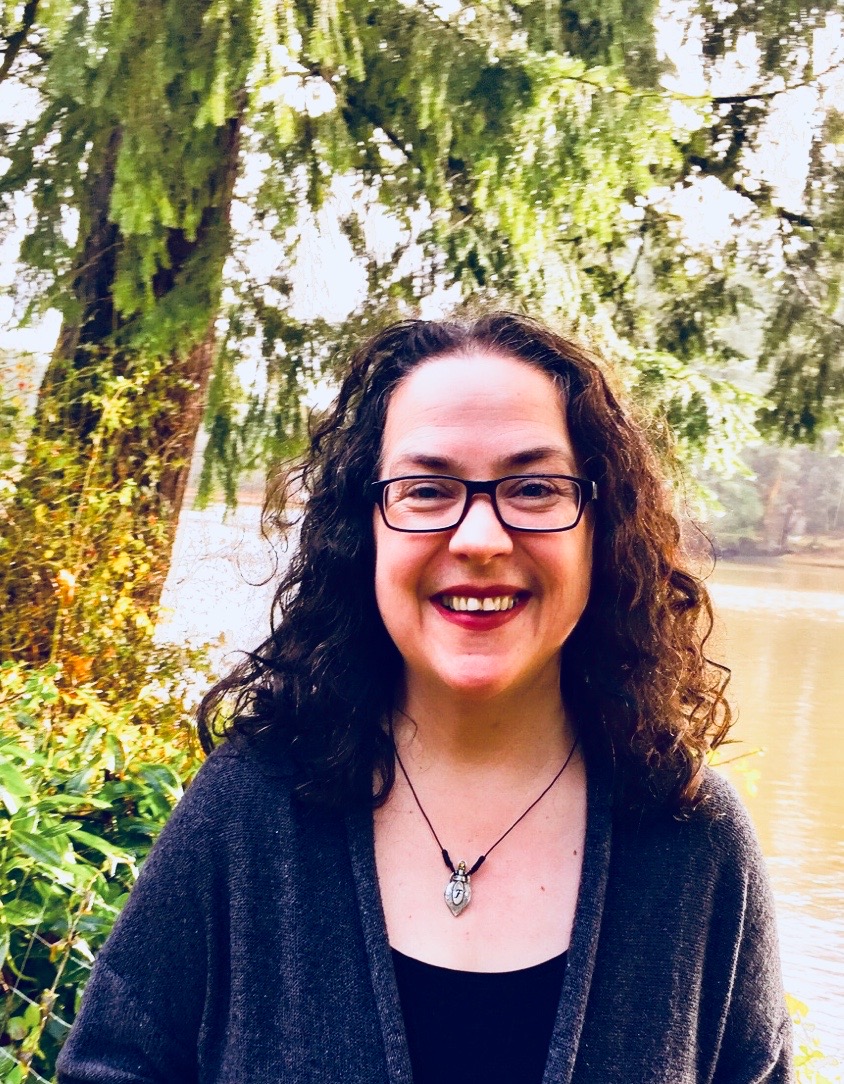
Rita Hogan is a clinical canine herbalist with over 20 years of experience specializing in holistic canine herbalism. She is an author, educator, speaker, writer, formulator, and herbal medicine maker. . Rita uses a combination of diet, flower essences, mushrooms, herbs, and phytoembryonic therapies addressing dogs’ mind, body, and spirit. Her full-time practice is based in Olympia, Washington. Her first book is The Herbal Dog