
 Apple Podcasts

 Spotify

 Castro

 RSS Feed

 Goodpods

 YouTube

 iHeartRadio
183. Why Seed Oils Are Bad for You & How to Choose the Best Omega-3 Fish Oil with Kara of Raw Remedies

Kara asked me to join her to talk about seed oils and omega 3 oils for her new podcast, Raw Remedies and we had such a great talk that I wanted to share it with you and to introduce you to her new podcast!
The processing of seed oils is disgusting and involves carcinogenic chemicals and deodorizers. We try to avoid seed oils as much as possible.
Omega 3 supplementation also has it's challenges.
Listen as we discuss both!
Follow Raw Remedies podcast: https://rawremediespodcast.buzzsprout.com/
BOOK: The Big Fat Surprise on Amazon
🐶 🐱 Nutrition & Holistic Health Consults: https://jessicalfisher.com/product-category/holistic-pet-health-nutrition/
💜 Follow Jessica on Instagram https://www.instagram.com/thepetparentingreset/
📩 Get email notifications for new episodes:
https://jessicalfisher.kartra.com/page/tpprnotify
0:29 This was your idea to talk about oils. And I love it because it's such a big topic and there's so much. I think right now people are so used to one in the US at least, politicizing everything and just taking such a strong stance and like, not budging that people aren't willing to learn right to. And so I hate that food has become politicized, but that's where we are today. And so hopefully my goal is to talk, just completely talk about the facts and try to leave politics out of this because I mean, politics has no business in food.
1:17 Like, literally every single one of us needs food to survive, to, like, continue to live on this planet every day. Like, yes, we do not need to be bringing politics into this. I'm going to take a drink because my throat is like, I don't know what's going on. Sip, girl, sip. So no, I agree. So no, it's really frustrating. We tend to joke in medicine like this is the hill that I'll die on, right? And people will stick to their guns until they're blue in the face, even if they turn out to be wrong. And what's really frustrating about it is you can be presented with the, I'm going to use air quotes here for people who are listening and not watching, but you can be presented with the evidence. But where did that evidence come from?
1:57 How was the study run? Was there bias? Was it cherry picked? Who funded that study? Was it a third party small company or a business? Or was it a huge multi $1,000,000 pharmaceutical company? And so it just makes it really difficult. And then a lot of people don't even read beyond an abstract. So let's say you're reading a study and you just read the abstract, which is kind of that beginning paragraph. Anybody's ever opened a study, right? It's the first thing that comes up and it's a summarization. You have to read beyond that because oftentimes they make very misleading statements and don't actually tell you the results of the study. They'll just have their hypothesis and if the results don't match it, they don't have to put that in the abstract.
2:41 So it's really frustrating. You have to know how to dissect a paper and you have to know how to really see about the validity of something before you adopt that as science. And unfortunately that's the background of the safety and recommendation of Food Oil is is of seed oils. Excuse me, is bad science bad science? Well, and the reality is that, I mean, you can go down the rabbit hole of everything else that the pharmaceutical companies have also profited and benefited from, from that bad science, from bringing seed oils into the food system. Because, you know, going back, and I know you said you were going to go back and get some of those statistics.
3:26 So I did not do that. But going back, it was originally created canola oil was originally created because of a surplus of machine oil that was being made for World War 2. And they're like, OK, they put so much money and resources into making this machine oil that they're like, instead of saying let's reallocate these resources to something else, they're just like, Nope, we're all in on this. Let's figure out how we can use it in another way. And it just, it took scientists to genetically modify the rapeseed plant to be able to use it as food.
4:12 So that's what they did. And to get it to the point that you see it on the shelf is horrifying, like. So process. Literally the IT will disgust you to the point where I think our we have been conditioned that our like we get horrified about something and 10 seconds later we've forgotten about it, right. But like, go watch the video. Go watch. Videos on. How how it is made because I mean literally the chemicals they use to make this are carcinogenic. They're horrible for us and they claim that those chemicals don't survive into the final product. But I don't, I don't, I don't know about, I don't know about all this. And rancid, it's all rancid 100%. Like there you cannot get a seed oil that isn't rancid. And one of the things who was this that just somebody just said Millie's raw like yes.
5:05 And so I think it was sunflower, isn't it? I believe it is sunflower oil that they used in mice when they want to induce insulin resistance, like when they're trying to do studies and study things and you can't do it all that much, so you do it on mice. So I think it's sunflower oil that they use to induce insulin resistance in mice. So it's not like we don't know what this does to us. Yeah. So I want to list. Yes, please go ahead with your SO. Millie for for people who are going to be just listening because I'm going to put this on my podcast, but Millie's raw Life said, how do you feel about sunflower oil in pre made raw dog food? So not just dog food, but human ingredients, right? Anywhere the ones that we're talking about today are soybean. So these are the seed oils, soybean, corn, canola, cotton seed, rapeseed, grape seed, sunflower, safflower, sesame, peanut and rice bran.
5:56 Those are the oils, the ones that we are specifically not talking about that I personally feel very comfortable using are avocado oil, coconut oil, and with a caveat that I'll bring up later, olive oil. So those are the oils that I feel comfortable using that we are not talking about today. So, but the ones that I listed, including Amelia's Raw Life, sunflower oil is a big no for me. Yeah. And, and a lot of a lot of brands do use it to balance out their recipes. And it's like you have to always balance the risk and reward and everything that you're doing for yourself and for your pets. And so if your choice is between a pre made company that has incredible sourcing that is using all whole food ingredients to balance their recipes and one of those ingredients happens to be like a little bit of sunflower oil versus something else you're looking at that maybe has Whole Foods in it, but they're using a premix to balance it out.
6:59 I personally, I'm still going to choose the the whole food balance that has a little bit of sunflower oil in it. And granted, that's something that you have to decide for yourself, but for me like that, I would choose that and. It depends on how much, right? So for example, 3 to 5 tablespoons of a seed oil. So 3 to 5 tablespoons of corn oil would be equivalent to about 60 to 70 ears of corn in a day. That's how concentrated and condensed it is. Or three to five tablespoons of soybean oil would be equivalent to 2 lbs. Of soybeans per day. These are numbers that no, no animal on this earth, be you a cat, dog, human, could possibly, maybe an elephant could consume, you know, 70 ears of corn per day.
7:48 But like, no, for the purpose of what we're talking about, nobody is consuming that. That is not species appropriate. It's not healthy. And so sure, maybe a couple of drops of something, OK. But if something is calling for and I'm, I'm happy to call out some brands, for example, just food for dogs. This is actually the first say, fresh dog food that I ever came across years ago when I was first researching fresh food for my pets. And their recipes call for several tablespoons of safflower oil. That's, I mean, excessive. That's so much. And I didn't know it at the time. And I, I actually did make a couple of those recipes and it was when I was cooking.
8:28 And anyways, it did not turn out we switched to raw. But you know, knowing how much is in there is very important, right? So if something calls for three to five tablespoons of a seed oil, but it's in a gigantic batch, right? Like they're putting that much in 50 lbs of food to make the food complete and balanced, and then you're feeding 8 ounces of that food to your pet per day. OK, that's not nearly as much, but if it's that amount of a seed oil in one serving, that is excessive. So knowing what it is, but also knowing the amount that is in the serving that you're feeding is very important. So should you come across something that has a seed oil in it like that, reach out to the company and say, hey, do you know how much of this is in there approximately based on 1 LB or something? You know, easy for them to delineate and they should be able to answer those questions for you. And if they can't, then perhaps that's not the company for you. Yeah, absolutely.
9:21 So, OK, just the process of making these oils is bonkers to me. That's bad enough. But what it actually is doing in our body, that's the other thing that we we really need to talk about and focus on because the whole premise of adding these into our food supply in the 1st place was that they lower cholesterol. Their quote UN quote heart healthy which I complete like I'm calling BS on this. I'm just completely physical. Pain now that I know so, so you're right Jess, they do technically lower your LDL. Technically, they lower a number. They lower a number like there's. However, asterisks that most people don't know by like. So they lower a number on a piece of paper, but lowering this number has 0 beneficial impact to cardiovascular health. So even though the number on this piece of paper is lower, it is not improving health outcomes. And there is a correlation with the introduction of seed oils and heart disease prevalency.
10:29 And we can talk about that in a minute because I think you're about to talk about insulin resistance. Yeah. Well, so I have to be honest, and I still kind of struggle a little bit with trying to explain insulin resistance. But basically when you ingest food, whatever food you are eating or whatever food your pet is eating, your, your body is looking at protein, fat and carbs. Like how are we going to process these and break these down into usable, like how how our cells can actually use these for energy. And when we are primarily eating proteins and fats, we can go into what's called a ketogenic state. So we're using ketones in the body to, to fuel our body.
11:10 Basically, when we eat a lot of sugars and carbohydrates, our body has to produce insulin to break these down. Am I getting this right? Kind of? And so insulin is technically a hormone when we produce a ton of insulin because our diet is full of starches and sugars and all of these carbohydrates most, I mean, granted, yes, some, you know, vegetables are going to have some carbohydrates, but we consider those to be like healthy carbohydrates, which you can still overdo if you're doing like the starchy kind of potatoes and things like that. So our body is producing insulin to break these down. And because it's a hormone, when we have all of this insulin in the body, what doesn't get used gets stored and it gets stored in fat cells.
11:58 And our like, it's, this is just too much for our body to handle. Like producing the massive amounts of insulin that we do for the standard American diet, which is what we're feeding our, most of us are feeding our pets, right? Especially when we're feeding kibble that is equivalent to the standard American diet and it's it's too much for our body to be able to handle. So we, and This is why like it's, it's the excess is stored in fat, which is why we have a lot, a lot of fat on our body. Yeah, well, you need to store these hormones somewhere. And granted the liver is going on too. Well, yes, there's the so stored in stored. In skeletal muscles stored in the liver, so it contributes to body fat just like overall adiposity. So like that kind of like the belly and the hips is where you tend to store it.
12:48 But then also fatty liver, like literal infiltration of the liver turns from this beautiful and toxifying organ into just this marbled. It's just bad. It's just bad. But no, you're right. And that's is all like a really, I think excellent explanation. I like to think of insulin. I really like the way you explain that. But I'm going to make this analogy because in case anybody notice, I'm wearing all my Bill's gear because today is football day. Insulin receptors on a cell looks like a goalpost. So like this, right? And so you're almost just think, I'm such a nerd. I almost think of it like you're kicking the football through the goal posts. That's glucose. So you're kicking it and needs to go through these receptors and into the set.
13:29 The problem is if you're constantly bombarding your poor little goal posts, Yeah, Millie's real life Go, Bill. If you're constantly trying to kick football after football after football through these goal posts, it's going to collapse. And all of a sudden you can't get it into the cell anymore. It gets desensitized and it's exhausted because we don't want glucose in the bloodstream. We want it in the cell, drive it inside because that is what is going to help feed our mitochondria, which produces our energy, which is what we need to live. And so that's the big problem with this insulin resistance, is it just gets so desensitized that you can't do it anymore. It's like if you live next to a spruway and you always hear the vehicles passing. By after a while.
14:10 You don't hear it anymore, it just disappears. That's that sound dissociation. And then a friend comes over and they go, Oh my God, it's so loud here, how can you stand it? And you're like, I didn't even hear it anymore. That's what happens. That's insulin resistance. And it's a huge problem. And these seed oils contribute to that. They do and that and we were asked to who asked this Oh Millie's real life about the inflammatory nature of seed oils. And I think talking about the inflammatory nature of seed oils actually is it is also a good segue into fish oils because I think that's what most of us think of omegas for is, is, is reducing inflammation. But exactly what Cara was just explaining, like when our body is over, so there's, there's good stress and there's bad stress.
14:56 There's what do I want? How do I want to say this? There's good stress, there's bad stress. And we, a lot of us think of like Omega sixes, for example, which seed oils are very high in Omega sixes. They actually because of the high heat processing that they go through, they're oxidized and they're they create trans fats. So all of this is very, very inflammatory in our body. So when we think of inflammation, we think of like Omega sixes because that is the responder that's helping the body create inflammation. And inflammation is not always a bad thing. So you get a cut, right? You get a cut or a broken bone or something and your body is going to create inflammation in that area because yes.
15:37 Proper wounds healing inflammatory cascade, right? Your cut's not going to stop bleeding unless you activate your inflammatory cascade. Yes, you need it which you just. Don't need why we need yes, so we do need Omega sixes because that is what produce that that's producing the inflammatory, that's helping produce the inflammatory response in the body. So they are necessary. We don't want to demonize Omega sixes, but when our entire diet is Omega sixes, that's a problem. We have to balance out the Omega sixes with the Omega and the standard American diet has little to no Omega threes in it. I mean, it's so bad when we think about what we eat, when we think it. Well, I mean just the amount of processed food we eat is insanity.
16:25 Like literal insanity how much processed food we eat. But even those of us that try to eat as much fresh Whole Foods as possible if we are not sourcing them properly, if we are not looking for grass, egg, grass, finished beef. If we're not looking at pasture raised eggs, we're not. Like you have to be very intentional to actually get the Omega threes in your diet unless you're going, unless you're eating seafood, which we'll talk about in just a little bit. There are a whole other sort of issues. Zone hosting problems. Yeah, so and then. Oh, go ahead. The rancid like so all of these seed oils are rancid, so they have to use deodorizers for us to even eat them. Like literally if they didn't deodorize the seed oils, we would all open a bottle of canola oil and be like my God, there's no way I could put this in my body. So imagine what those deodorizers are doing to your bottom.
17:23 Yeah, and I mean beyond even just so, the Standard American Diet, which we all lovingly called the SAD diet. If you think about what's in pet food like kibble, which isn't even food, it's feed, right? It's feed grade, not food grade. The recommendation is 30 to one Omega 6 to omega-3. That is so far beyond species appropriate in the wild, like wolves and big cats would eat anywhere from 2:00 to 1:00 to 4:00 to 1:00 ratio depending on the season and what's available. So, you know, to to say that it's OK to have 30 Omega 6 to one omega-3 ratio is five to six times what a species appropriate diet would provide. And it's just driving so much disease, diabetes, obesity, heart disease, strokes, cognitive disorders, cognitive like canine cognitive disorder is related to inflammation. It's related to high sugar in people, Alzheimer's, they're calling it type 3 diabetes.
18:23 Now finally, for years, for years, we've known that high sugar contributes to Alzheimer's. And it only just now is starting to come out in literature. I mean, it's just it's bonkers. And what's so funny about so much of this is from the minute this campaign started, I know we're kind of hopping all over the place, but from the minute this campaign started back in the 30s, based scientists and nutritionists were they knew and they tried to push back and they were silenced. And this is again where I'm going to say I am not afraid to sound like a conspiracy theorist. But the people who stuck their neck out and said this is wrong, there's no data and you're going to kill people were slandered. Their good name was run into the ground. The papers that they that they spent years and tons of money producing were buried never see the light of day. You.
19:16 Know and then their professional connections didn't want to be associated with them anymore because then they were at risk. When you spend hundreds of thousands of dollars and more than half of your life in school getting educated so that you can then become the educator for other people and then you stand up for the right thing and everything you have built for gets yanked out from under you. Of course people stopped talking and this is what happened. And I would strongly encourage people to look into a book and I'll link it. We can link it in. Crap. I'm on my computer not my. I can't copy and paste it because I'm on Instagram on my computer and not my phone. But it's called the big fat surprise is the name of this book. It's by Nina Teckels.
19:56 Nina. I'm sorry, I don't I don't know how to say your last name but it's called the big fat surprise. Why butter, meat and cheese belong in a healthy diet. And it's all about the rise of seed oils. The scientists that were silenced and the very, very poor studies that this was based off of when they integrated this into the nutrition recommendations in 1961. So the big fat surprise. Yeah. Well, I like it's on. It's on Audible too. Yeah, I love that. Freon Audible, if you sign up for a free trial, but it is actually 10 years old as of January 5th, 2025. Ten years old. So we've known about this for 10 years, ever longer, right? But people have been publishing books for years and years and years. And still you can find seed oils everywhere you go and you can find them in the stupidest things like your salad dressing or oat milk or bread. I mean, some of some of this bread is so processed now. Cereal.
20:47 I mean, if you go out to a restaurant last week, my husband and I, we went out to eat and I saw roasted cauliflower on the menu and I asked the syrup. I was like, excuse me, could you tell me what this is fried? And she's like, oh, I'll be right back. She comes back. Safflower oil or, excuse me, sunflower seed oil. I was like, OK, no thank you. You cannot get something fried at a restaurant without it being fried in seed oils. And that takes your healthy cauliflower into an unhealthy, prone, inflammatory appetizer. So it's just almost impossible to ignore because we demonized saturated fats, which is what humans existed on for centuries with no heart disease. Well, not only that, but literally, and you can correct me because I know you're the medical professional here and you already brought up cognitive function and Alzheimer's dementia. But our brain, the all like the myelin sheath around all of our cells, all of the building blocks of our brain is comprised of primarily saturated fats.
21:47 So if we are, if we are not consuming saturated fats and then how does that survive? How does that like exactly? That's the problem. Yep, that's the problem. And that's why cognitive disorders, I think, are becoming so much more prevalent. You know, not just the sugar, but also the lack of healthy fat. Yes, it is really, really tough. It's almost and like I still, we still eat out, but it's so much less than we used to because you can't. You just can't. Like can't avoid it. You almost have to just be so intentional about, OK, we're going to quote UN quote, splurge, whatever, however often once a month and like go to a restaurant and not ask these questions, you know what I mean?
22:35 Because you're just going to be disappointed. You're just though I will say one of the things that gets me so hard is that I think it's Paul Saldino that says that it takes like 2 plus years for your body to like detox after eating seed oils. So like even going once a month and like man, I really shouldn't do that, you know what I mean? And I go more than once a month, like still like, okay, there's another two years. Well, it takes a couple of years to have. Complete cell turnover as well. Yeah. So it's not, I don't know that it's like directly linked to I had like some ranch dressing when I went out to eat and got a salad, and now there's some seed oils in me and you know what I mean?
23:17 But it's. Yeah, it's like the overall cell turnover. So I mean, you can see improvements if you cut these things out in just a couple of months for some people, if they're really sensitive and their diet was terrible, perhaps a couple of weeks. But to get 100% cellular turnover and almost like start completely anew, it takes a few years. Yeah, but you absolutely can like start more. And whenever you start, I'm, I'm one of those people that like for so long, I'm like, I'll start on Monday, right. But like, why wait for Monday? That's what I've been trying to do lately is like I keep saying, people talking about like, don't save that outfit for a special occasion. Do you have any idea how many pieces of clothing in my are in my closet, like waiting for some special occasion to wear that And like I need to stop doing that.
24:02 And I think like, like that translates to like, don't wait for a special occasion to start making improvements in your diet and your pets diet because they all matter. Every every tiny little thing that you do really matters and compounds over time. And so, yeah, kind of maybe take that inflammatory process and switch gears a little bit into fish oils if you're ready to go there because Oh my gosh, there's so much. And I will say most of what I know, I just have to give a shout out. Most of what I know and understand when it comes to omegas in general is from Judah, I tell from Nordic Naturals. I had tried to learn so much before talking to him, and it just didn't stick. And he really like simplified things and made things sound so easy.
24:53 Not well, I want to, I probably shouldn't say easy because it's still difficult. It is difficult. We just live in a world that makes things difficult for us as far as finding clean sourcing and finding like the truth basically like everything is so hidden in marketing that it can be really hard to even if you're not paying attention to the front label packaging, whatever you're looking at and you're turning it around and looking at, you know, the ingredient list or whatever, it can still be really, really hard to to be like, OK, I trust and believe that this is going to be beneficial or not to my body. And so with fish oils or let's just say omegas, Omegas in general, we earlier said don't demonize Omega sixes. We do need them.
25:43 And in fact, we the requirement or the, you know, the what we're shooting for is actually to have more Omega sixes in the diet than Omega threes, but to keep that keep them in check. So as you were saying, the 30 to one, which I think is on the kind of low side for a lot of pet foods, you know, Kibbles, that is her. Like I, I feel like if a medical doctor told a human to eat a diet that had that ratio, like they would be like sued for malpractice or something, you know, like that is so horrible. Yeah, it is unintentional. People don't know. People don't understand. They don't know, and doctors don't know.
26:25 Nurse practitioners don't know. We don't know. I went to school for a really long time and guess how many hours of specific nutrition training I received. You could count. I was going to say, you can feel like count on one hand. 00 nurses, we don't get that nurse practitioner. We don't get that doctors. Do you know how much doctors get? 88 hours of nutrition education. And it's all trash, by the way. And they talk about like a lipid profiles and checking lipid profiles, and they tie all that in there. And it's actually incorrect information. So what they're being taught is also wrong because it comes from up here. And I mean, it's just so hard. And maybe just to give like a quick tie into current events so that people don't think I'm just a crazy person spouting nonsense. But probably a lot of people have heard that red dye #5 finally a law has been passed to remove it from foods, right? They have two years.
27:18 Companies have two years to remove these from their foods. But we've known for 30 years, 30 that it's carcinogenic, it's linked to cancer. So we've known for 30 years. Finally in 2025, we said, hey, time to yank it, but we're lenient. So you have until 2027 to actually remove it from your product, right? Well, like. How? But not only that, they still have the grass process that generally recognizes safe, right. So that is still in play and how how all of these artificial dyes have been used for so long to begin with is through this generally recognized as safe system.
28:00 And so just like what happened, we were all thrilled that Roundup had to pull glyphosate out of their product for sale, not for AG, but for us, as you know, individuals to be able to buy. And what did they do? They just replaced it with four different chemicals that have been found to be like 40 times more carcinogenic than glyphosate to begin with. So I mean, the same thing in my opinion. And it granted this is really negative, but this is just what they have shown us that they have done throughout the history of the FDA is that they will probably just alter it chemically very slightly, call it something else and put it right back through, through the generally recognized as safe system.
28:46 Yeah, well, because it's all about the money, it's all about profits and it's all about who owns what. And if you're ever questioning what you can use, look and see what your who owns your company. I got really excited that last month because I found some tallow, beef tallow at Sprouts, which is like a healthy food market near me. And I was like, Oh my God, tallow. I'm going to get this and cook with it. Brought it home, used it kind of was like this. Seems a little bit weird, smells a little bit clinical, like it's really white, like whiter than I would expect it to be cooked with it. Didn't love it. Looked them up and found out that the company is actually owned by General Mills. Yeah. So this was a small independent company and then they were bought up by General Mills. So I went on their website and I started looking through their reviews and if you go back four years, the reviews are amazing. Once you get to two years ago when they got bought out, all of a sudden the reviews are saying like it looks different, it smells different, it tastes different. Well, that's when they were purchased. Soon as you get purchased by an MLN multi level marketing company, a billion dollar corporation, which by the way, there's only like what 15 of them that own 90% of all the processed foods in America or something like that. That's crazy.
29:58 The quality takes a nosedive all of the things that just said. Plus, know who owns your company that you're using because it might not be them anymore. Well, and yes, we are going to talk a little bit more about fish oils, but to elaborate on that, I was just reading PFI Pet Pet food Industry. They published blogs regularly and the General Mills Pet division specifically who by the way, recently acquired Thera Pets who people are still in love with. So General Mills 2023 quarter for profits to 2024 quarter for profits declined 4%. Meanwhile, like their sales, I'm sorry, not there's profits, there's sales.
30:46 The sales from quarter four to quarter 4 and 23 to 24 decreased 4%. Meanwhile their profits increased 9%. How do you do that unless you are seriously cutting the quality of the products you're putting out for sale? Yep, Yep. You either cut the quality or you increase the price. But people would, people would be shouting to the rafters if they significantly increase their price. Yes, yeah. I hate it. Both probably, but you know, yeah anyway, so yes, fish oils or yeah, fish Omega threes in general, Omega threes in general. So one of the things and I think because there are still people out there who are looking for for alternatives to fish to any sort of marine based Omega threes and for good reason, because humans.
31:40 Humans pollute everything. Yeah, humans. Oh my gosh, we ruin everything. So we have to worry about microplastics, we have to worry about mercury and lead and cadmium, and we have to worry about overfishing, and we have to worry about species that are on the bridge of extinction. Like we have to worry about so many things when we consider fish oils. So it makes sense that people are like, how else can we get omegas indoors, right? So I'm going to say this wrong. I want to say linoleic, but Judas says linoleinic. So I'm not sure which way it is Ala alpha linoleic. That is what is considered essential. EPA and DHA are considered necessary. And so a lot of people will still look at things like flaxseed oil and say it has a lot of Ala in it. So let's.
32:32 Have seed oil. Right. And the problem there is that the conversion from Ala yes to DHA and EPA in the body is really poor, like between 1 and 10%. So yes, we do want Ala and we can get that from, in fact it's plentiful and a lot of plant matter, flax, hemp, chia, leafy greens. So we yes and it is necessary. And so we do need to be eating plant matter for lots of different reasons, some of which are, you know, fiber or microbiome, all of that. But to get EPA and DHA, we've we've got to go to the ocean, right? Whether that is fish sources, so cold water fish or algae, that's still a good source.
33:24 We can still get the EPA and DHA from algae sources. I think some of the problems with all of the problems with fish are there with algae outside of I think at this point it's it's grows really quickly. It's very sustained. It's more sustainable I think than than, but we're still dealing with all of the problems with plastics with an algae, I think I don't, you can correct me on this. Are we, I know with kelp we're dealing with a bioaccumulator. Is algae a bioaccumulator too? I think algae is not and I tried not to shake the camera, but I just tags tagged Amy runs from one of my absolute favorite fresh food companies. Goodness gracious at the other day she shared a phenomenal chart that has like the levels of like by size of fish and risk of mercury and other toxic heavy metals, and she had some other things in there that I think included.
34:14 I have to go back and look so shame on me, but like the the the levels of the fish oils so of the excuse me, Omega threes and so I would definitely check her out. Anybody who's listening Amy runs. I think it's probably just goodness gracious. Goodness gracious pet, I think it's goodness gracious pet, I believe. You'll find it if you just look up. Goodness gracious, they're an amazing company. But yeah, she has some really great resources. Yeah, and generally speaking it is the smaller the fish, the less likely. The lower the. Risk. The lower the. Yeah, the lower the. Lower you get on the food chain, the lower the risk of any kind of contamination be a microplastics to mercury. So that's why things like algae and phytoplankton or even like krill, although there's like a moral conversation about krill, but you know, the smaller, the smaller the better, essentially.
35:03 Yeah, absolutely. So we do need to supplement Omega threes in the diet and one of the questions earlier I think it was Millie's real life was cod liver oil and I think so cod liver oil does have EPA and DHAI think a lot of when you're finding it in pre made raw foods they are using it for like vitamins A&D. Yeah, so all of those, which is nice. Yes. So yes, you're going to get the added benefit of Omega threes, but they're probably not using enough to give you like any real amount of Omega threes. I think with any pet food, even if you're feeding a pre made raw, they are like yes, a lot of them, some of them do have pretty decent levels of Omega threes in them because of how they're sourcing.
35:52 And since we're calling out brands, Green Juju is one of them that they have pretty decent levels of Omega threes. Generally speaking. That's not a number that pet food companies are aiming to hit outside of the 30 to one that, you know, AFCO via the FDA requires. So again, generally and you can still make Green Juju's ratio better by supplementing. So like there's room and because they're not using any fish currently and in any of their current recipes, they're not using any fish because their current food line that they have is geared towards dogs with lots of food sensitivities and allergies.
36:36 So there's no marine life. Well, no, I'm sorry, that's not true. They are using kelp. So you do have to that that is a concern for some some dogs, but I don't know. I don't know. I don't is there any? I don't know. I would literally would have to go in a pet food store and look to see if any fresh fruit food brand isn't using kelp. Some valid, but that's a whole other. That's a whole other thing, yeah. So yes, so supplementing Omega threes to offset Omega sixes is important for us and for our pets. No matter what you're feeding and knowing what that Omega ratio is in the pet food that you're feeding. If like if you're trying to reach a certain ratio for your pet, you that's not something that is on the packaging, you are going to have to contact the company about it.
37:23 Green Juju post theirs, which is why I happen to know that they have pretty decent ratios in their foods. Most pet food companies don't post it because one, it's not required and most people aren't asking about it. And you have to test. It costs money to test. And they, I know that Green Juju does test theirs, but a lot. Every time you send a sample, it costs a lot of money. It does, It really does. So that the brands that do do it, it's not for any other reason than they actually care about the product they're putting out for your pet to eat. So we do want to get, as Kara mentioned earlier, closer to that one to four or yeah, I always get it backwards.
38:04 It's the Omega to Omega 6 would be one to four for pets. And I think, I think it's like one to five for people, but I mean. 5 or 6, Yeah. Yeah, it's so close that like whatever, just keep it all the same in my head, just keep it all the same. But so if you're actively trying, like if you were spreadsheet feeding, bless your heart. But if you were spreadsheet feeding and you're trying to get that exact ratio, you need to know what your food is to and then look at your supplementation on top of that. But yes, it's the EPA and DHA that we're looking for. Anything that you're buying for an omega-3 supplement, don't all like what you care.
38:50 These are the things that you should care about. They are sustainably fishing, right? That's something that that I hope you care about. They are third party tested for what's in it and what's not in it. So for efficacy or I don't know what's the word I'm looking for. So, so that you know what the actual levels of EPA and DHA are, but you also know what the levels of things that you don't like are. So the mercury and lead and things like that. For fish oil specifically, I prefer if you are getting it in a jar, it is a glass jar that is tented. So preferably like an amber or a dark blue jar.
39:32 So we are saving it from oxygen, light, heat even. So keeping it like in the back of the pantry or in the actually if you're getting a bottle, I would prefer it be in the fridge once you open it and then no pumps. If you're using pumps, you're adding air, air oxygenating it. So it's going to go rancid faster. I actually for small dogs especially prefer just getting gel caps and puncturing those because I just don't think you're going to be like, you get a jar. I don't know that you're going to be able to go through it fast enough with a tiny dog. Somebody like you, it's like 4. I don't know how many dogs you have, right? Now. Big dogs, you're going to go through it, you know, quick enough that that's totally fine.
40:15 Just get, grab a, grab a big jar and put it in the fridge. Somebody like me with 114 LB dog, like I'm probably going to wind up throwing the last quarter of that jar away because I don't want it in the fridge for more than maybe three months at most. So those are some of the things that that you want to look for. Do you? I, I, there's, I feel like there was more and my brain just went dead. So maybe you know of more. No, I mean everything you said right to like the tinted bottle, the smallest bottle, refrigerating it or a gel cap, which then you don't have to worry about oxidation. Because remember, every time you open it or if you put a pump in there, every time you open it, you're exposing it to air. Air equals oxidization. I mean, whatever is on top is going to be exposed. So but if you have a pump like that's going all the way to the bottom.
40:59 So I don't, I just don't love that. Amelie's Rawlife said how do you feel about a fish oil versus whole food sources of omegas? I am 100% all of the time going to choose a whole Food First if I can. And I'll tell you it's also usually cheaper because when you're buying a supplement, you're paying for some kind of processing, right? Somehow it has to be processed. I absolutely cannot afford to buy a fish oil for my dogs. I buy a gigantic 50 LB bag of sardines once every three months. They sit in my chest razor, which is to my right, making a buzzing sound, which I'm hoping nobody can hear and everybody gets a sardine a day and I feel good about that or, and that I think that costs like $150.00. So like 50 bucks a month in fish for my three dogs, which collectively weigh about ��250 versus a $45.00 bottle of fish oil that would last the three of them.
41:51 Maybe if I was lucky 14 days right, it would cost double the price. So it's but for some people, there's no choice. If you live on a you're if you're landlocked, perhaps you don't have access to fish or you do, but the shipping would be astronomical to ship it in dry ice, you know, or maybe you have like a local pet store and you have just a small dog like Jess has her, Kimberly, her little doggy. And perhaps you could feed a freeze dried fish, you know, instead of having to get fresh fish because the price is not that much, right. So, you know, it's all about what you can afford, what you're sourcing is and what you're comfortable with. And I think that just meeting people where they're at is really important because it's, I often feel so frustrated and guilty that I can't give my my dogs and my cats everything I want them to have. I wish desperately that I could pour grass fed grass finished meats and 100% pastured pork and chicken and Turkey and 100% organic vegetables.
42:47 And you know, I mean, there's always ways to cut cost somehow. Now my veggies are 100% veggie scraps, 100% veggie scraps, carrot peels, carrot tops, you know, beet tops. And you get to do. That because you have improved your diet, right, Right. So you're eating those and now you have the scraps available for them. Yeah. And a lot of people don't even know how to eat right anymore because we were not taught how because the food pyramid is is a bought chart the. Yeah. Companies have paid money. Lucky Charms are better than eggs. Yeah, like, tell me more about how Lucky Charms are going to make you healthy. Oh, it makes me so mad. So, yeah, the food pyramid is a joke.
43:28 It's a crock of shit. Yeah. You can't go by that. You can't go by what they teach you in school. You can't go by what your doctor is telling you to eat. So what the hell can you go by? I don't know. I'm going to just fall into a deep dark hole. I mean, I'm glad you brought up the freeze dried fish and the because that's what I do for my cats is they get freeze dried minnows. And so not only are they getting the EPA and DHA from the freeze dried minnows, but they're they think they're just getting a treat right. They're. They're getting Richmond. It's good for their brain. They're chewing on it, so it's good for their teeth. Yes. But I also think while we're on the topic of Omega threes and EPA and DHA specifically that it's important to understand that it's not just about inflammation that we're looking at EPA, yes, it helps is that response in the cell to alleviate and reduce inflammation when that is necessary in the body.
44:23 But it also, so EPA specifically like if you're looking at there are brands that will have like more EPA and then some that will have more DHA. So the EPA is having additional or greater EPA than DHAI think is better and like senior animals. And then more DHA versus EPA is really great for like puppies and kittens. Because the DHA again not only are we reducing inflammation in the body, but it is supporting brain function, nervous system health and just overall development of like your eyes and organs and everything else. Whereas the EPA having greater amounts of EPA versus DHA and senior animals, you're helping their cardiovascular system, their joints and again their brain health. But so we can, even though I don't love like playing around with nature so much, like, you know, just leave it the way it is in nature.
45:17 But still, I think if we need optimization at different stages of life, especially if you have an animal, let's say that's been kibble fed for a long time. And now they're getting close to the end of life. And the pet parent is finally like, Oh my gosh, I need to feed my dog fresh food. And what can I do to support them? And they're OK. Maybe we want a fish oil that is specifically higher in EPA versus DHA like we can we have the ability to to make these adjustments now, which is kind of cool. I almost would counter that depending on how the cognition is later in life for seniors, you may want to lean heavier on the DHA or even alternate because, yeah, EPA is great for cardiovascular health.
45:57 It's great for, you know, like countering malignancies and stuff like that. DHA is just makes me think like brain brain brain. Yeah. So, you know, perhaps if you have a dog with cane and cognitive disorder or something like that, some kind of neurological disease, I don't know, Parkinson's, seizure disorder, then perhaps we're going to lean a little bit heavier on the DHA. But as we get older, our cardio metabolic pathways are affected and so we want to definitely support those as well. Millie's real life said, can you ever overdo omegas and cause inflammation? Can you clarify, Millie, what you mean by that? Because Omega 6100 and we're all living in that pro inflammatory state, Omega threes. I have two things to say about that. The first is overdoing omega-3.
46:38 They're anti-inflammatory. So it's not that having a ton of those would make you more inflamed. It's that if you throw off that balance, it can put you at an increased risk for like bleeding and you know, because then you're tamping down your body's important inflammatory functions. So you still have to be able to clot and you have to, you know what I mean? So yeah, it's all about balance. So you can have too much omega-3 and it's not it's too to be supplementing with like I would call therapeutic doses of omega-3. The caveat to that is if you have a ton of omegas, even if it's your good Omega threes, right, you have lots of Ala and EPA and DHA, you still they can get oxidized.
47:22 So you want to make sure that you have enough antioxidants with your Omega threes. So vitamin E is an antioxidant, vitamin C, right? And those are things that can be harder to find in whole food sources, unfortunately. Like that's right. Also, it's all about balance. So because if you look at, OK, seeds are a good example, seeds are high in vitamin E, but they're also high in omegas. Food is balancing itself because it has both brain. People talk about oh feed brain to your animal because it's high in vitamin E. Well it's also high in DHA. It's balancing itself out. So if you extract specifically only Omega threes and then pound it into the diet without giving additional vitamin E, then you can have a problem because it can oxidize and now all of a sudden your anti-inflammatory fat that you added to the diet is not anti-inflammatory anymore. That's my caveat.
48:19 Yeah. Well, yes, I'm so glad you brought up the vitamin E specifically because when you are giving omegas at or Omega threes at therapeutic levels, that is absolutely something you don't want to skip, skip that step with additional vitamin ES. And also because we have been so conditioned by the pharmaceutical companies that we can pull something out of nature and supplement that just that one thing. Isolate it. Yes, we do tend to look at everything in a vacuum and not how it all relates together, how it all works together, all the key factors, all the Co nutrients and I love that you said. That yes, nature does not exist in a vacuum. Nothing should except for space, any other spaces of vacuum. The other thing I would say about supplementing Omega threes is that we can't forget that this is still a fat. So if your dog is not fat adapted, you want to go slow and, and because it is a fat, there are calories to it. So we, there are lots of things that we do want to consider, especially if we are giving like therapeutic doses of something like, OK, we're still giving, we're giving excess fats to our dog right now too.
49:35 So taking that into account with with their regular diet is is going to be in the. Runs they could get, I mean, you could even see pancreatitis because you're just like, if the pancreas is already stressed and burnt out, you're in a pro inflammatory state and then you're like, hey, I really want to help you. Here's the thing. That's anti-inflammatory. But in order for it to be helpful, your pancreas has to work even harder. And then the body's like, joke's on you friend. So you do want to be careful and start slow and build up. Don't just you don't throw the whole kitchen sink at it right away. Absolutely Millie's Rawlady for saying do you recommend a salmon oil brand and a tinted glass bottle? I don't know about you, I personally don't generally recommend salmon oil to begin with. I also would not.
50:17 It's a big fish. And if you're going to choose a fish oil, I would get the smallest fish possible. So sardine, anchovy, I mean, I don't know, the jury's out on krill because it's it's like not particularly sustainable. Peter Dobias has a calamari oil, so you could try that. That's small. I know Nordic Naturals has stuff. I don't know their pet line. Yeah. I. Generally recommend Nordic naturals. They have anchovy and sardine I think. They haven't. I believe they have an algae as well. I'd have to double. Check. I know what's it called? A Doord Beast has. It's not Joe Plankton, it's something else I have. It and I yeah, they need to. Think of it, but it's not an oil, it's a potency omega-3 and I think it might be on lying to people and I should check my facts. Check out a Dorneys path carry.
50:59 They have an oil. It's called potency omega-3, but I don't know what the oil is like. I apologize omillies for all I said Krill question mark. Krill is like the teeniest, tiniest, littlest itty bitty fish and it's what whales eat and they have to eat massive amounts of it to stay alive, which is crazy that the largest mammal in the ocean it's. The. Smallest fish, yeah. So yeah, we. It is it's they adored bees. The potency is algae. Algae, OK, All right, gotcha. Yeah, but they have a powder that I that I have been using recently and I can't remember it is I stick, I think it's Phyto Plate, Phyto Synergy. That's the name Vitosyn I. Think I have some of that too.
51:42 I've been using it for the dogs, but I think I'm going to start putting it in my shakes. But yes, so some resources, we'll link them as well. And then, you know, just just it's OK to question and it's OK to do your research. And if you're not sure where to start, you know, ask somebody like us, we'll point you in the right direction. Because let me tell you, I make $0.00 doing this. This is not talking about this. Do you know what this does? This puts me right in the crossfires of companies that I just mentioned, like just food for dogs. Or do you know who else it puts stuffed Blue Buffalo has canola oil and SAP, sunflower seed oil, The farmer's dog, which is all over the commercials, including, I'm ashamed to say, the Super Bowl commercials. They use sunflower oil.
52:26 Look, I am not mad at them in so far as that they have gotten to a point where they put fresh food feeding in front of the mainstream. Like if that's what we need to do to bridge the gap, let's do it. Let's do it. I will say their formulator. I mean, I'm not, I'm disappointed with their formulator. He could have done so much better, but it is what it is. And you know, they needed to get a product out at a certain price point for massive amounts of people and it's opening people's eyes. And so in that respect, I'm not mad about. But unfortunately, it's also creating problems.
53:07 The amount of dogs that I've seen come to me with pancreatitis a few months after they started feeding. The farmer's dog is high because it's full of starchy carbs and sunflower oil. And it's putting these dogs who existed for years on kibble and we're already in a pro inflammatory state in exposing them to even more inflammatory ingredients. And it's just, it's the greatest. But I am glad that it is at least making people look at the commercial and then go perhaps there is another. And then I just hope that they find their way to us. And then groups like, you know, Doctor Judy Morgan's naturally healthy Pets and, you know, all these different groups that are just really phenomenal and full of people who want nothing but the best for their for your pets. So yes, it's it is raising the question so that. Is it?
53:51 Is it? Is to start somewhere. All right, guys. Thanks so much for joining us today. I, I will probably put this on my podcast at some point as well too. So yeah, do it. I hope you guys enjoyed it. If you still have more questions, reach out to either one of us. And if I don't know the answer, I will find out the answer for you. That's the goal or have somebody on the podcast who can answer for you. So. Exactly. If you don't know, you find somebody who does. And yeah, stop eating seed oils and stop feeding seed oil. And stop eating and feeding seed oils. All right, everybody, rest of your weekend, we'll talk to you later.
54:33 Bye. Bye.
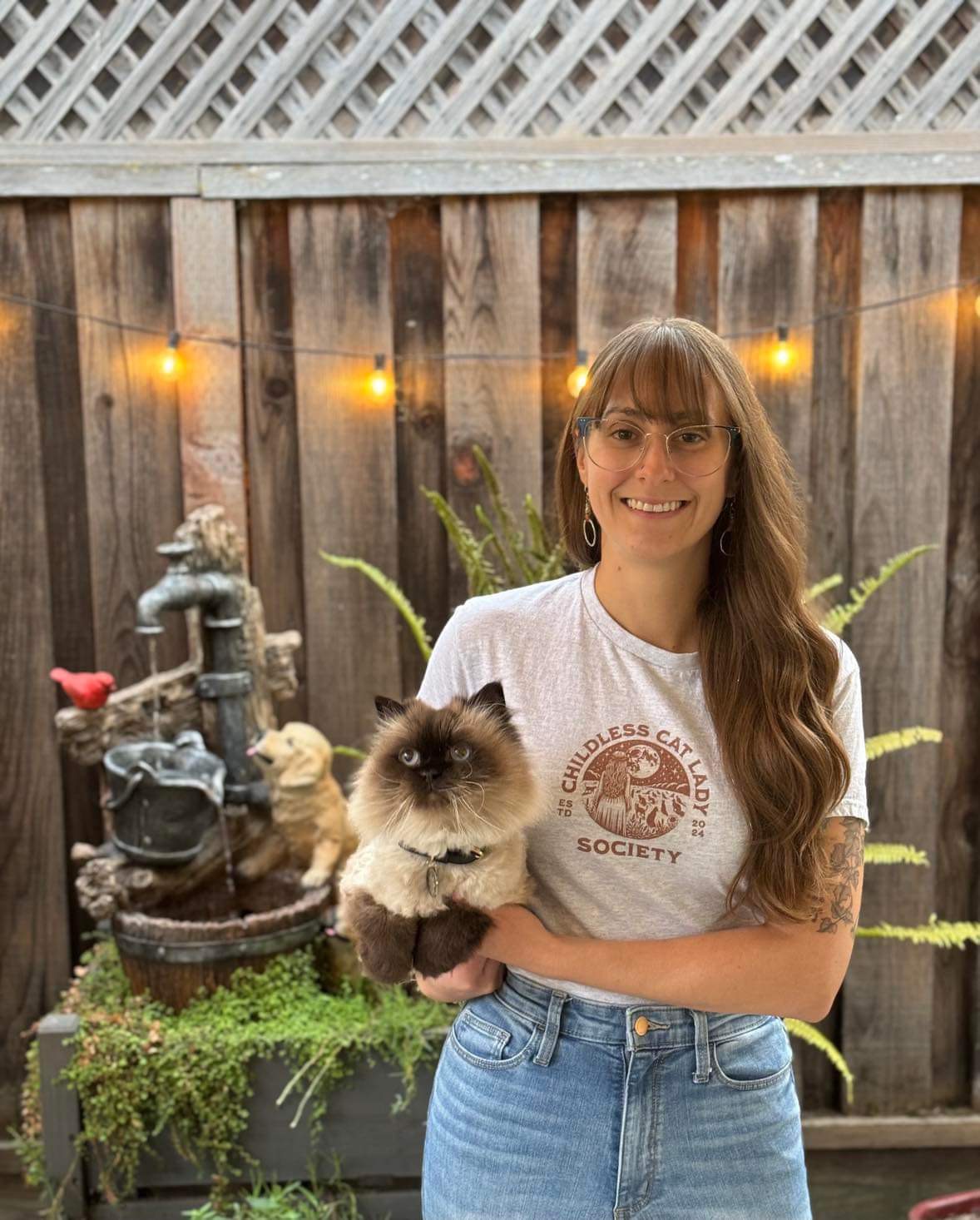
Functional Medicine Nurse Practitioner, CPCN
My name is Kara, and I'm a Functional Medicine Nurse Practitioner, a Certified Canine Nutritionist, and a Holistic Health Practitioner for both People and Pets. Most importantly, I'm a passionate advocate about natural health and nutrition for the entire family.
My goal is to educate and empower individuals rather than prescribe to them. Because holistic health isn't a prescription; it's a partnership between knowledge, understanding and action. Your actions are what steer the ship, and I'm here to be the breeze in your sails guiding you toward health and longevity.
I spent a decade working as a critical care Nurse Practitioner as well as being a 'normal' pet parent who fed kibble and never questioned the pet professionals. And over that decade, I watched as conventional therapies repeatedly failed my patients and my pets who were struggling with chronic illnesses. It made me wonder what I was missing and how I could do better to improve not just our lifespan but our healthspan as well. This catalyst sparked the creation of Raw Remedies Health, where we explore natural health for every member of the family, including the furry ones!