
 Apple Podcasts

 Spotify

 Castro

 RSS Feed

 Goodpods

 YouTube

 iHeartRadio
186. Specialized Cat Care & the Power of Lullabies: How Sound Therapy Helps Felines

Dr. Amaya Espindola founded FelVet after veterinary school when she found herself being called to specialize in helping cats.
Her love of singing has been a central part of her veterinary practice and she is brining her lullabies to the world so that you can share these vibrational frequencies with your cats too!
🐶 🐱 Nutrition & Holistic Health Consults: https://jessicalfisher.com/product-category/holistic-pet-health-nutrition/
💜 Follow Jessica on Instagram https://www.instagram.com/thepetparentingreset/
📩 Get email notifications for new episodes:
https://jessicalfisher.kartra.com/page/tpprnotify
0:00 Welcome back, pet parents. So today we are talking about sound again, which I find so fascinating. I actually was recently talking to Rita Hogan and we were discussing a little bit about the impact of classical music on us and our pets. And there's actually research in cancer and other things related to classical music and sound. And so I, I'm really excited to bring today's guest to you, Doctor Amaya Espindola with Felvet. And we are going to be talking a little bit about sound. But before we do, I want to welcome you and thank you so much for being here. Thank you for inviting me, it's a pleasure. Yeah, I well, and one of the things that I really like to do because I, it just doesn't happen very often, is kind of highlight cats.
0:52 I get so many people on here, we talk about dogs a lot and a lot of that translates to cats. But to really call out cat specific things is something that I do like to do as often as possible. I've had cats since literally the day I I left home at 8 of the day I turned 18. I've had my own cats at least one ever since. And as much as I love dogs, I'm just, I know like in my heart, my cats are like my babies. And again with the sound thing, that's just, it's so fascinating to me.
1:32 Again, I want to thank you so much for being here and bringing all of your expertise with you. But I would love to start out just by hearing a little bit about how you got started and veterinary medicine, and then we can kind of talk about how things have evolved since then. OK, so the story is it's actually a bit funny because I was afraid of cats. And and it's not, it's not just that I was afraid of cats. It was kind of a cultural thing because I've never been attacked or I was simply allergic. And all my family is. And simply we had this idea of, you know, cats are independent.
2:14 They don't want to be with you. They, they are not lovable or, you know, we were all dog people, right? So, and, and actually for my mother, the idea of having a pet was such a responsibility that she was like very cautious every time we asked for a pet, you know, I was like, yeah, we want a dog or we want something. And, and yeah, she was like, yeah, I know I'll be taking care of them. So she was a little bit say like resistant to have more pets. But I mean, when I started, I had a dog. I had one of my I think was the first teacher I had her, her name was Sophia. I was a mixed breed kind of shepherd and Husky dog. And she had an issue in her back and when she turned 14, before that, I think she never visit the vet. Those dogs that always eat the same food you do, you know, those we never fed even any ultra process. We didn't know anything about it. But yeah, the same food that we had. And I met the first vet there, one of the local vets we had. And I saw the way he was, you know, he was very open. He, he would open a book with you and, and discuss it. And I thought, this is amazing how how he works and how he does it.
3:29 But in the end, we could not find a solution for her. So we had, we had to euthanize and it was kind of a very bad experience in that because it was my first connection. I had the opportunity to learn about what she was going through. So I said to myself, I want to, you know, I want to make sure that, you know, we did the right thing, kind of. I liked animals, but at the same time I was very artistic and I liked music. So I was kind of a difficult decision. But in the end you turn out for the supposedly to be safe, safer career. No way. And you and you go for medicine. And I said, OK, I started there and up until the end of the career when I, when we had a Class, A specific class with a guest coming from Buenos Aires to talk about specifically about cats, I was not convinced to work working with cats. And after that class, I was like, OK, I'm afraid of the 50% of the of the animals I'll be treating. Right.
4:32 They have to do something about it. So well, I did, went to practice with him and suddenly things started to happen, things that were unexpected. I ended up practicing for John August in College Station in Texas A and I ended up in Spain working all my all my jobs were in feline hospitals. So it's kind of the doors open up for me. After I decided to face the fear of being with cats, the my allergies disappeared. I am the only thing my family that does does not have allergies anymore of cats. I was going to ask you about that. Like what did you do? Nothing. I just rubbed them because they had no other option. Then then I learned through psychosomatics that allergies come from a could be a conscious or unconscious fear. So there is a reaction to the from your body to something external, right?
5:25 And that can be conscious or unconscious. So then I learned. But when I faced the fear of cats and I stopped fear and fear in them, the allergies disappeared just like that. I didn't know at the time I simply robbed them like this. I was like, OK, I need to face this. I need to do it. And that's how I got into, you know, the feline world. And I became really passionate about. I had the chance to work in a cat cafe in Madrid for seven years, and I was the responsible bed. I had to deal with 30 cats at the same time. That was the greatest experience I had because you can learn a lot of things in books. You can learn about how to handle a cat. But when you have 30 cats were roaming around and you're rescuing 1, you have to bring it, You have to accommodate them.
6:12 You have to make sure that the people visiting the Cat Cafe is it's doing well. And all the cats, I got the chance to try holistic therapies with them. It was quite a really good moment as a, as a, as a development for me. That's, that's why it, it actually made the difference because up until then, I already had a degree of feline medicine. I had all those things. But until you face an aggressive cat, until you face introducing a new cat in the environment, I think you don't know anything. I mean, you can learn everything in books. So there was one thing I was doing at the time and it was singing. Because when I, when I'm nervous, I sing, that's my other, my other part, the musician was not never left alone.
7:00 I mean, I was studying veterinary school at school and then at the same time I was learning music and singing. So those things were always parallel when, when I, when I was nervous and I knew my energy was a bit, you know, when you find a scared, scared cat, you need to relax a lot. You need to calm down to, in order to try and communicate with them. So without again, without knowing what I was doing, now I know, but without knowing, I started singing and I start seeing the benefits from it. But at that time I didn't do anything with. I was just simply relaxing. Oh, I got it. Now I can vaccinate now I can, you know, that's all I thought about and that's how I started. How that's how my holistic career, everything felt that was born.
7:51 It was all through those experiences, It was all very. So it sounds like because one of the things that I like to talk to veterinarians about is their transition into holistic or integrative medicine, because most vet schools, at least I would imagine, I'm here in the US, but I would imagine around the world, there isn't a whole lot of emphasis, if any at all, on natural remedies, on natural treatments. And, you know, considering incorporating them into your practice. So, you know, I heard you say that when you were at the Cat Cafe, that's kind of where you were able to bring in some holistic options, which is absolutely amazing. I love that the you were given kind of that freedom to do that. And I'm just curious as to like what what some of the things were that you start.
8:45 I mean, you know, you were singing and that certainly is very holistic thing to do, but what were some of the things that you kind of dabbled in at first? Well, all as you say, old schools are old school, they don't they don't add anything. What I would say it's, I would consider a benefit studying in like a third world country like Argentina is that we learn to work without resources and in a way that gives you a holistic perspective of things. I remember working especially with horses that we need to, we needed to connect with the horse in order to get things done because we were taught, imagine if you don't have anyone around helping you out and you have to deal with a horse in the middle of the field that you have to deal with it, right?
9:34 So those things were very valuable for me. That's one of one of the things I really liked about my career, the good and the bad, because we also learned a lot of animal production things that were horrible for me. You know, the cow's how you know, the meat production, the milk, those those were really, really difficult for me. But in the sense of learning without resources, it was one thing that when I went to Texas A and I saw the benefits of, you know, having all the technology at your side. So I kind of was able to touch in different worlds. And this is already a thing that opens up your mind to, OK, if I go here, instead of trying to push what I know, I adapt to the next, OK, here we have certain technologies.
10:25 The day that fails, I know what to do. And when I, when I arrived to Spain, I met a vet that she was already how holistic she was doing traditional Chinese medicine. And at that time we, we became very close friends. And she was, she was simply just saying things like, you know, homeopathy works like this. And I remember my brain going, I understand. And, and this is vibration of that. I was when I met the people at the Cat Cafe, they were very open. They already knew about animal communication. So for me, it was like what, where am I? What am I doing? But again, I adapted into the environment of those people that, you know, they were doing a lot of things.
11:07 And to be honest, the first thing that we did was animal communication. My friend would come and do a little bit of homeopathy. She introduced me to cranial sacral. Well, she did acupuncture. I, I never, I never digged into traditional Chinese medicine. I don't think I I'm aligned to that, but I love certain facts that traditional Chinese medicine has, which I use, such as the heat and all those things. But you know, kind of my mind was like bubbling of new things. And I had 30 cats and they were open for me to try everything I wanted. So that's where I learned so far my pregnancy talent on Touch Backflowers, others, Essence Music. I was able to try everything there because they were open to it.
11:57 And actually the owner, she was really good communicating. So when I learned I was able to tap into that as well and practice with her, you know, it was, it was as I said, it was really good experience that changed my perspective. And also there I met someone that came as a commercial. She was selling a wet food for cats and she gave me a book of raw diet and she said I sell this because it's the closest thing to raw because it was a really good brand of I don't remember the name now. And and she said, but you should read to and you should read Ian Billinger's and I and I said, OK, I will when when I started reading, I was like, this has so much that. Bring it.
12:43 Like, yes, yes, that's How I Met the raw feeding veteran society. That's how you know, so everything started to be aligned in that job and then the pandemic came that closed down and I, I said, OK, I have enough with all the things I've learned during the seven-year period. Now it's time to develop velvet and start doing it on my own, right. And, and that's how that's how I I got into things. And then after that I started perfection in the things that I was more aligned to the therapies, which is so pharmacognacy is one of my favourites because it changed the way I see animals. As a vet, you are taught to interpret the symptoms and make decisions for them.
13:31 But when you are faced with two pharmacognacy and you allowed them to tell you how they feel, you add that with a little bit of communication or you add that with a bit of talent and touch, and you allow them to be the owners of their own bodies. Like we should be doing as well with our own health. That changed the perspective of how I treat animals completely. It was not only as a zoo farmer cognosy thing. It was, OK, I'm going to give you this antibiotic. If the cat doesn't want to take it, I have to think, rethink the whole thing. Maybe I'm making a mistake, you know? And that was really powerful for me. There are a lot of things in there I want to touch on. I definitely want to talk a little bit more about C pharma cognosy and then the idea of when you say, you know, I can prescribe an antibiotic to a cat, but if they don't want to take it, then what do we do?
14:23 Right? Like so the idea of working with cats is, in my opinion, very different from working with dogs. But before we jump into that, I kind of wanted go back a minute to what you said about being more open to holistic natural options in a third world country because you don't have the resources. That hit me, that really touched me when you said that because living in the United States, I've always, I mean, I've traveled a little bit outside of the country, but not a whole lot. And so somebody who has grown up here, who has let's just basically say never left, I know like in our culture, in our society today especially like we really, I think things are starting to change a little bit in our climate. But we really for so long have looked at people who try to do things the natural way, who want to eat right, take care of their body.
15:25 Like they, these people have really been looked at as outsiders, as almost bougie because like, oh, you're so extra for wanting to, you know, like take care of yourself in that way. And I know that, like, to me that just sounds so weird. But also we live and, and I don't know where it is where you are, but here when we want to buy food that isn't sprayed with glyphosate, when we want to buy meat that was raised regeneratively, we pay dearly for it. Like you can spend a few dollars and have a meal and it is full of herbicides and pesticides. It is full of if you get real animal product in it, which you may not, but if you do, that animal did not eat a species appropriate, like it's also inflammatory, full of chemicals.
16:16 And if you want to actually care for your body and return to nature as much as possible and eat right and all of it like you do, you spend an arm and a leg. And so it's really looked at, even though like, like you said it in in another country, especially like a third world country, you don't have the resources. So you do look to nature. And so like there's just this huge. It's, it's just so it's like 180° to me, but I get it and I see it. But I wanted to acknowledge that because I feel like so many people listening probably feel that way too. And I'm not sure if it's like that, like what I described. I'm not sure if it's like that where you are, but it's just it's, it's like you're looked at as an oddball for wanting to care for yourself.
17:07 Well, for example, one of the things that shook me when I moved to Spain was that we have in Argentina, we have very good quality what we used to because you know, we tend to, we tried to get into the first world country things that we do, we start doing things wrong. Extensive meat protection was very common. So you know, it was fairly common to see cows roaming around and that's what now it's all full of soy, which that's the economic issue that now we have. But before you, you could get without having to buy organic or grass fed, grass fed was something common, right? So it was, it was something that you could buy in any, any butcher, butcher store.
17:51 And but then, you know, now, now it's changing and now it's not as good as you could find. Spain and Europe in general, I would say we have really, well, not really good about better, better organizations. You can find for example here in Mallorca, there is a consumers group so you can fight find local products. You pay a fortune for them unless you know you find buy directly to the person. But once it you have the supermarket in between or something else, you're, you're paying a lot of money for it. For example, olive oil, which is one of the most common things in Spain, it's really expensive. Wow, it is it is something that because in order to find a good olive oil that is extra virgin with, you know, first extrusion and you know, without any heat without any any additives or anything, you pay that a lot of money for it. They call it the the golden, the golden liquid or something like that because how much the price increase. So we, we still have those issues. But it's true.
18:59 I have my sister living in Houston and, and family all in Texas and they, they struggle a lot to find and they pay much more money for organic foods or it's difficult to find. Actually, my, my uncle has his own garden because he likes to look into details and he's like an odd, but like you say, but it's because of this, it's difficult to, to find well in animal feed. It's well, it's bought in Argentina as well. The the cable that you find. Mostly it's is the big brands. And in Europe we have the alternative of the grain free. There is a lot of grain free or better or premium or anything. But still it's all ultra process. But when I look at the some of the products in the US, I really need to like look into very deep, very deep, very thoroughly to find, to make sure that that food is good. And this is this is something that concerns me a lot. Yeah, it me too, believe me.
20:01 Oh my goodness. Well, I just, I think that we definitely see our pets are suffering there. There's no ifs, ands or buts about it. Like our pets are suffering and we are too. We just. I think we see it quicker in our pets because they have a shorter lifespan, they're smaller, they can't handle the amount of toxins that we can. Like, it's, there's so much to it. But yeah, I, I kind of want to bring things back around to cats a little bit because they are, and I know I've talked about this so many times on the podcast, they are the most toxic animals on the planet, I believe is the correct way of saying it.
20:42 And I think that there are a lot of reasons for that, especially here in the US. They pretty much don't ever get to go outside. So they're not touching healthy soil. They're not off gassing or so like so much smaller than us or even our dogs. And their paw pads absorb like everything. So whatever is in that cat litter, just because, you know, cats do ingest it because they clean themselves, but they're also getting all of like if it's scented or fragranced or whatever, like it's all being absorbed in their paw pads. Whatever chemicals we're using to clean our homes and they're walking on those surfaces. There's so much in our environment that is so detrimental to them before we even start talking about food or vaccines or, you know, neurotoxic chemicals that we put on them to kill fleas and like whatever we're doing, they are some of the most toxic animals on the planet. Maybe they talk most toxic animals on the planet. And it is so sad because to me, and I've I've talked about this with animal communicators that I've had on in the past. I believe that our cats or our cats and our dogs, I think are both absolutely incredible, wonderful, wonderful creatures that I think humans need.
22:00 We we need them in our lives. I truly believe that, but in a different way. And I think cats are very spiritual creatures. I think cats protect us in more spiritual levels. And I do wonder so much about, I know for us here in the States, we have fluoride in our water and that calcifies the pineal gland. We are not connected to nature. I think that's one of the biggest reasons why we're not like we don't seek connection to nature anymore. And I just wonder, like, are we doing the same things to our cats when I I feel like they're supposed to be such spiritual creature. What do you think about that? Well, I do agree there are actually I was trying to find since there is a lot of local producers here are artisans that work with wool and wool is one of the most natural fit products.
22:51 And actually it's it's not used, it's not properly. They use it, they trash it, they don't use it. Wow. And it's free and you have to. I've been, that's why I started doing toys for cats with wool because wool is one of the most natural products you can get. Before you treat it, of course you has to be plain and cool. But not only we have the toxins of the cleaning products that we have or the fabrics which our couches are made, because most couches have that. It's a product they put to avoid ignition. Yeah, there's like fire retardants, but there's also like stain guards.
23:34 And so, yeah, they do a lot of different things. They do and most of them are plastic or contain a lot of plastic, so that's one thing. Then you have all the sense that when I, when I started having cats and I decided to remove and use only natural scents and things like that, everything is scented. Once you realize that when you, when you're going to wash your, your clothes, when you're going to do any, everything is over. My, my, my sense of smell is so, so sensitive now because I removed all those things. Then you have the electricity, the radiation where the water, you know where or the, the, the, the water runs around your house, the electricity and the radiation from the Wi-Fi.
24:21 So there's no scape. I mean, there is a lot even if you if they want to get the sunlight in through the windows, they don't get the benefit from the real sunlight that they would get outside. So, so cats are a very powerful machine, as you say. I do also believe they protect the spiritual world and as dogs are more physical and they they they, they share with you like a journey of I get more physical journey of you being connected to her that they take you outside. I think cats take you inwards. And and if you see how we evolved with cats, they were always a symbolic thing. You know, you loved it, you hated it. They were associated with all religious things. They were associated with symbolism, symbol of wealth as well with women.
25:14 But on the other hand, dogs allowed us to survive because we were able to sit down, cultivate and have groups and tribes and because you we had the protection of dogs. So it's a completely different evolution. So it's understandable as well. All the myths surrounding cats. It is normal to have culturally develop these fears of this respect because, you know, it's a symbol. You never got the chance to actually connect with them. And I can tell, I can see that it's fearful because they they push you to look inwards and not, not all people want to do that. So it's really hard.
25:57 And when you when you start doing that and you realize that your home is a hazard. Yeah, everywhere. Very much so. It's very difficult because you cannot sometimes you were renting, you cannot do a sanctuary everywhere you go or you cannot change and vibrate really high frequencies to to get it done. So it's really difficult. I used to believe that cats were, well, indoor. And now, now I don't what are we doing or whether we move to the countryside and leave it connected to nature. And then we have cats. And that would be the perfect life for me, for them. But at the same time, if you see the situation, at least here in, in Spain, you will see that there's a lot of predators.
26:45 You know, we not only ruin the indoor life with all the technologies and all the things we do, but outside the outside world is actually very dangerous because there are no ecosystems, you know, And so we blame them to be the very, very high. How do you say this? They kill the the phone around they, they, and for fun, you know. Sometimes they kill our birds. Yeah, people don't like that they kill the birds. But, and I think, yeah, I think other wildlife is honestly the least of our concerns when it comes to cats. Like, yes, there are wolves, there are coyotes, there are mountain lions.
27:27 There are like, there are certainly risks in the world for cats in general, but I think humans are the biggest threat to cats living outside with, you know, our neighborhoods, with traffic, with. With the kids playing with stones and throwing at the cats. Yeah, like it's just and and then we don't want them living behind shopping center, you know, I mean, there's, I think humans are the biggest, biggest cats living outdoors. But at the same time, since we, we destroyed the ecosystem and we don't have that variety that it's needed, we, we bring more diseases.
28:08 So if they, if a cat feeds on, on a migratory bird or if they have, you know, a rat, even you don't know if somebody else actually put a poison on that, on that rat. So there are there are many, many risks outside that. Of course, there are a whole human caused, but there are some risks because of it. And when they say that they are predators and they kill a lot of birds a year, they are forgetting that indoor there's no excitement, there's not the right food, there is no nothing. Because if you see a lot of because well, I have in front of my house, I have like a space with like 10 cats and they don't they don't take more than they need. They use, they know how to use the enough resources that they need and that's it.
28:59 And they reproduce accordingly to the resources that they have. We're trying to control because we make, we are making it wrong. We are making the wrong outside and inside and our solutions. I do believe that this is the only solution we have at the moment. Like for example, the capture, neutering and release, those are solutions for me are temporary solutions. We have this issue. We destroyed ecosystems. We have to acknowledge that we have this solution at the moment, but there is we had to have another plan for the future, let's say for 20 years.
29:41 I don't it doesn't matter. But we need to look into other ways to restore those ecosystems so we don't have to turn into these things. So I believe cats have like this. They are misinterpret, they are not understood. They and we tend to blame loads of things on them. And yes, they are the most toxic. And yeah, poor cats. I know, I know. Well, and to go back to what you were talking about, it sounds like a better way to treat cats because they are, in my opinion, and I know Jay and Adrian always, every time I say this, they're like, how dare you.
30:22 But I I say it because I believe it's true. And I feel like it is more difficult to raise a cat than a dog. And they both have their challenges, But for a cat, I just feel like they it, it's trying to force anything on them is so much more difficult. So a dog you can hide a pill and you know, a piece of meat or syringe something into their mouths. You can, you know, they'll sit there and let you trim their nails even if they don't like it. Like you can work around things with dogs, with cats, you really they, they need to trust you. And even when they do, there's not a good chance you're going to get cooperation from them for anything. So the idea I would like for you to explain a little bit more about what Sue Pharmacognosy is and how you utilize that. OK, well I'm going to.
31:22 I'm going to agree with Jason because every time I have to treat a dog because sometimes I get friends that ask me questions or for me they are not that easy. I experienced, actually the best experience I had, it was with pit bulls that, you know, we surprised, but they're very good patients. They're they're amazing ones. Yeah. And with cats, what I learned is, is that what I said before about the energy that you have? And it's not about, of course, dogs have this service motivation that the, you know, they, they always going to try to please you. And cats don't, they don't have that. So that is why you may find it easier to deal with them. But there is a way with cats, if you not only they learn to trust you, but you learn to control yourself and forget about expectations, what they actually want from you and what makes them feel safe.
32:32 It's you being 100% in the present. That's how you manage. Because I my cat, not the one that's probably going to walk away in a moment, but she's right here. My other cat was aggressive. There was a reactive and a very aggressive. And yes, I started with a towel going around and throwing, trying to trim the nails like that. But with work, with a lot of work nowadays, I call him with a treat. I cut. So I cut one hand and then he goes and I said OK. We stop and then I give him a treat. I distract him and I said OK. But I'm not.
33:13 I'm not even trying to please him at all. I'm just trying him to forget, calm down, just the information. Nothing happened. I'm alive, everything is fine. And then I go back. I grab him and say OK the other hand. Come on. And then again. And I did that with pills. I can syringe, I can give anything. Every time he tries, he tries to avoid, he runs away a little bit. And then he said, OK, she's going to get me. Right. Yeah. But all of this came with a lot of work, and when I'm thinking about it, I'm not already thinking that it's going to be difficult.
33:56 I've learned to be totally in the present. Totally. I'm not thinking about anything else that you're going to take this and if you don't, then if you don't, I'll think about it, why you didn't want this. But at that time I'm just thinking on that and that that's what made it made it easier for me. Talking about the pharmacognacy, which is the the ability animals have to self medicate. You can offer them. That's a really good way to offer nature for indoor cats. You can allow them to release certain things. There she goes. You allow them to to touch into those medicines and and tell you how they are feeling emotionally, physically, if there is something going on, you know, because even even they can choose things that they are potentially toxic for them. But if they are choosing them, it's something in there that they need.
34:56 Yeah, most people would would get confused and say, oh, yeah, but my cat eats any plant, right? And he goes around and he's eating this plant and that planted. He's not selecting anything. So when I started asking about what plants do they have? And this, this happened to me once they have a bonsai of a it's a plan I can remember now. It's, it's a plan used for arthritis. It's a tree. It's a tree that it's used for arthritis. And she told me, she told me that, that what the bonsai was. And I said to, to her, well, we need to look into arthritis plans, plans for treating arthritis.
35:39 And he selected three of them. Wow. So once we started treating the arthritis, he stopped eating the bonsai. Wow. I saw this for example, cats with digestive issues that you will see that they will take plastic or they will, they will choose to chew on well most plastic have a little bit of potato starch, you know, so sometimes it's not what they they are looking for. But some other cats will eat bread commercial and very ultra processed bread. So if you have that, you may need to look into the digestive system. There's something going on because that's not normal for them.
36:21 And when you start eating them, they will stop eating the bread and so on. So you can, you can just simply go and say, OK, I can use valerian root catnip or any normal herbs around. You can use cat gardens. There are around some people that do this, you can individualize and do a session for them. I used to do that for behavioral problems. And most of the times I, I was surprised of the result. I, I was expected, you know, you kind of put your expectation and said this is the problem. So I'm going to select this and suddenly they can't choose something completely different, right? So it's kind of a really nice experience. You allowed them to release a little bit to do the grounding that they are not allowed to do because they live indoor. Cats that have access to the outside usually won't select as much.
37:14 Sometimes you need to tap into essential oils because they already have the dry herbs or the plants or anything outside. So it's not the same experience for all. And if you've tried already a garden, you bought it and then the cat's not selecting anything, then even that is an answer of why it's not selecting. It's not selecting because it's not sending anything. He's doesn't doesn't want to. He's anxious of other things. Are you doing it with another cat? So everything, once you put nature for them, if they are not selecting things, they are disconnected. So you need. So everything you do with the pharmacognosy allows you to have a broader spectrum of what what the problems might be. And This is why I loved it so much. It's so fascinating to me and I, I never implemented it until the first time I spoke with Rita Hogan, who was a canine herbalist.
38:15 And it really is so incredibly interesting. And I did notice what you said about being disconnected, like that's kind of how I felt my dog was. I feel like my cats are better at selecting and I and I and I felt like my dog was less so. So we've been working on that. But it is very, very interesting. But I want to switch gears a little bit and go back to the beginning where we were talking about sound, because I know you've mentioned that music is your other passion. Your cat behind you is just adorable. Your other passion is music. And I know that you have put out some lullabies that people can purchase that are specifically created for cats. And I would just love to hear a little bit about how you use sound therapy in your practice and how you created what these lullabies are for.
39:10 OK, this is something very new. Actually. They are not yet recorded. We are, I have three of them and but my goal is to teach, to teach people how to use their voice in a way that it's relaxing for, for their cats. And the best way to do it is through lullabies because it's something that it's already in our systems. We and when I say lullaby, it doesn't have to be a song to rest or sleep or you know, it's not that the point. The point of lullabies is that it connects you to your yourself when you were a baby and your mother will sing to you in a repetitive way in a certain tone and it had a frequency and it becomes kind of a language, a universal language that can be transmitted to a baby. Does it that it hasn't developed language yet, but still the baby connects to it.
40:09 So it doesn't make any difference if that baby is a cat. Actually, you can do it with dogs as well. So the important thing is how you do it. What I'm doing now is to record this three lullaby, which contains certain words that empower you because you are the only one who is going to understand. But the idea is for you to connect with those words, to connect repeatedly and create that bond with your cat by using them. It's kind of like a mantra, but for me, mantras are very it's, it's part of, I respect them so much.
40:49 I believe that they are made for specific purposes. So if you are very aligned to that and you like to sing mantras, great that you can use mantras because it's the same process. But I think for everybody, that's my goal, that every single cat or dog parent, they should tap into what they listen as as a kid, as a baby, to connect now with their pets. And there's a lot of scientific research on how lullabies should be, how they create this safe space, how the nervous system develops. And this is aligned to immune immunity.
41:30 And it helps to relax, it helps to adapt to environment much better. So imagine if you rescue cats, that will be something really good to do because you're going to become the mother, right? So instead of becoming those worried mothers, mothers that we, we are, you know, like, are you doing this? I always, and I am one of those because when I work, when I work with cats and I was, you know, you get desperate when things go wrong. So if you get into this, it's a very simple exercise. So what I'm offering at the moment is teach you how to use your voice properly, how to connect and how to create that space. So when my lullabies are finally out, you can get and sing them or you can sing anything in your own native language that you remember, right?
42:24 That's another option. But the important thing is how to be present and how to do it. And that's that's what I'm teaching because that's what I've learned as a singer, how to how to do that, how to breathe properly. And it's going to also improve your life because if you speak better, if you you're heard because your voice is out there, you're going to have better relationships as well. This is kind of a benefit to all of us. And that's one of the things then sound therapy, as you say, before the classical music, classical music has a lot of effects, positive effects of and and it's and if you look at the had the special, how do you call the music sheet, right?
43:09 If you look at the classical music, it's not jazz. It doesn't have all the craziness that we developed over the modern music. It's very specific and it contains certain things are accepted and some others that don't that are not. So the same structure applies. But then there was David Day that decided to add to that classical music a little bit of the sounds that the animal is accustomed to. So for example, he developed music for cats. He's a cellist and he he did music for cats where he added the the suckling, the purring and everything that a baby hears when they are near the mother and added it to classical music. And he got much better results from it. So he said he started with this new concept of species appropriate music.
44:07 Wow. Yeah. And so I use that as well. So if I want to combine it. And then you have bioacoustics as well, which is the sound of nature. When you walk around in nature, you have certain sounds, maybe you are not aware of them, but those sounds are working on you and then you feel refreshed, you feel better. There is one, at least I know one in Spain doing it. It's called Sound and Life. And she does apply bioacoustics, which she goes around the world, records things in a specific time and place. She measures the frequencies of it and tells you what? What are they good for? I had seen, oh, I wish I could find, I haven't seen it in a while because you know how social media algorithms go, they're always changing.
44:55 But I used to see, I think it was on TikTok. There was somebody, I'm sure there are more, but there was somebody. They have like device where they click one, They're two different clips that you can clip to like a plant or something and then you can hear the frequency of that plant and how different they all are. It's amazing. It's also very calming and soothing and I'm like, this is just incredible. Yeah, and they play with with fruits, they touch with fruits and they play music with it. And yeah, those are a bit. The only problem with those is that the sound they create is a. It's too meaty. So it's a sound that is a bit artificial, though it's a frequency and and it's all that.
45:42 It's tapping into different electric fields around. So it creates a sound from it, but it's a bit artificial. The best is to go to nature and measure those frequencies. Those are the best you can use. Actually, later this couple of weeks, I've been using one of the sounds just because I had trouble sleeping for a few days and I decided to put the sounds and not only slept better, a lot better, but I had like this feeling this. I woke up very well, you know, like not only rested but also happy, you know, content and and I looked at because I chose it just, you know, before I go to sleep, I have like several sounds from her and I chose one that it's ocean. It's an ocean in a specific place. I don't remember exactly where, but she has different water sounds and you have to play them very in a very low volume. Some of them are to be applied topically for, for example, arthritis or pain.
46:45 You have others because sometimes you listen to certain sounds and you feel uncomfortable and if that you have to remove it. So it has a really powerful effect for you. And then she has a lot. And now I'm trying to help her to translate things because I want her to reach first because she has a very interesting work. So my participation in all this sound therapy and all the things I've been trying, I've been trying also singing and I went to gong bounced baths, but every time I tried to use those, the cats will simply disappear. They're like, no, that's that's wrong. That's just wrong. We're not doing that. So I know some people use it and they have really good, maybe they have different than they've tried. I just simply my experiments with singing bowls and all this harmonically developed instruments. I've seen cats sometimes comfortable, sometimes not that for me, the voice is one of the things I can control and I know and I understand and I know the benefit of it because my personal growth was around that.
47:52 So I'm actually also learned light language and soul song, which is kind of the the song that you meditate and you connect and you're your challenge your own soul to produce a sound. And all of those things allow you to connect deeper and deeper. I can tell you if you learn how to use your voice, you can communicate with the cats and dogs. I can tell more about cats, but any other species? Much much better. It really is amazing. I was reminded as you were talking about it earlier, there's many, I'm sure channels on YouTube, but there's one in particular that my husband watches and this guy goes out into a crowded area, a public area, and plays the guitar and has a sign that says sing with me for free.
48:35 And he always said people come up and they choose the song and he plays the guitar and they sing and he always asks them when they're done with the song. How do you feel now that you've sung? And everybody 100% of the time across the board says I feel better or I feel amazing or like it really. It does something inside of us that I don't know if we even really completely understand it, but it definitely changes us for the better. And the words we use. Sometimes you don't understand the language you're singing, but you understand the emotion behind it and suddenly you connect to it. There is a lot of power in in voice.
49:16 If you're listening out there and you think, oh, but I Can't Sing. I'm like, if I sing, you know, because that's the usual I get. I would say everybody can sing. All the tribes, all, you know, around the world, all the tribes used to sing without any judgment. The problem is the judgment we created in our minds about it. And if you cannot get the note right, it's because you're overthinking it. That's the only thing. If you connect with the breathing, if you simply try, you know, not trying to get the notes, simply go around sing without thinking about it, you're going to get it right. So it's not impossible and the idea of singing right better or it's very commercial. It's not a good voice.
50:04 I've heard many good voices around. They're not commercial. They are not going to sell a CD ever in their lives. And some others that have that, you know, that pop and thing that it's very popular. They're going to sell CDs and they're, well, CDs. Not anymore. But it's a lot of songs and and it's because of it's popular, it's not necessarily the best voice. So we need to make a distinguished and start and stop judging about it. I think that's a good place to end when not judging yourself and just feeling into it. And yeah, because I think we could all use that in our lives to just free ourselves from all the judgment. I think we place so much more on ourselves than the outside world ever would place on us.
50:59 So where can people find you can find Felvet? Where can they go to like learn more and follow you and all the things? They will find me on felvet.co.uk Felvet for cats in most social media. And if you tap on the Hard Cut and Soul podcast, it's fairly new. The Spanish one is much more advanced, but hard cut and soul. I will start again on February because I'm now in the holiday time, but I'm, I'm going to start again in February. And that's, those are the places. And if you if you speak Spanish, then just stop my name and you'll find the same website, misbindle.com and you'll find everything in Spanish as well.
51:43 Awesome. And all of that will be in the show notes for you guys. So I want to thank you again so much for coming on and sharing your story and helping us learn a little bit more about what you do and how it can improve the lives of our pets. So thank you so much. Thank you for allowing me to share everything too. So thank you too. Awesome. You guys have a wonderful rest of your day. Please give your pets some extra love from me and Doctor Amaya this week and I will talk to you next week. What?
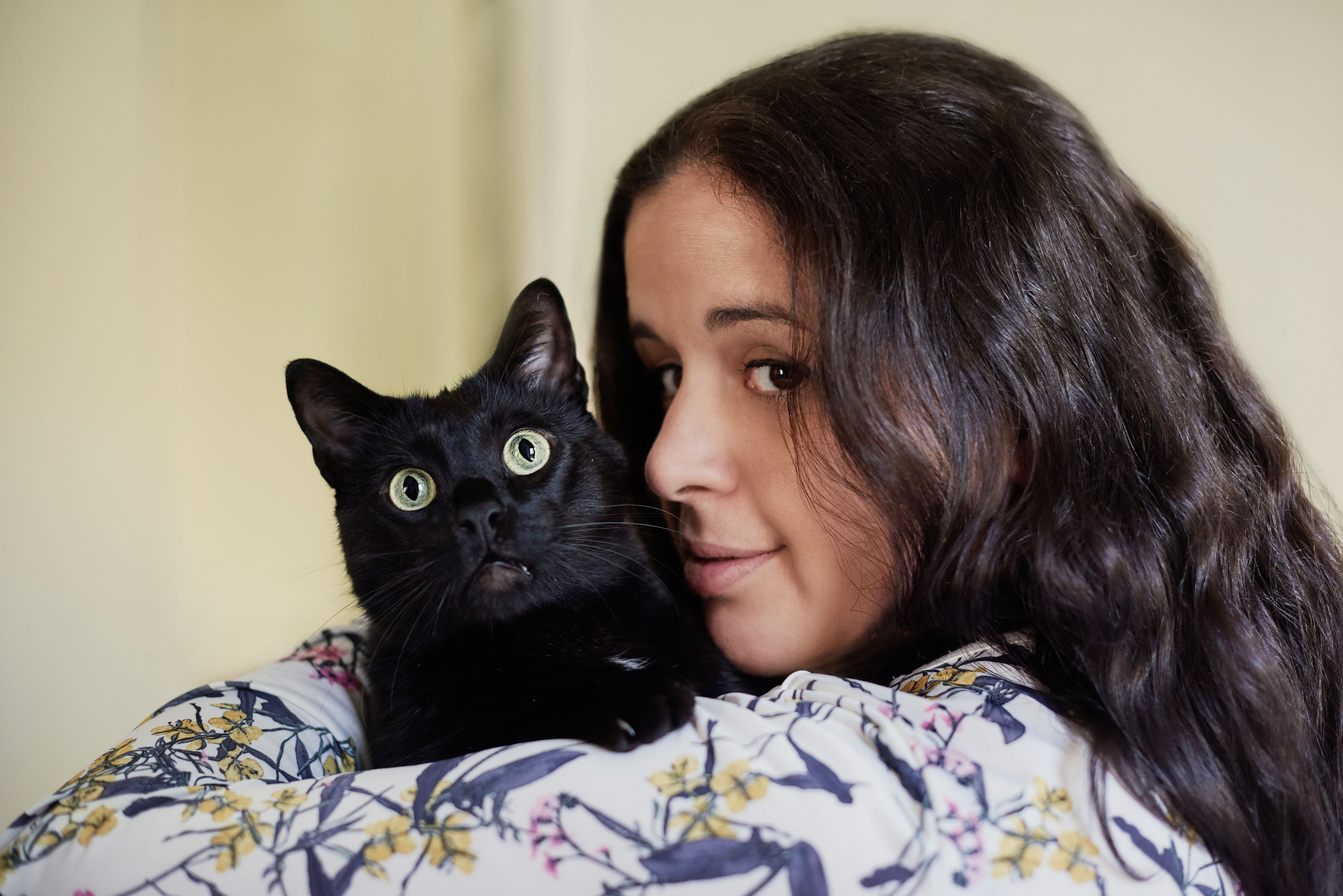
Holistic Cat Vet & Singer
Amaya Espíndola is a holistic veterinarian, feline specialist, and professional singer with over 15 years of experience. She combines her expertise in psicosomatic medicine, bioenergetics, and natural therapies with the healing power of music to create a unique approach to animal well-being. As the president of the Raw Feeding Veterinary Society, Amaya is passionate about education and fostering deeper human-animal connections. Her journey bridges science, art, and compassion, inspiring pet guardians to explore health and harmony beyond the physical.