
 Apple Podcasts

 Spotify

 Castro

 RSS Feed

 Goodpods

 YouTube

 iHeartRadio
189. Before You Spay or Neuter Your Dog, LISTEN TO THIS! (Vet Warning)

Dr. Ruth Roberts has been educating veterinarians and holistic pet health coaches on the risks associated with spaying and neutering dogs. While most of us have been taught to think that it's the most humane thing to do for over population, the reality of removing hormone producing organs is incredibly detrimental, especially so early in life.
Before you choose to spay or neuter your next dog, please take a moment to listen to this episode!
🐶 🐱 Nutrition & Holistic Health Consults: https://jessicalfisher.com/product-category/holistic-pet-health-nutrition/
💜 Follow Jessica on Instagram https://www.instagram.com/thepetparentingreset/
📩 Get email notifications for new episodes:
https://jessicalfisher.kartra.com/page/tpprnotify
0:01 Welcome back, pet parent. I am so excited to bring this guest back on the podcast for you. It has been a while for you, not for me. I fortunately get to talk to her quite regularly, which is amazing. Doctor Ruth Roberts is back with us today and we're going to be talking about so many things. Buckle up. Thank you so much for being here with us, Doctor Ruth. It is my pleasure, this will be a lot of fun. Yeah, so I have learned so many things from you and there's so many more things to learn, but one of the things that I don't want to say I had the hardest time with, I definitely don't. I try to keep a very open mind, even with things that like I have a lot of resistance in my body too. I try to keep an open mind.
0:47 But coming from the rescue world, I definitely was. Well, I was indoctrinated to so many things, but one of the things it was probably one of the last things that I kind of have dropped is this idea of spaying and neutering every animal that comes through a rescue or I mean, even breeders. I know I like breeders. I feel like mostly do it just because they don't want you profiting off of their bloodline. But most people are getting their animals from shelters and rescues at this point. And there's kind of a a mandatory when you adopt this animal, they're going to be spayed or neutered. And while there's understanding and what they're doing, because of how hectic and crazy their lives are and just how in turmoil they are with the work that they do, it can actually be pretty detrimental. So I would love for you to tell us a little bit about what you have found in researching so many things that have been going wrong throughout your career in dogs, dogs and cats, but I think more so in dogs and how you have related this back to early spay and neuter.
1:55 And I think that like there's a lot of codicils around what I'm about to say and the one I'm going to put out there that is the the truth is that it is a big problem. Early spay and neutering is a massive problem. However, I don't want to go back to the way things were when I started practice in 1990. And we don't have a good set of answers for how to handle this yet. Having said that, and we can go back to some of that stuff a little bit later, what I realized, so in 1990, I'm in rural South Carolina as a young veterinarian, 90% of the dogs live outside, often chained, sometimes with shade.
2:35 I mean, just all of the things that's bad about how pets get treated, right? But what I was treating then were hit by car cases, broken legs being sewn up from dog fights, you know, so blunt trauma and, you know, trauma from, from pet fights. I mean, dog fights mostly and cat fights and cat abscesses and all of that. And it was like cancer. So cool. This will be fun. Which sounds bananas, right? But because it was challenging mentally to really have to shift gears and to see a dog or cat come in with cancer was really rare, you know, and so was Cushing's disease, and so was Addison's disease and kidney failure and yadda, yadda, yadda, yadda. So one of the things I'd like to help folks remember when I came out of Veteransville in 1990, the average lifespan of a dog was eight years.
3:32 OK. Because it like in undeveloped countries, they're dying of trauma, right? They're dying of being hit by a car, of being in an abse fight, you know, things like that. Yes, there was pyometras, Yes, there was breast cancer. Rarely there was prostate cancer. Rarely there was benign prostatic hyperplasia and prostatic abscesses. So all of the diseases we associate with animals being intact in mid to late 90s. So we're at eight years in 1990, as in the average survival time for a dog, or median lifespan, half below, half above. In 2000, we'd gotten to 12.
4:12 Whoo Hoo, we're doing good stuff. And what had started happening? We started talking about spaying and neutering, keeping your dog inside, keeping it protected from the heat, the humidity, the fleas, the ticks, the everything. And people had started bringing their pets inside and making them part of the family. So now the dog was inside, but it still couldn't get on the sofa and definitely not on the bed. And they were still spending a lot of time outside. And I would say at that point, we're like 5050 spayed and neutered versus intact. So now we're making progress. We've protected them from the trauma stuff that happened early in life. We've gotten them from 8:00 to 12:00, which is amazing, right? That's a 30% increase in their lifespan in less than a decade. That's insanity.
5:02 I mean, we should love, you know, we can figure that out that that's the Holy Grail. And all we had done was really, we were spaying a neutering war, but we were also protecting them more and making them more of an integral part of our family. And then Fast forward to 2000 and I went from being able to take a hamangiosarcoma literally the size of a basketball out of a dog's abdomen, throw it in the trash can, clean up the abdomen, soap the dog. The dog never looked back. Spleen was gone. They did OK. 2 They're dying in six months from hamangiosarcoma. And what had happened? We developed this mantra of spaying and neutering by 6 months of age at that point in that we took it even younger.
5:50 And we're starting to see radical changes in the biology of cancer, in the number of cases of Cushing's disease, you know, atopy of allergies, of all of these things that we are fighting tooth and nail right now. And I'm thinking what has happened? And so this is the only thing I could find, but I didn't there was nothing to say. Yep, this is part of the problem. Until 2013 when the first UC Davis paper came out about golden retrievers and there they showed the link in their in their medical records. If the male dog, male golden retriever was intact, the incidence of cranial Croatian rupture was 0, and the incidence of other cancers were really, really lower versus dogs that had been neutered. So this was the first research paper to make a correlation, not a causation, a correlation between spaying and neutering and chronic disease.
6:54 And what they looked at in that first paper was bone and joint issues and cancers. And they went on to expand that research into endocrine diseases. And you know, the the next paper was golden retrievers and Labradors. And while the incidence of these diseases was still less in Labradors, it was much a marked difference between intact and spayed and neutered dogs there for that breed. So that was the first like finally, and, you know, we started and this week this, the University of Tennessee test for atypical Cushings, which is basically estrogen dominance, had come out.
7:35 And I had several conversations with endocrinologists at UT at that time. And they're like, yeah. And yeah, we probably need to figure out something about hormone replacement. But, you know, that's 2013. And here we are, 11 years later with nothing, nothing different. Wow. I mean, I have to say that like growing up, all of our pets were outdoors and that bothered me so much, so much So they like as a teenager, I was, there was no way I was going to have a pet. Like when I grew up and moved out, like I couldn't, I just couldn't. My heart was like, no, there's something wrong here. So having animals like in the home with me to me feels like that's huge. I mean, I wouldn't want to go back. But also at the same time, understanding their need for outdoor time, for enrichment, for being outside and still doing my best to protect them.
8:33 Like that's, I think there, there's a balance there that we need to strive for at least. And but I don't want to go back. I don't really don't want to go back, no. No, because that was bad. I mean, you know, kind of how heartbreaking this beautiful 10 month old puppy that, you know, got out because there's a female dog down the street got hit by a car and killed. No, we don't want that. Yeah, yeah, you're right. There's a balance somewhere. There has to be a balance somewhere and whether that certainly I'm sure pharmaceutical companies would love to find some sort of balance in a prescription or a hormone replacement, which I'm not knocking, but it takes time to get something from like human medicine into into veterinary medicine. I understand, yeah.
9:22 This is really taking time. You know, I think that there is a company that's developing a test to help veterinarians understand when a dog has reached sexual maturity, which will prevent all of the side effects, but it will reduce them significantly. And at least we will have gotten them to sexual maturity before their gonads are removed. But that's just now being studied. And that's not even opening the discussion to hormone replacement therapy. Yeah. So really, I think even before we talk about or any pharmaceutical company gets involved, though I'm sure they would love to, it is so much about educating pet parents, educating the people out there who have pets in and around their homes, because I'm sure there are still people that have their pets outdoors and understanding that this could be an issue, probably will be an issue.
10:24 And what are some steps to take? One, if you have any control over spaying and neutering that animal. So I'm sure there certainly are plenty of people out there who are just, you know, somebody's dog down the street had puppies and so they're passing them out like candy, right? And then in that case, you have control over bringing this dog into your home, giving them vaccines, saying and neutering them, all of the things you have control over that. So that's one case. And what are your thoughts there around saying and neutering? If you have control over it, just don't. Yeah, I mean that is the simple answer. And there are, again, there's a lot of codicils around this. So if your plan is to be able to board your dog, not spaying and neutering can create a massive problem because the daycare facilities, the boarding facilities, the dog parks, because these are all businesses that are covered by insurance, their insurance may require them to deny access to dogs that are still intact because of course, male dogs that are intact are more aggressive, which is not so. So there's a lot of things.
11:44 So you have to that OT that would be optimal for every dog. However, you have to live with the intact dog and if you have 4 four year olds running around your house, that could be a nightmare to have an intact dog and kids that are just going to open the door for the dog that then we're creating the situation that I came to age of as a young veterinarian where there are so many dogs being hit by a car or getting into a fight or something like this. So there's the there's the easy answer and then there's the answer for your family. I. Know so there are options, maybe not all veterinarians have the training and all of the options, but it's available and there are.
12:30 So for male dogs there are a couple of options and for female dogs there are a few more options. Do you have any preferences? There. So, yeah, so I mean, I think again, like in the United States, there is AAI can't get the word, the depository of a gonadotropin releasing, releasing hormone, inhibiting hormone. And it is marketed in other countries as a way to chemically castrate animals. The implants last for a period of 6 to 12 months in the United States. They're available for ferrets, but they can be used off label. So some folks have been successful in asking their veterinarians to order that to do the research, sharing the website for the manufacturer and saying, hey, this is, you know, can you, can you help me out with this? Sometimes it works, often it does not. The next best option is ovary sparing spay or a vasectomy, and the Parsimus Foundation has been very active in providing information about why early spaying and neutering or spay and neuter syndrome as a result of that is a problem and the impact it's created on dog health. They also have been active in creating training videos for veterinarians to learn how to do these procedures. Now a vasectomy, honestly, it's going to take a little bit of time to learn it, but it's easier than doing a regular castration and much less chance of bleeding, etcetera, etcetera. Ovariesparing spay.
14:03 Also to my mind, I mean, that would be relatively easy. The interesting thing is, is that when you can find a veterinarian that does this often they're charging 1200 dollars, $1600 to do the procedure. So it's a significant cost difference between doing nothing and or doing a conventional spay or neuter. And then recently one of our our colleagues, one of our holistic pet health coach colleagues is facing this issue with our own dog. And our local veterinarian said, Oh yes, we can just do a hysterectomy or excuse me, do ovaryctomy and leave the uterus. And yes, that will prevent a pyometer or uterine infection from occurring, but it's not going to provide significant benefit in terms of hormones.
14:54 And after a while, yes, there's a little bit more with the uterus, but that goes away pretty quickly. And the deal is, is that in the EU, this is when they do spay and neuter. This is a more common procedure because they just, you can do this laparoscopically, less traumatic to the animal, but you still have the same health, deleterious effects on the health by removing the ovaries only as you would with removing the testes only. So there's all of that. Well, some. Quite a few of my listeners are two point O pet parents and I would love because you we've talked, you've talked about some of the issues that you saw around early spay and neuter, the cancers, Cushings, Addison's, things like that, endocrine disorders. Would you mind?
15:42 And and then you just brought up hormones. So would you mind explaining a little bit as to why you feel like you're saying like what's actually going on when we spay and neuter an animal early? Why is this so detrimental to their health? So the curious thing is, is that we're talking mostly about dogs. For cats, I think there is some, there are some issues, but it does not seem to be as profound As for dogs. So what we know from the science and much of this research was done by Doctor Michelle Kutzler at Oregon State at Corvallis Veterinary School. She is a theoryogenologist, somebody that specializes in breeding and reproduction. So how she got onto this I'm not quite sure, but I'm glad she did.
16:26 And what she found is that in dogs after they are spayed and neutered, the levels of luteinizing hormone. And so maybe what I should do is back up a little bit and talk about how this works normally. So this will make a little more sense. Let's try that. There's we think of the sex, sex glands, the ovaries, the testes, everything's there. Well, they have to get told, hey, we need some levels of progesterone increased or estrogen or testosterone. Those are the three primary sex hormones. They are in both sexes, obviously males, more testosterone, in females, more progesterone. For the most part, estrogen only gets increased when the dog, the bitch goes through a heat cycle.
17:07 So, but you know, when they're out of the heat cycle, there's enough levels of these hormones to keep them functioning normally, happy, healthy, everything's in harmony. So where does all that start? In the hypothalamus, it receives the signal that one of those 3 hormones is dropping down. And so it tells the anterior pituitary, hey, things are not right here, we need to create some more hormone. And so the anterior pituitary produces gonadotropin releasing hormone, which then goes to the gonads, the ovaries, the testes and starts to produce luteinizing hormone and hollicle stimulating hormone along with estrogen, progesterone, testosterone. So that's the normal feedback mechanism. The hormone levels rise up, It tells the hypothalamus we're all good here.
17:55 You can slow down the signals, we're peachy hunky Dory. So when we remove the gonads, which are now the feedback mechanism to tell the hypothalamus, we're all good, there's no shut off valve for the feedback mechanism. So the hypothalamus is like, what the heck, guys, I'm telling you to make this stuff and nothing is happening. So it pumps out more and more and more and more and more. And then what we see is that the levels of luteinizing hormones go sky high and they can be anywhere from 3X that of an intact animal to up to 30X the intact animal's level. What then happens, and this is where the problems get created, is that these elevated levels of luteinizing hormone are circulating all through the bloodstream and tissues that should not have luteinizing hormone receptors develop receptors. And so now the luteinizing hormone can come down and interact with a cell it shouldn't. And what's happening is either proteins are being, there are too many proteins of a certain type of communication for that cell being produced, no proteins being produced or in an inappropriate quantity.
19:09 So what does that mean? So let's take the example of canine cruciate rupture. What's happening is those hormone receptors in the cruciate ligament are being saturated with luteinizing hormone. And when that happens, the tissue proteins are not being coded correctly so that the tissue becomes weaker and more likely to rupture. And when it finally does, a second thing happens. It's a very specific type of collagen ligament in or in that ligament. And when that's exposed to the immune system, if the other crociate begins to get weakened or stressed, the immune system sees that protein and comes and attack the opposite leg.
19:56 So that's why it's so common. If a dog blows 1 crociate, it often blows the other one in a very short period of time. And then you can repeat that scenario with wherever you can think of a chronic disease in the adrenal glands. It can create Addison's disease and we we should see Addison's disease in young puppies. Now we're seeing it in dogs as old as 5-6 years of age. Cushing's disease, which we should see in an old dog and now we're seeing that in dogs as young as 5 or 6 years of age. You know, hip dysplasia, joint sort of cartilage malformations, kidney disease, liver disease, inflammatory bowel disease, atopy, which is an immune mediated allergy response. That's way over the top there.
20:41 This, this, these high levels of LH have been associated with increased rates of atopy cancers. What's happening is the immune system is not surveilling properly. And so these horrible, horrible cancers are able to get a foothold and just go like mad. But just got to the point where, like I said, in my early career, seeing a dog with lymphoma was rare and kind of fun and exciting because now I had an opportunity to help these guys in a different way. It got to the point where we're seeing lymphoma in six year old dogs. And at one point in my career, I had this 4 month old Wymer on her puppy that I could not figure out what was going on.
21:24 There was something in the abdomen, X-rays were weird, ultrasound was weird. And finally we decided to take the dog to surgery. This dog had fulminant lymphoma all over its abdomen. And I mean at four months of age, that's just insanity. So that's kind of the mechanism of what's going on when we spay a neuter early. Wow, wow. And I think, I mean, that's just the things that you can measure and see because when I, when I really like start to think about it and I think about women going through perimenopause and menopause because I'm about there and I'm, I'm seeing everywhere online, you know, get ready all of these symptoms and you know, the brain fog and the mood swings and that like, I mean, I can only imagine this potentially causing a lot of behavioral issues and animals as well. Absolutely.
22:17 I mean, and that's the, you know, I didn't say anything about the brain, but that's why we're seeing so many behavioral issues so much just irrational fear about stuff and canine cognitive dysfunction. So it's just it is system wide in the body, which is horrifying, so. The big question then is what I always see any time I talk about spay and neuter. All the people on my socials are like, my gosh, I cannot believe I did this to my animal and what do I do next? So going. Back to your example about menopause in women, here's what I can tell you. When Mary Jo went through menopause, it was horrid for her.
23:01 Like she started at 45, hot flashes, couldn't sleep, awful. Weight gain, horrible, horrible. She was eating a lot of sugar and drinking wine. So what I'm here to tell you is that, Oh my God, I did this to my animal. No, you were following the best advice at the time that you had. And so it's done. We can't, we can't put the ovaries back in. We can't put the testes back in. But you have power over all the other choices for your dog's life, over what you feed, over vaccines, medicines, you know, the flea and tick stuff, all of those things. And so then now what you need to do is treat your baby gingerly, carefully and with intent to create a situation of health rather than allow the health to be further derailed by other options that are not the most beneficial ones.
23:59 So everybody, take a deep breath. Yeah. Take a deep breath. Not your fault, it really isn't, and it was not our intent. It was not the intent of the veterinary profession or the space or the SPCA's to create this. I mean, it's just the rule of unintended consequences kicking us in the butt. Yeah, well, and, and that was kind of how I started out this episode was. I mean, I, I did, I spent like a decade in rescue and the, anytime anybody asks me anything, I'm like spay and I don't care what I was talking about. I'm like spay and do your pets right? Because it's, it's so overwhelming in the shelter, shelters and rescues. You feel like it's never going to end and this is the only solution.
24:44 And so it, it's, it's good that we are realizing the the unintended harm that was caused. And then again, as you said, take a breath. There are things you can do. We just have to manage everything else in their life. Which exactly brings me to the second thing I wanted to talk to you about today, because I think that's a good place to talk about pet health coaches. And I would love for you to tell our listener a little bit about this newish program that you have going on, the certification and what not just what pet health coaches can do for them or what they can do if they want to become a pet health coach, but kind of your vision for long term in the world. Right on.
25:39 So this program was modeled after human health coaching and back in the day, back in the 80s when the insurance companies told the doctor, OK, you've got 15 minutes in the exam room and you're out of there and on to the next one or you're going to get penalized, right? So what happens is the doc walks in and he says, Jess, your H1 AC is elevated. This is pre diabetic. If you don't get this under control, you're going to become diabetic. And on insulin, Betty's going to come in and tell you what to do. And Betty was the nurse. So this was the was coaching in its infancy and where it went from there is to people that could help you understand what it is your diagnosis was, you know what whatever it was, rheumatoid arthritis, diabetes, inflammatory bowel disease, etcetera, etcetera, etcetera, and help you figure out strategies to keep it under control so that you could live a happy healthy life and not progress further down the down the flow sheet into the medication. So from there, functional medicine started having more of a heyday around that time because there were doctors that are like, I can't talk to a patient about diabetes in 15 minutes and neither can Betty.
26:55 So what can we do to help catch these people before they get further down that pathway and turn them around? And then, you know, from that, you know, these guys were nut bags back in the early 80s. They were talking about things like leaky gut. They were talking about things like metabolic syndrome, which are now ICD 9 diagnosis in the conventional Western world. I mean, it's, it's incredible how this has progressed. I went from 15 telling showing my GI doc a microbiome report and she's like, I don't know what this means. And I looked at her and said, you need to learn how to read these because you will be in five years. And indeed, that is now part of mainstream medicine. So from this, you know, lack of time to educate the patient, this whole industry was born.
27:45 And from the 80s to today, it is now a $7 billion industry. And what it has done is given you and I, the average Joe with little to no health education, the tools and the partner in our health to help us figure out what to do when Plan A doesn't quite work as well as we would like. And so a health coach would work with you to look at your diet, your lifestyle, your stress level, what's your family life like? And how do you spend time having fun? Or do you actually take time to have fun and go through all of those things with you. And that was my goal with the Holistic Pet Health Coach Certification program is to create a group of people that could understand the physiologic reasons for why the dog has IBS, why the cat has IBS, and provides you, the pet parent, the resources and the tools and the partner the guide to help you get your cat or your dog from screaming diarrhea 6 * a week. The conventional meds help, but we don't want to stay there all the time to having that disease under control or in remission as long as you keep doing the steps right. And that's where it's hard for the human health coaches. We get better the the diarrhea goes away if we have IBS and then we want to go back to eating Doritos and are like, what happened?
29:09 I was better. We can't eat the half. That's why you got sick. So that's the deal is that how can we help pet parents have a trusted guide that can help them cut through all the noise on the Internet and support them to have better conversations with veterinarians that are now in that position of 6 to 12 minutes per appointment and get out of the room and on to the next one or else you're penalized by corporate the. Noise of the Internet like that was the very first thing I started thinking of when you were talking about even human health coaching because I rarely, rarely see like an actual MD. I use a lot. I utilize a lot of what I have around me, holistic practitioners and just people I know and do a lot of research myself and the Internet.
29:57 Oh my God, like social, just just being on a social media platform. You were served up so many ads for so many different supplements and this is going to cure everything in your dog and this is going to cure everything in your cat. And I'm like, holy moly, how do people like no wonder, No wonder we are. Exactly and that's The thing is that and it's tempting, right because we all want that pill that's going to fix it magically and would be better two days and that's not it just doesn't happen that way. If you took six years, you know, to develop IBS as a human or if you're you know, if we go back to dogs, your dogs had screaming diarrhea on and off for four years, It's not going to get better in a month.
30:40 And so there's going to be layers that become revealed as you start down the pathway to health. The substituting a supplement for pharmaceutical medicine is not going to cut it because you're still not getting at the root cause of the problem. And that's where we've we've strayed. The DSHEA Act made it easier to develop and market supplements, which is good, but unfortunately it's created this chaos of what is useful and when should it be used so. This certification program, can you tell me a little bit more about that for anybody that may be interested in in joining it and and maybe dipping their toes and being a pet health coach? Right on.
31:29 So it is. You're not going to dip your toes, you're going to jump into the river. But we'll keep you from drowning. So maybe, probably so. So this is the deal is that it's designed. It is. First of all, the program is accredited for 40 CE credits for veterinarians and veterinary technicians. So it is not a week in certification course where you do the course and you get your little diploma and you put it on the wall. And Jess, you're a mentor in the course, so you are intimately aware of what goes on. But we divide it into several. We've got 14 modules, some of which are about building a business. Because when you finish this, we want you to be successful and we want you to go out there because otherwise nothing is going to change until we are loud and proud.
32:14 But then we dive into basics of functional medicine, traditional Chinese veterinary medicine. I am a home cooking advocate because I was trained in TCBM. So we teach the original Crockpet diet, which is an incredibly flexible home cooked recipe, and then how to use that to develop rotation and elimination diets to help support gut healing. Woo Hoo. And so from there then we dive into more organ specific modules and another business module in there. And then we wind up with the really heavy duty stuff, which is autoimmune disease and cancer. Along the way.
32:55 We want you to be competent and able to relate this information to pet parents who are struggling and are like, you know, their deer in the headlights in in 15 minutes in conversation because they're overwhelmed. And it to that effect. Part of the homework is a multiple choice quiz, which is easy but also written and recorded video answers to case questions. And the reason that is so important is we live in a video world and if you are not able to present yourself as eloquent, confident and competent, people will not believe you.
33:37 And so that is part of the skill set that we help you develop. The graduation requirements are to video recorded consultations with real pet parents and some of the cases that the graduating coaches are asked to take on. I'm like, still like, my gosh, I mean, and, and it's overwhelming, but, and it's things like a dog with Cushings and Sards and this and that. And it's like, Dang, how do we, how do we even, you know, make sense out of this? And that's part of where the coaching calls with me and the weekly office calls with your mentor come in handy because we're not going to hold your hand through it so much, but we're going to help you learn how to think your way through it and where to start.
34:23 And are you going to. And when this is a word we teach the coaches never to say cure cancer. No, you are not. But you are that pet parent and that dog's best option in the moment. And the help that you can offer with super simple changes that will create no harm is immense. So for those pet. Parents who are like, that's amazing, but my plate's full. I just want to work with a pet health coach. Maybe we can go back to the whole early stay neuter. If if they were to work with a pet health coach and say, I don't know, they're, you know, their dog is overweight. They're concerned that there there are some underlying issues. Maybe they've got all these foods they can't eat or they have Cushing's disease or they're just struggling. That's what I find more than anything else is people are like I've been.
35:18 To the vet. So many. Times and I'm just not getting, I feel like I'm not getting answers. I feel like I'm not getting any resolution. How do you see a pet health coach jumping in and helping a pet parent with that and that so? This is and this is what it also for pet parents are like there's something that's not right, but all the test results are normal. This is the other situation where this isn't coaches are incredibly helpful. And so the process of a coach call is this, you would send over a fairly detailed intake form kind of describing everything that you're seeing currently, previous health concerns that may or may not have been resolved completely and as many veterinary records as you are able to send X-rays, lab work, all of that. Now the job of the coach isn't to interpret those and tell you what the diagnosis is.
36:11 It's to be able to understand the trends in your dog's health. And also then I can further support the coaches in understanding what the veterinarian has arrived at as far as a diagnosis so that they are better able to support their clients and their clients pets. And so once that initial consultation is done, most likely the coach is going to talk with you about the basics and that's diet. You may already think you're doing everything you can in terms of diet, but there's always a few new tricks. And we love using Glacier Peaks Pet Nut Wellness Scan to help us understand what foods your pet may or may not be sensitive to, which helps us better design a diet and educate you further about that. And then we may try one or two supplements to support the general underlying issue.
37:04 And you know, in functional medicine, it's almost always leaky gut and over amount of inflammation and a poor ability to detoxify. And so if the coach guides you through doing those three things, supporting those three systems, the changes we start to see are immense. And again, you know, if your dogs had diarrhea for four years, it's not a one, one shot call. This is a process that's going to take 6 to 8 months. But because you now have a guide that you trust and somebody that can continue to educate you through that process, now you've got a resource that helps you be the best pet parent possible. And when you do need to go to the vet, to have very efficient conversations with the veterinarian and understand what the tests are that the vet is suggesting and to ask for other tests that may be helpful in narrowing down what's going on.
37:59 So it sounds. Like a pet health coach is a piece of the puzzle, is part of a healthcare team that's going to help you as a pet parent make the best decisions for your pet in your lifestyle and moving forward to to have the healthiest, happiest life they can, which is the goal I think. Exactly, you know, and so so so that's it I mean, this is the goal is to have a team approach. I'm not saying that you'll never need to see another veterinarian in your life. That's absolutely not it. But because veterinarians are so stressed and access to care is so limited in many parts of the country, when you have that appointment, you need to be able to have all of the information to be your pet's best advocate.
38:50 And the coach may help you find other team members. You know, people that do massage therapy, that do animal communication, that do energy work. So there's a whole myriad of people that can help you support your pet so to kind. Of pull this back around to spay and neuter. What you were saying when we shifted gears is that you can't put the ovaries back, you can't put the testes back. But what you can do is lifestyle changes in lifestyle factors. And it sounds like this is exactly what a pet coach is designed to to help you through. Right on. And I will say. This too, if your dog, your female dog develops urinary incontinence, ask for estrogen because now you're actually doing hormone replacement. And if your male dog has incontinence, you can ask them about testosterone, but they probably won't be super confident.
39:44 Also, if they have arthritis. Old age changes the frailty of aging, as the phrase goes. Check out dogsterone. And then basically you're doing hormone replacement now. Short of that, you still need to do lifestyle management because it's not just that they're spayed and neutered, they're also living. We're all living in an extremely toxic world. Their toxic burden is somewhere between 3 and 93 times higher than ours is, depending on what thing you're looking at. The very nature of most of the commercial foods being ultra processed creates leaky gut which starts all of these other chronic diseases in motion.
40:24 So if you're right, it's a whole package. And if we, I think that's been The thing is that we've been trained to look at things in isolation and it's not that you have to look at the entire being and where that being is living. It sounds very overwhelming. So I'm glad that there are pet health coaches out there to help people. I know for me, like I can do so much with my pets and then I look at what I'm doing for myself and I'm like, why am I so overwhelmed with that? It's it's not. Like you know, we all need help. Regardless of where our strengths are, there's, there's always something we need help with, right? And that's kind of one of the. Strengths of the coaches as well is that it can be extremely overwhelming and you can go out and buy the 27 supplements, but the coach can help you figure out which maybe one or two are useful and appropriate. And to make it less overwhelming by helping you literally take small bites of the elephant.
41:23 I love that. So where? If people are interested in learning more, I know you have lots of blogs and videos out there and I'm sure you know I can put links in the show notes to more information about the certification program if people are interested in that. But where can people find you on socials to get more more information? So Doctor Ruth Roberts is the I think that's the Instagram handle, That's the YouTube channel forward slash Crockpet diet on Facebook, other stuff on Twitter, other stuff on Blue Sky. Actually, we started checking that out. That's really cool. I'm probably forgetting something, but yeah, we're if there's a platform, yeah, we're out. We're pretty much there.
42:06 And then on the web, Doctor Ruth roberts.com, you can click on coaching to learn more about the program. You can click on more importantly, if you're a pet parent, you're like, holy smokes, help me now. Click on Find a coach. And then you'll see a list of our graduates and the things that they specialize in. If you are like, yeah, this is what I want to do with my life, go to holisticpethealthcoach.com and there's a page with information there. You can book a call, talk to one of our enrollment counselors, get more information, see if this is the right next step for you. Awesome. Well. Thank you so much for your time and all of your information especially. I mean, obviously the, the pet health coaching is incredible. I'm hoping that, you know, as time goes on, more and more people are going to be like, Oh yeah, I know what that is instead of what are you talking about? But yeah, with the, the spay and neuter information, I just think, you know, not a whole lot of people are talking about it and it is just about every dog out there could be suffering because of this.
43:09 And, and you know, there are, there are things we can do and, and most people don't, don't correlate that with anything going on with their pet. Right on. So if I may, I want to leave your listeners with four simple steps regarding spay neuter syndrome and, and really everything else. I mean, these are the four simple steps and we, I like to call them the four CS so we can make it simple, right? So the first one is chill. If you are, you know, for always listening to our cell phones and the, and the notifications and all of this stuff, they are designed to spike our cortisol and put us into a state of sympathetic fight or flight. So chilling means putting your flown into airplane mode and going outside with your dog and or your cat, if possible, sitting on the ground and doing nothing. And you know, that's where this could be the beginning of a meditation practice or a mindfulness practice. If you are a person that prays, make sure your dogs and your cats are there with you because when you are praying, you're entering that meditative state.
44:20 And the second is to cavort, meaning exercise. And this is critical. If we move and groove, we stay healthier longer and so do our pets. I think a lot of what happens for these guys if they don't put their feet on soil, they never get to discharge the EMF waves and all of that grounding and good stuff. Same thing with kitties. We, you know, we want to keep them inside to protect them from themselves and to protect the wildlife around them, but they, they really need some outdoor on the ground time. So that's critically important to the third thing is clean, clean water. That is one of the most common ways that we take in toxins unknowingly. So using something as simple as a bread, a water pitcher, they've actually gotten better.
45:07 They do more than just pull out chlorine all the way up to distilled water is going to pull out an inordinate amount of toxins so that the intake of toxins is dramatically reduced. And then the last thing is cook. And whether you are raw fed, advocate home cooked food, whatever it is, use Whole Foods. And I think that really is so critical because that way we're going to foster healthy guts, healthy animals and produce inflammation and improve detoxification. Well, I love that. I think it's a great way to. End and I just want to say thank you again. And guys, make sure to check out the program or pet health coaching depending on what you feel like your need is, what your calling is. And thank you again so much for helping us understand Spander Syndrome.
45:55 Doctor Ruth Roberts. It is my pleasure, Jess.
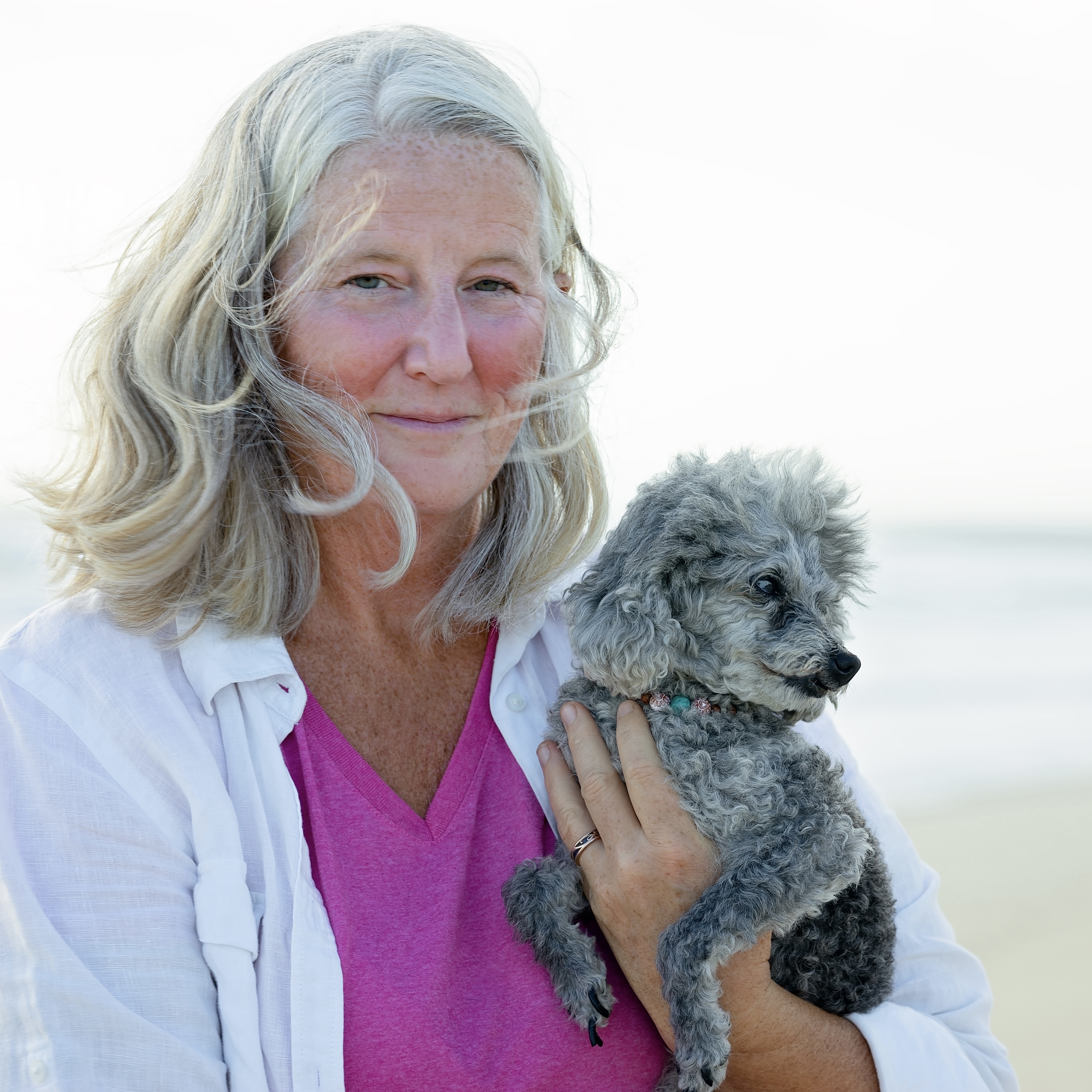
The Original Holistic Pet Health Coach
Dr. Ruth Roberts, the pioneer in pet health coaching and the visionary behind The Original CrockPet Diet, has been a guiding light for thousands of dogs and cats on their path to wellness. With her natural approach to healing, she's empowered pets to conquer formidable health challenges, from chronic kidney disease to GI illnesses, allergies, cancer, and beyond.
Now, Dr. Ruth is taking her mission even further. She's on a mission to democratize this knowledge, making it accessible to all pet parents. Her latest endeavor involves training and certifying Holistic Pet Health Coaches. These passionate individuals will work hand-in-paw with pet parents, offering holistic options and guidance on home-cooked food, all rooted in Dr. Ruth's pioneering wisdom. Together, they are transforming the landscape of pet health, one pet at a time.