
 Apple Podcasts

 Spotify

 Castro

 RSS Feed

 Goodpods

 YouTube

 iHeartRadio
192. How Fermented Foods Improve Gut Health

Try Gussy's Gut: gussysgut.pxf.io/TPPR It's no secret that gut health is one of the most talked about topics in health circles these days, but we've actually known this for thousands of years. And fermented foods have been a staple of diets for all types of animals (including humans) throughout time. Rob Ryan joins me on this weeks episode to talk more about how we can incorporate fermented foods into our dogs diet for a healthier gut, and ultimately a healthier immune system and an ove...
Try Gussy's Gut: gussysgut.pxf.io/TPPR
It's no secret that gut health is one of the most talked about topics in health circles these days, but we've actually known this for thousands of years. And fermented foods have been a staple of diets for all types of animals (including humans) throughout time.
Rob Ryan joins me on this weeks episode to talk more about how we can incorporate fermented foods into our dogs diet for a healthier gut, and ultimately a healthier immune system and an overall improvement in quality of life.
🐶 🐱 Nutrition & Holistic Health Consults: https://jessicalfisher.com/product-category/holistic-pet-health-nutrition/
💜 Follow Jessica on Instagram https://www.instagram.com/thepetparentingreset/
📩 Get email notifications for new episodes:
https://jessicalfisher.kartra.com/page/tpprnotify
0:01 Welcome back, pet parent. I couldn't be excited to have this return guest on for you today because my, my, everything that I talk about somehow always comes right back around to gut health. Thank you so much for being here with us again today. Rob, Rob Ryan of Gussie's Gut is with us, and I just would love for you to kind of remind people it's been a little bit since you've been on Gussie's Gut is so different. It's so unique. And I've just been, I mean, I tell so many people about it, but I would love for you to kind of give us a brief rundown of like the history of Gussie's Gut and kind of the mission of what you're doing. Well, first of all, thank you for having me back on and thank you for telling everybody about us and thank you all for watching and listening.
0:53 Hopefully we'll be able to share some couple 2-3 aha moments for some of you. Most of you. Well, yes. So Gussie's gut is all about gut health. My dog's name is Gus. I work with Dr. Ian Billinghurst, who I met. I actually hired him. It's pro tip, by the way. It's a really good way to, to, to get to be friends with really great people is hire them. It's a really great intro. So in the year 2000, I hired Dr. B to teach me how to feed raw food to my black lab buddy. I have a new black lab, Gus. Well, he's eight years new, but yeah.
1:36 So that was, what, 25 years ago when Doctor B and I work together, and I came to him after I'd done some fermentation for my second black lab, Gus, and it just transformed his entire world. Like, bizarre things were happening that were super positive. And believe it or not, before that, I had never, ever given my dogs for 20. So what would that have been? 21 years? I had never given fermented foods to my dogs. And I was taught by the king. And so I went to Doctor B and he said, Oh my God, I can't believe I've never thought of this. Like, what was I thinking for decades? Because he'd have been teaching this for 30 years, wrote the top four best sellers on raw pet food and what what we call species appropriate or biologically appropriate feeding.
2:29 And I went to him because I recognized right away that fermented foods were obviously thousands of years old, but they were part of this species appropriate diet because dogs were burying bones for millions of years. They were burying parts of their kill pieces of meat, all that stuff that of course, when it, when it gets buried, for those of you don't know, all the, the bugs in the soil, you know, they attack the thing and they pre digest it, they ferment it and, and then of course, they're reading the gut contents of the prey animal. And so I'm not that squeamish about that. And I, you know, I, I don't even have any problem, you know, thinking of my dog eating a prey animal. I've never done it, but it's totally instinctual. But some people do and I can understand that and be squeamish about it.
3:20 And So what we do is we mimic in a very optimized way what would what you'd find in the gut of a rabbit if they, if a rabbit ate the perfect diet. And so and we ferment it and that would be that would mimic the digestion of the gut of the rabbit. And we make that in this like very idealized, optimized recipe that we think about the profile of the ingredients. What what is the profile? This isn't a key thing that that people think greens are greens, vegetables are vegetables, all that. And they're absolutely not. So I can show you 10 greens that'll have 10 different nutritional profiles.
4:05 And so when you're strategic and intentional about what you're adding into a recipe, you're thinking about, well, what is the spectrum? What is that full picture, that spectrum of that formula? What is it doing? And what nutrients are getting absorbed? So and then when you ferment it, you it's like you pre digest it. So meaning it's a lot easier for those nutrients to actually be absorbed by the body for humans when we eat fermented foods and also for the other mammals in our lives, dogs and cats. So it works just the same way. And, and that's also good because when you think about a vitamin you take, believe it or not, it's really pathetic how little gets absorbed.
4:52 When you think about, you know, a piece of steak, it's only as good as your digestive system is to break it down and be able to assimilate it, absorb it. And another word for that that you might read a lot is bioavailable. Is it biologically available or accessible to our systems and to our dog and cat systems? So I'll stop there, but I could go on, on and on. Yeah. Well, I, I, I want to ask you more about fermentation in a little bit. And I also want to talk about a new offering that Gussie's gut has and we'll get to that. But before we do, I would just like to kind of stay in this realm of gut health for a little while.
5:34 So obviously this is like your world, what you do all day and and all night. You probably dream about it. Probably. Why are we constantly talking about gut health now like this Is this is something that like, if you don't have your head in the sand somewhere, somebody on your social media feed has brought up the idea of your gut not being healthy. And why does that matter so much, not just to us, but like for our pets? I think that there are there are additional things that we need to think about for our pets. Yeah. First question that you asked was why? So you have a couple things going on.
6:15 So gut health has always been important. It's always been, I think in the modern world, the last several 100 years, it's gotten progressively more challenging only because, and you're right, that's all we do is gut health because we think it's that important. So we we know that as food has degraded and we know for a fact it is completely a fact. It's not a conspiracy theory. It's not a theory that food to get the same amount of nutrients just since 1950 that you would eat in anything.
7:00 Pick the thing, carrot, kale, lettuce, I don't care what it is, you have to eat an order of magnitude of usually like between 30 percent and three, 100% more of that thing to get the same amount of nutrients today that you would have in the year 1950. So what happened? Well, we changed a lot of our agricultural practices. You know a lot about this, you talk a lot about this, which I just so appreciate about you because that's the core of this. It's how are we farming? What are we spraying on our crops? How much, how less, much less are we, is our soil contributing to the nutrition of our food because our soil is degraded. And people just Google this on their own. But you know, really it's, it goes earlier than the 50s, but that's really when things started to shift a bit for the worse.
8:00 And so it just takes less, sorry, takes more to feed somebody and get the same amount of nutrients as back then. Then you have those things I alluded to, which is the sprays of chemicals, herbicides, fungicides, pesticides, of course. And what there's a lot of them are there's many, many over 20 of them that are the top big bad chemicals. Obviously glyphosate, GLY, Google that Glyph and then PHOSATEI believe it's towards the end of the day, but I think I did that right. So that's a very big chemical and really, really hard on our the gut lining and the integrity of our gut.
8:40 And it also has a lot of these other horrible effects. It makes absorption in our system that weakens our absorption, our ability to absorb nutrients. It also effects what's called the Shika May pathway. And that's really horrifying for us because all these things, when you look at like what nutritional compounds do, what these phytochemicals, polyphenols in these plants do, when we absorb them, they're magic. And they, these compounds have a lot of effects on these pathways and these systems. They power them. And it's really what helps us hum and our dogs and cats help us hum along in a healthy way. When you start interrupting those things and you have this very, you know, this like these, this horrifying domino effect where everybody kind of goes, well, I don't know what's going on with my pet.
9:29 Like I just noticed this is happening. They're itching and they, you know, they got chronic diarrhea or they, I mean, there's a whole list of things that people see in their pets. They just don't have any idea what the culprit is. And it's really hard to nail the thing down. But glyphosate now is everywhere. It's literally in our rainwater. It's in our water. If you live near a golf course and a breeze comes towards you, it's in the drift of the air. They call that pesticide drift, glyphosate drift comes towards you. I mean, it's everywhere. And So what really what we're doing now is we're being more, we're playing more of a defense than anything. Some people think when you're eating healthy and you're, you know, working hard on your on your gut game with regards to your diet, like you're trying to get ahead.
10:19 I would actually suggest what you're trying to do is just stay at a level, you know, trying to fight against the forces that exists almost like a tug of war. So there if there are 5 forces against you, you're trying to have those five forces on the opposite end. I'm oversimplifying it, but that's just how I think of my own health and my dogs health. There are so many things in there that I want to touch on. And this was something that I don't know, you know, things just stick in your head sometimes and you're like, I don't know why that won't go away. But it's in addition to farming and ranching practices and all of the herbicides and pesticides and all of the things we also don't eat locally anymore. And one of the things that has stuck in my head is that a leaf of spinach, for example, by the time it gets to your grocery store and you buy it and you bring it into your home, the vitamin C that was in that spin is just virtually gone, like from the time it was picked until the time you. So we have that.
11:20 We have so many things working against us. And if we did get back to eating locally, that would certainly be a huge inconvenience for so many of us. But would just that in itself could help us quite a bit? Yeah, yeah. And you know, I say things all the time that are not good for business. I mean, one of the things that I say all the time, Doctor Billinghurst and I say all the time, is, is in the order of perfection. Eating and fermenting locally is on the top of the list. So what we do is we source the absolute best quality of ingredients. We don't make any compromise on that, but you know what, one of the ingredients we source may not be local to where you're at right now. You know, it just may not be and you can't really believe me, I thought about it.
12:09 We really can't do, you know, it just doesn't like you could never, you can never keep a business going. I can never even keep manufacturing going if we did local. But I did think about doing like 3 sections of the United States. And then I started to think, oh gosh, I, you know, what about the people in the North for Canada and then, you know, all that stuff. But even in America, just doing 3, like almost like sections of the country is still not really perfect. And as we say, the juice wouldn't be worth the squeeze. But what we're trying to do is we're also trying to mimic nature. We're trying to make something accessible where people just don't have the time. But we always tell people ferment on your own and go to your local farmers market. Do that.
12:51 Don't be a customer of ours. If you can do that, great. You know, and if you can, you can go to a farmer and get meat for your family and you know, you know your rancher and your farmer and buy locally. Like that's as it's pretty much about as good as you're going to get with the exception of having your own farm and ranch. And that gets really crazy. You know, that's that's a whole different deal. But but where those two options are not available, or even fermenting on your own, going to the grocery store and fermenting your own, we're here for you. Yeah, well, and, and so gut health in general, one of the things that I think it can be hard for people to like, wrap their head around around like where to start, what to do. You get a little bit of information and you go down the rabbit hole and you get so overwhelmed. And that's for me, like a lot of the clients that come to me, they have so much overwhelm.
13:49 Like the first time I talk to them, I'm just trying to pin them down to get the information I need because they're all over the place because they've got so much information, they don't know what to do with it. And one of the things that I've learned, especially in the like certification program that I went through to be a holistic pet health coach is that when in doubt, start with the gut. Like if you have a million things going on, your kidneys aren't working right, your liver is not working right, Maybe you've got some cognitive issues. When in doubt, start with the gut because that's going to branch out to everywhere else. And that's exactly what you guys are trying to do is focus on, on the health of the gut and to help get it back into a place where and so, but specifically with the products that you have, how are they affecting the gut? How are they improving the gut?
14:44 Yeah, so the, so you know, ideal world, I don't want to say perfect. In an ideal world, dog is going out and so is a cat into their natural environment. They're getting their natural, they're getting local microbes from where around where they live. So they're going into, you know, puddles and ponds and streams and, and dirt, of course. And if your dog is like my dog and likes to play with the ball, they get the ball full of saliva rolling in the dirt and they're eating tons of dirt. I mean, just is the way it is. And all of those things have microbes in them, including the air.
15:24 So there are mostly good microbes. There are bad microbes in the air and the dirt and the water. It's everywhere. And the body just selects and can sort of push out the negative bad stuff because it's keeping in the good stuff. So the good microbes win over the bad. It's really a good versus evil story. And how is that? Well, it's being healthy and resilient. And the way you do that is eating well, first and foremost, loving your dog is free. That's a big part of it. A dog that isn't bored, a dog that's living its genetic, you know, purpose on this life. So all dogs are genetically different, you know, summer hunters, etcetera, etcetera.
16:11 And also getting out and getting plenty of exercise that is supremely important, also free. It just cost time. And so the gut is a lot of people talk about it differently that some talk about it like a garden. And you know, lots of people have different types of metaphors and references, but it's, it's, I like talk about, talk about it like it's a hotel or a, you know, AB and BA bed and breakfast where the hospitable environment that you create is a healthy gut and that welcomes in the good guys and keeps out the bad guys, locks them out. And so if you create a positive health environment for your gut, you what happens is that they call them junctions.
16:57 They're like they fit together and really unhealthy ones are open And so the the bad guys go through them tight junctions keep them out. And so doing you can do that through really great. You can do that through some probiotics. I have AI have a issue with all probiotics. They're not the answer and the be and all be all. But you could do them with three the trifecta of biotics, pre pro and post biotics. Doctor Billinghurst says probably post biotics are the most beneficial and potent in achieving the results that we want. Prebiotics are really nothing more than the fiber, the food that the good microbes want to eat. And when they eat that food again, it's a, it's a good, it's a comfortable bed and breakfast.
17:43 When they're eating and they're comfortable and they're happy, they stay. When a gut is not hospitable, it's called your. The microbes are transient, so I don't care what you put in that's good. They fall, they fall right through the system and they come out of the rear end. You know when your dog's stool. And so even like all this money people pour in, you know, if you've got a unwell dog and you're spending like $30 a week on probiotics, that's just money literally down the GI tract, not, I won't say the tube, but down the GI tract and it literally just goes in and out. And some people say that provides some benefit a little bit.
18:24 And some people say it really doesn't do much of anything because it's because they're transient. They're just flowing through. There's no, they're, they're not hanging around and providing any positive benefit. They're not Sentinels keeping a lookout for the bad guys and they're not locking into the gut and then digesting all that food that comes through it because the microbes, that's really what they're doing. They're breaking down all these things. And so when you have like, like go on and on about things like allergies and food sensitivities, one could easily point, and this isn't the only reason, but one could point to an unhealthy gut. Because if you say to me, my dog, I know for a fact my dog is allergic to chicken, I would say, well, I would say look at it. You know, and I'm not sure we have the ability to unfortunately identify these things, but I would say your, your dog may be lacking the right microbes to break down the chicken, assuming it's real chicken and it's Whole Foods and it's, you know, I would, I would hope that it's raw, raw food because I'm a big raw food guy for, you know, 25 years. So, but no matter what, it's about the microbes living that can break down your dog's digestion. So we have a lot of folks that are coming to us feeding kibble and they're, they're rescue puppies and they don't, or dogs and they don't know where these dogs lived or how they lived before they bring them into their home. And I want to like start Gussie's gut. And they might say to us, you know, Oh my gosh, my dog dog's tummy's gurgling, you know, like the first day. And we said, just give me a
19:55 second. It's going to be fine. Some say my dog has a bout of gas. Oh my gosh, what's happening? We say this is good. Like think of it as a good thing. All these microbes are going, whoa, hello. And they're waking up and they're, and they're starting to adapt. And so the gut is changing and, and really the change that you're seeking is happening. And that's good. It's always temporary. It's like super temporary. And then you got even a smaller percentage of dogs that may get diarrhea, crazy diarrhea, like we're, it's explosive in the house. That would be horrible. But like they're on a walk and they're happy and they're, they're eating great and they're happy instead of like a hard stool, they're getting a diarrhea for like one or two days.
20:36 That's it. And we even say we have the whole videogussysgot.com/diarrhea. We have a whole video about that because that could be an amazing indication that, Oh my gosh, like real change is happening. And, and then if you know, some dogs, it takes its immediate transformation and some dogs it takes four to six weeks to transform. Some it even takes up to 90 days. It kind of depends on age and their epigenetic history and what they've eaten their lot, all this stuff that's super boring. People tune out because they're like, oh, that's too many details. The bottom line is every dog's different, every cat's different. And so we have to, we have to respect the time that they need for them to adapt. So we've been talking about how the products work and you brought up probiotics again.
21:24 We talked about probiotics pretty extensively the last time you were on. It's a big topic that I like to cover as well. So definitely if you are listening to this and you are giving probiotics to your dog, please go back and listen to the previous episode with Rob because we really did kind of go through it and break, break all of those down. I definitely believe that we're overdoing these probiotics with dogs. I see it every single day. But so the actual products and we talked the last time you were on about daily. So I would like to start there because you did a, a slight reformulation, which I'm actually really, really excited about, nothing huge, but what I am most excited about is that you did take the cheese out and then you made one other adjustment. So can you tell me why you made those changes? Yeah.
22:16 I mean, we, we have 19 ingredients in our product called daily. It's designed to be just a tremendous, I mean, with 19 super foods in it, you can imagine it's pretty potent. And we designed it to be this incredible boost to your dog's health. We were getting a lot of folks over the years saying, Oh my God, this is exactly what I'm looking for, but my dog can have no dairy. And you know, after a while we started to take notice that there was quite a few. Then we did a quick search and our support software, like how many? We did some research, like how many people actually, and it was to my surprise, it was a lot more than I thought. So we took out the dairy just because at the beginning we, I would, I'll just say I'll, I'll cop to it. I was very afraid that the only way to get this good stuff in our most of our dogs in the world was to put a little enticing stinky cheese in it.
23:16 You know, So we used organic cheese. It wasn't much, but I still didn't want I, my confidence has been, you know, shored up over time because so many dogs love it. We actually, truthfully, we only get our request to return because the dog won't eat it. And so it's like nothing. And so I just said this is crazy. Like, why won't I help these dogs that can have dairy? They may have other issues that actually, I mean, they need this even more than some other dogs. So we, we took out the cheese, then we replaced it with more veggies. So that's, that's all we did there. And then we also had kelp in ours that we think is an incredible micronutrient.
24:00 By the way, I take myself, I take our C Moss and sometimes I'll take kelps and and seaweed and stuff and in pill form, not in a salad, but sometimes in a Japanese restaurant, I'll eat it. And what we, what we're also hearing from many people is their raw food diets were pre made and had kelp in it for the same reasons we did. And we didn't want to, we wanted to not compete with those other products in terms of like don't have a dog double up on kelp. We already we did an assessment of our micronutrients and we thought this is incredible. So what, what could we, we're already good in micronutrients even without the kelp and we weren't putting a ton in, you know, for, for the reasons that I just mentioned the iodine and all that.
24:51 So we decided let's replace it with ginger, which is an amazing anti-inflammatory and all that. I would say 9899% of our customers thought it was an incredible idea and we had like 1 to 2% that didn't like the idea of like, you know, adding cheese later for their super finicky dogs. And others really like the convenience of the kelp because they didn't have to do it. And all we said was, you know what, you really don't need kelp from us. You could just do like a really little like a 1/4 teaspoon or, you know, a teaspoon with larger dogs or whatever. And so that's why we made those switches. And now we just, we just, we, we have a new addition instead of kelp. It's ginger for men.
25:33 And ginger. I love that. I love ginger all around I think and and dogs that are experiencing any sort of GI distress. I think Ginger is great for them anyway. Oh yeah, it's anti nausea, it's calming, it's anti-inflammatory, and you can never get anti. You can never get enough anti-inflammatory. We have turmeric or daily formula as well and they're both fermented, so they're broken down and much easier to absorb and assimilate. And you can never get enough anti-inflammatory in a food source if you ask me. Now, supplement made in a laboratory maybe, but food source, the body can differentiate in the bodies, the bodies of mammals, ours and our dogs and cats, they select, OK, today I'm going to absorb all of this because I need it, but I don't need all of this.
26:29 So I'm going to go ahead and let it, you know, I'm going to store it or I'm going to let it go and it goes out the other end. But it's as magical. The body knows what it needs and it pulls and stores. And then if you're in and out of eating that nutrient, because it stores it, it'll release it and absorb it and be able to utilize it later on. So that's what Doctor B talks about, and why Doctor Billinghurst is not absolutely He's not a believer in balancing every single meal perfectly and using food sources. So the daily product that is currently available is really giving your dog a boost and nutrients and good guys to feed the the good bacteria in the gut and really just supporting them when they need it to get, get all of these good no matter what the base food is. So it's not like, oh, you're feeding an amazing diet. You still need these on top of it. It's regardless of what your animal is eating these this can help boost their their gut health. Yeah.
27:35 And we know anecdotally and clinically and the bigger government organizations have studied this, that when you consume a fermented food like kimchi or something, and this is only unfortunately it's only done in humans, not dogs and cats. But we know dogs and cats are especially dogs are really, really some similar in response to people for many things. When you eat fermented foods, the things you eat with it are better absorbed. And do we have anecdotal evidence with, I mean, we've got, I'll never forget the name of this dog, Pesci. There's a video on our YouTube channel, P/E SHY Pesci, customer of ours. Pesci's no longer with us.
28:19 Pesci was an older dog and a big dog and Pesci was on, I believe it was, if I remember the story right, was like the was on medication for like arthritis and some other things. And our customer noticed and she put up when we recorded this video, I had her, she would go long, she could tell when he needed his medication. She tried to string it out as long as she could because it's toxic to the liver and all that. And so she noticed he needed it less and less. So the periods were elongating and he not only wanted to go on one walk, he wanted to go on two, then three. His energy was improving his quality of life. I mean that's what if there's one thing I live to do with this company is increase the Gerard evive of dogs and cats.
29:04 What is the joy of life? What is that on the scale? You know, some dogs it's running and fetching for other dogs, it's just being bright and being their true selves and and being excited and alert and wanting to engage. And some dogs are sled dogs and they want to pull sleds. You depends on the on the thing or some dogs love to swim when there's water V goes down. They don't want to do those things as much. And so when we see those things come back, we're very excited. So one of the things I don't think we do well enough as a company. We're trying to do that this year and certainly next year is do more of the longer form videos that about stories of people because we hear these crazy stories.
29:47 I mean, they still sound crazy to me that, you know, anxiety goes down and in four, you know, four to six weeks. And these aren't promises. We can't make these promises for every single every single dog, every single cat is super different and unique. But we hear these stories and we just go, wow, what a blessing. I mean, like, how did that happen? You know, and, and it's really just the gut was compromised. We freed it up, we unlocked it, and then all this magic happened that we can't take, we can't take any control of or any credit for. But when the gut gets fixed, all these other things just magically start to resolve. Before we jump over to the new product, I, I just want to touch on fermentation a little bit more because this is something that it intrigues me so much and at the same time confuses the heck out of me.
30:42 And I don't know why it just, I think, you know, our brains do weird things to us sometimes. I've been trying to get into like just understand, I understand how beneficial fermentation is and I actually like, I, I encourage a lot of my clients to use fermented foods, specifically with animals that need digestive enzyme. Like when, when I feel like we need the, the digestive, if I could talk digestive enzyme support and you know, just naturally as we age produce fewer digestive enzymes. But in dogs that have compromised guts, they're also, you know, not digesting the foods properly and just the gut isn't functioning properly.
31:26 So it is to me, like I understand that because this product is firm or any product that you ferment, because I I put a spoonful of fermented beets in my mouth and I was not happy. I was not a happy girl. Yeah, yeah. But I'm trying, I'm I've got some kombucha on board. I'm OK with that. I'm, I'm making a sourdough starter and keep telling myself one of these days I'm going to make some sourdough bread if I get some time. And so I understand the benefits of it. I don't understand like I know there and I know there's a difference in you talked earlier about a dog or a wolf will like bury some of their kill, for example, and then it will ferment over time.
32:13 To me that that there's a newer term I've heard called wild fermentation. That sounds like wild fermentation to me. Yeah. I mean, we, we used to use the term wild fermentation and we realized like nobody really understood what it, what it was. But so dogs love, Doctor Billinger says they love stinking, stinky and revolting foods. And that could be days old carcasses, it could be trash, it could be all kinds of things. So dogs love that kind of stuff. Dogs love stinky. And so again, what we do is we do it in this my, my number one word I I need to use for what we do is we just optimize nature. So we're just trying to select a profile of ingredients and fermenting this ideal scenario that just creates the best product that we know how to create. And so I don't know if that's an answer to your question or if you want to know more about what I don't love. Like we all, we all eat fermented things, just most people don't realize it.
33:16 Of course, cheese, coffee, chocolate, sausage, is it form? They're all forms of fermentation and some teas that we drink. And then of course, you know, the things like, you know, sauerkraut and kimchi and all that sort of stuff, those are obvious. Like most people just think of those right away. But in our everyday life, we're eating things that are fermented. So is it mostly for the digestive enzyme part of it? Are there other things that were? OK, sorry, I know. I wasn't very clear I was. No, no, no. Yeah, So great. Super good question. Very, very few people ask me. So enzymes are activated in fermentation. They don't create digestive enzymes. So when you take digestive enzymes, those are, you know, they're manufactured in laboratories and that's just like probiotics, but in there's different manufacturing metaphor and they're designed to breakdown protein, breakdown fat, breakdown carbohydrates, you know, on and on. They all have different benefits. And so those are very different.
34:18 Digestive enzymes are different than enzymatically activated foods. All I can say is fermentation is so crazy what it does, and it's so simple. And the fact that it's so simple, it's hard to wrap your brain around all the processes that happen during the fermentation. I mean, there's a battle going on in every batch of fermentation between oxygen and carbon dioxide. There's a battle between good and bad microbes, and the good microbes win every single time. And in pretty short order, the bad guys come out right at the beginning and they start to die because the, the, the proliferation of the good guys. And that's that thing I was saying about the tug of war. The good guys overpower the bad guys. And there are no more bad guys at the end of our fermentation. They're, you know, you're talking like 5 pH. And that's safer than the salad you'll eat at the finest restaurant in America.
35:15 So when you talk about food safety, it's naturally food safe. There's no need to worry about any of the bad guys just because nothing turns out the pathogenic bad microbes, the bad bacteria, the ones that can harm us, they're pretty weak. They're, they're good talkers at the beginning and they're real. They come on real strong and they die real fast and they don't, they cannot live in an acidic environment. And, and then of course, the, the, all the oxygen gets pushed out and it's, it carbon dioxide builds up. And that also helps a lot with that too. And sorts of just amazing, you know, thing and unlike your beats that you're putting in your mouth, like I'm not a kombucha drinker at all.
35:59 I love sourdough. I love like I can, I can put, I can taste our products and they taste like greens to me. They don't taste like like revolting or anything. And our, our new product that we'll talk about is actually kind of sweet. It's it's trippy. Like you think there was fruit in there. I'm sure that's the way it lands on my taste buds anyway. And we have no, it was a little bit, it was a little bit scary to put on a new product that's all grasses and sprouts and not put something like cheese in there because you're just like, oh gosh, I really hope, you know, my dog's like a horrible example because he'll eat everything healthy. A kid just he can hand him a piece of anything, anything and he'll eat it. So he's not the right test case.
36:46 I cannot use him at all for that. And so, you know, we, we put this out and we did a, a limited trial and we, I'm not trying to be cute here, but we went with our gut and we said, you know, dogs are going to love this. And because it's fermented, they sense that it's fermented and it's just this weird instinctual Dr. It's like gut contents. I'm going to eat it, you know, and most dogs just turn on they just it's and cats, they, they realize. And the new product that we have is also, I'm happy to say, available for cats too. I love that so OK the new product useful grasses and sprouts it has what are my notes here It has four grasses, 3 sprouts all fermented Yeah.
37:32 So obviously it makes a whole heck of a lot of sense that cats would would love it as well. So no ingredient overlap to the daily product to the the boost for getting to the gut there. And, and tell me, well, you're welcome to tell me what those grasses and sprouts are. I have them in front of me as well if you want me to read them off. I'll tell you it's there's, they're all organic. So wheat grass, alfalfa grass, barley grass, oat grass, which is gluten free for those wondering. And some people are themselves gluten free, so they don't want to be around gluten. So anyway, there's that. And then broccoli sprouts. And then did I just go out of order? Yeah, yeah.
38:12 Broccoli sprouts, alfalfa sprouts, and then cabbage sprouts. So all these guys, people say, Oh my gosh, wheat grass. Is that wheat? And we say, yeah, but it's like if you have a wheat allergy, you can usually do wheat grass because it actually changes and metamorphosizes. It becomes something very different when the the wheat shaft and all that start to form while it's a grass. We we love this formula because, you know, I wanted to build this amazing anti ageing formula. So when I start to think about this, I thought, well, what is life? Well, I immediately went to like sprouts 1st. And then I thought, wait a second, grasses, the young grasses, those are all coming out of the ground and they're catching the sunlight and they're in their, their, their absolute perfect, you know, form of growth or, you know, the, the, the longevity and the, the, the whole idea of their youth is like they're in the, in the beginning growth phase. So what if we just picked these grasses and then we had sprouts that were also in the same stage, you know, and we, we thought of these amazing, the ingredients that were designed for the point of their life, like their young growth. And then we fermented them to break them down so they were easily absorbable.
39:37 That's what the whole genesis of youthful grasses and sprouts is. We call it YGS. So it's gussies, gut.com/ygs. If you want to just go, you don't have to type out youthful grasses and sprouts. Well, and and I think maybe you just explained it, but the whole idea of how youthful these grasses and sprouts are is that the biophotonics is a word that I had not heard before. Yeah. But the idea that what it what my sheet says that they're eating the sun, which is incredible. I mean, the sun is life giving, right? Which of course takes me down another rabbit hole of all these people that think the sun is horrible for us.
40:21 Yeah. Is life giving. And so that just kind of falls right back into line with what what you were saying. Yeah, I mean these are appreciate that the I mean the the the thing I think about all the time is the term life force. So what is like the life force? You know, what is life giving? And to to answer that, you have to know evolution, evolutionary biology, which is what Doctor Billinghurst is the top of this field in. You have to know like for millions of years, what these dogs and cats have eaten and needed. And then we are fortunate we don't live in a cave by a fire and have to go hunt for these things.
41:06 We can go, you know, you guys can leave the hunting to us. We find these and we, we break them down and ferment them and, and package them. So you can just add them to your, your dog's food and just sprinkle it right on, mix it in, you know, And so life force is the theme, especially for this product. It is for all of our products. But you know, I, I think of us as, yes, a gut company 1st. And I also think of us as a nutrition company because these ingredients don't just work on the gut at all. I mean, they're, they're doing like ridiculous amount of heavy lifting when it comes to nutrients and, you know, nutrient absorption, which is also the key. So, OK, I'll between daily and YGS, I'm going to try to adopt that. There are so many incredible ingredients. I have so many questions I want to ask you when we're like already over, we're at 47 minutes, so I'm going to try to to get these in.
42:02 I think that is a perfect example of providing a ton of diversity in the diets of our dogs. That's something that I think, and I know you're very passionate about raw food, raw fed dogs specifically, like if you look at them as a whole, as a population, the diversity of their gut microbiomes is actually worse than kibble fed dogs. And we've seen that in the Biome research that has been done with all of the, you know, FMT and everything that's available to us. So this is giving us a lot of diversity to add to diet, which I which I absolutely love. But the problem that a lot of people have is sourcing is access because as you were talking about earlier, it would be wonderful if we could buy everything, get everything or grow everything locally and we just can't do that. And so the diversity piece, I think, I'm sure that was top of mind as well for you guys.
43:04 Yeah, yeah. And you mentioned something earlier when you're talking about the introducing the product. I mean, there's no product overlap there. You know what, what we're allowing folks to do is if you want to go the route of our daily product and, you know, go beyond boosting. Let's say you have a dog that has extra needs, maybe they're overcoming an illness, maybe they're older and you want to really, we give them like a level 9 support. You're feeding daily. You can add grass and sprouts to it. And I know that sounds like, you know, the founder of a company saying feed more of our stuff, but that's not where I'm coming from.
43:46 If your dog needs more, you're able to add this to it. And we're happy to offer this to you because there's just no overlap. And these nutrients are completely different than what is the youthful grass and sprouts are completely different and daily and vice versa. So what you're doing is you're just stacking the amount of phytochemicals, phytonutrients, you know, all the good chemicals, all the vitamins, minerals, trace minerals, all the things. You're just stacking it. You're creating like this powerhouse. But if you have a young puppy who's super healthy, we'll just assume for a second, this 6 month old, you know, 8 month old, whatever 2 year old is, you know, they're, they're new to life, They're new to glyphosate in the environment.
44:37 They're, you know, have maybe only been on cable food for a little while and whatever. So they had their, their systems haven't degraded, haven't had as much degradation. And so, you know, definitely have like you definitely have a age thing that you want to look at first, then you want to look at genetics and then you want to look at epigenetics and consider all these things. How many rounds of antibiotics has my dog had? Is there gut microbiome completely stripped? You know, I mean, you can get really, it's not that hard to figure out where your dog is in terms of needs. You know, do you live on a golf course that's heavily sprayed with chemicals?
45:19 Sorry to say, I think golf course homes are beautiful. But, you know, do I live near a farm that sprays chemicals every week, especially with the planes going over? Or do I have even a neighbor that has a lawn service and a weed service come and spray around the perimeter of their home? So all these things have impact. All right. One of the easiest things you do is look at age of a dog and then also look at symptoms, of course, and all the other things I just mentioned. So I don't know, I might be going off on a tangent, but you the you can, you, you can feed more to get a greater benefit than feeding less. And for dogs that are, we say that for dogs that are already really healthy and wonderful, like you could just go with youthful grass and sprouts, it's a little bit less expensive. It's seven ingredients versus dailies 19. You know you can save a little bit of money and so a budget is a concern to you.
46:14 You can go right to youthful grass and sprouts and get this amazing benefit, just amazing benefit. And I would imagine the reason why you wouldn't put them all in one product is because you want to leave room for that difference in what one dog may need versus what another dog may need. Yeah, we, you know, we're becoming a lot more sensitive to, as we grow, we're becoming more sensitive to budgets and the economy. And what we want to do is make it easy to, to, to feed fermented foods to your dogs and cats. We think that's the most important thing. The more that we, you know, we've got two issues really. If you put everything into one product, you're, you're going to have to feed a lot of it. So that's number one.
47:00 And like for daily, all you need is 1 teaspoon for 20 lbs of your dog's weight. And you also have this thing of like the more ingredients you put in a product, you're bound to find some dog that the owner thinks they can't have that one ingredient. And so they completely dismiss the whole product and they're like, oh, you're like, Oh my gosh, like, I mean, we see this with daily. I mentioned to you at the beginning of of the show, like, you know, people are like, I can't have kelp or I can't have cheese or, but I want all the other ingredients. You're like, Oh no, like this, this is so sad, like this dog can't have this and this, this owner is not going to ferment on their own. So it, you know, hurts us, you know, and, and I mean like our mission, it hurts.
47:45 It's you know, our whole way of, of, you know, being the company we are is we want to improve the lives of of the pets we serve. You know, we want to increase the amount of years, healthy years that we add to our our customer, meaning our dog and cats lives by a million years. But you know, in the in the five years that we from the beginning to the next five years, we want to increase the amount of healthy years to a million, a million years. And we think we can do that by encouraging really great health, moving to a little bit more raw food and then adding fermented foods in there. You know, our goal is to increase like your pet's life a few years. And so you know, was obviously a lot in between, you know, draining that and doing it.
48:31 And we know that, but there's there's a lot of steps in between that we need to encourage people to adopt A healthy diet so to get away from just a kibble diet, but we think we can do it. Well, I love that and I think it's a probably a good place to end the episode on the mission and what what you want to do. I want to say thank you. And actually really quickly, I know you've mentioned a couple of times gussiesgot.com, so that's certainly where people can find you can find the product. But is there anything we should be like keeping our ears open for? Well, yeah, we yeah, we have very exciting 2025 planned were we're very excited about a new product that we're going to have come out that will be more affordable and a bigger bag for multi dog households, bigger dogs. Very excited about that announcement and we're going to keep focusing on our sourcing and the quality of our products and just making this much easier to understand added benefit to your pets health.
49:38 And so we do that through education. Thank you for allowing me this platform to do that. And so 2025 for us, we're we're really wanting to increase the accessibility of fermented foods for all dogs. And especially like, you know, the people who e-mail us say I have seven dogs help, you know, so we, we're, we're very excited about that. So we have a couple announcements. If you, you know, if you're interested, pay attention to our social media, sign up for our newsletter and we'll let you know about that in, in short order. I I'd say we're going to have a pretty a series of pretty big announcements by spring of 2025. I love it. I love it. I can't wait for it. And I want to say thank you again for all that you're doing for pets and their parents.
50:20 Because when we see that what we're doing for our pets is making a difference, like, it just makes us feel so good too. Yeah, yeah. I mean, you know, the story of the short lives of dogs and cats is a tough story. And, you know, I'm one of these people that needs to be told all the time to live your dog's life and not their death. I'm always thinking about like, Oh my gosh, how many more years do I have for my dog? And I was obsessed with this since the age of 16 when I lost my first dog. The short life of dogs is is very hard for me to handle. And so I have been obsessed honestly, with longevity in pets in our dogs and cats since 16. You know, how how do we keep them around longer if we can get even just one more year, like it's incalculable. You know what that's worth, at least for me. And I know that our customers feel the same way and I know you do too.
51:22 So you know, that's the name of the game. And so we're yes, we're playing defense on some on some issues, and we're also playing offense and we're trying to be proactive and improve longevity. So anyway, thank you for the thank you for the opportunity, Jessica of. Course, it's always nice to have you guys. Check out gussiescut.com, follow them on socials. Can't wait for the new product announcements. And if you haven't already, check out daily and YGS, I'm gonna I'm gonna get that YGS. That's right. All right, guys, have a great rest of your week. Give your pets some extra love from me and Rob today and I will talk to you next week. Bye.
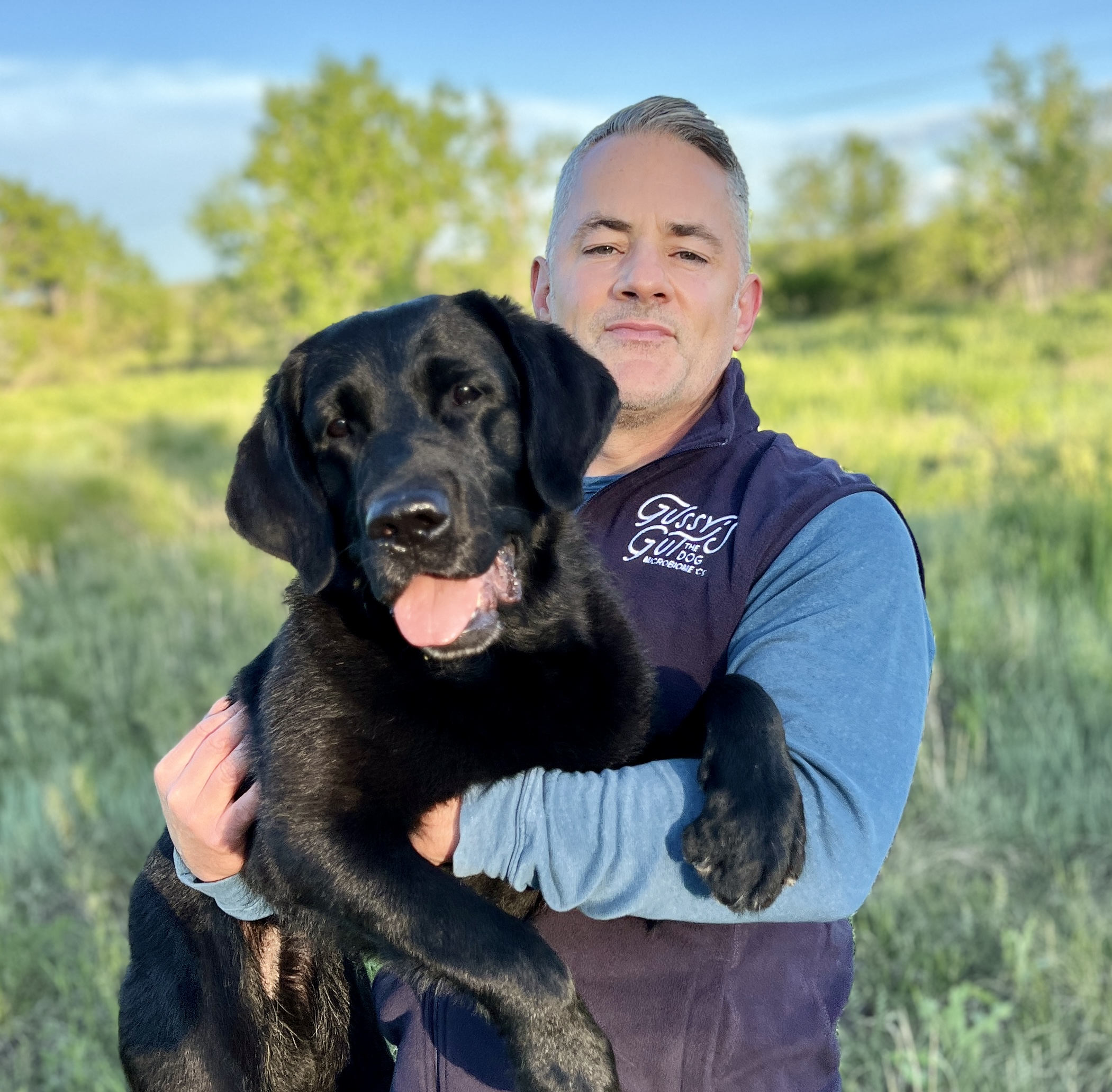
CEO / Founder
Rob Ryan is a lifelong dog lover and entrepreneur. Rob co-founded Gussy’s Gut with friend and the father of biologically appropriate raw feeding, Dr. Ian Billinghurst. He also founded the Billinghurst Institute company to educate and certify more people on species appropriate raw food diets. Rob is committed to the education on the microbiome of our animals and creation of the absolute highest quality products that support true health and diversity.