
 Apple Podcasts

 Spotify

 Castro

 RSS Feed

 Goodpods

 YouTube

 iHeartRadio
196. Beyond Needles and Pills: The Radical Truth About Healing Pets – with Dr. PJ Broadfoot

In this episode, I sit down with the legendary Dr. PJ Broadfoot—holistic veterinarian, trailblazer, and total badass in integrative medicine. We dive into the alternative therapies she’s used for decades to treat everything from chronic illness to trauma in pets—tools most vets won’t even talk about. From energy medicine to frequency-based treatments, Dr. Broadfoot reveals what truly supports healing on a cellular (and soul) level. If you’ve ever felt like conventional vet care isn’t enough… this episode is your wake-up call.
🐶 🐱 Nutrition & Holistic Health Consults: https://jessicalfisher.com/product-category/holistic-pet-health-nutrition/
💜 Follow Jessica on Instagram https://www.instagram.com/thepetparentingreset/
📩 Get email notifications for new episodes:
https://jessicalfisher.kartra.com/page/tpprnotify
0:01 Welcome back, pet parent. Today I have one of the coolest guests I could possibly have for you. And I don't say that just because she's staring at me on the screen right now. I say that because I got to meet her about a year and a half ago at the HVMA conference in San Diego and she just blew me away with how casually she's just like knows so much. And I, I love it. I love that she's so willing to not only help her animal patients, but to help other people do better with their animal patients. And so I, I would love to welcome a recipient of the Carvel.
0:49 I is it Teichert? Teichert, a recent recipient of the Carvel Tikkert Lifetime Achievement Award at the American Holistic Veterinary Medical Association. Doctor PJ Broadfoot, thank you so much for being here with us today. Thanks for inviting me. Just I am great. Well, I say that it is cold here and I don't like cold weather. I mean, I left Kansas because I didn't like cold weather and I think it followed me to Arkansas. It's like been in the teens and supposed to get down into the single digits, which is generally not in Arkansas. It's not going to last very long, but it kind of feels like I'm into Arctic, so, you know.
1:31 I can't. I can't even. I'm in Central Texas and I definitely did not come here to yesterday. Wake up to 21°. I'm like, what is going on? Yeah, we at least didn't get the 8 inches of snow they got in Northwest Arkansas. We got we get just got an inch so but it is cold. It's been really cold. Well, you know, spring is spring is coming, so something to look forward to. We're we're over the hump of the middle of winter at least that's right. So hopefully spring will be here before we know it, but you have been a practicing veterinarian for quite some time and you are not only into some really cool holistic modalities, but some that I had never heard of and probably more that I have still not heard of, which isn't, you know, a big leap. But I just, it amazes me how much there is out there. And I'd love to start off just by getting a brief synopsis of like your story and how you got to be where you are and how much you love animals and all of.
2:42 That jazz. Well, I got into veterinary medicine. I I'm actually from a very medical family. My stepdad was, my real dad was a doctor, he was a neurologist. My stepdad was an internist cardiologist. My grandfather was a General practitioner. They didn't specialize in those days. And interestingly enough, the person that he had take care of his family back in the 30s probably was a homeopath, an MD homeopath before the Flexner report completely squashed homeopathy in the United States. So, but so my step dad was really, really open to all kinds of stuff. They used homeopathy and his family and he actually used an herbal for hypertension in his patients. So, you know, he just had a, he never, he never believed the statin stuff, the cholesterol stuff, you know, he was kind of a skeptic of a lot of those things. So medicine was just kind of in the just in the genes, I guess was in my family.
3:40 When I decided I was going to go to vet school, my stepdad said, honey, don't you want to be a real doctor? We'd we'd laugh. We joked for years that I didn't want to be an Rd. want to be a DVM, not an RDA real doctor. So, and you know, with time, he kind of he came to terms he had one of his other kids, one of my, my younger sister became an MD. So he got an MD out of the out of the sibling bunch. So he was fine. And then we've got the like, I've got a, he's going to Med school, a nephew that is a, is a anesthesiologist. My son is a pathologist. So like we've contributed more to the, the human side of it. Not one of my four children wanted to be veterinarians. It's kind of sad.
4:22 I think that dragged him out of bed at 3:00 in the morning to go on emergency calls, probably broken any aspirations of being veterinarians. So so anyway, I went to bed school and and the first my first introduction to anything holistic in the veterinary world. We actually at K state of all places, which is obviously not one of your alternative medicine, integrative medicine kinds of schools had a couple of acupuncture's come in and talk to the student chapter AM A A/B MA and so I knew there was something else out there. It was the first time I'd heard of acupuncture, but I knew that there were other things out there. So kind of gave me just an inkling that that we didn't what we learned in Med school wasn't all there was to know and that school just left all kinds of trails of odds and ends of things.
5:06 They talked about actually fecal microbial transplant, that I'm old. I got out in 1981 and they talked about fecal microbial transplants. The first one I ever did was in 1981 on a horse when I worked on the the set of the Blue and the Gray, which was a mini series that was done back then. I had a horse that colic and he was a valuable horse. None of the drugs touched him. I mean, none of them. So I remembered something, you know, one of those offhand comments that one of the clinicians made and I took poop from several different horses and meals and I put it down with a nasal gastric tube and it was like miraculous. And I then I didn't do it again for about 30 years, which is really stupid, but but I got that, you know, little bit of information in that school.
5:51 And then they talked about butazolidin was retarded bone healing and race horses. So I knew back in the that as far back as the 70s, we knew that non steroidals retarded healing, but you know, when you get out of school and that all you have is Butte and aspirin and Arquel, which didn't last very long in the market. So I'm guessing it was deadly. And that was before the Internet. So I don't really even know what happened to it, but it just kind of disappeared. Learned about autologous blood therapy of all things from a cow vet who said, well, you know, if you can't get that cow over it, take a slug of blood out of the jugular and put it back in the hip. And at the time I thought what a weird thing to say. But, you know, then I started learning about autologous blood therapies when I started doing a lot of the homotox stuff.
6:34 And for years I lectured for years on on autologous blood therapies. And I finally went down a rabbit hole with it that had to have come from somewhere in the United States. And because why would that veterinarian K State have even mentioned that? And it turns out that AMD named Rosenau, I think was doing autologous blood therapy in at GOSH, one of the big schools, Mayo Clinic, Mayo Clinic, he was doing, he was doing blood therapies. So but you know, you can't patent blood. So it kind of fell out of favor, but it's, it's an immensely valuable form of therapy because it's basically body specific immunotherapy.
7:14 So, you know, they were, and there were other things, you know, that people just mentioned in, in that school that steroids should be a line of last resort and things that kind of colored my, my looking for other things when I got out. And then when I got out, God just dropped things in my lap. Every once in a while I was like, here, look at this, look at that. And then I get a case that nothing else would work on and then you'd have to be looking for something else. That's how I got started on homotox. And then thymus extracts. I learned when I was in Germany, couldn't find any thymus extracts when I got home, but I learned about it there. And then someone happened just walk in my clinic one day that was a Rep for one of, for a different company that I mean, this thymus extract wasn't, wasn't handled by anybody.
7:55 And he said, are you interested in thymus extracts? It's like, my gosh, yes. And about two weeks later I got a box in the mail from Hawaii, these little lyophilized vials and a diluent. And I thought, I have no idea what to do with this at this point in time. What I learned about it for was cancer, didn't have a cancer case at the time, but then I got a last ditch in for case on the cat and I gave it to him because absolutely nothing else worked. And that's why you get those is so that you use them and then you're down bad. You're down that track. We've used it on thousands of cases since that that cat's name was Stevie. And we've used it on thousands of cases since then. So, you know, so it's one thing after another that just, you know, here, try this.
8:41 Yes, Oh my goodness, there's so much, so much in there. I think to be to be learned. But what are so a couple of the things that I had never heard of thymus extract before I met you and I had heard but had not really utilized deer antler velvet. Yes. And and so those are a couple of things that I find incredibly intriguing in both cases. What are they? How do you use them? It sounds like with Thymus you use it for quite a bit. Yeah, just about everything. Basically it's the linchpin of the immune system. So it helps to balance, counterbalance the T threes, T fours. So whether you've got a hyper immune state or a hypo immune state, whether you've got cancer or autoimmunity or inflammation, it actually has some anti shock effects. It's just an amazing, but you know, you think about it, the linchpin of the immune system, it shrinks with age doesn't mean it does not work at all anymore, but and you can regrow thymus, which I think is pretty interesting, but it's so integral to to the immune system, which is the center point of everything.
9:52 So, you know, we use it off label as an as an injectable often, more often than not as an autologous blood therapy. And we use it. You can use it in acupuncture points. I do quack you puncture. I only know a few good points. I've learned a few here and there and I put them in those points and I know you know which ones to use. You can use it sub Qi am. It's just an absolutely amazing therapy. And, you know, we've done a lot of lectures on cases that we've had that have just been, you know, kind of the blow you away, you know, just, you know, that's what worked. So thymus extract's been a, a big part of my armamentarium probably for about 12 years or so now.
10:38 Deer antler was kind of funny because I happened to they, they were at a H VMA1 year. The New Zealand people were, and I had kind of, I walked or was walking around the exhibit hall and I the thing that attracted me to it wasn't the deer antler, which I didn't know anything about. It was the fact that they used turnip and which is the Greenland muscle and Perna changed the way I practiced medicine back about 1980 three 1984 because it's so regenerative. It has anti-inflammatory capabilities. It has 9 glycosaminoglycans, 53 fatty acids, three of which are that we know are anti-inflammatory. So the only I have always used Detrascience and that's the and that changed the way I practiced literally because I knew non steroidals retarded healing because the thing that actually recruits stem cells for healing is the inflammation. So if you give an anti-inflammatory in an acute injury, you have retarded healing on a cellular level. So what?
11:42 So when I ran across the Perna, that just completely changed the way I practice because there was something else that you could use in an acute injury or in chronic injuries. We use it for dogs with, you know, chronic arthritis. Interestingly enough, it can also help with, you know, bladder disease in cats because and and gastrointestinal issues because it has an acetylglucosamine in it, which is the primary coder of the mucus membranes. So, yeah, we had a cat that had been on antibiotics like forever. I just one after another. And I don't like antibiotics to begin with. I really do test them now. I use them every once in a while. But you know, they they have to best be a clear indication for it.
12:24 But this cat, it was just, it was driving me crazy because we just kept, you know, she beyond the antibiotics she'd clear up. A few weeks later, she'd back in with another UTI. So I finally said, Luanne, we're missing something here. I don't know what it is, but I put her on new cat, which at that time had Perna. It doesn't have Perna in it anymore, but it was like a broad spectrum kind of a nutritional supplement. And lo and behold, that cat cleared up and was years went years without another UTI then you know, year. And I, I thought I had no idea really what a component of that helped until there was an actually a journal article that was talking about injectable glycans for cats with cystitis. And I went, it was the permanent. So we have used Perna and or an acetal glucosamine now for decades for cats with cystitis.
13:18 So and an acetal glucosamine has actually been used for like for people with IBS, IBD and it can reduce the stress that gut brain highway thing. There are people, there's no, there's no research on it. I looked at least there wasn't a few years ago, but there were a lot of people who took an acetal glucosamine that said that their stress levels reduced remarkably when they were taking in a seed of glucosamine for their gap. So yeah, always there's always new stuff to learn. So anyway, back to the how I end up on deer antler. I I digress a lot, I think. Yeah, they had Pernet. They had this product called that was AI think it was called dog agility or something. At the time it was deer antler and Perna. So I thought, well, you know, I really don't know anything about deer antler.
14:06 And I didn't at that time didn't really think I needed much of anything else for the arthritis. But at an ABC one year, I was invited to a dinner with a bunch of veterinarians from Israel and most of them used the deer antler and liked it a lot. And I thought, well, you know, there's, there's enough people here that find it useful that I, I went ahead and got some of it. And the, the first dog I put on it had been actually was doing better. She had been improving with time. But when she came into my practice, she had been, she'd had a cruciate surgery done a year or so before and the surgery went fine.
14:46 She never used the leg. She was just packing that leg. So she was 3 legged and she started blowing the other cruciate. I mean, she was, couldn't squat to pee. And so the owner, you know, told me, he said, you know, if you can't help her, we're going to have to put her down because she literally cannot urinate. You know, nothing like being under the gun. So we started her on complex homeopathics. We were doing injections on her. And then I sent her to a friend of mine who does Prolow therapy. I don't, I don't inject joints. It makes me nervous. So he did, he was doing quite a bit of Prolow at the time. And I sent her there and that improved her. So we were getting some, you know, we were we were moving in the right direction.
15:28 We did some supplements on her and then I had gotten the deer antler permit and I said, let's let's try this on her. Her name was Cassie and she was a weenie. So, you know, that leg was probably fine. She was just a weenie about it. So we put her on the deer antler. And I am telling you it was not very long. That dog was running and both legs, I mean using both legs, including the leg that she hadn't used in a year. So when I was hooked, because, yeah, when you think about it, deer antler is the only mammalian tissue that regenerates every year. It goes from a blastema to a rack. It grows an inch or two a day. Those there's called service Elvis is is the variety in New Zealand that they harvest those from an inch or two a day. That is a phenomenal rate of regeneration. So you can imagine that there's a lot of regenerative potential in those antlers.
16:22 So it's a we've used, we, we use a lot of it. And then we, we developed a formula that has deer antler, Perna thymus colostrum and an algae. And the algae that I wanted was is AFA algae, which is grown in, which grows in a lake in Oregon. And it also was another game changer in my practice. I love blue-green algae, but they don't grow. They don't have anything like that in New Zealand. It's a cold water algae and it grow the lakes that it grows in is frigid. I tried to walk through the headwaters of it one year and I levitated out of the water. It was so cold, I couldn't walk. There was people swimming in that I could, I could even walk in it. It's freezing.
17:06 So, but to, to maintain cellular integrity in that cold, cold lake, the those that algae has to put a lot of omega-3 fatty acids into the cell wall. So it is literally the bottom of the food chain for omega-3 fatty acids. So, and we've made a powder in the clinic. We, you know, we don't, it's not commercially available at this point in time, but we have added that, that blue-green algae to our powder at the clinic. But the one that they still make in New Zealand has a red algae, which it was kind of a funny deal I was looking for. I was looking for an algae that they harvested in New Zealand and I found this kind of a abstract on a study that was where it showed that the they were using this particular algae, red algae, but it turned the oil green. And I said, well, it has to be, it has to have, it has to have chlorophyll.
18:01 I was looking for chlorophyll. Chlorophyll is a base. The body can actually nearly free substitute the iron molecule into the algae to make blood. So it's a blood builder. It's a blood builder. My mother went from a hemoglobin of four to a hemoglobin of 10. I'm just taking the blue-green algae from Klamath. So anyway, I was looking for a green algae and but there was, it was just an abstract. I couldn't get the paper. So I contacted Barry and the lady who'd done the the work was in Christchurch, New Zealand. And she said, so she, he calls me and he said, hey guy. I saw that she was in Christchurch, so I rang her next thing I know. So I'm talking to this, this researcher who's probably kind of thrilled that somebody actually read her paper.
18:45 And she said, Oh yeah, that is a, that is a green algae in a red coat. So it actually does have chlorophyll in it. And that's, so that's what's in the what's called pentagenesis, which is the, the algae combination that with the thymus and the colostrum and the, and the antler and the perna. So it's a, it's has been, that has been a really, really good combination for a lot of dogs for a lot of different combinations of problems. So use a lot of that one. I mean, I feel like that's enough. And for me, like people can, can, could stop there if they wanted to. Please don't because there's so much more coming, but they could stop there and be like, you blew my mind.
19:27 I need to think on this for a couple of days and I'm going to come back and listen to that was so much. Yeah, well, that's kind of The funny thing. That's why modus operandi is I use something and then if it works, then I have to know why. So then I then then I'm down rabbit holes for days or weeks on end. Actually, we're getting ready to to hopefully develop a thymus book. But when we went to, when I went to gather the data that I have, I have like 34 of information on thymus extract alone. So there's there. There's not a large language model right now that can handle that. Now Neo, which is now I take it back, I think he's, I think his new, the new one is called Enoch. But Mike Adams, who's the health Ranger has developed a large language model that probably can handle all that data. And part of the reason there's so much of it is I've got videos and pictures and, and there's so much data to collate that needs to be kind of put in a framework that that's digestible. So, and then I, we did, I did that 7 hours of video of an interview with Doctor Ushishima that developed the thymus extract.
20:40 So 7 hours of conversation with the absolute one of the most brilliant people on the planet. So you know, that that's a lot to kind of distill down too. And a lot of the, a lot of the things that I used it for were because of things that he's, you know, would say like in passing. It's like they, he said that they had a dozen patients with end stage emphysema that they gave. Well, one of the docs I was working with him said, hey, he did this at work. If we nebulized it and he said no, they did it anyway. They got no less than 100% improvement in lung function on these people with end stage emphysema. The average was 300% improvement in lung function.
21:21 Some of those people went back to smoking. It's like in the world, why would you do that? Yeah, but some of them went to get back to playing golf. I mean, they got their lives back and these were people that were living on oxygen. So, you know, and then just it's like every time you talk to them, there's some other story. They had 30 some patients that went into remission with end stage cancers with Lymus is great. Some of those things that works better with the Synergist so BCGSPL colostrum. So they had but just really fascinating cases and the, you know, first place they used it, he used it was for with calf syndrome, which was, I don't know if they ever did actually figure out what the causing of Organism was, but they they assume it's a virus or maybe a retrovirus. But these these cows would drop calves and they wouldn't get up. They just died.
22:12 So the, you know, producers are just in our panic. And I think I remember this when I was in vet school this week, calf syndrome. And of course, I was long before the Internet, so I hadn't been able to find anything on it. But one thing that they found when Doctor Ushujima did the necropsies on them was their thymus was shrunken down enough virtually they were, He said, where'd he put the thymus in cattle? He's Japanese. So sometimes some of the things he says are they, they sound kind of funny. I love it. So anyway, they, they didn't, they found virtually no thymus. And then, you know, they should be big in a, in a newborn. So he happened to read, you know, another one of those God things. He just just happened to read some research articles by a researcher, Dave Goldstein, who was doing work on thymus extract.
22:58 So they did a crude extract and they said well, just to give this much, inject this much, three, you know, 3 * 3 doses and the producers are in a week or two, they're just smiling ear to ear saying hey, doc, we got a problem. They're smiling. They were having to rope them to give them a third dose. And these were cats that were dying. So, you know, that was pretty amazing. And then they did respiratory syncytial virus in pigs and stopped losses at a hog farm. And so, you know, then it got legs. The other MD's got very involved in it. They did, they had a case of a young woman who had internal Scleroderma, which is a death sentence basically. And they had said Scleroderma was one of the, the things they weren't going to treat because it was so resistant to any kind of treatment. Well, this happened to be the niece of one of the MD's that was working with him.
23:43 So they gave her the, the thymus extract and she went into remission. So, and they tried to send that information to the, you know, the Scleroderma people. You know, there's all these societies that are always looking for money. Nobody was interested. We had, we had a couple of dogs with alopecia Eck, which is a, you know, genetic thing where they kind of end up looking like a lion with no hair and exception weird Tufts on different parts of the body. And we had several of those that grew coat back, completely grew their coats back. And so I tried to contact the like the people that were, were the alopecia X people never heard back from them.
24:24 So I know it's like, how much do you really want to know? And how hard would it be to do a short trial? There's a lot of alopecia X dogs out there, so I had one in my practice. We treated 1, the caisson in California that completely grew her coat. So, you know, we we had pretty yeah, had pretty good luck with it. So that was that was actually with algae. The first one that I treated was algae and penta. So the you know and then the but the dog in California only got penta but their network combination. Well, so, OK, I have to ask because it's obviously miraculous what it does, but one of the things that comes to mind with any supplement that I'm looking at is how are we getting it?
25:17 Like, and I don't, I don't say that to be like we shouldn't be using it. But you know, you brought up colostrum, which I do use sometimes with, with some animals that I'm working with. But I know there are, you know, moral and ethical issues around it. How do we get the thymus extract? And are there issues that that we need to be aware of? Well, the thymus extract can be actually you can use it from any species. Basically thymus is thymus. Most of it comes from the the slaughterhouses. So, you know, it'll be one of those things that be thrown away or put into animal feed or whatever it it is.
25:58 You know, the more sustainably you can resource it, the better. I had a had a encounter with the, what was she naturopath, I think, in Chicago a few years ago. And her mother was treated with thymus extract for an autoimmune condition, if I recall correctly. And they were using rabbit thymus. I wrote they were, yeah, they were extracting that evidently probably from one of the bigger slaughterhouses. When I was lecturing in Lyon, Mexico, many years ago, there was a veterinarian who came up and told me after the after my presentation that they had treated AI think it was a tiger with a non healing wound, that it was just not responding to anything. And they treated that, that big cat with crocodile thymus. Wow.
26:46 So, so this is something that presumably the animal is slaughtered and then you harvest. This is not OK, got it. All right. I don't know why that came that just like popped in my head. I'm like I need to know the answer to. That well, and it's a good question because you want to know that I mean that you're not just killing something from for one thing. So no, it's it's just a you know, it's like sweet breads are thick or thymus. So, and the question also comes up often on the deer Amber and they and they, you know, they don't, they don't kill those deer. They do, they harvest them. Why they said they sedate them or anesthetize them. I'm not sure which, but they have done cortisol studies on those on those before and after. And there's virtually no, you know, they virtually have no changes in their stress hormones. So and you know, they're, if you don't harvest them, they injure each other to these are, you know, these are, are they are pastured animals.
27:43 So and you know, you don't want to run a bunch of boys together and have them. That's the, you know, I just read something someone was asking about it can improve clotting mechanisms. So then of course, the question is, is it a problem? Does it make them clot too much? Which I don't, I've never seen that honestly to be an issue at all. But there's actually a study that was done that showed that that deer have a more robust clotting mechanism because when they fight, so they would bleed out if they got too much damage. So it's actually, you know, I think it's a balancing. It's a it's another one of those things that's a balancing thing. So I don't think there's so much of it that it would interfere with like if you had a human on, on anti clotting drugs, I would think that might keep them actually from turning into hemophiliacs.
28:34 There's so many people that just bruise like crazy when they're on, on those drugs. They need a balance to that. And I don't I don't know that there's any study that's been done, you know, as far as you know not using it usual response on the the conventional side is not to use anything that counter counter effects what's being what is being given, even if what is the side effects of what is being given are really relatively awful. So I think that that using something like the antler that has that could probably rather nicely counterbalance the overt or the tendency to bleed too profusely. Interesting, interesting. So I do want to talk about homeopathy, but before we do, I think sticking on this this supplement topic a little bit because there are we were just briefly chatting before I hit record. The supplement world is mind boggling. It is.
29:29 Overwhelming it is. And I have definitely had people on the podcast in the past where, you know, we've had this conversation about choosing supplementation and kind of how to figure out, you know, even even I still sometimes will fall for that. You know, shiny object syndrome marketing is boy, it can really, really get to us. And I think that's why the supplement world is so confusing for so many pet parents. So what are like when you are looking at supplements? You were, we were talking briefly, you have a lot of homie hypotheses and also a good amount of supplements that you know you have in your back pocket when you are looking at supplementing an animal, regardless of what issue we're talking about, like are there some defining factors where you're like definitely not looking at that anymore or I think this has a possibility, this has a good possibility that we could find.
30:27 Like what are some of your like qualifications for choosing a good supplement? OK, so the first thing I look at is, is there a kind of a whole, a full plate that we can give the body so it can pick and choose what it wants? So that's that's where I put stuff like the AFA algae, which is grows in a lake with a 35 foot mineral base. It has all 20 amino acids, it has omega-3 fatty acids. It's got minerals, it's got vitamins. It's, you know, so that a lot of times you can give that as A and it's actually a photobiomodulator. It's a photon emitter, which in cancer you've lost your light emission. Part of the cell to cell communication is light, which is biophotons and frequency.
31:14 They sing to one another. So if you lose that cell to cell communication, you're you're one step away from ending up with a cancer somewhere. So anything we can do to help restore that is, is bound to be helpful. So it's an alkalizer, which, you know, most of us run acidic to the to the high degree, just, you know, lifestyle and food and other threats. All those things probably contribute to body acidities. So I, you know, for, for most patients, I'm a big fan of that's a no harm strategy. We actually make 4 supplements in the clinic that are based on that blue-green algae. Now we target them.
31:57 One is more for allergy and general Wellness. We have one that's more for arthritis. We have one that's more for immune. And then we have the one that we've made recently with the deer antler, which I can't, we don't produce enough of that, you know, to do commercially. But, but the AFA is kind of a defining factor in all of that because it's, I had, I have notebooks, like 4 notebooks that are two or three inches deep, one just on kids stuff, which is actually one of the reasons I got started. That's the reason I got started lecturing actually, was the, because of the drugging of children and, and the algae turned my ricochet rabbit child into completely normal in 10 days.
32:42 Now, he didn't stay that way unless he was on the algae for a while. But you know, it was so apparent that his kindergarten teacher could tell what he'd been offered for a couple of days. And my staff, he came, well, got off the bus and came into clinic and my Susan and Corey looked at me and said, he's not taking his algae. It was like you could just see him. He was like this, this, and he turned out to be a great kid, But you know, when I was in vet school, they actually used Ritalin to hop race horses. Literally, it was speed for resources. So that was not going in one of my kids. And I actually my first lectures that I ever did was because of the children being drugged in large numbers. So that that's the bottom of the food chain. My, my asthma kid was off of asthma drugs within six months and he was a critical asthmatic, so that wasn't a small thing. So and my mother had diagnosed with breast cancer in 1996. I started taking giving her the algae months before that because I knew she was, we knew she was sick. All my sisters and I got together something wrong with mom.
33:46 She's not herself at all now. She was coughing, she was tiring, she was sleeping more and that's not her. She's a ball of fire. So that was 1996. We saw her on the algae in May of 96. She was diagnosed in September. She had mastectomy, she had no chemo, no radiation, and she just turned 96 last August, so still taking the algae and her hemoglobin went from 4:00 to 10:00. So she hasn't been getting blood transfusions for the last 40 years either. So, you know, pernitomy is a full plate for the joints. It does other things like we talked about, you know, gastrointestinal and urinary tract and stuff, but it has, you know, 9 glycosamine of glycans. So everything that is intended to make a joint is in that green, red muscle, but then to survive that big low and close. So that is a in that the, I don't know if you remember seeing the advertisements for like Omega XL and some of those they're, they're a green red muscle extract. They're of the, of that cost of, well, maybe all of that fatty acids, I don't know if they fractionate them, but there's one of the novel fatty acids and that's called my cost of tetranoic acid.
34:56 ETA it is like 300 times more potent than salmon oil as an anti-inflammatory. So, so you have to be careful when you're looking at permanent products because they're extracting that oil out of a lot of it. So a lot of things have got the glycans and stuff, but they don't have the fatty acid, which is the one of the anti-inflammatory components of that. So, you know, if you see Perna on something, be somewhat skeptical that it doesn't have that. It's not a full plate that the Omega threes are not in. So I'm a big, big, big fan of of that as a whole food thing. And then things like colostrum tend to really be kind of a whole food if there's just a lot of lot of factors for regeneration and colostrum. So and then went from there.
35:38 We kind of look at what I consider targeted nutritionals. If you have a liver problem, we may be looking at a silver and maybe looking at not silamrine. Yeah, silamrine, milk Thistle. And I tend to do the herbal, the whole herbal rather than bits and pieces of things. I'm also a big fan of dimethyl glycine, which is, is a targeted nutritional. It is not mostly probably does liver stuff, but there's a whole book on DMG that's really, really fascinating. They've used it for neurological stuff. So it, it's a metabolite, but most of the time when you think about it, you think about it for liver stuff and it does a way, way, way more things like than that in the body.
36:18 And it was actually the probably the second supplement I ever used. The first one I ever used was choline loading in dogs for senility. And then we, I read that it helped with reducing the frequency and severity of seizures in people. So we use a lot of it for seizure dogs as well. Wow. Well, that was the that was the first one that I used. The second one, second one was the dimethyl glycine because I had a horse where my horses, the horses had tying up syndrome and that reduced lactic acid and improves immune system. And it's really an amazing substance with my friend that had told me about it said, well, they, you know, they've got this product called Glycoflex.
36:59 It's pretty good for arthritis. While I'm ordering, you know, you couldn't get them from distributors back then. So I ordered, I ordered from Vermont. You had to order direct at the time. So I ordered some of them. All they had was Glycoflex 300 milligram. That was it. And so that's what I ordered. And the dogs that couldn't get up that were, you know, the owners were threatening euthanasia because they just had no quality of life were up and running. And it was like, my gosh, this is this is great. I mean, these are dogs that have already failed non steroidals. So that was the third one I ever used. And then things just kept, I think the algae came in like 1995. Homotox was about 1995 because it was a dog that had an osteosarcoma and they did not want to take the leg off her and they didn't want to do chemo or radiation.
37:46 And so I was scrambling. That was before Google Internet and so I was fishing through journals and all kinds of stuff and I finally got a copy of the Orange Book that a friend of mine had given me and I knew about Toronto Meal. That was the only complex homeopathic I knew about. And I called him up and I said I have an Osteosarp dog, what do you have? And they sent me like 1/2 a dozen thing. That dog lived a year and a half and was running and playing and compressed the bone. That tumor actually shrunk. So that got me hooked on Homotox. But as you know, as far as the other supplements, so there's so many of them that are targeted for so many things. Alpha lipoic acid can help with liver failure. I mean, abject liver failure.
38:30 Some really funny stories about alpha lipoic acid out there yet. Look up Bert Berkson and his adventure with alpha lipoic acid. Nearly got thrown out of bedspool because of alpha lipoic acid, but he saved some saved some liver failures with in the midst of all of that. And those are really very targeted nutritionals and acetyl cysteine. And there's an endless array of them. You can walk into any, any store, any herbal store and there's a bazillion of them and they're all slightly different. And, and so it is the, the difficulty is coming up with the right combination or the right, you know, the starting point on those.
39:10 We have a quest unit, which is a bio energetic screening. And that that actually gives us some kind of numeric idea of besides what comes out on the print out or like what things we're looking at, what, what is what's not vibrating correctly. That will make us look on our own for some things that we already know about. Because not everything in the world is programmed into that. But often it will give us something that's that somebody has put the data in, it's programmed in, and it'll pull it up. And then we check to see which are the most critical for that patient at that point in time. So you've brought up a couple of times different homeopathy and there seems one of my first questions is you're saying is that you said complex homeopathy, right. So there's the classical, and then there's complex. Yeah, or, or, or compounded or so classic homeopathy was developed by Samuel Hahnemann and it is a very exacting science for for a lot of patients and a lot of, you know, homeopaths, their intake is sometimes an hour, hour and a half, which you know, most people in general practice can't do.
40:20 Like, you know, I, I do block an hour like for atopy dogs and stuff. But to come up with the the single. Homeopathic at the correct dilution is not is a very, very challenging very, very challenging to do and Reckowig in the early nights. His father was cured of a incurable renal disease, kidney disease with use of homeopathics. And so when he went to Med school, he said he was going to meld the disciplines of homeopathy and Western medicine and he set out to do that. But what you find in that is that like if you, if you look at single dose, single remedy homeopathy, that picture changes like sometimes within minutes and then it's asking for a different remedy.
41:08 So the reality of that in practice is not that easy to do. So what he started doing was putting together symptom pictures or symptom progressions. So if you get the flu, you've got aches, fever, chills, sweats, appetite loss, you know, whatever that, that you, whatever you're rolling through those. And he put them together, he complexed them. And some of the things are he'll, they're called a homicort. They'll have three different dilutions of something in it. And it's because the body, the body's a tuning fork. So every cell, every organ, every tissue has its own resonant frequency.
41:49 And if you put in the frequency that it wants, it will tune itself to that frequency that it's that like a tuning fork in the front of the room. If the one in the back of the room is a resonant type, it will strike you strike the one in the front, the bat one in the back will also start singing. So we're, so we are, we are a series of we're a sometimes a cacophony, but we're, we're an orchestra of resonant frequencies. So he started putting orchestras together to to give to simplify the, the treatment. So something like Tromyel has something for the heat, pain, redness, swelling, edema, whatever the, you know, that whole complex of things that happens like if you sprain an ankle and it's it's nearly miraculous.
42:40 We had kids that would like sprain an ankle on a baseball diamond with a, you know, ankle this big around and they were back playing in a week. So you get it on, get it on right away. There's, you know, that swelling goes down really rapidly and they, they are, you know, back on the court or the field or whatever in very, very short order. So, you know, with the, with the single remedy homeopathy, you know, you're having to hit every successive set of sentence. So, and, and it's a, it is a really, it's amazing. It's a whole system of medicine.
43:23 The nice thing about it is for those of us that, you know, learned Western medicine, I'm a very Cartesian, I can't keep yin and Yang straight. I'd love to do Chinese medicine, but I can't keep yin and Yang straight. So you can, you can take what you learned in, in that school or Med school or whatever, and you can look it up in a word search and you can find the things that have those things in it and see which one fits the best. So that's called homotoxicology or nanopharmacology. They're all nanopharmacology. Any kind, anything that's a delusional dilutedness, a cost is a nanopharmacology. It's kind of funny because nano medicine, nano anything has become less of a taboo, kind of a woo woo kind of a thing anymore because we're, you know, now the word Nanos in our in our vernacular. So, so we use, you know, and have they've got some amazing stuff for heart issues and kidney issues, liver issues, and there's good data out there.
44:23 In fact, one of the I think there's only probably a few substances or few things that have all four levels of evidence called the mosaic of evidence. And Tromil is one of them and Vertigo heels another where they know the basic research, like the mechanisms of action. They put them in real world trials. They've done meta analysis on them. So there's, there's, you know, all of those bits of evidence, every, every type of evidence is in though it has been done on those on those two that we know of. Zeal may be in there too at this point in time, but not very many things in conventional medicine can actually boast that. In fact, I'm not sure I can come up with any right offhand. And I will say that if in the conventional medicine field, the British Medical Journal, I think it was a British Medical Journal, BMJ, it's been a while.
45:13 It's been a while ago, decade or more ago actually did a study where they looked at the safety and efficacy studies. Only 13% at that point in time of conventional therapeutics, drugs, interventions, whatever, only 13% had true safety and efficacy studies. Where they were they were proven to be safe and useful. Like more than 50% was unknown. They had no idea. I don't think that's gotten any better. No, I mean why would I mean especially ones that don't even have liability.
45:53 Yeah, I wouldn't get to mention that, but if recent history tells us anything, yeah. For sure. Gosh, I feel like I feel like I could just like ask you questions for hours and hours and hours, and I think that actually would lead me to my next question for you, and I hope this doesn't catch you too off guard. It sounds like you you have some plans coming up. You were talking about a book on, on thymus extract, but one of the the themes that I got from the conversations that I was fortunate enough to be involved in at the AHVMA conference in 23 was that a lot of the truly holistic we coined, we coined a new term on this podcast not too long ago called tholistic for those who are tholistic.
46:51 Like FAUX. Like faux. OK, that doesn't sound very nice. It well, it actually wasn't me that came up with it. It was another woman that I know. But we just have come across so many allopathic veterinarians who learn acupuncture and then call themselves holistic, but then they put you on a prescription kettle or, you know, they're still doing the jabs every year and the you know what? It's so we're like, OK, they're they're, they're pholistic. That's well, you know, that's probably that's probably more people who learn the medical acupuncture rather than Chinese medicine because you know that it, that's more, I don't know, Cartesian, like put a put a pin in it. You know, this one does this and that one does that. They're not looking necessarily at the whole of the body like the like Chinese practitioners do. The thing is that a lot of those will eventually always laughed at.
47:50 You know, people ask me how I got into alternative medicine and it's like my failures, you know, the things that I couldn't fix that that kept coming back or that there were no conventional answers for. And there's a lot of those, you know, it's just like, let's leave you a steroid and you can go back. We'll see how long you last. So that that's never set set very well with me. You know, most of the people or a lot of people that get, really get into integrative medicine, it's because of the things that for which they had no conventional answers. And I think a lot of people, you know, you get your foot in the door and you know, and a lot of those people that you know, a lot of it's kind of funny because when I've lectured mostly at like NABCBMX, we would when we, when I first started lecturing there, it's like people look at you like you were like out of your mind when you're an integrative practitioner. But then as, as time went on there, there would be people sitting at the table thinking, saying, yeah, you know, we're thinking about bringing on a chiropractor or an acupuncturist or because they clearly see that their clients are looking for that.
49:01 And there's so much more data available anymore. So I think that if somebody, even if somebody gets into it as a medical acupuncturist, they will often, you know, in the process of getting continuing education or, and their clients, I'm going to tell you, my clients often bring me really interesting things and I will look at them. You know, I may or may not end up incorporating them, but I will look at them because they're, you know, we don't. And it's a big world out there and we do not know. There's no end to what I'm learning every day. You know, my hard drive is full. I don't have room for anything else out there. So I have, I have a staff person who's not my external hard drive.
49:43 I just let her absorb all the new stuff. I have to say. Taylor. Taylor, do you remember? Well, so yes, I, I do hope that it is getting the ball rolling for, for a lot, if not most or all of them. So, but a lot of the conversations that I did get a chance to hear were that many of the holistic veterinarians at least that were at the conference that year are getting to the point where they're thinking about retirement and and so that your knowledge, their knowledge needs to be passed. Along. Especially for these people who are just, you know, these veterinarians who are like, OK, let me bring in accurate like they, they, this information needs to be available to them at some point down the road when they are ready for it. So that's kind of where my mind was going with this. Next part is like, how do you see that developing? Do you, how do you see yourself putting your brain, your hard drive somewhere for future veterinarians to to have this information?
50:51 That is really a difficult question. And I have seen some of my colleagues that, you know, about the same age as me that, you know, couldn't sell their practices and just walked away. And it's like all of that, all of that information just is, you know, left with them. You know, that when they when they walked away from their practice, there was no one, there was no legacy to leave. You know, they had a legacy, but they took it with them. And that is that's concerning to me because there is so much, there is so much information that needs to be passed to the next generation. And, you know, one time at the AHEMA, we had talked about doing like a mentor program, but you know, that's kind of hard to do long distance.
51:31 And I've actually had one or two veterinarians that would just come and spend a couple of days with me and we would, you know, do like cases that came in. And I love, you know, I love the the hands on part of that. But, and I don't know, but I don't have the answer for that. I'm actually giving the keynote for the 40th anniversary at a HDMA this year. And that's one of the things I'm going to bring out is what do we do for this next generation? Because a lot of us are aging out. You know, you're not all going to be Doctor Tucker still practicing in his 90s. You know, I, I don't know how long I'm going to go, but I have a blood analyzer to pay for now. So when people come in and say you're not retiring, are you USA? Well, not to only pay for that blood analyzer, you know, we do have to use conventional medicine sometimes I've got to pay for a blood analyzer. So I, you know, that is a, that, that is a big worry for me. And I have a colleague that's, that is, has been putting together like a series of, you know, lectures and stuff for veterinarians to, to kind of broaden their, their, their knowledge.
52:39 I can only homotox. You can, you know, teach basics in a, in a conference, but but you can't really teach them techniques. It's kind of like the thymus extract. You know, there's so many ways to use it, but it has to be presented to people like this is how you do it. But one-on-one takes, you know, that just takes up infinite amounts of time and then it's not repeatable. So, you know, I actually did an autologous blood therapy, just a little tutorial on it at one point in time when we were trying to get veterinarians to do like autologous blood therapy for, for allergy dogs and stuff. It was like they just can't process the idea of it, even though it is body specific immunotherapy.
53:24 So you know, it's it's immune, it's immune modulation using the blood as a reference point. Wow. So. Well, I can't say that I have suggestions, but it is on my mind. Well, you know, it's been online too. It, it really has because I hate for, you know, all of the, you know, 30 or 40 years of, of work that I've been doing the, the knowledge I've been accumulating and I'm a librarian. Basically. That's what, that's what my friend Rick Palmquist calls me. I'm not sure if that was supposed to be a Councilman or not, but he calls me the librarian. So I archive everything and I so I have a ton of data, but I don't know how anybody would be able to utilize that unless it was kind of like the large language models collated into something that somebody can actually use. Yeah.
54:18 So I'm hoping that that, you know, I'm not, I'm not really a big AI fan, but I'm hoping that that will be one gift to humanity that and actually that Enoch model, everybody should probably look into that because he has put into that. It's not available yet. I think it will be in March or April or something like that. He has put like Joseph Mercola's stuff in there, green Med info, the health Ranger, and it's all going to be free anybody and regenerative farming. And yeah, so it was it was called Neo, but I think this one is called Enoch. I've lost books of the Bible. Yeah, I do find AI to be terrible, terrifying and fascinating at the same time. Same time yeah it could be used for good or evil like anything, but I'm hoping that that will be that will be something good that comes out of it is the ability to access massive amounts of data because you know those rabbit holes take a long time to go down and then try it's like that 34 gigabytes or so that I've got just nothing but Dynamos extract the can't can't collate that can't I can't put all of that into a format that's where all that data is rational and reasonable and readable where I think in a language model probably could do that and it needs to be done because that's that is one of the most valuable therapeutics out there It's kind of like all these peptides.
55:42 You know the that's been one of the big buzz things. The thymus is peptides was one of the original ones. Those are peptides. Yeah, and you know, Neuralink I think scares me even more having access to to your body that way. But I. Maybe if maybe if I was pairwise and would want help walking, but I don't want an implant in my brain with anybody else to access. Whatever's in there can just stay as scrambled as it is right now. I don't want an implant. No, I well, what I was thinking was like to gather that information out of your brain. Yeah, Do they, the Vulcan mind meld, That's what I need is the Vulcan mind.
56:22 You remember the Star Trek? Star Trek. Yeah, Yeah, Mr. Spock, that's what I need is somebody that I can just transfer that into their brain so they don't have to. So they don't. That which is actually why I started teaching was because you know that that knowledge is to be shared. It's, you know, you don't hide it away under ask it somewhere. You share it so that the next people don't. You don't have to repeat all the work that that you did to get to where you are. Yeah. I'm absolutely hoping that that will, you know that will eventually I have started, I have started doing some work with Marlene on her on her lecture series.
57:05 I'm a little kind of behind on that project, but it's not because I don't have anything else to do. I've only got 7 grandkids and. Yeah, she is a go getter. All right. Well, I cannot tell you how much I appreciate your time. This was a while in the making and I am just so appreciative of you freely sharing your knowledge, information, and maybe I'll take you up on coming and shadowing you one day. Yeah, more than happy to have you. Oh my goodness. Well, thank you again so much as if I know you have your practice in Arkansas and you have someone else who who helps you with your Facebook. But if anybody is interested I know you have a website where you do.
57:52 Have you mentioned the like 7 hours of video? On that's on there under the thymus tab. So all those all of those are in that under the in that drop down. There's a little bit of information on ozone. So I don't know. I don't know. I didn't build it. I don't even know it's on there. Yeah, start there. And then some of the interviews that I've done are actually posted there as well. The, the interview that I did with Ty Bollinger for The Truth About Pet Cancer, that whole interview, that whole interview is on that is on my website, so. Awesome. And that is DRP, jb.com, correct? Correct. Perfect, that will also be in the show notes.
58:33 Again, thank you so very much Doctor Broadfoot. It was so wonderful having you. I appreciate you and just want to tell everybody out there. Thank you for for listening and I hope you give some extra love to your pets from me and Doctor V today. Good night everybody.
DVM
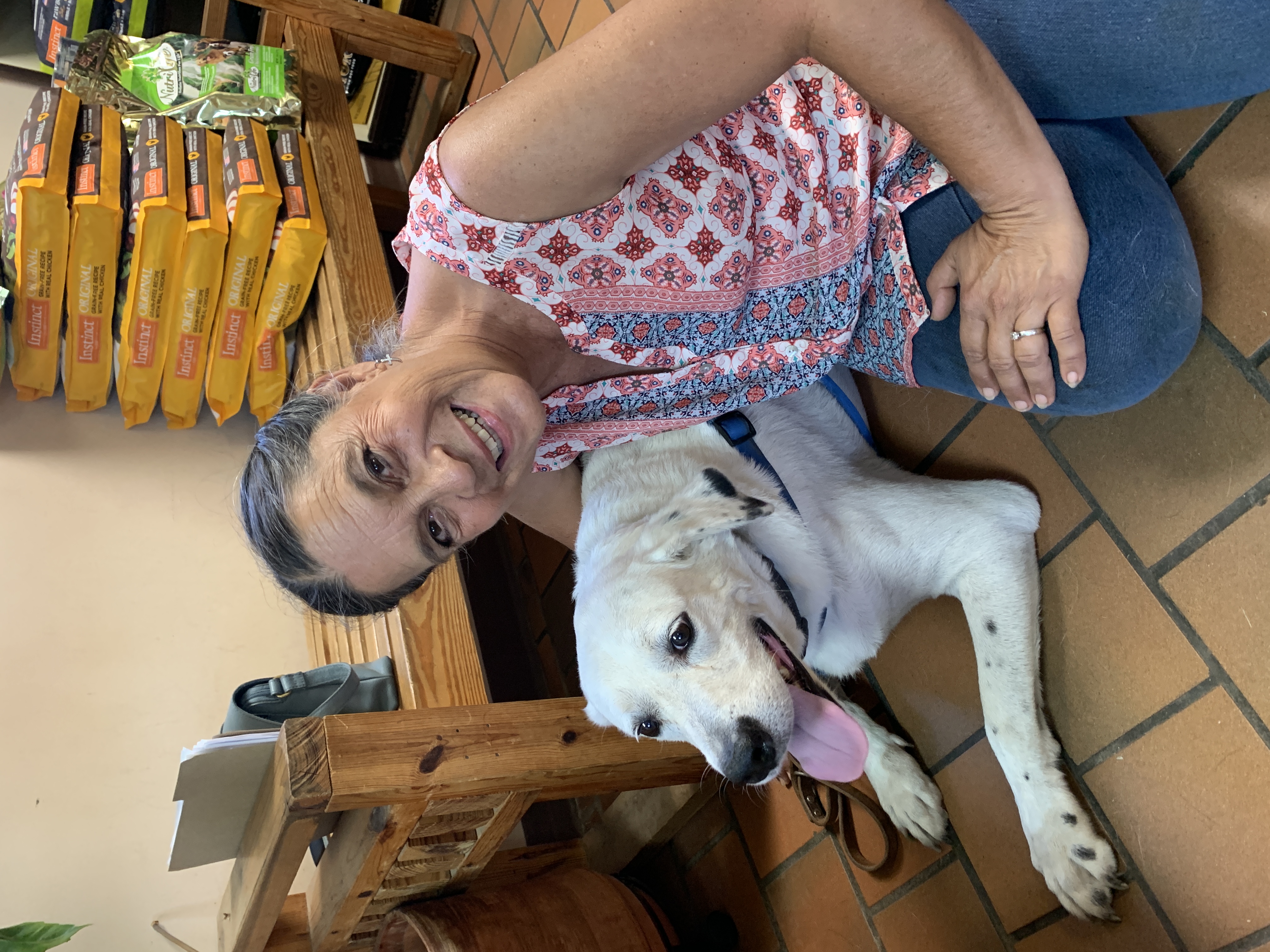
Attended Kansas State University, Manhattan, KS and obtained a BS in Animal Science and Industry, with an emphasis on genetics. Graduated KSU School of Veterinary Medicine 1981, Cum Laude. She started a solo practice in Van Buren, AR in 1982. PJ is married to Jeff Broadfoot, and has four grown children, Brannon, Barrett, Burke and Brea, and 7 Grandkids. Member of the Arkansas Veterinary Medical Association, American Veterinary Medical Association, American Holistic Veterinary Medicine. Served as an instructor in the College of Integrative Veterinary Technologies (CIVT) an international online college. She has given lectures on integrating nutritional aspects of healing, homotoxicology, cancer, the dangers of electromagnetics, the microbiome, psychoneuroimmunology, and the influence of environment and nutrition on children with learning and behavior difficulties. PJ lectures extensively on Complimentary Medicine in U.S and abroad. Published articles have been included in such diverse journals as Explore Magazine, The AHVMA Journal, The Bio-therapy Journal, distributed in the U.S. and Germany, and The Integrative Veterinary Care Journal. She co-authored a text-book: Integrating Complementary Medicine into Veterinary Practice (Wiley Blackwell 2008). In 2023, she was honored with the Carvel Tiekert Lifetime Achievement Award.