
 Apple Podcasts

 Spotify

 Castro

 RSS Feed

 Goodpods

 YouTube

 iHeartRadio
201. Inside a Lifetime of Holistic Practice: Dr Bob Ulbricht on Pet Health

Dr. Bob Ulbricht has spent a lifetime at the forefront of holistic veterinary medicine—now he’s revealing the homeopathic remedies and time-tested protocols every pet parent should know.
In this episode of The Pet Parenting Reset, Dr. Ulbricht walks you through his journey from conventional practice to true integrative care, shares how he’s capturing the wisdom of retiring holistic vets, and outlines concrete steps for passing these healing traditions on to the next generation.
Tune in to learn practical homeopathy tips for dogs and cats, understand why blending old-school insight with modern science is crucial, and discover how you can safeguard your pet’s wellbeing with natural, proven approaches.
🐶 🐱 Nutrition & Holistic Health Consults: https://jessicalfisher.com/product-category/holistic-pet-health-nutrition/
💜 Follow Jessica on Instagram https://www.instagram.com/thepetparentingreset/
📩 Get email notifications for new episodes:
https://jessicalfisher.kartra.com/page/tpprnotify
0:01 Welcome back pet parent. I am so excited for today's episode. I have another incredible veterinarian to bring his wealth of wisdom to you guys today, and I actually got to meet him a couple of years ago at a HVMA. So it is my honor and pleasure to bring Doctor Bob Ulbricht to you today. Thank you so much for being here, Doctor Bob. Thank you, Jessica. It's great to be here. So I would love, I mean, we're, we're going to get into it. We're going to talk about all the things you have many decades of veterinary practice behind you, which is incredible. So I know you have so much to talk about. You use a lot of homeopathy and I saw that you have some really amazing success using homeopathy with cancer patients. But we're going to get into all of that. What I would love to just start off so people can kind of start to get to know you a little bit is to just tell me a little bit about like your history, why you became a veterinarian. And then we'll kind of get into why you saw alternative modalities outside of the allopathic veterinary like industrial complex.
1:17 I don't know the, the veterinary allopathic veterinary complex. It's, it's, it's a thing. It's, it's a thing. So we'll talk about that too. Yeah, I mean, I being a vet was something, you know, since probably about the 7th grade or, or something that I wanted to do. And I just followed the path and did the usual things that one does to get there and then and, and when I was in school, all the alternative stuff. I mean, it wasn't, it wasn't just poo pooed. It was utterly ignored. There was there was no mention that there was anything other than this is the way you do things. And as far as I knew, that was the way you do things. So I, you know, the first actually, you know, several years of, of my practice, four or five years, I, I practiced conventionally. I had heard about, you know, acupuncture when I was in school.
2:07 The, the head of our anaesthesia department, we heard Newsome acupuncture. And if you kind of talk to him, you know, and you know, just hush, hush, you know, hey, he might teach you a little bit of something. And there was a couple of my students or fellow classmates rather that, you know, that did that. And we're all like, oh, yeah, I might as well stick pins and little dolls. You know, it's all voodoo. And you know, that that was the milieu that I learned and grew up in. And it it took practicing out in the real world to kind of release realize that, you know, conventional medicine is really great. If you're hit by a truck and you need to be anesthetized and have your legs set and blah, blah, blah, you know, acute disease, great. But when it comes to chronic disease, it really fails. Hypothyroidism, you can't cure it. You can supply the symptoms with external thyroid hormone or, you know, cancer or diabetes or any of those chronic diseases. All you can do is you can't really cure any of those things. You can just kind of palliate the symptoms. And I got sick and tired of that. I thought there had to be a better way. I remember I was, I was working at a clinic at one point, one of my patients who had just diagnosed it as a cat had feline leukemia, wasn't doing well.
3:26 And basically there was wasn't really any hope for this cat with conventional medicine. And I actually had the euthanasia solution drawn up in the syringe when the the pet owner said to me, isn't there some kind of, I don't know, alternative medicine that we could try? And I was like, I don't know, as it happened, my neighbor was a naturopath. And I thought, oh, that's nice. You know, that, you know, she does some, you know, that's cute. It's not real medicine, but you know, it's nice that she plays around with, you know, herbs and things. And so I, I thought, well, you know, I could ask my neighbor. I don't know, I didn't really expect anything, but OK, let's give it a try.
4:08 Sure, why not? And I talked to her. She suggested a few, some immune support, this and that. And behold, the cat got better. I was like, OK, that wasn't supposed to happen. And I started looking into it more and more and started taking classes like for humans in, in Chinese medicine and think, you know, continuing education classes and stuff and adding a little of this and that. And I thought it was breaking new ground. And then I discovered there's a whole organization out there, the American Holistic Veterinary Medical Association, and then other organizations like the Academy of Veterinary Homeopathy and, you know, the chiropractic organizations and acupuncture organizations, all supplying consuming education.
4:51 I didn't have to forge my own path. It's already, you know, there hasn't been a lot of people forging that are following that path. We're still pretty few and far between, but yeah, there there was other resources available. So that's where I then I started taking, you know, certification course in veterinary homeopathy and I got diplomat status in that. And then chiropractic, a veterinary chiropractic. It took a lot of other courses in Western herbs and and Chinese herbs and nutrition and nutraceuticals and blah, blah, blah, and built a practice over the years that I've never turned back from. It's been really remarkable what stepping out-of-the-box can do for you.
5:37 So first of all, I just want to say there is never in a million years will I ever say anything negative about voodoo or hoodoo or anything like that because there is. Please do not hex me. You're right. I believe in it enough that your hex will work. Please do not do it. I, I, I, I don't know, I maybe I want to believe in it. I don't know, but I will never say anything negative about it And because I certainly fear that somebody be like, oh really, let's see what's going to happen. But and I. Don't want when I say, oh, I thought it was voodoo that was in my mindset back then, that anything outside was, you know, weird elite, you know, magical thinking, blah, blah, blah.
6:29 And yeah, lo and behold, you know, there's actually a whole lot of science between or behind the things that I do. I mean, people say how can homeopathy work? There's nothing there, blah, blah, blah. Well, actually there is interesting things there, but it's not physical things, it's vibrational things. And if you look for it with the right way, you can see it. So and, and, and people say, oh, well, I believe in, you know, evidence based medicine. Well, that's really such an insult because the implication is that anything that isn't science has no evidence against it. And the fact is people who are doing research and publishing in the alternative journals are doing really probably better science than the people doing conventional medicine because they kind of have, you know, they feel like there's a higher bar for them that, you know, they have to prove themselves better. And so the science is actually better. It's just ignored.
7:23 I mean, if you're willing, I would actually love to dive into that a little bit because I keep saying, and I granted, I have nowhere near I, I would never put myself in, in a class of a, of a veterinarian. I am like humbled by what you all do. And just even even conventional allopathic veterinarians. I mean, you go through so much schooling to learn so many different species of animals. Like I am so thankful that there are so many incredible veterinarians out there. It's just like you said, if my dog is hit by a car, please, I'm, you know, want some pain meds if you need to put them under anesthesia to do some let's let's get them fixed. But and I especially looking at the human side of things because I think that's where things happen 1st and then it kind of trickles into into veterinary medicine when we look at the human side of things.
8:14 And science has become a religion. I don't, this is, this is craziness to me. And I do, I mean, I, my bachelor's is in a science, it's just not in a medical science. I have a bachelor's of science. And so I learned what, you know, a science experiment should look like. And you're kind of when you go in, you're supposed to be trying to disprove yourself, whatever your theory is. And I don't believe that's the way most scientific studies are set up anymore. I think, you know, a pharmaceutical company or whoever that's funding it says this is what we have. We need to figure out a made a way, a way to make it work.
8:54 What can you give me? And then, you know, data is cherry picked and I don't know, it's, it's an insane percentage since like the 1980s of studies that have been retracted or corrected because the science was flawed. So I would just love, I mean, go, go get on your soapbox if you want. For sure. Well, yeah, people one another thing that bugs me is when people, you know, you talk about whatever, say the vaccine questions and they say, oh, no, I believe in science. Like, like science is not something you believe in. That's called religion. Science is something you you look at the facts. If the facts differ from your your belief, you change your belief.
9:38 You don't change the facts. There was an old quote from Doctor Who, the original Doctor Who back in the 60s, when Tom Baker said something like as the Doctor, he said the very the the very powerful and the very stupid of one thing in common. They don't change their opinions to fit the facts. They change the facts to fit their opinions or something like that. I'm probably slightly misquoting him, but but it's true. Yeah. It's, you know, getting back to like the vaccines, you know, wow, everyone has to be vaccinated and COVID. So. So have any of these people actually looked at some of the research that's come out in peer reviewed Western medical scientific journals like The Lancet, the 20, the October of 20 21 Lancet or the January of 22 European of Journal of Epidemiology?
10:34 I mean, these are well respected scientific journals, peer reviewed. And yet they, the, the articles, the, the research published in them show that the COVID vaccine was not lowering the antigen load, that was not reducing the spread. It was not. There was no difference between highly vaccinated countries and, and poor and, and low vaccinated countries were highly vaccinated counties and low vaccinated counties that it was not spreading. And yet people aren't looking at any of the science and they're just saying, oh, I believe in science without looking at the data.
11:20 So that's just one example of, of course, many rainy roads we could go down. Yeah, well, I just, I, I find it to be so odd that and I, you know, I see this kind of thing on social media all the time. It's like people have no problem injecting themselves with something and not asking questions, eating a Dorito and not looking at the ingredient profile, but suggest that they take oil of oregano when they have the flu and they're like, where is the scientific research on? And I'm like, what in the world? I just think that's what that's the society we live in. Kind of shows like where where we are as a society. It shows how you know, have become so disconnected from nature that we think we're so much more intelligent, more powerful. And what you do, what you have proven in your practice is that that's really not, in my opinion, what you've proven is that that's that's just not the case. So what are some of, and I know you use a lot of homeopathy. What are some of the modalities that you have used in your decades of practice that you're like, this is pretty incredible guys.
12:40 Like we really need to. We need to look at this more. Well, I mean, I mean, really realistically, the number one modality, the number one thing that you can do is your diet. You always start with that. I mean, there's just so much getting off of processed food and people just, you know, they ask well, which brand, which kibble is best or whatever. None of them. Some are better than others, but none of them are good. And it's just like if you did nothing but ate canned goods all the time, how would your health be as it was opposed to eating something fresh from the produce department. And it's the same thing where there are dogs and cats. You got to start with diet. That's the number one, you know, nutritional medicine, the number one thing. Some dear friends of mine, their dog had lymphoma, developed lymphoma.
13:23 And we didn't, I mean, we started them off. I gave them some immune support and support, You know, the main thing we did, we, we switched the diet. Number one, get them on a raw food diet and ancestral diet. What are wolves and coyotes eating? And it's not opening cans and bags of things and it's not sitting around the campfire roasting their rabbits. They're eating it raw. So get back to what they're doing. They did that, but they unfortunately really couldn't afford to keep up with the immune support and all the all the other things. And they kind of fell back on jest diet. That dog lived a year and a half on diet change alone. I mean, think how well it would have done if we could have kept up with some of the other things.
14:04 But I mean, diet alone can do, can fix so much, so much of our of our pets and our health problems are because we're eating the Doritos and all that junk we put into our bodies. So I mean, that's pretty amazing, especially for lymphoma because that is known. For life expectancy. Pretty quick, yeah. Yeah, that's pretty amazing. And I too am on that bandwagon with we have to have to have to fix the diet first and foremost, like you cannot out supplement a bad diet. And I think we try. I think a lot of us, we try. I know I get a lot of a lot of clients that are like, they'll have a list this long of supplements that they're giving their dog and they're good supplements. Like they've done their research and they're, they're really using good supplements, but they're feeding a kibble. And I'm like, you know, I hate to break it to you, but. It's like building a really good house with no foundation. Right, yes.
15:02 So, OK, you started as a conventional veterinarian. What? And you told me about the, the cat with leukemia. Was there anything else that maybe kind of shifted you, your mindset a little bit? Was there are there any other stories that you have that you were like, I really, I really need to expand my horizons here. Another anecdote. I, I mean, I just, I know that the more I, the more I learned, the more I tried things, the more I saw success, the more I realized that there was a whole lot more out there than I ever was presented in vet school. Another story isn't just like springing to mind at the moment, but that's OK. I'll probably think of something as we talk. That's OK, No problem.
15:49 So I noticed when I was looking at like the bio that you gave me, you pretty quickly it looked like you you ran from 8:00-ish years after vet school and then you went and you, you learned homeopathy. So let's start with homeopathy. Sure. I have to be honest, like, I love the idea of homeopathy. I have tried. I actually just signed up for another course with Doctor Will Falconer. Yeah. And so, yeah, I it's like I understand it, but I don't understand it, if that makes any sense. Like, I know that there are different, different methodologies with homeopathy from talking to to Doctor PJ Bradfoot. And I know that I only know enough to be dangerous because like, you have to, from what I understand, at least the way Dr. Falconer teaches it is you have to get like in the nitty gritty of every symptom.
16:51 And when those symptoms change, you got to do it all over again. And so to me, I'm like, I would be pulling my hair out, but I would love for you, you to give me like I'm in fifth grade, explain homeopathy to me. So homeopathy, it works with the symptoms. Conventional medicine works against the symptoms. OK, it's a very anti. If you got a fever, you take an anti pyretic. If you're vomiting, you take a anti nausea medicine. If you've got a whatever it is anti diarrhea, anti this, anti that. Whereas homeopathy, the symptom symptoms are like the how the, how the, if the body deals with disease, right? So, and they're like the oil light on your car. If the oil light comes on, you can either add oil to the engine or cut the wires leading to the light. Either way, the light goes off and things like steroids and all these, you know, it's suppressing the symptoms kind of, you know, medications are just cutting the wires. You're not doing anything for the body. So the, the, the symptoms, like I say, they're how the body tries to, you know, if you've got an infection, it raises the temperature to cook the infection out of you. If you take something that lowers your fever, your ability to fight the infection is actually inhibited. You might feel better in the moment, but it takes you longer to, to get over it.
18:14 Or maybe you never get over it, depending on what, what you're doing, what you're talking about. So what homeopathy does, if you've got a fever, you give say something like belladonna, that if you were to eat it, eat a belladonna, you know, in its pure form, aren't plant form, it would actually make your your fever rise, your temperature rise a bit. So it actually enhances your symptoms temporarily and therefore thereby enhances your body's ability to fight whatever it's trying to cure. But then those remedies don't continue to because they're diluted and potentized. They have a brief effect they don't have. Like belladonna is poisonous until you turn it into a homeopathic remedy and then it you know can cure things that have a similar symptom.
19:08 Picture they say that large doses of anything kill, small doses palliate and micro doses cure. So homeopathy is the micro doses that give the body a little nudge in that direction, kind of waking it up to say, oh, this is what's going on. This is, you know, enhance the the the body's innate ability to heal and then you sometimes get a little aggravation from that, but then you get true healing afterwards. How's that for a quick and dirty? Experiment. Yeah. Well, and what I understand of homeopathy is that the originator. Yeah, Doctor Hahnemann. I don't know if it was him or him and a bunch of other doctors.
19:51 They actually took these remedies to test them out to see what they would be good for. I cannot imagine a doctor today creating a pharmaceutical and doing that. Right, right. So, yeah, the the state of medicine 200 years ago when Doctor Hahnemann was, was formulating his ideas about homeopathy. I mean, there was, there was these things that, yeah, the doctors of the day, well, when you have syphilis, you give them mercury or whatever. And he was like, why? Where's the peer reviewed study? Not that they really had those and they, they just didn't have those that kind of thing in those days, right? And so it was all kind of handed down, called Doctor Smith said it worked and Doctor Smith got it from Doctor Jones. And nobody really knows where some of these things came from. So what Doctor Hahnemann said was, well, let's find out what these things actually do when you take Mercury or, or whatever it is.
20:54 But of course, Mercury's really kind of toxic or most of these things that they were giving were, were really toxic. So he wanted to, you know, want to poison himself. So he took Peruvian bark that was supposed to, it was supposed to be good for I think malaria and he made it into a solution whatever and then diluted it one to 10. And he want he was a very, very meticulous man. And so he he would make sure it was really stirred up really well. So he would succus it like 100 times and just just, you know, kind of stumbled on this. He, he was just his meticulousness. There wasn't any thinking about, oh, there's something about secussion that brings out the healing properties of, of, of these remedies. He was just trying to stir things up to dilute the, the remedies.
21:41 And then he, you know, that was still too toxic. So he took what was left and he very, very meticulous. He'll just do it at 1:00 to 10:00. He was always, you know, very precise and everything. He diluted that one to 10 and secused it and he got it down to the point where it was not toxic anymore. And then he took this substance and he found that he got sort of this relapsing fever that, you know, would kind of come and go just sort of like the way malaria works. And you think, well, maybe there's a connection there. And that's what got him sort of started in this whole idea of these substances that produce these symptoms can cure ailments that produce similar symptoms. And from there he that he tested hundreds of remedies on himself and on volunteers.
22:26 And then, you know, eventually getting, you know, groups of volunteers that would take these things and write down everything that their, their thoughts, their feelings, their sensations, how you know, their dreams, their, you know, whatever all the whole totality of everything. And then he looked for common denominators that was repeatable throughout at least the majority of the of the testers. They called them provers. It wasn't like proof isn't a mathematical proof, but proving what you know, what, what does the remedy do? And and then he wrote, you know, all this, all these books, you know, all the symptoms that this remedy or that remedy would do. And what you're talking about from what what Doctor Falconer was telling you, That's how you for, for especially for like deep chronic disease, you got to look at that whole constellation of pictures and pick a remedy that matches as closely as you can so that it will resonate as closely to the individual as you can.
23:16 So it will have the deepest acting effect. Now that's all constitutional prescribing. That's that's for chronic disease, for really deep diseases, There's a lot you can do with acute diseases. You don't have to delve that deeply into it. Probably the most commonly known homeopathic remedy is arnica. It's the, of course, it's the best remedy for pirates. Arnica. So arnica is good for trauma. If you take the arnica plant, it's a beautiful yellow flower. But if you were to grind it up or eat it or whatever, it would have this kind of a toxic effect where you're, you're, you'd feel kind of sore and bruised. And that's, you know, that's why it helps with, with bruising and, you know, sprains and strains and, and things like that.
24:11 And people with, you know, arnica cream on their sore shoulder or take the arnica pellets when they, you know, have a, you know, a sore back or whatever it is. So arnica, you don't nearly need to know all the, the, all the details about arnica. It's a pretty acute, not very deep acting remedy, but it's so useful for so many acute diseases, trauma type things. Well, Donna, like I was saying for fevers that come on quickly and and your face is flushed and pupils dilated. If you have that, you know, there's a lot of a lot of different diseases, a lot of different viruses that will cause that kind of a thing with a fever and flushed face and all that.
24:54 So Belladon is often very good acute remedy for a lot of of these types of diseases. If there's probably, I don't know, 20 or 30 remedies, cute remedies that if you knew those and the kind of the, the basic things that they are called for, you could treat quite a few things with homeopathy, maybe not curing cancer or getting, you know, deep into, you know, some of the, you know, really chronic diseases, deep acting or you know, long term life term, lifelong things. But there's a lot that you can do with acute prescribing. It's a great way to start. And once you see how well the acute stuff works, sure dive into some of the, you know, the deeper stuff, learning more about some of the the antisoric remedies and the anti miasmatic remedies and all that that that you can delve into much deeper. So and I've heard it described as like energetic because of how diluted it it is.
25:58 And I think that's what turns a lot of people off to it like because people don't again, we're back to that word, believe in it. What do you do? I don't have you come across patients like or, you know, pet parents like that or. Sure. I, I had one that was that said to me, yeah, I brought up homeopathy. Yeah. What's, what's the atomic number of that, you know, or something, you know, is it was like, well, I don't know what's the atomic number of gravity? There's no atomic number for gravity, but you believe that gravity exists. What's the atomic number for? You know, there's so much in this world. Photons don't have an atomic number, but we use laser light to, to, to treat diseases.
26:40 One of the one of the many things that I do is a therapeutic laser treatments that pulse infrared laser light at different frequencies that will stimulate nitric acid, nitric oxide levels in the cells and ATP production and blah blah blah. And it's all scientifically proven. It's actually FDA approved. But people say God, what lays light there was, you know, something. Anyway, I digress. Just because something doesn't have an atomic number doesn't mean it isn't real. And even Doctor Hahnemann knew, I mean, they didn't know about Avogadro's number and you know, atoms and you know, whatever back in those days. But he still kind of knew that, boy, these things, if you dilute something one to 10 or 1 to 112 times, there's really, there's nothing left of the original substance.
27:28 And yet he found that the more he experimented with this and the higher the potencies, the more repetitions of the dilution and secussion, dilution and secussion, he found that some of these remedies, some of these things became more and more powerful. Their healing, healing improved. And yet it was more dilute. And he actually, he, he did some other experiments to kind of look at what's going on with that. He tried, maybe it's, is it, is it the dilution? So he tried not secussing but very carefully to lightly stirring and diluting and stirring and it didn't get that effect.
28:10 And then he took substances and you know, made a one like very dilute whatever diluted it and sekus, sekus, sekus, sekus, sekus, it didn't have that effect either. It was the alternating dilution and sekussion that somehow brought, brought forth the healing properties of these substances. So what was the original question? I don't even know. I don't even know. I was just lost in the story, but that that it does make me think of, you know. Oh yes, of bioenergetics. OK. Not to interrupt you, but no. No, no, you're good. So yes, even Doctor Hahnemann knew that there, that there had to be something more than the substance itself, that there was something brought into the solution from the substance of bioenergetic pattern, a fingerprint, if you will, of the substance without the toxic effects of this substance.
29:03 But there was still something vibrational there. And there's, there's been some, some studies, I think MRI magnetic resonance imaging that you know, that shows, OK, there is something, there is something there in a, in these two substances that are chemically identical. 1 is just the sugar pills for the milk sugar that the substances are generally put on and one is blank pellets and one is pellets with a remedy. And sure enough they can tell that there's a difference there. So there is something that goes on, it's just not chemical. But there's a lot of things that go on in our world that aren't chemical. So and it, and it, it does make me think a little bit because I know it's easy for us to say like, oh, humans ruin everything and we ruin a lot.
29:55 Don't get me wrong, we ruin a lot. But, you know, when I think of like, like, like a zoo farm and cognosie or, you know, where animals can self select they're, they're probably not going to select an arnica plant or a belladonna plant or something that is known to be toxic or is going to like, upset the stomach or like. But but that human intervention was actually a good thing for once. Yeah. I mean, animals do a deer will eat Mullen in the in the fall, right? And it's good for the respiratory system and you know, helps, you know, for, you know, colds and flus and things like that. And they will purposely seek that out during cold and flu season, cold and flu season, let me just say.
30:37 So every year we have a candy holiday. I was going to say yeah. Followed by a pie holiday, followed by a cookie holiday, followed by an alcohol holiday. And we call it flu season, right? Anyway, animals will seek out medicinal plants. They don't dilute and succustom. Whoops. And hit my computer here. They don't dilute and succustom and turn them into homeopathic remedies, but they certainly seek out herbal remedies. Yeah, the dilution and secussion was kind of, you know, stumbled upon, but, you know, a remarkable way to turn some of these medicinal plants, which some of them you had to be careful with, like digitalis from the foxglove plant. It can kill you.
31:31 It can also save you if you've got heart disease, there's not a lot of difference between the curing dose and the and the toxic dose. You know, there is some difference and if you're very careful with the prescribing. But that was one of the reasons was one of the things that pharmaceutical companies kind of came about was because people would take, you know, different, different foxglove plants would have different, you know, one that grew in the spring versus the fall or on the hill versus in the valley or whatever. They might have different amounts of digit digit in their in their leaves. And so when people made this remedy for heart disease plant, you know, herbal remedy, yeah, some people died because it was too, too rich and there wasn't really good ways of of kind of measuring, you know, how much is actually in here. So pharmacies came about to standardize the dosing so that when we take digoxin, we know we're taking the right amount and not saying nothing, you know, too toxic. But nature often has a way of balancing things. Dandelion tincture is a really good diuretic, probably better than lasix.
32:40 Lasix is a good diuretic, but what? But it also has a tendency to deplete potassium from the body. Dandelion is naturally high in potassium. So it comes with this natural balance. And then what modern medicine does is, oh, where's the, what's the, the active ingredient? Let's, let's get rid of all the other stuff. This is the one active ingredient. And it doesn't work that way. Like CBD, for example, now that it's become generally legal. The science has been just this avalanche of research coming out about all the different things, the whole endocannabinoid system that we had no idea existed even like when I was in school.
33:21 But what science does is that, oh, there's a plant that has, has these medical properties. What's the active ingredient? Oh, it must be CBD. It let's get rid of the THC and the blah, blah, blah, blah. And let's just, it's CBD. And yes CBD is good, but it's better when you have the entire complex of the 300 or so different cannabinoids and the all the other terpenes and blah blah blah all those things X synergistically and and far modern pharmacology. Taking this one thing out of a plant and calling it the curative substance is just very short sighted. It is very short sighted, I agree.
34:01 I've been talking a lot about that lately with colleagues and trying to get more content out around that here very shortly. So it, it, it is, it's very, in my opinion, too short, short sighted of us. One of the other questions that I wanted to ask you about homeopathy, I hear this a lot, is that you, you can't hurt anything with it. Is that true? Mostly it's let's let's say it's difficult to do any harm because the, you know, it's diluted so that the toxic properties are diminished. You can complicate things with homeopathy if you don't know what you're doing, but it's hard to like, you know, kill someone with it or something. You know, if you, I'm going to stick some arsenicum in their drinking water and they're going to get this arsenic. Well, no, actually, it might help cleanse arsenic from their bodies.
34:54 You can't. It would be hard. But if you're, yeah, if you're trying to cure and you're kind of stumbling, you're trying this remedy in that rainbow, sometimes this remedy kind of disrupts the case and complicates things. And then it makes it harder for the more the actual remedy to, you know, the the better remedy to do its job. I. Don't know the best I can kind of come up with it. You can do some harm with it, but but not a lot of harm. OK, gotcha. You mentioned also that you've had a lot of success using homeopathy with different cancer patients and I have not heard a whole lot about that specific topic. So I'd love to hear.
35:39 Sure. So I actually do a multi pronged approach for cancer. I don't use just homeopathy. If you can get the right constitutional remedy for that individual, I mean, if you get the right remedy, you can cure a rainy day. It's remarkable. It can do, but sometimes there are layers and you got to hit the right remedy on the nail on the head every layer down and it can be tricky. It can be done, but it can be tricky. So I do I do things that are a little bit different for cancer. Well, first of all, I talked about earlier, always start with the diet, get them off a processed food. And there's certain veggies that are particularly good for helping the body to fight cancer. The cruciferous vegetables like broccoli, cauliflower, Brussels sprouts, cabbage, they those contain indals and quercetin and things that help the body to fight cancer. So, you know, want to increase those veggies. And also the veggies, anything with that red, yellow, orange color that shows that it's high in beta carotene, other carotenoids, Yeah, carrots and squashes and sweet potatoes and red bell Peppers, things like that. So you want a diet in an unprocessed raw meat and veggie diet with particularly emphasizing cruciferous and red, yellow type of vegetables.
36:55 So we always start with that and then we get them off of anything, any extraneous chemicals that they don't absolutely need. They're on thyroid hormone and their thyroid is totally shot and they need the hormone. OK, fine, keep them on the thyroid hormone, but you know, try to take them off the heartworm preventative and the, and probably the number one thing is don't vaccinate anymore. A vaccinating an animal with cancer can be like pouring gas on a fire. And generally the vaccines last way longer than what everyone tells her they last. So they're absolutely fine. And if you're concerned about it, run titers and see if they still have the antibodies, which generally they do for the rest of their life. So they don't need the vaccines. They could accelerate the growth of the cancer.
37:35 So you get them off of all those types of extraneous chemicals. And then I'd really try and build up their immune system with, you know, transfer factor and medicinal mushrooms, Myitaki, Shiitaki, Turkey tail mushrooms supporting the organ that the cancer is in. So standard process makes a whole slew of supplements, nutraceuticals that support each organ. So if the, if it's in the liver, you put them on liver support. If it's, if it's lymphoma or whatever you, you use, you do a, a nutraceutical that supports the kidneys or the thyroid or the whatever it is that the cancer is in. And then you, well, there's, there's things like turmeric I use with almost all my cancer cases now, turmeric, this is an interesting thing.
38:23 Turmeric is wonderful. It's got anti cancer, anti aging, anti-inflammatory. It's great, great stuff. It's only about 1% absorbable. It's nature's great practical joke. Here's this great herb that's healing. It does all these things for you and you can't have any, and the 1% that gets into you is good, but it wouldn't be great to get more, and they do. There are ways of getting more in there. You can add black pepper and coconut oil and that'll get the absorptability up to 3 or 4%, which is better than one, but still really terrible. I found these folks in Germany that figured out a way to complex the curcumin from the turmeric with cyclodextrin, which is a ring of sugar type molecules in a doughnut shape. And they stick the curcumin in the doughnut hole and then the body looks at it.
39:04 In particular, cancer cells who love sugar look at it and say, oh, sugar, I'll take that. Pulls it in, pulls the curcumin right along with it, increases the absorptability 40 fold. It just blows all of their turmeric supplements out of the water. Wow. So I always put almost all my cancer cases on it. It's called cava cumin. I used to have to import it from Germany. I think there's someone in, I don't know, Minnesota or Michigan or someplace with an M that imports it now that we don't have to go out of the country, but it's still difficult to find in this country. But I, you know, I get, you know, 10 kilogram lots about once a year. I go through a lot of it. I take it myself, honestly.
39:47 I take half a teaspoon and a glass of water every night. Helps with aches and pains and it's a great supplement to take. Oh, again, all my, almost all my cancer cases, I'll put them on that. And you know, and the mushrooms, the immune support, there's some erybidic herbs like harataki or I can't remember the scientific name, Terminalia turbula or something like that anyway, that has good anti cancer properties. And then of course CBD and I typically use the one from CBD Dog Health who you know Angela produced or created that line of products which are excellent. I know I have. I've actually started referring to it as full spectrum hemp extract just to just not because it's easier to say it is not, but because so many people here CBD and then they just go buy the cheapest CBD they can find. And I'm like, no, that's not what I want. I want you to get a full spectrum hemp extract. Right at the proper dosing too, at the proper, you know, concentration.
40:50 So yeah, I mean, first of all, OK, it's a whole new unregulated industry. And there was a paper that was published that where they went out and they bought 100 different brands or I don't know how many of CBD products and had them third party tested and some ridiculously high number. I can't remember what it was, I'm going to say 20. It was, it may have even been more, but it was, it was a lot of the brands that are out there. What was on the label wasn't necessarily reflective of what was in the bottle. So just because it says cannabis or CBD or whatever, you, you want to make sure it's third party tested and make sure that what they're claiming it is, is actually there. And you're right, full spectrum.
41:35 I mean, there's a lot of, you know, just not what do you call it, not when it's not full spectrum, broad spectrum, OK, broad spectrum is better than just CBD. But no, you want full, full spectrum. You want all of the stuff that that nature provided and you want it to be organic and you want it to be, you know, etcetera. And CBD, cannabis extract, whatever you want to call it at what is it like 2 point, 2 TH 5 milligrams per kilogram is kind of like your typical dosing for pain and anxiety and you know, things like that.
42:17 But if you're talking about seizures or cancer, you want more like 2 1/2 to 5 milligrams per kilogram. It's almost like, you know, 5 to 10 times the dosing that you would use for other things. And so people going out and buying a CBD product, it may be way too dilute for what you're treating. It may not be full spectrum. It may not even be CBD for that matter. And then you also you utilize homeopathy on top of that. I do, I do. And if I can can work out a constitutional remedy or a an obvious trigger. It all came it all they all started downhill or, or the tumor came up right after they received three different vaccines in one day and they had the strong reaction and then right at the vaccine site, the you know, this, this tumor develops. So, you know, something like really obvious that OK, well then we definitely would start with a, you know, vaccinosis remedy, Thuia or sulfur or, or Silicea, you know, would be the top three.
43:18 There's, there's others that could be appropriate, but typically it's one of those more often than not Thuya. So, you know, we'll often start with something like that. And then if there's, if it's clear what the next layer is, we'll we'll certainly stick with it. A lot of times it's it's not clear cancer, it's a complex disease with, you know, different miasms, interplaying and and stuff. And it, and it can be tricky to ferret that all out. So one thing that I've often done, and this, this is not exactly classical homeopathy, but there's a, a doctor from India, doctor Rama Krishnan, whose methods that I have adopted for those cases where the constitutional remedies is not clear, he'll do a, an alternating remedy. One week they're on an organ specific remedy, next week they're on a cancer nosode and it basically stimulates the body to be aware of this organ, be aware of cancer, be aware of this organ, eventually be aware of cancer in this organ. And then so for example, let's say bone cancer. The kind of the the classic one organ specific remedy is a remedy called Hekla lava.
44:27 It's actually a remedy made from lava from Mount Hekla volcano somewhere and they somehow that happens to resonate with the bones. And then we'll alternate that usually with Carcinosin. So the cancer nosode made made a remedy made from a cancerous tumor. So I'll, I'll alternate those two, you know, in one week they're on one, one week on the other. He also does a plussing method which I will sometimes adopt, and the way we adapt it for animals we'll have is put a dose of the remedy in a dropper bottle and dissolve it in 11 squirts of water. And then you give a squirt.
45:10 You set the timer for 10 or 15 minutes, you succus the bottle a couple of times and give another squirt, 10 or 15 minutes later, succus and squirt 10 or 15 minutes later, succus, squirt. You do that 10 times, you'll have one squirt left in the bottle. The next day you dilute what would that one squirt with 10 squirts of fresh water. So you're diluting it one to 10 and secussing with each dose. And the next day you dilute that one squirt that's left in the bottle again with 10 squirts of fresh water. So you're it's a one to 10 dilution every day with a lot of secussion in between, which is of course how homeopathic remedies are made, alternating dilution and secussion. So you're constantly ramping up the potency of the remedy. If you give the same potency of a remedy to a patient over and over again, the body gets used to it very quickly and it has less and less of an effect. So this is a way of keeping them under the influence of the remedy longer for the whole week. And then at the end of the week you go to the second remedy with the second dropper bottle.
46:08 You go through the whole thing with a dilution and secussion. And then week 3, you go back to the first dropper bottle with a fresh dose of remedy and start over. And we just, you know, do that all back and forth and we'll sometimes see that they get better this week and little, you know, lower energy the next week and better and lower. And if we're seeing that pattern, OK, the the remedy that that were they are not doing so well, we need to change that one. So it takes, you know, a lot of observation of is there a consistent pattern to are they are they just getting better and better? Great. That's what we'd love to see. But if it's they're getting worse with one remedy, then we got to change remedies. So I, I want to talk to you about the future of veterinary medicine, but before we do that, I just want to, this may be totally dense of me, but as you were talking, I just realized something that I don't know if I realized this before. And so I wanted to say it in case anybody listening is like still having a hard time understanding homeopathy because I think this just made sense to me. One of the things that I've learned and that I tried to pass on to other people is that, you know, we live in a very toxic world and we are constantly bombarding the body with bad food, especially, you know, if, if all the animals eating is older, processed diet, bad food and chemicals and fragrances in the air and, you know, there's smog outside and pesticides on the lawn.
47:34 And so one of the things I talked about is how overwhelmed the immune system is and it doesn't know where to focus because there's just too many things going on. And so it might focus on one thing and it's not exactly what you want it to be focusing on. And one of the things you said through the course of this is that this energetic medicine, homeopathic remedy is kind of going into the body saying this is where you need to be focusing. Yes. Does does? Is it my thought process? I don't know if that's this is just my thought process of like trying to understand how this works. Yeah, I mean, that's not true of all homeopathic remedies. OK, OK.
48:18 Some treat the whole body, but there are some that have an affinity for the nervous system or an affinity for the GI system. And those are the remedies that I tend to use with the cancer treatments. Gotcha. At least using the Rama Christian method when I'm using more classical homeopathy, you don't necessarily look at that as as. It's a it's. So the more classical is like the like treats like kind. Of like treats like, and, and it's still like treats like we're still choosing a remedy. I mean, there there's usually several remedies for, you know, cancer in this organ or cancer in that organ. There's several that that could come up.
48:59 And so you look at the symptom picture of those three or four or five different top remedies and you choose one that has the similar type of discharge, the similar type of pain sensation, you know, whatever it is. So it's, you know, it's not, it's not throwing classical homeopathy completely out the window. It's just a shortcut that is often useful, especially for such a difficult disease to treat. But I'm not saying it's the only way to do it. And certainly, you know, the ideal is to, you know, do the more classical prescribing and hit each the nail on the head, correct each time. It's not always possible to do that. Gotcha. So one of the other things you said is to stop vaccinating. And if you really need to somebody is, you know, got a hair up their butt, then go ahead and tie your test. Right.
49:50 Now I, I was not expecting to share the story, but since you said that it came to mind. I recently moved and I took my dog to a new veterinarian. And I believe me when I tell you, like I called so many places. I did this when I moved the last time to, I called so many veterinary offices and just to get like a feel of who they are, what they're because. Because for me, a lot of times the best case scenario is find a veterinarian who was open minded enough to have conversations and agree to disagree. And so I thought based on the conversation I had with this person at the front desk, that this was the kind of clinic I was going into, totally not the kind of clinic I was going into.
50:35 I spent the whole time with this veterinarian who got very flustered by the way, I think because she didn't know how to handle. I was just calm about everything and said OK, thank you, I understand instead of like arguing or crying or whatever. And she when we got because I had submitted my dog's titer test to them before I even got there. One of the things she said was that she didn't believe and there was not science proving that titer test tell us anything. And I'm like, OK, I mean, that was just one of like, I don't know, 15 things that I was like, I'm not coming back here. Especially when my raw fed dog had a high bun with a good SDMA and she did not even ask me to do a urinalysis and decided that she had kidney disease. But anyway, yeah.
51:28 Thank you for bringing that up. For people who are listening, the BUN or bun is it's naturally higher on dogs on a high protein raw food diet. It does not mean that their kidneys are failing. That's as a normal test result for that diet. The SDMA is normal. You do not have kidney failure. But I just yes, thank you for for bringing that is another big sticking point that yeah, yeah. Yeah, I mean, didn't even ask to do a urinalysis. I was like, OK lady. So anyway, that brings me to the future of veterinary medicine because I think like I was saying, a lot of times the best case scenario is as open minded as possible. Agree to disagree.
52:15 Use an allopathic veterinarian for your labs for Wellness checks. And then I don't know what like find a holistic or integrated vet who does telemedicine, utilize holistic pet health coaches, you know, nutritionist, all the things that are out there and available to you. But one of the things that I had talked to you about previously was the idea of a lot, a lot of the holistic veterinarians that especially that attend like the AHVMA conferences are at that age where they are looking at, I want to retire soon And there aren't as many younger veterinarians coming in that are like expressing a lot of interest in learning.
53:07 But you guys have so much knowledge that really needs to get passed on. So there is a crisis in veterinary medicine. And I think if we could get your knowledge and others like you out there, then maybe we wouldn't. We have such the crisis we have. But I don't know what are your thoughts around this. Well, but it's complex. I mean, part of it is the corporate takeover of veterinary medicine, holistic medicine, you know, is not as profitable, at least on paper. Let's just go going back to the vaccine thing. The markup on vaccines is, is ridiculous. It's like, you know, 10 times what the vaccine costs, whereas A tighter test, the cost of the lab work you're you're maybe doubling it or whatever. So you're the costs like I make about the same amount of money per jab, whether I'm jabbing something in or pulling blood out.
54:03 I'm making about the same amount of money because the tighter test is a little more expensive than the vaccine, although we're only running the tighter test every three years. So it actually in the long run saves you money. But for the amount of time that I spend, I'm making the same amount of money. But on paper, my costs of business costs are just way higher because laboratory costs are much more expensive than the vaccine cost. And so when they do practice analysis and run their their formulas and their numbers, my practice doesn't look very profitable. And even though I'm making, you know, the same amount per time, but their formulas are just off for my kind of practice. So corporate medicine doesn't care about the patient, they care about the profit.
55:00 Profit driven medicine is destroying veterinary medicine. You talk about veterinary medicine being in a crisis, it's because so many of these practices are being bought up and taken over by these big mega corporations whose interest is in how can we maximize the amount of money that we can extract out of each patient visit has nothing to do with what's best for the patient. Now you can make more money that way by pushing all those vaccines, pushing that extra whatever, you know, wormer medicine every month or the whatever, you know, pushing, pushing all these things that they don't need and may actually be harmful to do all the same time or in conjunction with these other things, or maybe just harmful in and of themselves.
55:48 But they're not looking at that. They're looking at how much profit can we make? Now by making that extra profit, they're able to to take something out of the new students and say, hey, we can give you this kind of salary come to join our team. And so it's harder for small practitioners, individual owned practices to make ends meet. We got to we got to compete with them for staffing costs, and it's great to be able to pay the staff more, but where's that money coming from? It's coming from the health of the animals. Ultimately their health goes down so that the profits can go up so that they can pay the staff that I then have to compete with.
56:36 And it's a lot harder for me to stay in business that way that that's one of the things that's destroying veterinary medicine. I did just hire a wonderful vet. She's only been out for a few years. She did a externship rotation through us when she was in school. And she's come back to, to work for me and I'm teaching her all these things. There are people, there are some young people who are more interested in or in, in, in practicing good medicine rather than filling their wallets. And hopefully they'll be, you know, more and more, you know, you know, who want to follow that path. I'm doing what teaching I can. And when she eventually, hopefully, maybe she'll take over the practice and I can maybe put all the stuff that I've learned over these decades into a book. But yeah, there's been other people have written good books, Marty Goldstein and blanking out of the some of the but there's a lot of books out there that are good. But who's reading them?
57:34 Not the vets, generally speaking. It's, it's the clients who like you hopefully are going to drive business, you know, look for the vets who have, you know, who are open to these things. The more you go to those types of vets, the better their business is. The more they can stay in business, the more they can pass on this knowledge, the more they can compete with the allopathic medicine. Go to theahvma.org. I think its.org and they'll, and they've got members now, just because you're a member of the AHVMA doesn't mean you're a good vet. But if you're looking for someone who practices the kind of medicine that I practice, that's a great place to start. There's other organizations as well, like the a, a, the AVHTHE avh.org, that's the Academy of Veterinary Homeopathy. Again, they have a, you know, find a practitioner section and they've got continuing education and, and, you know, annual conferences and all that.
58:34 I tend to like that group. I mean, if you're looking for a really good holistic vet, I think it's my personal bias because my original certification was in homeopathy and I think there it's generally a really great group of veterinarians, but that's a great place to start if there's no one in your area. Sure. The HVMA likely has someone and you know, any of the Ibis, you know, the Veterinary Acupuncture Society, there's a lot of groups out there that have their websites that have their referral system. Those are great places to start. And yes, we're still kind of few and far between and hopefully there's someone in your area. But if not, yes, telemedicine is still an option until they take it away.
59:19 Right, so I lost my train of thought. I just appreciate you coming on and bringing all of this knowledge with you and being so willing to share it with my audience. We are, we're small, but mighty, right? Like the the healthy pet space, in my opinion. Like we are growing, but we're still small in comparison to the big guys. And so, you know, I just do my best to bring on the the best education that I possibly can. And I appreciate that you were willing to come on and and be part of it.
59:59 Yeah, I hope. I hope that everything goes well with your new hire, that she absorbs everything. And goes and gets her certifications like you did and just continues that legacy because I, I mean, we need it so badly. We are again, I go back to like human medicine because it's, it's this path that veterinary medicine kind of follows. Human medicine, though it might be a lot quicker than it has been with AI coming into things. I don't know, You know, I, I saw something the the other day because in human medicine, women are just so, I mean, intentionally discriminated against for so long and still really a disservice is being done to us every single day.
1:00:46 But it was like at 13 years old, we put you on hormone therapy and then you come in in your 20s because you can't get pregnant. And then it in your 40s, we put you on a different kind of hormone therapy. And then somewhere in there you may need some surgeries. And you know, we're going to offer you an ablation now, right? So like we have just, I feel like this is the trajectory of what we're doing to humans and our pets alike is just, it seems insidious to me. And I think I don't know how much intentionality there is, but it seems very intentional to sell you what's going to cause you the problems later on and then sell you the solutions for those problems.
1:01:30 And I, I just, I feel like that's the same thing happening in veterinary medicine And so many veterinarians don't see it. And that's my biggest, like, I think that's one of our biggest hurdles. It's like veterinarians have to start seeing it like you did, right? Yeah, yeah, it's, I don't know how intentional. I, I think it's, you know, more, more ignorance or being led by the nose from it may be intentional, say up the line from the, in the pharmaceutical companies, but they're giving continuing education and stuff to the vets who you know, though, they'll tell the vets, no, I, we don't know how long the vaccine lasts. We only, we know, as far as we know, it only lasts a year. So it's better to be safe than sorry and just just keep pumping those in year after year and the vets just kind of buy it. Oh, OK, I guess we'll just say, well, they say it was safe. OK, well, we'll just do that.
1:02:25 And, you know, I think they're, they're following what they were taught and they're following what they think is right. Maybe somebody higher up did it all intentionally just to make more money. Who knows, But I think most vets are. They have good intentions, they just haven't bothered to question some things that they were taught. Yeah, it's funny. I was literally this morning having that conversation with Doctor Ruth Roberts about how many people don't have critical thinking ability. Tell me about it. And like how hard it is to teach those critical thinking abilities. But anyway, again, thank you so much for being here for sharing your with at least a tiny little bit of your wisdom. And I hope, I hope to be seeing you around soon. Is there anything else that maybe we didn't touch on that you're like, no, I wanted to say this. Oh, I think we're good.
1:03:17 It's been delightful being on your show. And yeah, I appreciate you having me. And maybe I'll be back sometime with some other things to say. I don't know. I'd love that. Awesome. Thank you so much Doctor Bob and you at home listening. Thank you so much for being here. Please give your pets some extra love from both me and Doctor Bob this week and I will talk to you next week.
Veterinarian
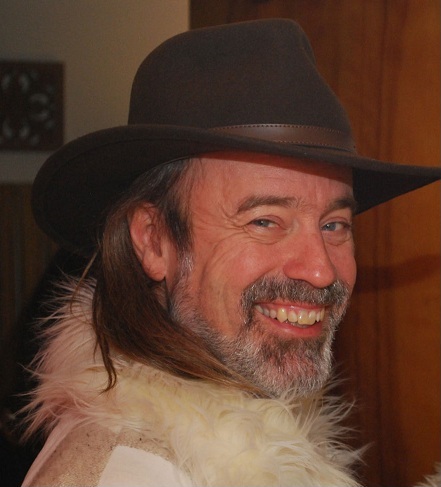
Bob Ulbrich VMD, CVH, CVSMT
Dr. Bob Ulbrich earned his undergraduate degree at Hamilton College in Clinton, New York, and his veterinary degree at The University of Pennsylvania School of Veterinary Medicine in 1986. In 1994, he became a Certified Veterinary Homeopath through the Academy of Veterinary Homeopathy, and in 2005 he received Certification as a Veterinary Chiropractor through the The Healing Oasis Wellness Center. Dr. Ulbrich can address any health problem using a variety of modalities, and has enjoyed a great deal of success using homeopathy to treat cancer and even behavioral problems. He is also available to consult by telephone with pet guardians and their local veterinarians throughout the country, and internationally, when a more holistic approach is desired.
Dr. Bob lives in SW Portland with his wife and the one and only Tig (short for Tigressa), a brindle rescue from Mexico. He lists some of his most interesting past employment experiences as being the Curator of Animals at the Aqua Circus of Cape Cod and volunteering to treat oiled seabirds in Washington state after the sinking of the Tenyo Maru. In his free time, he enjoys sailing, hiking, camping, dancing, SCUBA diving, and river rafting.