
 Apple Podcasts

 Spotify

 Castro

 RSS Feed

 Goodpods

 YouTube

 iHeartRadio
202. Stress-Free Overseas Dog Trips: Insider Tips from Pawdega Founders

Charly and Larry of Pawdega break down everything you need to know to globe-trot with your dog—no drama, no guesswork. Learn their holistic prep checklist (vaccines, health certificates, microchip alignment), packing essentials (food, supplements, familiar bedding), and stress-busting tips (pheromones, pre-trip carrier conditioning). They also share on-the-road routines for food, enrichment, and emergency planning, plus advice on staying compliant with customs and airline regs. Tune in to turn international dog travel from headache into high-vibe adventure.
🐶 🐱 Nutrition & Holistic Health Consults: https://jessicalfisher.com/product-category/holistic-pet-health-nutrition/
💜 Follow Jessica on Instagram https://www.instagram.com/thepetparentingreset/
📩 Get email notifications for new episodes:
https://jessicalfisher.kartra.com/page/tpprnotify
0:00 Welcome back pet parents. Today's episode has been a while in the making and I could not be more excited to introduce you to Charlie and Larry Pruden from Padaga. Padaga is a online holistic and natural pet Wellness store that has locations now in the USA as well as Dubai. And they ship worldwide, which is incredible for people who don't have access to things locally because we don't all have access to things locally. And one of the things that's really cool about this is just how much they take the time to put into sourcing products that are truly natural and holistic.
0:43 So let me get Charlie and Larry on the show for you guys. Thank you both so much for being here and working around your schedules traveling all over the world. I just appreciate you 2 so much. Yeah, thank you so much for having us. We're super excited to be here. Thank you. Yeah, I'm so excited that this finally worked out. Yeah, so, OK, Paul Daga, I have seen you guys online for years and was so interested, but honestly, for the longest time I'm like, oh, well, they're in Dubai. Like I don't what what am I doing paying attention to this, right? Yeah, You guys recently opened a location where you're shipping in the USA now. And I'm just really curious.
1:26 We're going to talk about a lot today. We're going to talk about Paul Dago. We're going to talk about how you go about like deciding what products you carry. Of course we're going to talk about Milka, who everybody, if they follow you guys wants to know about and traveling and all the things. But I would just love to hear kind of that origin story, like why did you guys start Padaga? What inspired you to create this kind of business, especially one that's focused so heavily on, you know, fresh food and natural supplements? Because this is, I mean, it's growing, but it's still pretty niche. Absolutely. Yeah. So of course, our dog inspired us. She was the original inspiration. But as like so many pet parents get into or get interested in holistic health because their pets at some point were sick, right.
2:16 So this is what also happened with Milka when she was a puppy. We had just moved to Dubai and there was a lot of changes for her and the environment, obviously with food. And she just kept like being very sick. She kept throwing up. And I remember there being, she also had a lot of like hot spots and diarrhea and things like that. So I remember there being like one week where she woke us up in the middle of the night like five nights in a row just throwing up. You know, every pet parent wakes up when that sound comes, right. So yeah. And we just were at a point where we're like, it's not working what we're doing.
2:58 Like we've just been switching from premium kibble to the next. And, you know, the vets all said they don't know what's wrong with her. We're feeding great food. We're doing all the right things. Like they just didn't couldn't help us. So at that point, we had a friend who kept telling us about raw food and we should just try it. And we were very apprehensive at the time because our vets were telling us not to do it. So at some point we were like, you know what, what we're doing isn't working, so let's just try this raw food. So, and we didn't, we, we switched her kind of from one. Like we did a slow transition, but it was quite fast for her. And she was just like a different dog. There was no more throwing up.
3:40 There was like slowly all her other issues went away. The hotspots never came back. And we were just like left feeling like, holy Molly, like, what just happened? Like, why? Like why are all the vets telling us not to do this when this was the thing that made our dog so much better and reduced all our vet bills? Because our vet bills were really high back then. Although we were spending less money on food back then. We spent all that money on vet bills. And now we're kind of like spending a lot less money in general because we just don't do a lot of vet visits anymore.
4:21 And that kick start our journey as to like our interest in holistic pet health. And from there it just spiraled into like, OK, now let's look into natural flea and take treatment. Let's look into natural shampoos, let's look into supplements. What's gut health all about? And all these things that just gradually, yeah, sparked our interest into learning more and more and more. And we wanted to share all of that. So from we're always very interested in sharing things with other people. And back then it was really just like just this we we just couldn't believe that. Like nobody was talking about it. It felt like nobody was talking about it. Exactly.
5:07 So we just started sharing Milka's journey on her Instagram account back then and that again, just spiralled. And so more and more pet parents, specifically in Dubai and the UAE, asking us for help. And we started, you know, suggesting certain things to them, like get these probiotics from adored beasts, for example, But nobody would do it because it's just so far away. And like you have to import the products into Dubai as a customer and it's quite expensive. And that just turned into us realizing, OK, if we actually really want to help other people, we need to bring these products into the UAE.
5:49 And, and that just went into like, we knew that if we were going to open a Wellness store, we'd want that store to be the safest place where pet parents can come to. Because at the same time, we were very fed up with going to a pet store and taking like 8 hours or longer to like, you know, just stand there and be like. Research Ingredients. Searching and we're just not sure what what's actually safe. It says natural on the front of the bag, but when you turn it around, you barely understand any of the ingredients. So we're just like very fed up with that. And we knew that if we were going to open a pet store, then we would make sure that it's the safest pet store and pet parents don't have to worry about all of the ingredients that could potentially harm their pets.
6:37 My goodness, I think so many of us are on this journey because one or more of our pets was sick. I know. Like that really wasn't even the case for me. I did have a sick dog, but I didn't like equate improving her food to improving her health. I just was like, I think I was just being motherly and like wanting to do more and started cooking food for her. And it was just like, one day I looked at my husband and I'm like, my gosh, like, when was the last time Claire had a seizure? It was amazing to Start learning these things. But what you were just talking about Charlie with like the front of the bag says natural.
7:22 I, you know, I've recently started talking about this on the live version of the, of the podcast with a couple of different guests greenwashing. And it is happening in every industry of course, but in the pet industry, it just makes it so much harder for pet parents to really find good products. So I am curious, how do you guys go about selecting the products and the brands that you carry? Like what? And this is a big, big question I know. But like can you talk about some of the standards that that you guys have for when you do vet a product to decide are we going to bring this in to to our shop or not?
8:06 Yeah. So like one of the first things that we do is really check for brand credibility. So we we look at the brands, is it a reputable, is it a reputable brand? Then we start looking at each product. Then we look at the ingredients of those products to see, OK, do they even fit within our store? And then going beyond that, then we start looking at we ask these brands, how do they source their products? Like are they, are there ingredients ethically sourced? You know, and then we start, then we move beyond that as well. Then we check for individual reviews, like what do actual people say about these products? So we, we want people to give their honest feedback so we can make a decision on whether or not we would stock the product.
8:51 So we can also help the people that shop with us as well. And I just want to add to that, like, the most important thing for us is that it's not just safe for pets to consume, but also like sniff or be exposed to like for with toys, for example, like it's very important that like just the dogs are going to sniff the toys. For example, are they going to inhale toxic chemicals when they sniff the toy? Like it's it's a product or chew on the toy. Yeah, it's a product that they don't necessarily consume. But even with things like that, it's very important to really do a lot of research into what the products are made of and what consequences these ingredients or materials have on our cats body. Larry kind of tried to really simplify it, but like this process takes days, if not weeks sometimes. And we do it for every single product. We don't just say, OK, you know, this brand is generally safe. So we bring in all of their products. We actually really look at every single product of a brand because like some brands do have some products that we wouldn't bring in and then we don't bring them in. So it really depends on a case by case basis on the product. And it's really important for pet stores to not just read ingredients, but really understand the impact that the ingredients have because we've
10:24 like we've hired other pet stores, say things like, Oh yeah, I read every ingredient before I bring in a product. But that's not enough. You need to understand that the ingredient, what it is and what the impact of it is. Well, yeah. And I, you know, I think it's it's one of those things with where, you know, you are, you have a store and you have to make money to keep that store open. And so I talked to a lot of people who have like brick and mortars here in the States and it's kind of all over the place as to how they choose the products that they bring into their shop. And some some of them are there like, well, we got to pay the bills. So we still stock these products that, you know, I maybe they might not even feed to their animals or give to their animals to play with.
11:18 And it's like, I mean, I get that you have to keep the doors open, but also like, I don't, I think that's such a hard. Things to. Do to make those decisions like there are because there are definitely stores that will not stock anything that they won't feed their own pets and they can keep their doors open. So it's it there, There's this. I'm very curious like. Your perspective. On on this part of it because they're again, at the end of the day, it's a business, but it's a admission driven business as well. And so kind of balancing that, how you guys say that? Man, this is like, this is such a great question because I think right now, especially as we're travelling through different countries and we're seeing like what like income levels of the people and you know, their wealth and you can see it's, it's so hard because like as you said, people got to pay their bills, you know.
12:17 But from our side, I think we have, I don't know, maybe it's our geographical location of where our businesses are located. I believe that the people that shop with us have the ability to afford. The thing about natural products is generally they are more expensive and raw pet food is going to be more expensive than kibble. I think as a as because your question is regarding the business owners. So I think first of all, we are very grateful that we're able to stick stick to our values because it definitely isn't easy. So I definitely understand. I think it's a great, if these business owners are honest about it, what you just said, you know that they're honest about like, hey, I do have to keep the lights on and I do need to sell some products that I don't maybe necessarily agree with 100%, but I have to do it to keep the lights on to keep my business running. And that might still be better than, you know, like they're still offering a lot of other nice natural things to their to their audience.
13:26 So that's still better than closing the shop down, right? Yeah. But at the same time, I think there are a lot of pet owners that we have seen, especially in in the UAE after we popped up that started using our words. But they didn't really, they weren't honest about them not checking. So that's what we were referring to earlier. So that's like there's a difference between being honest and your customers knowing what they're coming for you to your store for. And then there's there's the difference of not being honest, but trying to look like an all natural Allstate store, right? So there's these two differences. But I think when it comes to like really like our store, for example, for us it has been very important for us to really continuously educate our audience, which again isn't easy, but to like just reiterate why people are coming to us because we're the safe space, because we are.
14:25 Yeah, we're we're kind of making our own life harder by only offering completely safe and non-toxic products. But we're continuously telling our audience about that and they know that when they shop with us. So, yeah, that that's kind of the way that we are able to continue to operate because our audience really appreciates that about us. So yeah. Yeah, that's what I was. Saying add anything to that. No, I, you said it much better than what I was trying to say. Yeah, I think it's, it's, it's just, it is hard, you know, because I, I don't want to judge anybody out there, you know, selling, you know, products that I wouldn't necessarily agree with or sell. But I understand bills got to get paid. And just as you said, you know, it's better to offer some great things than no great things.
15:22 Yeah, Yeah. Well, and Charlie, you mentioned where I was going next with the other part of this business. You're not just providing products, you are educating consumers. And I know so many people get so overwhelmed with even the tiniest little bit of information coming into this space, whether whether it is for their pets or even for themselves. Like when you you try to start educating yourself on more natural holistic options, you're like, wait a minute that you know, this is how we've been doing this forever and ever and ever. And how do we not know about this all of a sudden in the last 100 years, we've all forgotten how quickly actually we all forgot about all of it.
16:12 But it is a huge part of what you do. How do you guys go about educating people and maybe helping them manage some of that overwhelm, Especially when they encounter a shop like yours where they may be like none of this looks familiar to me, where do I start? Yeah, Yeah. So that's a great question. We've always been very big on education and raising awareness just because we like from a very beginning, we just were so passionate about this whole topic. And we were just like, how could, how could let's not talk about it? How, how could this be such an unfamiliar thing to most regular pet parents, right?
16:59 Because also we were first time pet parents actually. So yeah, we just right from the start started diving into social media and just sharing Milkas journey. But along the way, we've worked with some of the world's most renowned holistic and integrated fats and health experts. Yeah, and really amplifying their voices too. Exactly so and now we have the podcast Next Level Pet Parent, which also is just an amazing platform for us to share not just our story and our like Milka's journey, but again, like interview experts and just share like their journeys as well.
17:41 And I think it always also comes back to showing pet parents like just go one step at a time. There's so much information out there and it's so easy to get overwhelmed. And we've been there for sure. But it's always important to just prioritize, think about, OK, these are the five things that I eventually want to implement. Let me start with one thing and start there. And once I got that going, I start with the other things. And I think something that's very important for me always is to find ways to implement things that are actually going to be implemented in a way where I can go through with something.
18:29 So like I need to somehow find the best way to implement something in the most convenient ways so that I can actually manage it on my daily day, daily life, right? So like, if I know, I don't know if I know I'm going to use supplements in milk house food, I'm going to put them on my kitchen counter so that I don't have to take them out of the drawer every single time I use them because I know I'm going to forget about it, right? So just little things like that to make it easier to implement the things that we actually want to do. I found that very helpful. How about you? Yeah.
19:12 For me, I think it's it's about being practical about about the stuff that about what we're doing. Yeah, yeah, I that that hits so hard because even, you know, I know people look to you guys, people look to me and they're like they've got it all together. They're doing all these wonderful things right. And I'm over. Here like I don't remember if I put garlic and my dog's meal tonight. Like I have no idea did I do? That did I not do that? Like she needs it. It's spring, you know, it's getting warm here. I need, I know I need to be starting it again. I don't know if I did that right, but it is like, how practical can we?
19:54 Like we really do need to make things as practical. And, and I think that's also part of choosing some of the supplements that I mean, I don't have a shop, but the supplements that I recommend, I'm like, OK, what can we? That is going to like hit as many bases as possible. So we're doing as few steps as possible, adding the least amount of junk into the food as possible. I, I just appreciate that so much because that can be hard. We can definitely, even in the natural space. I've been talking to people about this recently. It's like we, I see this really hard and I actually went down the rabbit hole a little bit myself picking supplements for myself. It's like everywhere you turn, somebody has something else to sell you and it's natural and it's wonderful, but like, do you need it?
20:43 You know what I mean? So it can be really, really overwhelming with even in in the space we're in, paring down and picking and choosing like what is actually necessary for that individual animal in front of you. So yeah, I just appreciate that so much. And you guys keep bringing up Milka. So I think it's time that we talk about her a little bit more. I know she inspired Paul Dega and the journey that you've had with her, but I would love to learn just a little bit more about, like you said, you switched her to a raw food and that's great and that's wonderful. But I think we all know that that's not 100% of what changes. Yeah.
21:29 So I would just love to hear a little bit more about like Milka's actual story and journey. Yeah, so like after we transitioned Milka to a raw food diet and we started listening more to the holistic and integrative experts, we started looking more into functional supplements and enhancing health, so looking at ways to help prevent cancer because as you know, nearly one in two dogs over the age of 10 are being diagnosed with cancer. So that was a big point for us because we're like, Oh well, we obviously want our dogs to live as long as possible. So what are the experts saying about this? So we looked at all right, incorporating antioxidants, you know, helping her to detox, helping like just so many different areas to help prevent cancer like such as fighting inflammation in the body. But what else would you say?
22:22 I just want to add for anyone who maybe isn't familiar with us or Milka yet. Milka is a French bulldog and she is now. She's turning 10 years old this year and she's amazingly healthy. I'm so grateful for it. But we started this journey with her when she was around 1 year old, so or maybe one year and almost six months. That's when we started our her Wellness journey. So and back then we very into cancer prevention because that was a really big topic in the holistic pet Wellness community back then. And we actually went on one of our trips to America to one of the pet health conferences. We shot a documentary, a little mini documentary about pet cancer prevention.
23:09 And it was just so amazing what all of these holistic vets told us about different ways that we can provide pet cancer prevention for our animal. And yeah, that really kick started again, our interest in all of these topics. But yeah, natural phlegic treatment was a big one as well, which I think we should talk about a little later because now that we're travelling around the world, we just came back from an island in Thailand with Milka and yeah, unfortunately there's takes. Yeah. So we had, we had a couple of not so pleasant surprises last week. But yeah, she's OK.
23:56 Yeah, she's OK. Definitely. It's just it's a journey. I think gut health was a huge one for us as well, like learning more about gut health, probiotics and things like that with Milka. Yes. So that actually is the original topic that I asked you guys to come on about was traveling with Milka because it's my gosh, it's hard enough typical American. I've barely left our country. I mean, I've, I've been outside of the country a handful of times, but it's one of those things that I think people in America at least we say like, why do Americans never travel to other countries?
24:37 And it's like, well, we can travel to other countries by going to other states almost like we can't. I mean, the culture is, is very different, but the culture state, state to state can be very different too here in America. But it's difficult enough, I guess is what I'm getting at, for me to travel between states with my dog. And I'm just like, how do people travel internationally with their pets? I don't know. And then they, you know, all these rules and especially the, you know, vaccinations. And I'm just like, Oh my goodness, like, how, how do you do it? How do you do it? Yeah, it's, it's actually not that hard.
25:19 I mean, when you search online to say you choose a country that you want to go to, you can always check the government website for what they require for a dog to enter into the country. And I think now we've traveled to maybe 5 different countries. It's Malka multiple times. So I think we've traveled internationally with her like 10 times. But the documents are actually they're not. There's not too many documents. You definitely have to make sure you have them. And we, we share our some travel experiences actually on our YouTube channel. So if you were interested in how to travel from America to Germany or how to travel to the UAE or how to travel Mexico, yeah, Mexico was probably the easiest country that we that we went into because they required the least documents, honestly. So, but we post all of this stuff on our YouTube channel for people to see how to actually do it. And you'd be surprised.
26:19 It's not that hard, even though you would think it would be very difficult. But for us personally, it's it's not hard. Yeah. But it, it, it's also because we have a small dog. So if you do have a big dog, unless it's a service dog, it's going to be a lot more complicated because you would have to put them into the cargo. So yeah, they're, it's, you know, it depends on, on your dog as well. So I'll say that. So how do you go about feeding her and getting the supplements if you're in all these different countries? How? How? Does that, Yeah. That's a really, really, really great question, So.
27:01 Sorry, I think also maybe we should mention we are digital nomads. So we're not just like taking vacations with our dog. So we actually right now don't have a home base, which is very freeing actually. It's amazing. We're really enjoying it. So we're in Thailand right now for six months. Yeah. So we work remotely in different countries. So and when we were in Mexico, we were there I think almost three months. Then we were in America for almost five to six months as well. So we're like we're choosing different countries and then we're staying there for like 2 to six months. Yeah. So, OK, so how do we feed milk? So it depends on the country that we're going to. So typically America has amazing raw food out there. So we were feeding grain Juju and solutions pet food and then when we were in Germany we were feeding a a local raw brand was was a really amazing quality honestly. But then.
28:05 But we had all her supplements with us. Yeah, we. Travelled all her supplements. So we travelled with a lot of supplements actually and it's really great because like for example, what just happened last week when we were on the island, on a remote island actually this happened 2 times because it also happened in Mexico. She got got a tick, but we had everything to help, you know, deal with that. You know, pretty much anything that were were to come up, we have something for it. It's not convenient like as far as the amount of products we're traveling with, but for us, it makes us more comfortable to know that we have nearly everything that we would kind of need as far as food, right? So some countries, the raw food scene is not really big or they don't necessarily meet our particular standards. So.
28:56 Such as Thailand. Yeah, such as Thailand for example. So the really great thing is that we have access to freeze dried raw food, which is like for those that are not familiar, it is pretty much raw food with just the moisture removed. So it is a dry product and all that is required from us is to just rehydrate it with water or bomb broth. So that's that's, and that's been working. So she she loves it. So it's really great. Yeah, so we literally like she has her own suitcase, like a full size suitcase with six months worth of freeze dried raw food and yeah, all her supplements and everything. Like we, we travel with the national flea and tick shampoo, natural, the intake repellent.
29:42 What else do we have? We have lots of homeopathics as first aid, remedy kids. Yeah. And like obviously when we travel for six months with her, we also need to travel with like, you know, multiple tubs of her probiotics and things like that. So we really, we have definitely simplified her health regime a lot. Now that we're travelling, we're giving her a lot, yeah, a lot more multi company supplements. So yeah, multifunctional supplements, I guess as much as possible so that we can just take less.
30:23 But yeah, it's she's, she's like a little person. So I mean, yeah, I, you know, it had mentioned that earlier with like trying to find products that have that serve so as many different functions as possible and just simplifying things. And I think maybe that is something that has evolved with you guys traveling the way you do, just kind of simplifying things for her. And I would imagine that helps you in the education part of it and in recommendations that she might have for pet parents to really keep things as easy as possible because we're all in different places, right?
31:04 Like there are certainly. It was actually, yeah, the inter the interview already aired, my latest interview with Billy Hookman from Green Juju. And he was talking about how like much he did for Lua, right? And then when he had Maple and he was like, wait, I literally like, he had this thought where like, everybody has plenty of time to do all this stuff for their dog. And then he was like, oh, wait, no, like I'm literally spending all of my time trying to keep this newborn alive. I can't do all of this stuff for my dog anymore. And that was kind of like an epiphany to him to where like not everybody has the time that I have to put into my. And, and I mean, that's kind of an extreme case probably. But you know, just an example of how like we're all in different stages and life changes and we have to be able to adapt. And I, I appreciate that that's probably changing your education piece quite a bit as well.
32:06 Yeah, I mean, I, I always like, sorry I lost my train of thought, but I completely understand that because I think people just have to do what like they can actually go through with. And we're the same. We actually really appreciate like we used to do our own raw food and we're so grateful that we don't have to do that anymore. And that's like the first thing we gave up because we're like, we're not about that life. And there's plenty of people that love that and that's amazing. But we weren't necessarily one of those people. Also we were like, we just really want to find a really amazing quality pre made raw.
32:49 And like we do all of our research to make sure that that's good. And then we were really happy being able to feed that. And now it's like that with the freeze dried raw. Like we found a really amazing quality and we're happy feeding that Jamaica and we are very grateful for that. I completely understand that. So you had mentioned earlier, Larry, about kind of, you know, in your travels, seeing the different income levels, just what people are going through, what they can afford, what you know, what they're, what we can afford and what we want to be able to give to our pets. They don't always match up right. And I think you guys are in kind of this really cool and interesting position traveling around the globe. How, how has your views on the pet industry just generally through our pet health and, and, or the pet industry, how it, it's so different between different countries? Like are there any insights that you guys have have had during your travels so far?
34:00 Has it changed how you guys think about what you're doing with Podega, what you're doing with the education piece, with your YouTube channel? It's a yeah, it's a really great question. It's it's so interesting to like be on the ground, you know, travel to all these different countries and countries like Mexico and Thailand that we've been to recently seeing how like there's so many St. dogs here and the people, they really do take care of these animals. These dogs live completely different lives than dogs in America, Canada and most of Europe, right? And, and, and these countries, dogs are truly domesticated, like they live with their humans.
34:46 But these dogs in Mexico and and Thailand where we are right now, a lot of these dogs are living on the street. Like they have owners, but the dogs pretty much live on the streets. And it's such a different type of lifestyle because these dogs also look, in my opinion, so much happier, right? Like they have that freedom, but the quality of the food that a lot of these dogs eat is very low. A lot of them scavenge. So they're not they don't even have access to like high quality nutrition, which is also quite interesting, But I wouldn't necessarily say it changes my view on how, you know, on the things that we offer because I do truly believe that domesticated dogs do not live like street dogs are free roaming dogs, right? Like so I think interest on high quality nutrition for domesticated dogs are really really important because they do not have the freedom to roam like these free running does. What would you say?
35:53 I think we should like really tell you a little more stories because like we've just, we've just been in an Airbnb where it was absolutely beautiful. It was like a little tiny home and it has windows on all four sides basically. So like we can see everything. And this Airbnb was on a property that's like a plant sanctuary. So this guy, he was like adopting plants that were dying and trees that were dying and then he plants them in his property and then they grow again. And he also adopted 2 St. dogs. And these dogs, they were, it was so amazing seeing them every day.
36:36 And actually there was one more. There was three dogs in total, but one of them wasn't his. But anyway, it was so amazing watching these three dogs live their life every day. And it was so insane actually to see Milka sitting inside the house, watching them enjoy their house outside and like they would come and they would be like, hey, come. On the window, scratching on the window like hey, come outside. Yeah, and then like milk, I played with them outside plenty. But I mean, during the day it's really hot. So they would like just go into the lake that's nearby and just cool off there and then come back and be covered all in mud.
37:17 And then they play and then they chase a bird and then they do this and that. And it's just, it was so amazing and beautiful to watch these dogs be outside and be so free and be allowed to do what they want to do. But then also to see that they are so aware of their surroundings, like they never really left the property too far. They would never like run away or anything like that. And then even, and then even in the morning time when we take Milka on a walk, like Milka has her leash that's dragging on the floor behind her and she has her little tracker on so we can track her at all times because she's an explorer. She will run away if she gets the chance. So, so, and then these dogs would join us on our morning walk and they would come and in Thailand, the street dogs like the like real St. dogs, they are very territorial. So sometimes we would not be able to actually walk Milka that far because the street dogs would come and they would bark. And that happened on the first day, the the dogs from our property, they joined us on our walk. And then we got to the end of the road and then these other street dogs came and Milka was like, OK, what's happening? And then these other two St.
38:37 dogs from our property, they just ran away back to the property. And then the next day we go down that same St. and Milka has no clue. She has she has no clue of her surroundings. She's like, yeah, I'm just on my walk. And these these two property St. dogs, they're like so aware of they're like the. Airs go immediately up, they start walking slower. They look around, they're like, where are these dogs? I'm not in my territory anymore. This is their territory. And it's just so interesting to watch them live, you know, so, and to see really, wow, we've domesticated dogs, They've lived with us for so long. If Milka sees a snake, she'll go chase it.
39:19 If these dogs see a snake, they will not go near that snake, you know, So some of them might, but they'll learn their lesson very fast. So it's just so interesting to watch how how these dogs react. But that being said, there's also so many people over here that have even breed dogs, right? Like we've seen Maltese, for example, over here in Thailand and these dogs also are off the leash the entire day. They don't run away. So it's just, it's so interesting that that freedom part has been so interesting to us because I wish, like, I love nothing more than to let milk off leash and let her explore.
40:03 But I know I can't really trust her, even though with all the training that we've done, she has chased camels in the desert of Dubai before. So she just puts herself. Into these dangerous situations, you know, So, yeah. It's an interesting part of health, you know, that I think a lot of people don't necessarily think about, you know, like the actual going outside, being off leash and for how long. I mean, we know, we we hear about, you know, some of the longest living dogs, all of them lived outside, all of them had free access to the outdoors. And if you compare that with great nutrition, I think it would be so much better. But I think for like these two extremes from what we see, like we see domesticated animals for the most part having the best nutrition, but they are free roaming status is quite low over here. We see the animals for the most part have this really free roaming lifestyle, but the quality of nutrition that they consume is very low.
41:07 So it's quite interesting to see. I think nutrition is is incredibly important and I will always advocate for high quality nutrition, but it's just so interesting to see how you know these these animals here live their lives. How so different from the Western world? Yeah. And also like, I'm, I'm just so grateful that like we get to even talk about supplements for pets because I don't like, if I would go over here to these people and talk to them about supplements for their dogs, they would be like, yeah, OK. So you know, the the fact that like we can all like even be interested in this whole topic of holistic pet Wellness, that's just such a big privilege. And I'm very grateful for that.
41:55 Yeah, yeah. What I was thinking as you were telling that story and like that contrast between those two rescue dogs and and Milka is, you know, we as humans, I mean, I think some of us, we try, we're trying to kind of reconvene with nature and how we should be living. No, we're not really. We're both sitting on couches inside of four walls. We're still pretty far removed from nature and that is where we have brought our dogs with us is pretty far removed from nature. And seeing, well, in my mind's eye, seeing those Rescue St. dogs with their hackles up because they know they're going into another, you know, dense territory versus Milka just like prancing along.
42:54 And like. That is, that is to me like the epitome of the disconnect that we have with nature, right? Like that's, I don't know, that's just where I was thinking the whole time you were telling that story is like that right there. That's that line, that's that delineation between how living beings interact and connect with the natural world around them versus how we've decided to live. Yes, absolutely. And also within the last month since we've been in Thailand specifically and observing these rescued property dogs, they, it's been, so I have been wondering like, are we just like helicopter momming, you know, like milk?
43:41 I, you know, like, should I just be letting her do her thing and learn by herself a little more often? But it's so difficult because it's like, I don't want her to get hurt, you know, So from for example, I think about cats, she has such a fixation with cats, right? So she chases them and it's very dangerous because they can scratch her and Frenchies, they have the big eyes. So and you know, one time actually, she did get scratched by a cat in her face, which wasn't that bad. But I'm just like, how does she, how does she get to learn by herself that this is dangerous and she should not be doing it? But like, I can't just let her go to the cat because that's dangerous. So it's just such a, yeah, it's something that I've been thinking more of, like how can we let her do more by herself and learn by herself versus like not putting her in dangerous situations?
44:41 And we do, we do train her a lot. Like she's very well trained. We do positive reinforcement with her. We do lots of treats. But she's also a friend. She's so she's very stubborn. So yeah, it's an interesting. It is interesting and literally just today my dog walked out the door the the garage door was open and she walked out into the front yard and I'm I'm like running behind her and I literally said to her, I'm like, I don't what do you think you're free range or something like what, what is this? Yeah, yeah, yeah, no. Exactly. And she's just doing what's natural to her. And I'm like, yeah, no, get back inside. But you know, I'm over here like I don't run in traffic. Then she's like, let me explore.
45:29 Yeah, yeah, yeah. It is it's it is hard. It really is, especially when cuz again, my dog Kim, she is, I have, I have kind of slacked on her training some lately because, you know, again, with positive reinforcement, but I, you know, it's something you do have to continue to reinforce throughout their life. And she will do what I asked her to do most of the time. But if there is another dog, there is no way she and and I just know that about her, right. You know, there is, there's no way I'm going to be able to like her brain is just going to shut down. That's it. Done. It's over. So I, you know, we do have to have those considerations for, I mean, that's it's part of it.
46:16 It's hard. I get it. Yeah. So OK, it sounds like you guys are just obviously living the life, having the best time. Milk is having an amazing time, learning and even reconvening with nature in some ways, which is wonderful. Even though there have been some nasty tick incidents. What do you guys see like happening next for Paul Daga, you mentioned you've recently started the Next Level Pet Parenting podcast, which is amazing. And I know it hasn't been that long since you expanded into the US to begin with. So what's next?
46:58 Are you guys just like this is enough for now and we're here for you? I think, yeah, that's a great question. I mean, now Podaga USA has been opened for just over a year. Podaga itself has been opened for almost 5. And I think we just want to keep continuing, raising awareness with the education and putting out content across different platforms such as the podcast and YouTube. And where else do we put content Instagram and Facebook? I would say just keep raising awareness because we just have to keep the job is never over, right? There's a lot of animals out there to help and a lot of people need our help and and your help too, you know, through this podcast, you know, like they need these avenues of a communication.
47:48 So I think right now for us is to continue raising awareness and hopefully pet parents will find us and shop with us and help improve the health of the animals. I mean, from my perspective, you guys are doing an amazing job and I love all the content that you put out and I'm really excited that you 2 are able to join me on today's episode. Where is it? It's just Podega everywhere. Whatever social media platform they want to find you on. Yeah, so they can find us everywhere with the name Podega PAWDEGA. Like Bodega. Just paw Bodega. Yeah, and at Podega.
48:34 Awesome. Well, thank you guys. So Oh, and the podcast. The podcast is yes, So the podcast is next level pet parent and that's on Spotify, Apple podcast, wherever you watch your podcast and then also on YouTube, it's under our Podega channel. Awesome. Well, thank you guys again. I really, really appreciate it. You guys are doing such amazing work and I'm just really grateful that you took the time to come and talk to me and for everything that you're doing in the space to improve pets lives. So guys, thank you so much for being here and listening. I know that Charlie and Larry will second this. I always end by saying please give your pet some extra love for me.
49:25 And I know today please give some extra love to your pet from Charlie and Larry with Paul Daga. And guys, I will talk to you next week. Thanks so much for being here. Thank you so much for having us.
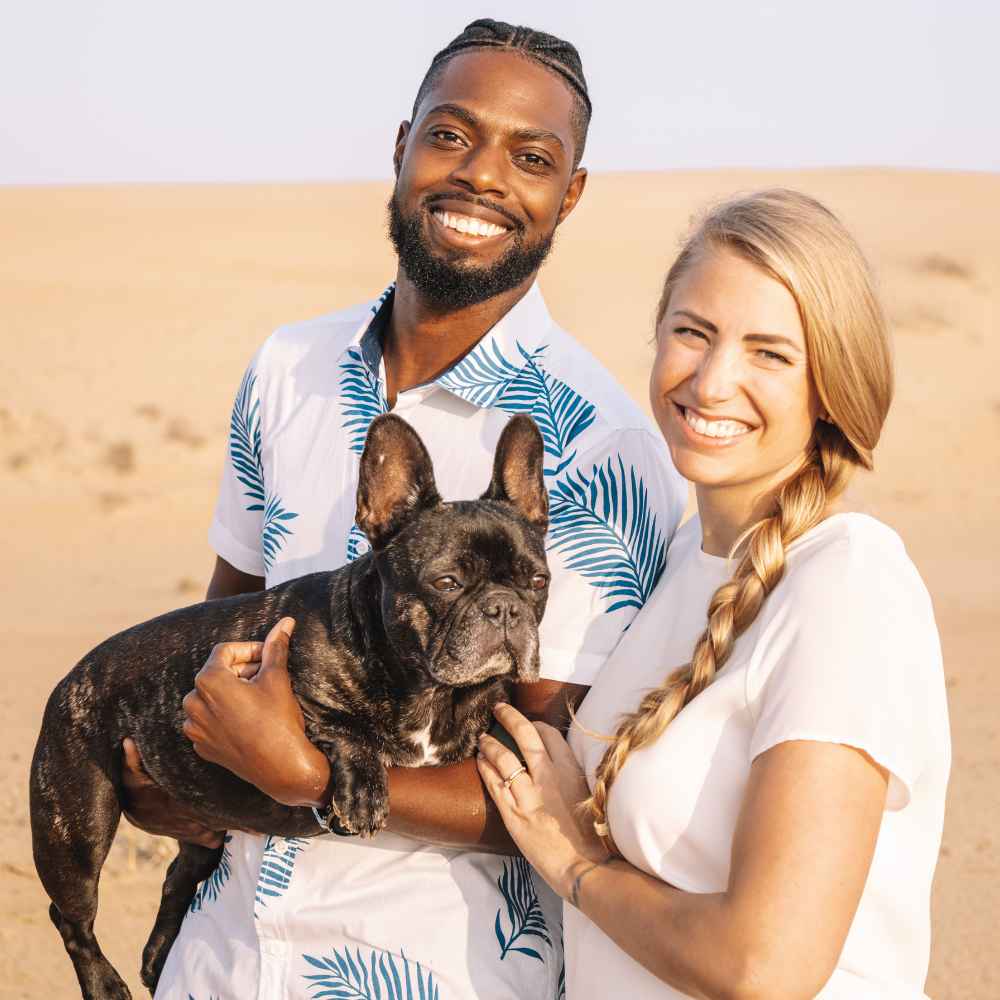
Co-Founders of PAWDEGA
Larry and Charly Pruden are the passionate founders of PAWDEGA, a pioneering online holistic and natural pet wellness store with locations in the USA and Dubai, shipping worldwide.
They’ve created a safe haven for pet parents who demand transparency, purity, and the absolute best for their furry family members.
At PAWDEGA, you’ll find only the safest, non-toxic, and truly natural pet products—ranging from species-appropriate nutrition and holistic supplements to organic grooming essentials. Every product is carefully vetted to support optimal health, longevity, and a thriving life for dogs, cats, and even horses.
As holistic pet lifestyle experts, Larry and Charly have collaborated with world-renowned holistic and integrative veterinarians to spread awareness about the life-changing benefits of proactive pet wellness. Through PAWDEGA’s social media channels and Next Level Pet Parent Podcast, they educate, inspire, and empower pet parents with cutting-edge knowledge to help their pets live longer, healthier, and happier lives.
Join the PAWDEGA movement and discover a new standard of pet wellness—because our pets deserve the very best!