
 Apple Podcasts

 Spotify

 Castro

 RSS Feed

 Goodpods

 YouTube

 iHeartRadio
204. How Green Juju’s New Probiotic Powders Transform Pet Wellness

In this episode, Billy Hoekman pulls back the curtain on Green Juju’s three food-based probiotics—Farm (raw goat’s milk), Soil (wild-fermented plants), and Leaf (kombucha powder). You’ll discover how these powders pack billions of diverse CFUs, why they outshine standard capsules, and real-world dosing and palatability tips for dogs. Tune in for data-driven insights, case studies of gut transformations, and how this approach carries forward holistic veterinary wisdom.
🐶 🐱 Nutrition & Holistic Health Consults: https://jessicalfisher.com/product-category/holistic-pet-health-nutrition/
💜 Follow Jessica on Instagram https://www.instagram.com/thepetparentingreset/
📩 Get email notifications for new episodes:
https://jessicalfisher.kartra.com/page/tpprnotify
0:00 Welcome back, pet parent. I have none other than Billy Hookman back with me today. And we were just talking before this. This is going to be so raw of an episode because neither of us know what we're doing. We have agreed. So welcome back, Billy. How are you doing today? I am pretty good. It's it's been the rainiest month almost I think maybe ever in the month of May at Lancaster, which is not my jam, but it's sunny today, so I feel good about that. Well, good, it's a sunny day, let's take advantage. We're going to talk about Green Juju's probiotics. Before we do that though, would you mind telling me or reminding me, Reminding the listeners, there's prebiotics, probiotics, post biotics. Can we run through that real quick? Yeah.
0:49 So prebiotics are the things that post biotics or sorry that probiotics eat. So they are food for probiotics. Probiotics are those beneficial bacteria that do things in your gut and post biotics are the result of those probiotics in your gut, their life cycle. And when they grow and metabolize, they basically sort of the byproduct of that is like enzymes, vitamins, beneficial nutrients, organic acids. So it's kind of like a whole life cycle, which is what you get in, you know, say our wild fermented mushroom probiotic or fans digestive support or Lewis inflammation support or something like that because it's the whole food, you get the whole gambit of those things. So we talk so much about gut health and like that's just what we're doing here again today.
1:37 But it's so important for everything going on in the body. Like if our gut isn't functioning properly, if we're not getting the pre and probiotics, if we're not getting those post biotic breakdowns, then nothing is like really functioning in the body all that well. When we think about food as medicine and we think about that for our pets, I think that's kind of where Green Juju kind of differentiates themselves from most other pet foods, even in the healthy pet food space, that it's so important for our pets to to really thrive. But what was it like?
2:23 Why did you decide to go out and play around with making these probiotic formulas? Like what? What were you seeing or what were you looking for that wasn't there in the market? Yeah, that's an interesting question. I, I was actually at a trade show over the last week for like our retailers and couple of them came up and they were like separately we're like we think you're doing like the most innovative stuff industry and that was a huge compliment. And that's really what we strive for is to, you know, what Kelly and I create all the products it comes back to like the premise of we don't know what the best diet is for a dog or cat. Like we have a good foundation for it, but but we always need to improve on, we always need to, you know, and that's where like I consider, I consider that my strongest asset is like creativity in that realm.
3:19 I, you know, I really like established knowledge and all that kind of stuff, but pushing that and for better health outcomes is, is really my my passion. And, you know, the process of making these products is so fun with the entire team. You know, when it goes back to everybody on on board with green juju, I think it's, it's exciting and fun and we do it almost too much because we like it. But we always, you know, try to be like, oh, we're not going to do as much as many new products that had new ideas come to circle back to your question. I don't remember the exact. So one of the things that like I say this a lot, I probably said it's not your podcast a lot, but I think about nutrition all the time and I think about like different ways of approaching it.
4:01 It's just I've been doing this. I've been thinking in that way since like, I don't know, going back to like 22,000 and 10, right? Like just even when I just had my own dog Lua, and I wasn't really in the industry or anything like that and I was just doing stuff for her. That's just the way that I thought for whatever reason. And so it's hard for me to pinpoint the exact idea. But I do remember talking with Kelly and being like, wouldn't it be really cool if, you know, we could take these foods that have all of these different diverse probiotic species and somehow remove them from the food and put them in a powdered probiotic. And at that point it's just kind of like a dream because there's a lot of ideas.
4:42 It's a very funny inside joke for our team that we have a shelf products folder in our share drives. And it's things that are done or things that we don't know if they'd sell or they're too expensive or whatever, but they're all there and they're done. And they're, you know, things that it also might be like, hey, I think like, oh, this is really cool. And everybody else like, no, we're not doing that. So it really depends on that. But I've always been really obsessed with this idea of naturally occurring probiotics versus, you know, what we see as as traditional probiotic supplements. And I think that the research really is, is clarifying that diversity is key over potency.
5:30 And so the whole premise behind these is diversity over potency. And I looked long and hard at the human supplement industry. And obviously I knew it wasn't in the pet food industry, but I looked long and hard and I said, you know, no one's ever done this before. So that's, I think we can make some really big inroads with this. And so we went about finding how to do it and working with the lab and it's been a really interesting process throughout the the way. So there are three different ones. Can you tell me, can you break them down for me and tell me the difference in the three? Yeah, so we have soil, leaf and farm and kudos to Kelly on the names for those because she came up with that. She's so good at marketing, like, you know, she just like she came up with all of those herself.
6:18 I don't claim any credit for that. And so we have soil leaf and farm. And so the the first part is, I guess the first thing to go would be to go into how we make them. Actually, no, I'm going to go into the cultures because the cultures to me are my favorite part. And so they're very, so when I say cultures, I mean whole food cultures, all of the cultures that come from fermented foods, all of the probiotics and the healthy yeast that come from specific 3 fermented foods. And it goes even further than that because these aren't just, these aren't just, these are like raw fermented milk, kombucha and wild fermented plants. It goes further than that because of the fact that they come from Kelly and I and you know, we have our cultures and it's kind of a cool thing.
7:11 We could send those out, you know, to be very nerdy. We could send those out into the world. But soil is derived from Bailey's blend. So in order to make the culture base here, I took Bailey's blend and I added a 2% salt, added 2% sea salt to it so I could reduce the pH quicker and create a grater ferment in it. All of basically much like when you look at any of our fermented products, all of the probiotics in the soil come from the broccoli, the green cabbage, the cilantro, all those things that are in Bailey's blend. So a very, I think it's like 8 different plants, right? A very unique blend there.
7:58 And typically when you look at the literature, those are going to have at least 500 different species on average in any wild fermented vegetation. So that's really like nature that that's essentially like the probiotic powder version of letting your dog go out into the grass and eat dirt and roll around because they're soil based and non soil based cultures there. And there's such a wide diversity of them. And we've already seen some amazing results in our testing. We are going down the path now of two clinical research studies, but even our testing and some of our, our data that we currently have, we've, we've had some amazing results. And it's really cool when you can combine like interesting theory and real results.
8:47 So a good example of that is the reason why I think this works so well is because we've really removed dogs and cats from their evolutionary environment. So when it comes down to it, they don't live in the woods anymore. They don't sleep outside. They don't, you know, cats don't go outside at all usually. And so that's great for them. They're very comfortable. You know, my dog's very comfortable between my legs under the blankets every night. I'm not very comfortable. I will say when he does that, but I let him do it for whatever reason. And so, or when he's pushing me off the bed. So that's living with a dog. So, but that's not great for his microphone. And so it's, it's really nice to be able to have this theory and go, this is like the probiotic equivalent of letting them do that because it brings it into the bowl. And then we had a case study that we did with Barbara Royals lead fat tech, which we saw, which they did a gut dysbiosis test, which had started at so 0 is basically no gut dysbiosis. And so she tested before she did soil and she had a 3.8, which is a pretty high level of gut dysbiasis. And then that same test measures for pathogens and intoxants coming off of those pathogens.
9:55 And she did soil for a month and then retested and this gut disposes went down to 0.8. So almost healed, tested negative for pathogens and tested negative for the toxins coming off those pathogens. So we, we think that's a really good just specific case study incense, which is kind of why we're going down the, the research, you know, the, the clinical research route with these. So it's really cool when you can have that in theory and see it actually in practice. And so that's what I think we're going to see. And when I go into usability, I'll talk a little bit more about that. But so that's soil and it's just a really, it's hard to say that nature that you can outdo nature in the sense it's because this is like nature's version of a probiotic.
10:46 So we also. Wait, because so that's where my mind drifts talking about you can't outdo nature, right? And, and I know you've already, we've talked about this a couple of times on the podcast where you had to completely rethink HPP. And now I'm looking at these probiotics and I'm like, they, they look incredible. They're so wonderful. But like that kind of like naturalist mentality, kind of I feel like I'm having, or maybe you had to and maybe other people out there who are just like, but nature provides, let's just do what's natural. Let's just go out and get whatever from nature.
11:26 Like the fact that you are taking these and you're sending them through a laboratory and removing the fit. Like how do you feel about that? Really. How do you feel about that? Yeah, and that's a great question. Well, first of all, on the HPV thing, I think it's an interesting way to look at A at food safety in general is it doesn't matter what the food safety method is, you're taking a natural process and applying it. You're taking naturally existing things and applying them in non natural ways. So bacterial flashes, you are taking these viruses that attack bacteria and you're applying them in amounts that you don't see in nature, right? So fermentation, you're taking these bacteria that exist in nature and you're applying them in amounts that you don't see happen naturally in nature, right? HPP, you are taking pressure, which obviously exists in nature and you're applying it in amounts that don't exist in food in nature.
12:33 So I think with all food safety steps, you're taking natural processes. Well, unless it's like I would say in the main three that you're looking at in raw food for pets, right? You're each one of them is a naturally existing process that takes that you're applying in an unnatural way. And that's what it takes to, you know, control pathogens essentially. So, so I don't agree that so if you say nature, so nature's best is just a starting point. If you say nature is best and that's where you end it, then that's a logical fallacy. It's appealed to nature logical fallacy. And it you cannot build an argument based on a logical fallacy, at least not one that's going to be true because of that reason. So that's just a starting point.
13:18 And so I would say like when I say it's hard to outdo nature, what I, what I mean by that is it's hard to outdo what is naturally existing in the environment because it, in this one specifically soil, we're letting the environment grow as a probiotic. And we still need to see the results in the animals, which is the actual science part. So we we start with this concept of nature and then we move forward because, you know, here's another good example of that. If someone were to say humans are the only species that drink milk in adulthood, like that really sounds like that's like a cohesive argument.
13:59 But then you apply that to other things and you say, well, humans are the only things, the only animals that use iPhones. So what? Right. No, I'm training my dog to use my iPhone. Oh, there you go. So, so that that doesn't make that doesn't give it a negative or positive value. You then have to look at what is the actual science behind milk? Is it digestible? All these all these different things. So I use that as an example of kind of what I was talking about. So and I think we will address that as well. So. I do like how you you called out iPhones when you don't use an iPhone but. That's a good point. I get made fun of.
14:40 I get made fun of all the time for that and for the from the green juju folks, really. Yes, 100%. I get so, so frustrated when I send somebody a text for the first time and it doesn't come back blue, it comes back green. I'm like, oh, do I want to talk to this person anymore? Those are the people who want a good camera, so as it turns out. But OK, all right, so those. Are my people. That. Want the biggest phone that's ever existed and then. Yeah, yeah, I I'm kind of intentional about like whatever version of the iPhone I go get, I'm like, what's the smallest version of that iPhone? Because I don't like, I still want to be able to put it in my pocket. Like, how do you, I mean, I guess your pockets are bigger than mine, but yeah, I don't, I don't know. Yeah, I I just go what's the best camera? And this one has five cameras, so it has to be the best one. That's what I.
15:36 So maybe what are we talking about? We were talking. About there would be 6 that's crazy. It just blew my own mind. So we're talking about soil and I and I will kind of address more of that too. I think when we get into like the usability of it of all these and kind of the the concept that we were like going for. So we also have Farm, which comes from fermented raw milk and is a very special culture itself, which is my raw yogurt. I don't know what's going on with my voice, but it's just going to be what it is. So it's going farm is my home raw yogurt culture, which has been alive for at the time that we sent it to the lab over 2 years. So.
16:20 Can I ask you what you named it? I have no name for it. You have no name for it. You call it alive, but then you don't name it. But I don't have a name for or gender for that. I do have gender for Mike and Bucha Scooby. She's a girl, but. She's a girl that makes sense because it's life. It's life giving it. Makes sense. It is, it is, it is, it is the most intense culture of the yogurt culture because it's so basically, I'll go into why it's intense because I'm the only one who drinks this stuff, but which is, which is good that we didn't mean the cultures into this powdered form. So this is both cow and goat milk and it's mostly cow because that's what I actually prefer when it comes to, you know, the taste of it.
17:08 But so essentially I started with a standard yogurt culture and make yogurt at 100°, which means that it maintains all of the nutrients and raw or, and bacteria content of raw milk, right? And so I'm adding these cultures, but the, the other cultures will grow as well. So we started there. And then we also, I also added in like I believe four other local Pennsylvania farms that make raw milk or that make sorry, raw yogurt. So it was their own blend of raw yogurt. But that also goes to the yeast in the air, goes to that specific farm, goes to all those different things. I also added a commercial coconut yogurt to it.
17:51 So that's in there as well. And by the way, every time I added something, I would still do the 1/4 of a cup of the last batch and then I do 1/8 cup of the new thing. And within that time, I, within the two years, I've made raw yogurt once or twice a week, every week basically. And so every time I added in a new batch of, of raw milk, there's more diversity there. You know, it depended on that cow or goats genetics, what they ate, you know, the farm they were on, the temperature of the grass, all these things dictate the probiotic content of raw milk. And so it's a very, very diverse culture. And when you, the actual culture itself is so fermented, it's very high naturally existing yeast as well.
18:36 And so it's kind of smells like bread was the first thing. I've never added yeast to it, which is interesting. Kind of smells like bread. And it's very tangy. There's like basically no sugar. Where is it getting the yeast from? Is it just the environment? From the raw milk and from the environment, yeah. And so and yeast tend to proliferate even better than bacteria. So it, it, it's very tangy. There's literally no sweetness. Do it essentially, it's very like thick for raw yogurt and it's slightly carbonated, like that's how fermented this is. And so I enjoy it. I had it this morning, but no one else in my house will drink it. So in fact, I, you know, even huckleberry was like, whoa, this is intense.
19:20 So, so it's a good thing for people that we so, so we're taking this huge culture. But so if you look at the literature on raw milk, you have like at least 3000 different cultures and healthy yeast. And in this case, we actually, the lab actually took the culture and grew it in one environment that was conducive to yeast and one environment that was conducive to bacteria. And we use a 5050 split of the yeast of bacteria that make up the entire culture. And we do that for both leaf, which we'll talk about and farm. So this is like even for being fermented raw milk, this is an incredibly diverse culture. So really proud of that as well.
20:02 And leaf is reference to tea leaves because it's base, it's kombucha base. And it's my kombucha Scooby, which has been aligned for over 10 years and is. In the same way, incredibly diversified. So it's actually lived in several different regions. So it's lived in LA, it's lived in Philadelphia, it's lived in Lancaster where I live now. And it has many of my mentors and friends gobies added into it for their for that bacteria diversity. It has a bunch of Pennsylvania far, a bunch of the farmers I shop with around here, Meg Kombucha. So they will sell their kombucha or their Scooby and I'll use it as a starter, that kind of thing. So it has a lot of PA farms in it as well and just countless commercial brands.
20:46 So I've made it a practice in the past of being like, oh, this is a new brand and they have a plain kombucha, so I can use this as my starter and inoculate that into the the general diversity. So like I said, it's been going for 10 years and it's, you know, full of really good yeast and really good bacteria. And so it was really neat for me personally to be able to kind of, you know, put those out into the world and, and get to see the dogs and cats of America really benefiting from from those things. And it's also kind of interesting for me because they're just like what I consume on a daily basis anyway. So it's weird that they're kind of like out there in stores. Yeah. So that's really the story behind each one of those cultures.
21:30 So tell me, I mean, I've listened to you talk about this, but describe this process of removing the the food. Like how do you get? Into the powder. I think that's the hardest part for people to wrap their minds around. And that was the reason why we do retail training videos for stores. And we had to like redo the whole video recently because when we were coming out with us, we were figuring it out. And you know, how do you explain this high level thing to have part time pets or employee and so? Or somebody like me like. Basically what happens is we we take so I sent the cultures to the lab we work with.
22:13 So I grew out the kombucha. I don't know if this is particularly relevant, but it was blueberry kombucha that specific batch on that I sent because I make all different, you know, every time I make kombucha a second fermented. So the current one I have is pomegranate, like blueberry, whatever, right? So take the culture and I sent them to the lab. And what the lab does is first they tested to make sure there's no pathogens in it and then they check the probiotic content of those specific batches. So it was actually kind of cool for me in the 1st place because I got some like professional lab testing on my own yogurt kombucha, right? So that was pretty cool. Just generally, so because I'm a nerd and think about, oh, I'm getting this many probiotics for this, you know, for myself every day or for Huckleberry, whatever.
22:59 And so we send those to a lab. And what that lab does is they take those bacteria, they take that culture and they grow it in a different medium. So those bacteria, I'll just take fun. So those bacteria, those probiotics in yeast normally eat the milk. Sugar is in the milk, and then you have the milk itself. So you can take that entire culture, all those bacteria, and you can put them in a different environment. So you can put them in, say, a sugar environment and they'll eat the sugar the same way and they'll digest it completely and they'll grow in exactly the same way.
23:39 So it's essentially like you're taking these bacteria. But the difference there is normally when you make a probiotic, you would tell the lab like, oh, we want these 10 strains and we want this amount of them. But in this case, they just took the whole culture and then let it grow for what it was going to do for that, like see culture. So it's just the bacteria in the new medium. The only thing that's in it is artichoke fiber, organic artichoke fiber, which is the prebiotic in there and it's less than a gram. So I don't even throw anything off, you know, energetically or anything like that. So, you know, people might want to think about like you're, you're essentially like straining the food out and then you just using the bacteria and then growing them in a new environment. It's kind of similar to, you know, we tested out if you could ferment our raw milk with these and you can't. It's kind of a similar thing.
24:34 I mean, you're taking, if you took soil and wanted to ferment our raw goat smoke with it, you would be taking bacteria that usually feed on the fiber in plants and you're putting it into milk and now they're going to feed on like lactose sugars. So it's kind of a similar thing and you're just taking the food away from it. So it's just the bacteria in yeast. And the really cool thing is, so let's say you go like, I like soil, soil, soil is the one I'm going to use. I recommend rotating between them. But if you were going to say just use soil, when the lab makes a new batch of that, they're just, they take the seed culture and they're just growing out the whole culture. So every time they grow it out, it'll grow out in different ways because it's not 100% predictable. So essentially what'll happen is you'll get the same bacteria, the same probiotics, but you'll get them a different amount. So it's kind of like rotating supplements without even having to rotate a supplement.
25:38 So that was actually one of my questions. Well, I'm getting my feedback again. So many products out there, people, companies are intentional about making sure that every single pill or bottle has exactly what they say it has in it. And you're saying, no, we don't necessarily want to do that, right? We want there to be variants. We want there to be estimated amounts of things because that's what you get in fermented foods. Like when you feed your dog raw milk, you're not getting like, there's these probiotics. No, it's totally dependent on the the environment, the farm, the time of year. Does that goat like, you know, going outside more? Does it like eating hay more?
26:26 By the way, PSA, goats like hay more than grass. I'm just throwing that out there because it's a misconception. Whenever we take people to the farm, the goats are inside most of the time because goats are. It's kind of hilarious. I was talking to one of our goat farmers and he's like, yeah, this is a total tangent, but I think it's relevant. He's like, yeah, you know, they don't really like when they like, they don't really like when it's raining or when it's too sunny or too hot. He's like, they don't really like much of anything. So. And I would kind of because it's kind of funny because they'll be like this beautiful day and they're. And keep in mind the barns that we have are total open sided, you know, but they're just hanging out inside.
27:10 And and because I think people, people ask me all the time, like, Oh, is your goat smell, You know, is a grass fed? It is. And they do go outside and eat grass, but they're not like cows. They don't just graze right? And they actually like, Hey, which spoiler is grass better? So that's my weird tangent for the day. Because every time we take pictures of goats inside, people are like, why aren't they outside? Because they don't want to be. And we just let them go wherever they want to, but I digress. So we, we want that variance. And that's why this is that's why we're also looking at this clinical research that we're going to be doing because we want to see what does this do in the gut. And we also want to see what does this do for the pet itself. And I won't elaborate that on that too much because that will be coming out honestly in the near future. It doesn't take that long to to do these things, but because that's the most important thing is how does it make your pet healthier?
28:08 And so going back to the potency thing, I think the other thing that this does is it concentrates nature or the natural existing probiotics, because when they're found in their, when they're found like in food, in nature, they're in a lot of moisture. So they're diluted through that moisture content, like raw milk doesn't have a ton of potency, doesn't have a ton of amount of probiotics, but it has a ton of diversity of species. And so that's this concentrates that to some degree. So like that little bottle, a 30 gram bottle of leaf has as many probiotics as a gallon and a half kombucha because you're taking the moisture content out of it. And that's where when you go back to my, I speculate that that's where, you know, when you go back to that case study I was talking about, I think it probably worked that quickly because of the concentration of those of those bacteria in there.
29:02 So it, it sort of does that. The other great use would be there's a lot of animals that don't do well with fermentation. There are some that there are a lot that do. There are some that don't. I know a lot of I know a lot of really great people I work with and respect, you included, who do health consultations and you work with people on what their animals should be eating. And, you know, having gone on tour this year with Rita Hogan and I don't know, I, I kind of struggled with her name there, which is fitting because if she watches this, she always pronounces my name wrong. So I'm going to see her on Friday. We have an event on Friday. So, so I'm going to make fun of her. I've been meaning to make fun for that, but so I totally just lost picture.
29:43 So not every animal can do fermented foods. And so this is a great way to be like these. This is the bacteria from fermented foods are so beneficial, but it's just the bacteria. And then the other I think the coolest thing I've learned on that tour is about food energetics. I don't know, I'm like, I mean, Kelly would tell you I'm like all science for the most part. I've I've been better at this now, but I'm all amino acids and that nutrients and I'm not, you know, I'm not the expert on warming and cooling And you know, I look to my friends who are experts. You know, I look to Judy Morgan, I look to Rita, I look to, you know, those are the people I go to. So we're learning a lot more from Rita. And I think that was, I didn't even think about this when we made it. But I think the coolest part about this is all of these foods in their native state have energetics attached to them. They might be warming, they might be neutral, it might be cooling.
30:37 These are nothing. These bacteria are warming, cooling, orange, They're nothing. And so now if you're working with someone who needs, say, cooling foods, but what really benefit from the probiotics in raw fermented dairy, you can use these as you know, it helps there. But I don't think your animal needs to, you know, not be able to do something to use these. I'm going to use them every day I have been using them. And so I think the other thing that people can do as well as if they have something that works really well, they can rotate with that too. If they do a probiotic that works for them. Great.
31:21 So you could eat, you could rotate with that, or you could use them together because ours is high diversity, low potency. It's just food. It's just food based, right? And so there's nothing that says you can't use one in the morning or 1:00 at night to be able to do that. I mean, it's kind of like what we do. And Kelly says this the best way when she talks about who should use what. Like we have these like parameters like, oh, farm is great for immunity because it's raw milk based, right? Leaf is, is really good for yeast issues because it has all these native species of happy yeast that cannot crud out bad yeast. And then you say like soil is really good for, you know, allergies, general diversity, that kind of thing.
32:03 But it's like deciding between like, do I, which one do I want to pick specifically? Do I want to drink lucha? Do I want to do I want to eat yogurt? Don't want to eat for fermented vegetables? No, you should probably do all those things. And so it, you know, either rotating between the however people want to rotate I think is the best way to go. But I think really the proof is in the pudding. I think just try it. If it works, great. Yeah, I've, I'm not shy about posting on social media that I, I use a lot of green juju products myself. Like on me, I've used the the veggie blends and my smoothies when I have been too lazy to go to the store and buy fresh veggies. And I drink the milk all the time. And it's interesting that you're, you're like, you prefer cow's milk.
32:55 And for a long time I did too. And I'm actually starting to prefer the goat's milk, which is interesting to me. But I can see myself using these probiotics as well. And I know what you're going to say. You're going to say these products are made for dogs and cats. And I cannot condone you using these products, but I do and they're wonderful. And this is my podcast, so I can say it. That's true. I do agree with your statement. I don't, you know, we make everything for dogs and cats. I do think that anything. I do think that honestly, the these probiotics are the most relatable to people, right? Because they're food and they're they're food based.
33:37 And we took traditional foods that humans have been making for a very long time and made them into a probiotic supplement. And so I don't really see any reason why that would be up to without getting totally into that with humans as well. And that's the thing about Green Juju. I mean, although we, we do sell for pets, everything we do is of the highest quality we can do. And you know, that just comes back from what I originally joined Green Juju. That's how Kelly's always done. And I've actually been there for years as of this month, which is crazy, but it's been really fun to do that. And I don't think Antoine would kill me for saying this, but hopefully he does that because I'm not going to tell you anything about it, but there could be something new coming very soon.
34:24 There's always something new coming very soon that you can't talk about. I don't like always. That's very, that's very true. So there could be, I'm just saying there might be. There's, there's, there's a good possibility of it and I'm excited about it. I think it'll be really cool. And yeah, we don't rest. We don't, we always take things and travel and, and you know, that's how we live our lives and here we are. And I think people forget too. There's like 4 full time employees at Green Juju. Yeah, you do. You do bring that up. But it's impressive for what you guys do. It's really impressive to have such a small team for the huge impact that you're making well and for the people to watch. None of those people are the people behind me that keep walking by because this is a Co working space so I don't work with any of you.
35:19 Looks like a very fancy. I don't know these people. Yeah, it does. It does. So OK, the probiotics. Yeah, I, I would agree. Like rotating is, is probably going to be your best bet. But like you said, they kind of naturally rotate anyway, the way that you're, the way that they're growing and the way they're, which is really cool. I yeah, I'm really excited to start using these and my consultations as well. And then for my dog and then for me, and I don't know, maybe for my cats if they'll take it. Which reminds me, that was another question, like, what are you hearing as far as like palatability? How are How are animals responding? Palatability is great because it's it's a very fine white powder that basically like dissolves into whatever you're doing it like.
36:06 So hard to travel through TSA with. Baby, I haven't tried it yet, but like the like the taste of it is like just slightly sweet nothing and I don't think we've had any animal that that really has even noticed what it is. I, I, the way that I feed it to hug, like, you know, I'm sort of anal about these things, but the way that I feed it to huckleberry is I essentially like, like there's a scoop in it. So it comes with a scoop and the directions are just scoop per weight or whatever. And so I just take the scoop and kind of like lightly tap it into his milk and it just dissolves as it hits the, and that's pretty much it. But I'm also like, I don't want the clump in there or whatever. You know, you'd still probably eat it just fine, but that's just who I am.
36:57 So, you know, I just do the tap in there and then it dissolves in there. Or you could put it like on our, our veggie blends or something like that, you know, in between them or something. I think the only reason that I'm not doing that is because I'm currently using PEA from Judy Morgan and I put that between the veggie ones. There's a lot of powder, but I'm excited to see I'm I've, we've, we've reduced Taco berries allergies by almost 100%. And so I was like, maybe this is the thing that, you know, I'm a perfectionist, so maybe this is the kind of thing that can get me there. But cats would benefit from this greatly because they don't go outside at all.
37:44 So I would start with soil and then with a lot of animals that have digestive issues, just generally I would start with soil and do that for like 4 weeks, which will be like basically one of a jar will last as the dog zero to 30 lbs for two months and then 30 to 60 lbs one month. So I would do like 4 weeks on. I got to plug my computer in. I'm a, I'm a real professional here. I. Don't feel like. Battery. Thank you for taking me so seriously, I appreciate you so much. So I I do this during meetings. Thank goodness this is a recording. I'm going to leave this in just so people get an idea of how you treat me.
38:28 So going back to cats, I don't lose my train of thought, you know, they're inside all the time, which we love them and it it protects them, but it's just not good for their microbiome. And so or the other thing that I feel like I would really want to mention and this is kind of like a hot button issue and I kind of want to give a new take on it is a fecal transplant. So. Yeah. Transplant, they are great. They work right. However, I think that our probiotics are specifically suited to use long term after fecal transplant because basically at least what you see. And I've actually had meetings with some people that work in fecal transplants and I've asked them this question. I haven't got a super good answer on it, which is like, OK, you do the fecal transplant, you fix the gut, right? Then what happens a month later or two months later, right? Because that happened because of the environment, because of the food, because of all these different like factors. And the story that I bring up when someone says this is there was a guy who was actually living with a tribe in Africa who were like hunter gatherers.
39:39 And they would eat like hundreds of different types of plants. And because of that, they had these like amazingly diverse microbiomes. And so this guy lived with them and got this amazingly diverse microbiome, and then he went back to America and it was gone like within a month. Got sick? Because he ate food here he lived here he you know, all all bacteria is ubiquitous bacteria is you know everyone you share a home with pet or person, you're sharing bacteria. So I think that fecal transplants can be great. Let's re establish the gut. Let's reset the gut and then I think the problem that a lot of the. The the advocates for those have is, well, once we reset the gut, we don't want to monoculture the gut with just these 15 different bacteria or do a bunch of these potent bacteria. And that's not what we're doing, right. We're having all of these bacteria that they would get from naturally eating foods anyway in a concentrated amount. So I think that these are the perfect thing if you do a fecal transplant to then move on to rotating between all of our probiotics to get all of those thousands of different cultures on a continual basis.
40:52 It's funny that you brought that up because I'm actually right now waiting for some FMT capsules for Kim. And that is exactly what I was going to do was do the month of of FMT and start her on. I hadn't decided yet which one, the soil or farm or leaf. I hadn't decided. I'm going to have to go back and like remember everything you just told me to make a decision on which one to start her on. But like, that's my plan with her. As well, I would start with soil. You could do whatever you want, but this is my recommendation. I would start with soil you. Can do whatever I want. Thank you for permission though. And then I would go to farm and I would go to leaf and I'll just rotate through those.
41:37 People rotate however they want. Like some people like to do a different, like when they do food I feed like bison, then I go to beef, I do the whole bag. Then I go to beef, I do the whole bag. Some people like to do different protein every day, etcetera. So people can rotate these probiotics however they want, right? They can do a different one every day, different meal. They can do 1 bottle and then move to the next bottle. You know, however people want to do it is totally fine. But you know, and they go great with other probiotics. I mean, 36% of my dog's diet is raw milk and so he gets a lot of probiotics from that as well, but he's also getting them from this, right? And so. Yeah, yeah. I have no idea the percentage of my dog's diet that is green jujus raw goats milk, but it is there. But I appreciate that you know the exact percentage. It's 36, it's 14%, one whole egg and then 50% of our food. That's his base.
42:38 And then I can, you know, do the veggie blends, that stuff doesn't really add calories, right? Bone broth, it's just marginal. So it's 5036 and 14, that's it. So 50% of his diet is eggs and fried eggs and and raw elf. Bringing up the veggie blends really quickly before you go because I know your time is limited because you are so important and everybody loves you. Not everybody, but yeah. The last time you were on, we talked about the new Vitality blend. How's that? How's that going? How's that being received? Really well to the so much so as far as like the digestive results we've gotten back that we just did doctor Keith and Kelly and I were just in Seattle and we did kind of a round table and we're, we were making health protocols for our vet program. And so vets can have our idea of what, you know, is a supportive diet for Axe condition, be it kidney disease, you know, cancer, whatever.
43:40 And we specifically included that as the starter for our digestive support diet and doing that for four weeks and then moving to some rotation there. But it's, we find we've found through feedback that the not only the fiber part of it, but the purple cabbage as well-being, one of the main ingredients has really helped, I think with digestive lining as well. And it's kind of both of those things, right? Like one of the reasons I feel like I fixed huckleberries rogue milk intolerance was the fact that, you know, I feed him the freeze dried food and I rehydrate it with at least double the amount of bone broth. So he's getting a lot of bone broth per day. And I do think that that really helped to kind of like heal his gut and help those bacteria that because people don't realize that if you are intolerant to even raw milk, that you can kind of rebuild your, your gut microbiome to be able to process lactose and those things. And so I think that's what happened. But I think that Vitality blend really helps them in the same way.
44:40 And I will call out, we don't really call it out that much, but it does actually ferment like Bailey's blend too in my house. And so it does work. So there's always experiments going on. There's currently outside of my normal ferment, so it's it's too much probably for one kitchen, but here we are. So Vitality blend does work in the same way. For those that like to ferment the Bailey's blend, you can ferment the Vitality blend as well. Nice. Oh, probiotics are out. They can go to their indie pet store. They can ask for them if they're not already there, right? And they can order. They can order.
45:22 On the yeah, there's a couple things you can order. You can order them from our website too, but they will cost you more money because you'll you'll be paying shipping. But if you can't find them because I go to your indie retailer first, we just get enough people who are like, I don't have one near me, etcetera. So those people, they are available now to there. But it's good to spend your money locally and with your with your local pet store. And also you just get the best deal. So that helps as well. And you can get other fun stuff. I encourage people while you're buying your granges, you buy dog toys and fun stuff for your dog as well because they like it and that really benefits the store as far as their sales go. So I let Maple, my daughter, take out all of Huckleberry's dog toys now.
46:07 So that's her job. She's pretty good at it. So I'm. Sorry, you're telling me, you're telling me that a little girl, a woman going to be a woman, is good at shopping? That's what you're telling me already. Although she is like, there was, she did something yesterday that was like, and I was like, oh, you're my daughter. So she wants to do a lemonade stand and make money. And the first thing she did to figure out the lemonade stand and she's 4. She just turned 4. She made a graph that showed how many drinks people would need based on the weather outside. Wow, so sunny day waste or lemonade?
46:47 That's amazing. That's AI mean that's a lot of liquid. Like me in a lot of ways, which is good and bad. So mostly bad. All right, Billy, thank you so much for coming back on talking about these probiotics. Yeah, I'm just really excited for them, really excited to hear because you're always, always like, yeah, we're working on something and I can't tell you what it is. So next time we'll have we'll have you back on for whatever that is. Well, if it if nothing does come to fruition, you will know soon so. Yeah. The world, the world will know soon. I appreciate it. By the way, if anyone wants to has any other questions, if you just reach out to info@greenjuju.com. I answer all the nutrition questions that come in to Green Juju so I'm happy to help anyone at any time. Just let me know what I can do.
47:41 I'm just going to start emailing you all kinds of questions. Yeah, that'd be great. I'll be like, this is the first one that I'll be like, I didn't get your e-mail. I don't know what I'm talking about. I have no idea. So no idea, my gosh, she's going to block my e-mail now. All right, Thanks so much, Billy. I appreciate you guys. Please have a great rest of your week. Give your pets some extra love from me and Billy this week, and I'm sure we'll have him on again soon. Bye.
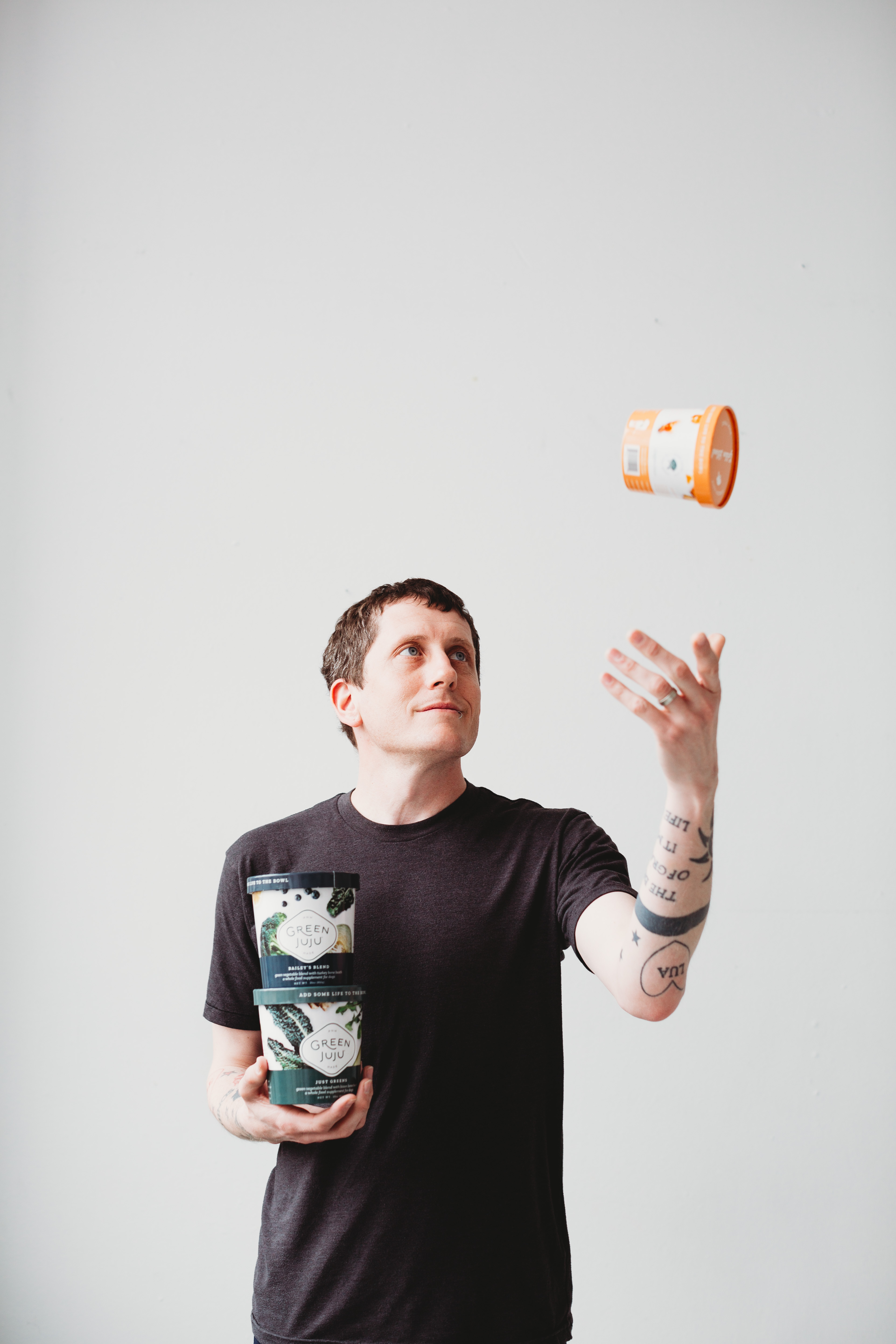
Vice President of Nutrition and Communication
Billy Hoekman is Vice President of Nutrition and Communication for Green Juju. He is involved in formulation, product development, working with farmers, science education, and sales and marketing. He participates frequently in expert panels and speaks nationally and internationally in venues ranging from universities and conferences to public libraries. He also serves on the board of directors for multiple organizations, attends AAFCO meetings, and has numerous published articles. He is a trusted pet health advocate that specializes in turning hard to understand nutrition concepts into plain English. He lives in Lancaster Pennsylvania with his wife, their daughter Maple, and their dog Huckleberry.