
 Apple Podcasts

 Spotify

 Castro

 RSS Feed

 Goodpods

 YouTube

 iHeartRadio
222. Bioenergetics Meets Vet Medicine: Dr Kristi Wilson on TCVM & Vaccine Choices

Holistic vet Dr. Kristi Wilson shares her path from cancer survivor to TCVM practitioner—and how that journey reshaped her approach to animal care. We unpack bioresonance in plain English, what it adds to a whole-pet workup, and how she builds individualized vaccine plans (including titer testing and timing). Expect practical takeaways you can use with your own vet team: food therapy basics, nervous-system calming, and red flags that warrant a different plan. Grounded, clear, and action-focused.
🐶 🐱 Nutrition & Holistic Health Consults: https://jessicalfisher.com/product-category/holistic-pet-health-nutrition/
💜 Follow Jessica on Instagram https://www.instagram.com/thepetparentingreset/
📩 Get email notifications for new episodes:
https://jessicalfisher.kartra.com/page/tpprnotify
0:00 What is the most underrated low cost change that a pet parent could make with a really great impact? I think doing less for your pet, actually saving money on your vet care. I think when people get that reminder in the mail, they feel such guilt. Welcome to the Pet Parenting Reset. I'm Jessica Fisher, a canine nutritionist and holistic pet health coach. This is your Food First, no fluff, integrative small business small pet food small supplement manufacturer podcast for raising healthier dogs and cats with real science, real talk and better choices.
0:45 Hit, follow and let's reset. Welcome back pet parent. You know, I always love having veterinarians on, especially the ones that can help us understand their journey into a more holistic lifestyle, into a more holistic practice for their patients. And so when Doctor Christy Wilson and her team reached out to me to come on the podcast and I learned a little bit more about her story, I was really excited to bring her on to talk to you guys. For anybody who's listening, if this is the first time you are listening, my name is Jessica. I am AK-9 nutritionist and holistic pet health coach, and I host this podcast that you're listening to right now, the Pet Parenting Reset.
1:28 And on this podcast, we talk about all things holistic health, integrative health, quality of life for you and your pets. So I want to welcome Doctor Christy Wilson to the show. Thank you so much for being here with us today. Thank you for having me, glad to be here. Yeah. So I'd like to just start a little bit. I know you were going to talk about all of it. You have a pretty incredible story. You do have a background now in TCDM, so we're going to talk about all of those things, but I'd love to just start out. One of the things that I like to ask veterinarians is, you know, chances are you had a very conventional training in vet school. So how did you go from that conventional mindset indoctrination and to get to where you are now? So I graduated from veterinary school in 2002 and I was a can be I, I was a totally conventional, you know, trained that.
2:32 I went to great institution, Texas A&M University and I did get a great education there. I came out of school and practice in Dallas, TX for three years and then I practiced in Pennsylvania, Philadelphia, PA for 12 years. And really, you know, most holistic veterinarians have a start in conventional practice and, and that was true for me as well. The first ten years of my practice were pretty conventional, you know, practicing as I had been trained and not deviating from that too much. And then really what happened is that I had a family health crisis. So I have three children and all of my kids were born with, well, not really born with, but in their very early years developed a lot of health concerns. And we had, you know, I always prided myself on choosing the best doctors and going to the best medical centers to get advice.
3:29 And I was following all the advice of the practitioners that I was seeking out. But unfortunately, with my Children's Health problems, there wasn't. And there wasn't really a good answer as far as how they would get over it. So one of my kids who had a severe peanut allergy. And that didn't make sense to me because my husband and I, when we were kids, there weren't peanut allergies. So me being a curious person, and then my husband is as a landscape architect, so he has a lot of background in ecology. And so he understands ecosystems and I understood medicine. And, you know, it just didn't make a sense to us that how did this happen? Like we can't just accept the fact that our kid is allergic to peanuts and has to carry an EpiPen.
4:13 But what led to that? Why, why is he alerted to peanuts? And that was just one of the things that we dealt with. All three of my kids had some serious health concerns and then even our family cat had the same. My cat was young and she had asthma and, and inflammatory bowel disease and chronic skin condition. And so she was going through things at the same time as we were. And I had noticed, you know, I started working in veterinary medicine, cleaning kennels when I was 14 years old and cleaning the vet hospital. And, you know, I had noticed over my whole career, including when I was cleaning kennels, that the pets had changed. You know, there were there were a lot more medications for humans and animals.
4:58 And we never, you know, previously had to have so many medications to keep, to keep pets healthy and to keep my human family healthy. So my husband and I really went on a pursuit of health when our kids were little. And then we ended up finding stumbling that was kind of at the beginning of when smartphones were invented. And so we were just constantly searching, you know, the great World Wide Web had just been that it allowed us to have so much more access to all this information than we ever had before. And so we just couldn't stop trying to figure out what had led to all these problems for our family. And so we eventually found some really good podcast. 1 was by Natasha Campbell Bride.
5:42 She did a podcast about autism, allergies and ADHD and we read it or we listen to it and you're like, Oh my gosh, this is definitely like what where we need to explore further. And so we just kept kept searching and kept going down more rabbit holes and they just kept leading to more and more information. And there were no dead ends. You know, it was like they're just more doors to open. More you learn, the more you learn, the more that's out there. And I actually changed my diet pretty drastically when my kids were little. And, you know, I ended up being the grand finale of our family's health problems. I was diagnosed with stage 3C breast cancer in 2018. And so we had already been on a quest for health prior to my diagnosis.
6:28 And you know, when I was diagnosed, I was diagnosed with advanced breast cancer. I even had cancer in my neck. It was kind of like a gunshot smattering of cancer in my upper quadrant. And so it was a really big deal. And I believe that I lived with that breast cancer for many years. And I think that because they have changed my diet, when I was diagnosed with cancer, the doctors that I went to at MD Anderson, they commented like this is not very common for someone to have such extensive local disease without any distant metastasis. And I do believe that my body was fighting as hard as it could to hold that cancer back because I had changed my diet and because I had done so much for my health prior to my diagnosis, I think my immune system was working as hard as it possibly could and it contained the cancer at least in that quadrant. So thankfully it wasn't was at stage 3C, but you know, so we have, I've had a long road, I say, you know, the Lord's blessed me with so many problems with myself and my family and that's allowed me to relate to many of my patients. And a lot of the information that I've learned about taking care of myself and my family and my patients is stuff that is so new that it's not made it through continuing education. You know, so continuing education requires every vet to go to a conference and to listen to a speaker. And so the transfer of information is, is fairly slow. And because by the time you get
7:58 the person to speak about it and the place, you know, all of that takes time. And I remember when my kids were were little, I said, I don't have 10 years for these kids. I don't have 10 years to wait. Like I have to do something right now because these kids need to live like a normal life without medication and they they need to go to, to, you know, college and, and get married someday. My kids, maybe that wasn't going to be possible for the the plan that we were on. And we did intervene for our kids and our kids are all thriving today and have a pretty typical life. The blessing of an ordinary life is so amazing, really. Yeah, well, and what about you?
8:43 Yeah, I'm doing great too. So I, you know, I went through treatment seven years ago at at that time I, I was definitely well on my holistic journey, but I didn't know near enough to be able to save myself from that situation. So I did go through the conventional treatment of chemotherapy, radiation, surgery, all of my lymph nodes removed in my left axilla. I have AI still have lymphedema in my left arm because I have no lymph nodes on the left side and so that they they took them out in surgery. So I still have a lot of things that I deal with chronically, but I don't have cancer. I went through conventional treatment. I actually had to have radiation up to my jaw. And when I was going through radiation, they, I had to go to the dental oncologist and they, they said I was going to need to use fluoride trays because they were going to kill my salivary gland and I wouldn't have any saliva. And then I'd probably get all these cavities. And I looked at the doctor and was like, I don't even use fluoride in my toothpaste.
9:55 How can I possibly use fluoride trays in my mouth? And so I then was like, there's got to be another way. So I found an acupuncturist and, and I went to acupuncture twice a week. The entire time I had radiation on my neck and he saved my salivation. And so I have great salivation now and I have no problems and definitely not using any fluoride trays. So, you know, it's just the more I learn and, and all of the things that my family has been through, there is always another option. When I, when you get something like a recommendation of fluoride trays, it's like, OK, I've got to figure that out now. It's just like what do I have to figure out next? Yeah, yeah.
10:37 Oh, gosh. And it's a lot. And you can see why a lot of people just kind of give up. They're like, it is what it is. I have to do what I have to do and don't take the time to go down the rabbit holes, especially when you know, the average person doesn't even know like what to trust online. The Internet is amazing and it's horrible, right? Like it, there's so much opinion that oftentimes it drowns out truth. And you know, I, I tend to always, not that it is 100% correct to do so, but I tend to always air on like, OK, what's more natural, what's more like came from the earth that was given to us to be able to live this life, which isn't again, it's not 100% like we can't act that way 100% anymore because of what we've done to the planet. In my opinion, even with nutrition, like we have depleted the soils and killed the soils and like the are the topsoil and so we we have to make adjustments. But when I'm like evaluating something, I'm like, OK, how natural is this?
12:00 What's the truth? I don't know. But that's an incredible story, you know, and I think one that so many people can relate to, especially I put up a podcast not too long ago that was very not on brand for me. But I just am to the point where I'm not going to silence myself anymore for the sake of, you know, possibly offending somebody. Like my truth is my truth. I, I, I say that to preface that I'm getting ready to say that there's so much out there that I think is true, but we have a huge propaganda machine in the pharmaceutical companies and the, that, that whole, what Rockefeller started like we, it, it's very, very interesting when you actually go and look that, you know, he actually believed in natural medicine, but that wasn't going to be profitable for him.
13:09 So the whole country and then it has cascaded to other countries has just been on this huge propaganda train of for, you know, 100 years at this point. And just tell somebody that there is another way. And by the way, this is how we used to do it forever ago. Like if we could just remember if like we listen to our intuition and our body and we can remember that, we would realize that, oh, no, this, this can be real. This actually can help me instead of having this like, knee jerk reaction that, oh, you're just woo woo. Yeah, it's incredible to me.
13:53 And I have really experienced this first hand for the past 15 years almost because it's interesting because the number of times that I have been cancelled and discredited for leaning on more natural medicine and the friends that I have lost and the relationships and all of that, you know, and it's because it's just a very complicated, it's a very complicated web of problems. I, when my kids were little, I noticed that my son was have a reaction to gluten. And when he would eat it, it would be really significant.
14:34 And the changes in him, you know, I at that time, this was 12 years ago before being gluten free was cool. And, you know, it was almost impossible for me to trust anyone with my son because no one believed that it could be that harmful to him. What's 1? What's 1 pretzel stick? Like, come on, Is that really going to hurt your son? And then they would think you're just crazy because you don't let your kid have a pretzel stick and you're, you know, depriving them of something that kids should have, you know, And that was a huge, huge battle for me. And thankfully, the world has become so much more accepting of the gluten, the needs of gluten. And now there's all kinds of literature and, and hard studies that say, you know, gluten can actually cause a whole bunch of problems that are not what you would expect. I mean, every, everyone thinks so a stomach ache, you know, you can get from gluten, but the amount of, of problems that you can get with dermatologics changes, neurologic changes from gluten is so significant.
15:41 And that's just kind of one example of the past 12 years of evolution of me trying to take care of my family is that 12 years ago, I was completely ostracized for that. And now it's very much accepted, you know, and it's kind of, that's just one example I've done, you know, I've got a hundreds of more, more examples of the same thing where, you know, initially when people hear it, they just, you know, rear up against it. And they really are are I think that you're just crazy. And and then give it time, let it simmer, let more people be aware of it. And then the world comes around, you know? Yeah. Well, and there certainly is gluten definitely causes issues and people and I think life is a causes even more issues in a broader group of people.
16:35 Overwhelmingly the medical establishment doesn't believe women. And who is talking about this? Women for themselves and for their children And they just, you know, there's, it's very well known. The medical establishment just doesn't believe women. Yeah. But I'm curious how this changed your practice as a veterinarian. Well, that's a great question. I basically, you know, I've always put the oxygen mask on my family first before my practice because my children were and were the most important thing to me with my goals. And, you know, so I always was pushing to learn more for them and for myself eventually when I was trying to save myself from cancer, too. Because, you know, conventional medicine will get you so far. Conventional medicine certainly got me out of the weeds with my own diagnosis.
17:29 It certainly did. But I do not believe I'd be alive today if I hadn't picked up the reins and gone in a holistic path to make sure that it didn't come back. So it's definitely a combination. And so as I'm learning all of this stuff, I was running a satellite clinic for a bigger hospital. It was owned by an individual, but it was a secondary hospital. And I had the privilege of being able to sort of drag my patients along with me because I was working by myself in this hospital and I had a lot of very faithful clients that I knew very well. And I put these pets on medications. And I'm like, after I'm learning about this for my family, I'm thinking this isn't the only thing we can do. We can do so much more than this. And so I'm, I started very early on, about 15 years ago, changing everybody's food.
18:22 You know, I was putting them on different foods and I was noticing them get better. You know, I started way over to one side. And as I've gone, I've gone little bits and gradually gone to the complete opposite end of the spectrum. And you know, even when I started my own practice in 2019, I called myself integrative because I wasn't as holistic. I was more melding conventional and holistic practices. And now I, I definitely can call myself integrative because I, I use a lot of integrative modalities, but I just think I'm probably like an 11 out of 10 in the holistic spectrum at this point because I've gone so far over to the other direction. And it isn't on purpose.
19:10 It's just that the more I learn, the more holistic I get. And, you know, I have seen rewards in myself, my family and my patients that no one would even believe are possible. And that is what keeps me going. And that's what keeps me pushing and learning. And there's always more to learn. I'm constantly at continuing education conferences, you know, reading books, following different people on social media. You know, I'm always pushing to learn. Like, what else can I learn to make this better? And every time a patient comes in to me, I say, you know, you came in six months ago. I'm not the same practitioner I was six months ago. Because every every time you come in, I'm going to be new and improved because I've always learned something else. And that's the beauty of holistic medicine is that they're really, you can never be an expert in holistic medicine because you can be an expert in one area of holistic medicine, but there's always somebody who's. An expert in a different area that you don't know anything about.
20:09 South. And now I use all kinds of modalities in my practice that are super rewarding, and they're just able to give me and my patients things that I never imagined would be. Yeah, there are so many modalities, it's kind of hard to keep up with. Yeah, really. So many, how much is out there? So one of the things that I know from your bio is that you are a TCVM practitioner. And I have had, you know, a handful of TCVM practicing bets on the podcast in the past. But what I'd love for you to just as kind of a reminder to listeners, explain a little bit of what TCVM is and how, if you don't mind, how it changed your practice.
20:54 Yeah, so I actually took a year out of, I moved from Pennsylvania to Colorado in 2017 and I took a year out of practice to go and get certified for acupuncture and Eastern medicine. And I in order to do that, you have to have over 200 hours of training. And the institution that I use for my training was called IVIS, the International Veterinary Acupuncture Society. And they have, they hosted an acupuncture course in different cities each year. And so the year that I they hosted my course, it was in Kansas City. And so I traveled 5 different times to Kansas City to go and do this acupuncture training. And interestingly enough, so I had taken that time off of work because we moved across the country and I wanted to get acupuncture trained.
21:41 And while I was doing that training, I was very sick myself. And then right after I got my acupuncture certification, I was diagnosed with breast cancer. So that was what it kind of was a big thing. And then, you know, I, after I had got gone through my certification for acupuncture, then I was diagnosed with breast cancer, went through that whole thing which takes you down for a year. I couldn't go back to conventional practice and I couldn't work for someone else. So I had a friend and mentor at the time, Doctor Judy Jasik. I just reached out to her because she was another holistic vet in the area and she was so welcoming to me and she invited me over. And so I went and saw her practice and it kind of closed the gap for me.
22:26 And so I just set up my own shop and it that was 20/19. It was November 2019. And then we all know what happened in March of 2020. And I then was just pummeled with people with COVID puppies and they didn't want to do curbside. So the original clients of my practice were actually pretty conventional people that just didn't want to want to do curbside for their COVID dogs. And so I built my practice with COVID puppies. I have a big couch that they sit on for their appointment. I have rugs on the floor because nobody, no dogs like to walk on slippery floors. And I have really nice cozy cat beds that are elevated off the floor because that makes it less threatening to cats. And so it's really, it's great when you work in a facility that most vet hospitals are not very good for the veterinarians either.
23:19 They have no windows. They they have a bunch of fluorescent lights that they're working under. It's just really a hard environment to work in. And windows are such a huge quality of life factor. I cannot practice without windows. But you know, veterinarians themselves have a very high rate of suicide. It's a very hard profession. And so, you know, I think that one of the things we need to do to break out of this sort of corporate box that's happening with our industry is we need to recognize that if you build it, they will come as far as holistic practices, there are a lot of corporate practices that are trying to advertise themselves now as holistic because they want to catch, you know, get that edge of the market.
24:07 But people are not fooled about holistic practitioners. Like you can really, if you're superficial holistic, you might be fooled, but the true holistic people with their pets, they can tell. And so I think, you know, what we need to let veterinarians know is that you don't have to have $1,000,000 of loans to start a practice. If you have holistic knowledge, whatever realm that may be, you can you can set it up and be successful in a small environment and people will come because they know what's out there now. They're not being fooled anymore. It's like, OK, it started with curbside service where the appointment lasted 5 minutes and you paid $700.00 and your pet came out and, and never wanted to go in the vet hospital again. And now it's and, and it's now manifesting in you take your pet in for a visit and there's all this pressure to get all these different vaccines and all of these different preventatives. And it just seems like there's no escape for pet owners to go in and pummel their dog with pharmaceuticals once a year. But you can't.
25:14 There is a better way. And that is if they're, if you're truly searching for help for your pet to find a holistic practitioner, the AHVMA has a huge, a beautiful practitioner website that has a list of small practitioners that some of them are still corporate on the AHVMA website, but a lot of them are not. And you can find people that are truly trying to find help for your pet. And it doesn't have to be a big operation. So it's hopeful for the pet owners and it's hopeful for the veterinarians. Yeah, no, that's a really cool way to do. I feel like that's how that's used to do it a really long time ago. Yeah. So for your training in acupuncture, that was very timely.
25:59 Yeah. Considering that that's what saved your salivary glands was acupuncture right? That was really cool. And I guess I didn't really answer your question. I mean, acupuncture was a stepping stone for me. You know, I use Eastern Chinese medicine and everything I do to explain to my, that's how I kind of explain things a lot of times is using the metaphors that are set up by, you know, in ancient Chinese medicine. They didn't have a lot of text, they didn't have textbooks. They just passed their information down and they basically explained health in using metaphors.
26:40 And it's amazing how accurate they were thousands of years ago, you know, because now you can put Chinese medicine side by side with conventional Western medicine. And the parallels are so they're, they're very similar. And we think we're so smart with our Rockefeller medicine that's been around for 200 years, but we aren't really very smart because, I mean, this is we're very new. Like we're the babies with this conventional Western medicine. All of these ancient practices have gone on for thousands of years. So really the traditional medicine is actually ancient medicine, Ayurvedic, Chinese, all kinds of different modalities, chiropractic, you know, there's so many things that we, we can, we can lean on that are, are way have been around for way longer.
27:32 And so I do use Chinese medicine and acupuncture and everything that I do, I use a lot of Chinese herbals. I also use bio resonance. And so that's been a huge piece of my practice that I would say the biggest movers for me as far as knowledge and education have been Chinese medicine and bio resonance because that has been just as impactful to me as my acupuncture training. But the two kind of they synergize. So it's helpful. They really do. I use a lot of bio resonant. In fact, I'm such a fan of bio resonance that I have worked with Pet Medela. I'm very fond of their technology because they bio resonance companies are really technology company, right? Yeah, that I've worked with Pet Medela to put out a dog specific bio resonance test that I'm very, very excited about launching, is getting ready to launch. And I like that there are two different testing levels. So I think we're pretty familiar with a lot of the ones on the market right now that are like food sensitivity and environmental sensitivities, that kind of thing. So there is a level for that.
28:55 And then there's another level, broader scale scan that also does hormone imbalances and nutrient deficiencies and like heavy metal toxicities. And I'm really, really excited for this because it's not just the finding out what we need to remove, like all of the taking everything away that that a dog is sensitive to, but it's also the why behind it. And I'm just, I love love by a resonance. But you're, you're the expert here. So tell me tell tell the listeners what bio resonance scanning is. So bio resonance basically is like you said, it's computer technology that it operates on the principle that every cell in our bodies and in our pets bodies has an electromagnetic signal.
29:44 And you know that signal can be measured in acupuncture. You can use actually a voltmeter on an acupuncture point and you can measure the electrical conductivity of that point. And then you can use an acupuncture needle and treat that point and then you can use the voltmeter again and you can see that that electromagnetic field on that point has changed. And so we can, it's basically, you know, it's quantum physics. It's very, it's very hard for people to that have never been exposed to it. It takes them a while to come around because it's not something that people really grasp intuitively because we have, it's something really outside of what we've been trained and conditioned to believe is real. And so when you're working on energetics, you can use that electromagnetic signal of each cell to help to bring the body back into homeostasis.
30:42 And so basically all disease starts with this resonance. So basically, you know, if you're exposed to toxins, that's going to change your body's voltage. If you're exposed to heavy metals, that's going to change the voltage. And so in a negative way. And so homeostasis is where every cell in the body is lined up and is perfect, right, Everything is happy and good. Well, homeostasis like doesn't exist in perfect form. All of us vacillate in and out of homeostasis. So we're we're always trying to get to that point where our cells are happy and good and the things that are environmentally around us are what's pulling us away from that.
31:22 And so it's toxins, it's heavy metals, it's trauma, it's parasites. And so when we're getting pulled away from that point of homeostasis, then we're getting further from health and we can measure those electromagnetic changes in the voltage that's in our bodies and in our pets bodies. And this computer system that's a bio resonance machine is able to check and see where the imbalances are. And it works on the body in layers. So it's going to always prioritize what the body is ready to work on. So maybe a pet has, and this is basically the foundation of my practice now is that, you know, maybe a pet has a lot of heavy metals, heavy metal toxicity and maybe they also have chronic infections, which I would say most every human animal has some degree of those. So, but how do you know where to address that pet? How do you know how to start with where they their needs are? Because sometimes if you address the wrong thing, you can have a healing crisis or herximer reaction where the pet or the human actually gets sicker because of the treatment that you just tried to put in place.
32:34 I learned that myself, I have a chronic infection similar to Lyme disease, which is called Bartonella. And I think it was it was a big player in me developing cancer. And you know, when I before I had bio resonance, I was trying to get treatment from a Lyme literate Dr. for the Bartonella and he was giving me a lot of great herbs that were super powerful. But I was dying with the Bartonella. Like the Bartonella was dying and so was I. We were both going down together. And so it was so strong that it was killing me too. So, so the bio resonance has been just a total game changer for me with that because it allows my body to work on the things that it's ready to work on at the right stage. And so we, we want to be able to prioritize what is the body ready to work on right now?
33:24 And then as you peel back the layers, then the body can be given the opportunity. To heal. So when you are working with a dog for instance, and you run a bio residence scan, can you give me an idea of like what a typical consultation looks like? What does that process like for you and the dog? Yeah. So I, well, right now I'm my patients are, are in person for the most part where people come in, I take some hair from their pet and I do a bioenergetic scan. I take a very thorough history. I do a thorough physical exam on the pet and then I basically use the knowledge that I have from all of the different hats that I wear from being a veterinarian and having a naturopathic approach and integrative holistic, all of these different approaches.
34:22 And then I use what the bioenergetic machine is telling me as well. And then we come up with a plan for that pet. And it usually consists of a series of supplements and food and sometimes lifestyle modifications. But it's, it's just kind of this perfect storm of little things that we put together. And then I am also doing so I have hope Healing for animals is my practice and I'm just launching Hope Energetics for Animals, which is a it's basically the same thing that I'm doing for my in person clients, except it's without a client patient relationship. So it's not quite as good, but it's my effort to try to help more pets because right now there's such a need and I do have a very long waiting list.
35:09 So that's, you know, it's just like trying to figure out how can we help more pets because there's plenty of vets on every corner to offer vaccinations and Apoquel and Cytopoint and Librella. But there are not a lot of vets that can offer supportive care with detoxing heavy metals and in chronic infections and helping you with the right food and all of that. So I think there's that. That's definitely an area where there's a lot of hope, and I feel like the world is starting to realize the need and the benefits of that. Yeah. Is that the quest? Machine. Yeah, yeah. OK. Yeah, Yeah. I talked to them at a couple of years ago. That looked really, really cool.
35:52 Yeah. I was very impressed with. That I would say it's a very high learning curve because it's you basically build your machine to do what you want it to do that basically you can any you can buy the machine, but it doesn't have the the ability to do all of these things until you program it. Every person that uses a quest has their own snowflake as far as what that machine can do for them. So. It's, it's really, really cool that I know I talked to, well, I talked to them and because Doctor Marlene Siegel is a big, big proponent and she sent me over there to talk to them and it was really, really that's I, I like it.
36:39 Yeah, she's another practitioner. There are a handful of practitioners that are veterinarians using it in the United States. Not a whole lot of us, but there are some. So what are you seeing most in your patients? Like what are the the issues that you see most? I see I get a lot of the worst of the worst patients that because I see a lot of patients where they've been down the whole down the conventional route, they've been to a whole bunch of different veterinarians and they still don't have a good plan or something that's hopeful at least. You know, I see, I see really all across the gamut. So of course, everyone, you know, I think it's close to 80% of dogs are itchy and that is definitely a holistic origin.
37:26 Like that's there's a lot of root root reasons for that happening, as I'm sure you're aware to with it's basically just all the things I was just talking about all the chronic infections, heavy metals, vaccinations, parasites, trauma. And so I definitely see a lot of itchy dogs. I see, you know, one of the things that I really do well with in my practice is behavior problems. So in my practice, behavior problems are health problems and I really can make a lot of difference with my patients with the things that I use. It can really change the pets dynamic in the household. It's really that's pretty amazing. I see a lot of autoimmune disease. I have some patients that have been absolutely through the ringer and no one can find out what's, no one can figure out what's wrong with them.
38:20 You know, they have a lot of lot of problems. Usually I look through their record. They've had tons of vaccinations. They've had terrible food, you know, lots of pharmaceuticals, antibiotics. So we just have to peel back the layers and chip away at those pets and we can really turn them around. It's not always easy, but you can. I mean, I have so many patients that I don't think you would even be alive if they didn't have a holistic approach to their care. I see a lot of kidney disease. I see a lot of gastroenteritis. I see cancer, a fair amount of cancer, although I don't treat patients that are undergoing active chemotherapy.
39:02 So if patients are getting chemo, then I'm not the right bet for them. So holistically if they if the pet parent is not interested in doing chemotherapy or conventional practices for cancer, then I can definitely help with that. You know, holistically we can do a lot and I have really good success with cancer patients, you know, where they live, really nice quality of life, they feel good, they eat well and we can you know, we don't talk that much about the cancer for not to manifest and really like hone in on that because it's better if we don't. So we talk all about the immune system and keeping that pets immune system healthy and then the pets body does the work, you know their immune system does the.
39:48 Work. Well, the animals don't know that they have cancer, right? Right. They shouldn't tell them. Yeah. I mean, that's the benefit that they have. They don't have that ruminating that we have, you know, cancer is so scary. And a lot of it's because we've been conditioned to think that that, you know, your statistics determine what you your success rate. And I would say that statistics are maybe a little bit of information for you, but there are so many people that can blow statistics out of the water by just optimizing their body. And their pets bodies, you know? Yeah.
40:32 So for the average household in the in the United States, if you could only suggest changing three things. Yeah. To improve the pets, the pets in their home, their quality of life. What would those three things be? Yeah. So if I were to recommend changing three things, I would say feed the best food that you can possibly feed, even if that's not, you know, not perfect. So just try to give some eggs, some, you know, if you have leftover asparagus from dinner or salmon skins, you know, try to try to just feed some fresh food as much as you can. Organ meats amazing.
41:17 So feeding fresh food would be a big one Environment. Cleaning up the environment would be my second recommendation, which would be like stop putting toxic fertilizer on your yard because the dog is walking in that every day. And also, you know, you're the drinking water, make sure that that's filtered, making sure, you know, even the cleaning products you use in your house, the air fresheners, all of that adds to their toxic burden. And then my third recommendation would be to really be careful with what interventions you do at the vet. Be very careful with vaccinations.
41:59 Ask for titers. You know, don't do all of these vaccinations that they're I'm recommending right now and be very careful with antibiotics, pharmaceuticals like Librella, Cytopoint, Apoquel, all of these things. So really just have to advocate for your pet. So those would be my three things. I mean, there's some new vaccinations that have come out. You probably are aware of the Novi vac next vaccines that are on the market. They are self replicating mRNA vaccines. We you know, just at the whole age, I was just at the holistic vet conference a couple of weeks ago and you know, we're the veterinarians are talking.
42:51 It's it's just pretty unbelievable that you could have a product that we have never tested. No, the USDA is what approves these vaccinations. It's not the FDA for animals, it's the USDA. They're in the same category as livestock. And so they actually approved this self replicating mRNA vaccine for animals without ever testing whether or not that vaccine could be transmitted to the humans in the household living with that pet. So you, you know, we used to think that the whole shedding thing of the vaccines was a conspiracy theory, but in fact, it is not a conspiracy theory.
43:32 There are exosomes of the vaccinations that are mRNA that are exhaled through our breath and our saliva and are transmitted to other people. And now we're not talking about the same vaccine that humans are getting for COVID because that's just a regular mRNA vaccine. We're talking about a self replicating mRNA vaccine which never turns itself off. And it is integrating itself in the biology of our pets. And we do not know the extent of what that effect will be on the humans living in that household. So you could take your pet to the vet to get them vaccinated and you could literally leave with a dog that comes home and changes the immune system of your entire family. And that is just absolutely unbelievable that that is happening.
44:23 So, you know, vaccinations used to always all be in kind of this category of vaccines where they're all similar in how they their mechanism of action is pretty similar. And you could talk about 1 and you would talk about all of them. But now that's changing. And when we're talking about a self replicating vaccination, we're not even in the same ballpark as regular vaccines. And I think we all have to advocate for our pets and we have to be aware of what's getting going into their bodies, not just for their precious bodies, but for ours living with them. So talking about vaccines is I enjoy it, but I know it can be difficult for veterinarians to talk about. I have had doctor Lori Kosher on a couple of times and she told me point blank, like, I would love to tell you what I really feel about it, but I can't because I have this license and the veterinary board is not going to let me say what I actually feel, what I want to say about these vaccines. And so, you know, I don't expect you to say anything that that would potentially get you in trouble. But how do you handle the topic of just the core vaccines with your clients?
45:44 Well, you know, a year ago, I think they would have canceled your whole podcast for talking about vaccines. But now there's so much talk about vaccines that I don't think that I think the cat's out of the bag. And, you know, we're a little freer to talk about this stuff than we were a year ago, thankfully. And so, you know, I think that you want to just state the facts about vaccinations. You know, vaccinations provoke the immune system. They are not benign. They have side effects. Unfortunately, the side effects of vaccinations have been shoved under a Bush for since 1989 when the Vaccine Act passed. So, you know, it is unreasonable to expect anything to not have side effects.
46:35 You know, there is a risk versus benefit ratio to consider for everything that we do. Walking across the street carries a risk. You know, driving in a car carries a risk. Vaccinations absolutely carry a risk and they always have. But the reason that we haven't been able to, the reason that the risk hasn't been presented to us is because the companies that are creating the vaccinations have been sheltered from litigation. And so, you know, that allows them the opportunity to say this is safe, you know, because they are, they can't be sued. And so, but we need to recognize that there is nothing in this world that's safe, Not anything. And so I give vaccinations.
47:24 I, I still give vaccinations. And you know, I worked in inner city Dallas where we saw parvo on a regular basis. And I'm truly afraid of rabies. I never want to get that. And so I definitely am not an anti vaccinator, but I think it's very important for us to acknowledge that these vaccines last a lot longer than we give them credit for. That the pets immune system is a lot stronger than we give it credit for. That we can draw a blood test and we can send it out to a recognized institution, Kansas State Veterinary School laboratory to get a vaccine titer tested is very reputable institution will tell you if that pet has immunity on paper, even though they have more immunity than on paper because some of it you can't measure.
48:20 But yeah, you know, so I think you just have to, when you're talking about vaccines, you have to keep it to the facts of, you know, it's not, it's not an opinion. These diseases and viruses do exist and vaccines have a risk versus benefit ratio to consider. And there are a lot of vaccinations that are potentially harmful. And I do not believe that the risk warrants that vaccine for a pet. Yeah, that is a really good way to no, it's a, it is, it's a very good way to have that conversation where hopefully everybody around the table can participate and understand and go away with, you know, these are just the facts like you said, and and make a decision. So, OK, before I let you go, we're going to do a quick lightning round.
49:11 Sure. What is, in your opinion, the most overrated Wellness trend? Overrated Wellness trend? Might have to edit out some for me to think about the most overrated Wellness trend for pet. Oh I know. I think one of the most overrated Wellness trends is that there are a lot of pet foods out there that are not necessarily that great, but they do a really great job of marketing. And so I think you just have to really know what you're looking for in the ingredients. You know, I like to see organ meat. I like to see not a lot of I don't, I don't like to feed my patients a lot of grains or legumes. But so I think that people are really sold on marketing with their pet foods.
50:06 And I think you really still have to pay attention to the ingredients because some of that stuff you're paying a lot of money to feed what you think is a good food. And just because you're paying a lot and they have good marketing doesn't mean it's actually good food. That is very true. Yeah. What is the most underrated low cost change that a pet parent could make with a really great impact? I think doing less or your pet actually saving money on your vet care, I think when people get that reminder in the mail, they feel such guilt and they want to take their pet in to get all of these things done to them because it says really what everything is that that pet is due for.
50:53 And I think if you spend less money on the things that are on that postcard, you're going to have a healthier dog. What is 1 supplement that you could not keep your practice going without? A supplement like, you know, I don't use, like I, I really don't have a supplement that I'm married to because now that I'm into this bioenergetics, I really don't have, it's not a one-size-fits-all approach. So there's not like 1 supplement that I have like a hot sail on because it's different for every pet. So there's not. I really don't have one supplement that I use because every pet has different needs.
51:37 Yeah. Sorry, that's a bad answer. It's OK. No, it's fine. OK. What is 1 Hill that you'll die on? Oh, so I am. I am very passionate about getting to the root cause. The hill that I would die on is I have lots of hills like that. You can just go down the road if you want. Yeah, I mean, I am. Let's see. I think hormones are really important for pets. That makes a huge difference in my patients hormone replacement. I think that pets take on their owner's energy, you know, and that really influences their health.
52:18 And I think that the hill that I would die on is probably the unconventional hill, which is basically that it is possible to heal in a completely different way than what we recognize is the way that healing is supposed to happen. And I've seen it over and over again. And if you are out of options and you don't believe there's hope, that's just because you haven't opened the right doors, you know, And so and of course we have to honor every pet and every human has a time where where their time here on earth is done. But there is so much hope that is outside of the conventional box.
52:58 And we just have to find it's getting to that hope that's the hard part is finding the right practitioners that align with you and have the modalities that your pet needs to bring them back to hell. But I really, I just have a lot of faith in in alternative practices for health and I've seen it work in my patients. Yeah, awesome. So where can people find you and learn more and follow you on socials and all the things? Yeah, so I have social media, Christy Wilson, DVM and TikTok, Instagram and Facebook. I'd love some more followers. I don't have that many. And also my practice, which is Hope Healing for Animals and getting ready to launch the Sister, which is Hope Energetics, which doesn't have a website yet, but we'll have a website within the next few months.
53:48 And yeah, so that would be great. I would love to be able to pass along the things that I know to help more patients. And that's really my goal in my practice. I can only touch one patient at a time and I have a very long waiting list of people trying to get in. And so my goal with creating Hope Energetics and with doing these podcasts and social media outreach is just to be able to share this information with more people that need to hear it. That's awesome. So yeah, I definitely go follow Doctor Christie and be on the lookout for Hope Energetics. That sounds really incredible, especially as you just said it, it takes you to program the machine and how much success you've had in using it with your in house clients. I think that's going to be a really incredible resource for people moving forward.
54:41 Thank you so much for being here, Doctor Wilson and guys, thank you for being here and for listening to this podcast yet again. I can't tell you how much I appreciate you. Please give your pets some extra love from me and from Doctor Christie this week and I will talk to you again next week. Thank you for having me, Jessica, It's been a pleasure.
DVM
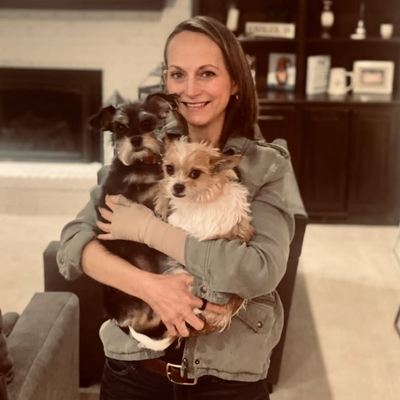
Dr. Kristi Wilson, founder of HOPE Healing for Animals in Colorado, is a holistic veterinarian, stage 3 breast cancer survivor, and Texas A&M graduate. After experiencing health crises within her own family—including her children and even the family cat—she discovered the limitations of conventional medicine and turned to holistic and energetic approaches. Now, with over a decade of experience in TCVM, bioenergetics, and integrative therapies, her integrative approach draws pet parents from across the state. Living in Colorado with her husband, three kids, and two dogs, Dr. Kristi is passionate about sharing her knowledge to empower pet parents to bring HOPE and healing to animal care beyond her physical practice