
 Apple Podcasts

 Spotify

 Castro

 RSS Feed

 Goodpods

 YouTube

 iHeartRadio
230. Year-End With Billy Hoekman + Green Juju's Probiotics

Year-end, no fluff. Billy Hoekman joins me to unpack what actually changed in pet food 2025—big brands piling into “fresh,” label games to watch, and what still doesn’t add up. Then we dig into Green Juju’s new food-based probiotics—what they are, why they hit different than capsules/powders, real-world signs they’re working (stool, skin, resilience), and simple ways to use them daily or in pulses. We wrap with a quick Extras sneak peek—where these toppers fit (and where they don’t). Fast, practical, and built to help you feed smarter in 2026.
🐶 🐱 Nutrition & Holistic Health Consults: https://www.wildwellnesspet.com/collections/consultations
🐶 Get to the root cause with the Wild Wellness Bioenergetics at-home testing kit: https://www.wildwellnesspet.com/products/bioenergetic-sensitivity-testing-for-dogs-full-scan-wild-wellness-powered-by-pet-medella
💛 Follow The Pet Parenting Reset on Instagram https://www.instagram.com/thepetparentingreset/
🤍 Follow Wild Wellness Pet on Instagram https://www.instagram.com/wildwellnesspet/
📩 Get email notifications for new episodes:
https://jessicalfisher.kartra.com/page/tpprnotify
0:00 It's time to rethink how we raise our pets. A reset to naturally healthy dogs and cats. My name is Jessica. I'm a certified professional canine nutritionist, raw nutrition certified for dogs and cats, a holistic pet health coach, the founder of Wild Wellness Pet, and the host of the Pet Parenting Reset podcast, where every pet deserves the absolute best and every pet parent is welcome. Learn from the best holistic and integrative experts in veterinary medicine and nutrition every Tuesday right here on this podcast or get individualized help with your pet through one-on-one consultations and take a deep dive into the root cause with the Wild Wellness Bioenergetics at Home test kit.
0:47 If you've been feeling like there has to be something more, something better, a better way to raise healthier pets, welcome to the Pet Parenting Reset. I decided that today's guest doesn't need an introduction because he's been on the podcast so many times, he might as well be an honorary Co host. So for those of you who are new here, my name is Jessica. This is the pet parenting reset. And I have Billy Hookman with us again today. If you don't know who Billy is, that you're living under a rock, but he is the vice president of nutrition and communications for Green Juju. Thank you for being back on the show, Billy. So I'm always happy to come on and discuss all things nerd and nerd related. Nerd and nerd related, which is why I guess you got the new haircut because you are.
1:37 If anybody is watching the video, Billy is in prison apparently. Yeah, I did. I I did just get my haircut, so I appreciate you noticing that. But every time the every time the my hair person's like, So what are we doing? I'm always like the same thing you do every time. I never know how to answer that question. So here we are. It's a pinky and the green episode. So I I did I showed you like all of my notes that I have for today's episode. But we I'm we're just going to do like a wrap up of the year because this is going to air at the end of the year for 2025. And boy, what a year 2025 has been. But before I kind of decided like what I actually wanted to talk about, I went to ChatGPT.
2:26 Like this was when we first booked this recording. And I was like, what the heck am I going to talk to Billy about? Because I've had him on so many times. And I just want you to to, to hear like the opening line of what my chat said to me. It says let's actually use Billy for what he is The Walking encyclopedia of pet food formulation and sourcing. That's at least robots think I know things, so that's exciting. That's hey, that's I'll take it. You know a compliment from anyone, including a robot and AI. You know is is a thing so I will take it. I mean, I do have my GPT is is very customized and it speaks to me in a very certain way and it knows a lot about me and about my guests because I program it that way because I want it to be able to help me in certain ways.
3:18 I will say I'm not using anything that it gave me other than that first line, but I really just wanted to talk. So we are going to talk about the extras line that Green Juju has announced for. Hopefully it will be out in 2025. We'll see. We know that like with small manufacturers, things happen and sometimes the timelines don't line up exactly to where you want them to be. We're going to talk about that, but we're going to talk about some other things first, including that cute little bracelet that you have, because Maple makes you so many cute little bracelets. It's by, you know, the number 14 year old designer in Pennsylvania. She it was actually funny because I told her she made me, this is like a fall themed 1, you know, and she was like, I was like leaving on a trip to Europe. And I was like, hey, I'll wear this every day so I can think of you.
4:07 And she was like, you don't have to wear it every day, just like whenever you want to. Sounds like, OK, I guess we're at this stage already. So. But yeah, I know I I will. As long as she wants me to wear jewelry she makes, I will be wearing it. She has a little Spitfire on your Instagram, that's for sure. Well, I was going to bring this up later, but let's go ahead. Since you just brought up going to Europe, I am curious how that talk went. It was good. It was really cool to be so. It was kind of like coming full circle because I was actually asked to speak at that conference in 2020, but it didn't happen because of COVID.
4:51 So I did speak there, but it was, you know, from my house, which, you know, was not the same experience as getting as going to England at the time. So and then I was actually going to go to the conference and not as a speaker in a couple years ago. And my dad passed away a couple weeks before that. So I was kind of half expecting there to be some sort of like cataclysmic event that way, you know, prevented me from from going to the the conference. But my first take away was it was it was really nice to be around sort of the faction of people that we see here, You know, the people who speak places, the, the, you know, educators and media people like yourself, you know, the, the people we see at Super Zoo and all that kind of stuff, but a totally different group of people.
5:42 So it was really nice to connect with basically what what was like the European version and, you know, become friends with those people. And so even outside of the talk, just, you know, being able to connect with them and eat with them and go to the beach with them. That kind of stuff was really cool. And just kind of differing perspectives on on a whole list of things. But then also, you know, seeing my friends who I respect immensely, like, you know, Jay and Adrian, but you crazy cat ladies and Rita and Rita's partner Heather, who makes fun of me and rips on me all the time. However, she's from Minnesota and as a Vikings fan, so we don't have to take anything she says seriously at this point. I hope she hears that.
6:27 But so going into the talk portion of it. So what I talked about was kind of innovation and in, in, in a lot of ways related to Kelly and what she's done and also the mindset we do in, in sort of how we do our products. Not because I wanted didn't necessarily talk about our products, but because I wanted to talk about the mindset of doing new things versus the status quo, which is kind of what you see in formulation and pet food all the time. And so it was cool. It was, it was nice to be able to, you know, share a lot about fermentation and cultures and, and to go down that road. And then, you know, it was kind of interesting because the president of the Raw Feeding Veterinary Society, Nick Thompson, was in Lancaster yesterday. We got to go to one of our goat farms and hang out. I got to give him some of our probiotics so he could add that to his key for culture because he had gotten kind of like the the rundown of how that culture works and that kind of thing. So, you know, it's nice to be able to to make that connection and know that like there are inroads there. And then also talk to the definitely talk to some of the vets there about running some case studies with, you know, our probiotics and that kind of stuff because the more information we can get the better in relation to that. And so I think possibly also cooking up some speaking next year in Europe as well, which
8:00 you know, will be something I don't like 8 hour flights, but if I think it's worth it, you know, to do that, I also have to play my travel pretty closely because I travel a lot. And so, you know, I try to make it as efficient as possible so I can be home as much as possible. So, but, you know, being able to connect with some of those people and some of the cool research coming out of Europe specifically, you know, being able to kind of piggyback off that or partner with those people. Oh, and I did also get to know Doctor Tobias as well. And I, I hadn't met him before, but we've never really gotten a chance to talk. And so got to sit down with him, go to the beach with him at a group of people. So it was nice to be able to connect with him and you know, because it's just someone who I've, we, we run in the same circles for many years and have never actually got to talk so. Well, you mentioned some of the research coming out of Europe. Is there anything you can talk about specifically? Just some a lot, some of the stuff you may have talked about previously coming out of Helsinki, Doctor Anna was there at the conference and did some speaking on that, on some of that stuff specifically.
9:17 But some of the stuff they've done with like inflammation markers, the study that I think Karen Becker highlighted recently with, you know, some of the, I think it was, it was terriers that they did on raw diets. And they also did a group on processed diets, kibble diets and, and did measured markers between cholesterol and some other of those factors to see, you know, where they would kind of hit in those markers. And I think those are important studies. I do think it's interesting that as soon as a study like that comes out, the the discrediting crew comes about and then tries to, you know, minimize those findings. But even if it's like a start, it's still a really, really good start.
10:04 So I think Dog risk is doing some really interesting things and you know, I would look forward to, you know, sharing more of our information with them and that kind of stuff because we're, we're getting ready to do some cool stuff. I think I can say this because it's going to come out later anyway when we would have already like done all the participants and stuff. But we did pivot back to the probiotics for our for our upcoming study with independent pet Labs. So we are working on that. So that will be very exciting to show some of the factors and some of what's happening. Real, What I like about innovative pet labs is it's like real, real world results.
10:45 You know, they're measuring a lot of interesting things outside of even just being like the gut microbiome, right? The the bacterial makeup of the gut microbiome. So excited to do that and be able to, you know, add that to the to the growing body of, of research out there that is happening with fresh foods and you know, that kind of thing. You brought up the disinformation crew and I want to put a pen in that because I want to come back to that. But one of the things and one of the reasons why I wanted to ask you about the talk at the Raw Feeding Veterinary Society is because one, this is a year end wrap up podcast.
11:25 So I kind of want to cover some of the highlights throughout the year in the pet community and the what I like to call the healthy pet community. Although I think what did what Lauren from Girls gone raw and we're trying to change it to the crunchy pet community. I don't know. We'll, we'll, we'll stick with healthy pet for the time being, but I like crunchy too. The one of the the things that I have started noticing that I want to try to do my best to make some changes with moving into 2026 and this kind of your talk at the Raw Feeding Veterinary Society made me think about it more. I'm curious, like, do you still have opportunities or do you seek out opportunities to speak in front of groups of people who may not be as like minded as we are? Because I think in our society where like where we are today, like that's getting harder and harder. And it's something I want to try to lean into a little bit more in 2026.
12:28 And I'm trying to figure out like, how do we do that? Well, I feel like I, I used to do that more because there's always, there are opportunities that like, you know, veterinary colleges, especially, you know, students inviting you, that kind of thing. So I feel like I used to do that more. Interesting. I actually used to like do some like, I guess guest teaching at this and here in Pennsylvania at this local college who did a veterinary technician class and I would go in and talk a couple days out of the semester and, and that was definitely a mixed group of people. We have definitely thought about doing some more of the maybe eventually Doctor Keith Weingart, who's the veterinarian at Green Juju and I doing some more of the conventional vet shows.
13:21 But it's just, you know, it always depends on resources and time and money. And sometimes when it gets down to it and you're, you're shifting between education and running a business and that kind of thing, you, you have to prioritize, you know, the things that will grow you and help more animals. So that's definitely a possibility in the future. I remember years and years ago going to a vet conference, this is, I mean, I don't even, this might be like 2014 or something like that, but going to a vet conference in Florida with my then boss Jacqueline at the time. And, and we were there four days and I bet under 10 people talked to us the entire time we were there. So it's just like us working on our computers while we were doing that.
14:06 But I mean, I'm definitely open to the the speaking opportunities. I feel like, you know, next year is going to definitely be more condensed when it comes to the speaking stuff, at least the big error speaking stuff. You know, when you look at Judy Morgan's event being a 2027, I think there's some other things cooking, but I think we were in like a trend of like there was a bunch of summits and then now they're kind of tapering off. And so we'll see where that goes as far as a like minded people go. But yeah, it'll be interesting to see. I don't know. The the other thing about that too is like outside of veterinary conferences, like the, the, the summits that are on the, the help, the what's the word? I'm like before I lost my trade, though. Oh yeah.
15:00 The summits that are on the holistic side, those don't really exist on the other side unless it's a veterinary thing, right? It's not like there's a conference where they were like people who are really passionate about nutrition have stopped at like, oh, the highest amount of education I can get is to feed hills. So what would you then learn at that conference? I guess you could go over like new information from those companies or whatever it might be, But so there's nothing really out there for that unless it's the veterinary community. And the veterinary community, at least on my end, is not they would be more interested in in having a bad cum, I would guess, you know, because that's the sort of like credibility they're looking for. And we understand that.
15:48 One of the reasons we work with Doctor Keith is 1. He's an amazing person and he's, he is also very like mindedly innovative, you know, and, and thinking about those things, but also like people want to know, to know that veterinarians are supporting what we're doing. It's the reason why we have to, you know, the vet program, which, you know, we have over 175 vets in our vet program now. It's the reason why, you know, Doctor Keith is we wanted to work with him. And so that's the long answer for I don't know how many opportunities they'll be. That's OK. I like long answers. This is a podcast we're supposed to talk. So going back to the disinformation crew, one of the more recent events of 2025 from when we're recording this at least is fun.
16:41 There's a huge trend. I mean, we've seen like Purina sales are down. All of the big companies seem to be in some way, shape or form trying to get into fresh food because they see like they're losing money to it, even if it's a small amount of money, any percentage wise to them, like obviously they don't want to lose any percentage. They're trying to gain quarter after quarter. So they're all getting into the fresh food. Blue Buffalo just came out with fresh food. Obviously, you know, we've had farmer's dog around for a while, Nom nom Ollie, all of the things. And so even though they are starting to get into fresh food, I think was it Hills maybe bought like a raw food company in Australia earlier this year. Anyway, there, there's a lot going on there Even so, yeah, I think it was it Prime 1.
17:33 Is that an Australian Prime 100? I don't know. Anyway, it it's, it's not like a whole food balanced raw food. It's it's, it's raw meat and a bunch of synthetics thrown in it. So it's kind of right up their alley as far as, you know, their business model. But then recently, you know, there's all these headlines about fresh food causing urinary issues in pets, which isn't the actual truth. Those are just the headlines. It's one of the synthetic ingredients that they're using. So one of the things that I've asked a handful of people this year about. And I'm just curious your thoughts as well. This is a huge shift, especially for veterinarians. If these huge pet food manufacturers that have been telling veterinarians for decades and decades and decades that this is the only way to properly feed an animal is with our food, is with this dry food or this canned food. And now they're getting into fresh food. It's, it's going to, I feel like it's going to be really difficult for them to go and say, oh, by the way, we also have this fresh food.
18:42 And so this isn't the only way to feed anymore. I'm curious your thoughts on this whole like big pet food moving into fresh food? Yeah, I think it's just a natural evolution of the way people do business. It's what you said, like your business, nobody is OK with just making money. You have to grow and grow and grow and grow and you have to find those ways to do it. And so I think it was eventually going to happen. I will say that the reason why I was surprised about the thing in Australia with the raw food is just because I would assume because everyone's going into fresh food, you know, fresh, not, you know, cooked food, that they would bypass that entirely to, to not deal with the risk of, you know, having a raw food company, which I think most of those companies will do, which I think is an interesting, the most interesting part of the trend is most of those big companies bypassed raw food because that's where the market went.
19:38 Gently cooked was introduced and then people started to feed it and get really good results. So it was right, you know, running parallel with raw food. And so now a lot of these corporations like, Oh, we don't have to take that risk. We can just do this and, and cook it and it will be better. And it is better obviously, you know, in, in less processing and and that kind of thing, but better than, you know, I mean ultra processed food and so. I think it's just a byproduct of that. And I do think that like I think honestly where the discussion will go with with veterinarians generally will be like, well, the reason we didn't support it was because it was small boutique companies. But now that these larger corporations that have the the ability to do more science backed research are making it weak, trusted and OK, then I guess the ultimate end goal there is more animals will be healthy, right?
20:30 Because you know, you bring up it's a raw food with just solicit synthetic vitamins. That's not ideal, but at least it's low in carbohydrates and you know an animal will have a better metabolic reaction to that. So, you know, you take the as good as you can with the bad and kind of like move from there, but it's still just isn't those, those large corporations just aren't conducive to any sort of real innovation because there's so many steps you have to take to put things out. There's so many people you have to go through. There's so many. You know, it's kind of, it's kind of like just in general, like if, if you have 100 pet stores, it's going to take you a lot longer to introduce a new brand of food versus if you have one or two or three, you can kind of move on much quicker.
21:21 And so that's where I think we play a bigger, we play a big role as a small company in that, you know, it's whatever Kelly and I think is cool. We, we just can do it, which is like, you know, a small percentage of the ideas because I think a lot of times they're like, no, we're not doing that whenever I, you know, break up something so, so. Speaking of Speaking of, what are you currently obsessed with? What am I? What? What are you currently obsessed with? What are you working on? What are you like doing in your kitchen that your wife hates? Well, I can, it's always a fine line I walk between what I what I can. That's a great question. What up like nutritionally?
22:03 What am I obsessed with? It's a good honestly, most currently we're working, I can't I can't say it. We're working behind the scenes, not on a new product, but on something I'm most I'm most the thing that I thought of recently that I just want to explore more is so we put out and we talked about this because this is the year end review. We put out probiotics this year, which we've had tremendous results with which I just am I'm so excited about. But we're working on something behind the scenes and I was kind of like looking at like what the what the medicinal value of some of these things are in, in specific conditions that dogs go through. And I thought of like kind of a new way to to think about these probiotics.
23:00 And I think it puts it into perspective to people. And I was like, OK, if we can get this messaging down, I really think that it helps in that that messaging was so we know we had to get across like it's the food without the food. We, you know, it's the whole food culture. We took out the food, we did the whole thing and we had to get that across to people. But what I'm really interested in is the ideal microbial environment that our dogs and cats should have that we take away from them through many different things, through environment, through food, through chemicals, through all these different things. And so a really cool way to think about our probiotics is like a farm is raw milk is the initial environment that you inherit from your mother as far as your microbial environment, your microbial influx every single day.
23:54 And then eventually we diminish that through their environment. So farm restores that initial microbial environment and soil and then those dogs go and they live in the forest and they live in the wild and then they are in nature's microbial environment and we take that away from them as well, which I think is a handicap. So soil restores that natural nature's microbial environment. And then the other thing that happens too, and we deal with this all the time is because we don't have either two of those natural microbial environments, yeast balance goes way off kilter.
24:35 And so leaf restores a natural balance of yeast. So in thinking about these probiotics, I'm like, when you rotate through all three of these, you're restoring those microbial balances every time you do it. And that's where where the importance comes to like rotating through them. Like when I use them specifically for my own dog, I use soil every single day and then I rotate between the other two. So Monday would be soil and farm, Tuesday would be soil and leaf. And that's where I'm, I'm constantly giving that microbial environment of living outside. But then also the other two have, you know, equal amounts of healthy yeast. And so I'm rotating between the other two to also restore those. And even if you just rotate it between them, but I think that can become a new concept that we're not even really looking at like what is the ideal that they're born with or set up with and how do we take that away?
25:34 And then how can we restore that? And that would just go back to those microbes as opposed to like a model culturing microbe, which work to make animals healthier. But you know, when it's 10 or 5 or whatever, it's just a different like case. So I feel like even if you were going to use another product that works really well for probiotics, you still might want to do these as well. And you could use them together, right? You could use, you could use, you could be always rotating between 3:00 and then you can put in other ones whenever you felt like it to get like, you know, whatever microbial bouncer or use them for medicinal purposes, you know, however that might be.
26:18 So anyway, that was a, that was a huge tangent for that's what I, I thought of that like 2 days ago. So that's what that's what I'm into exploring more and and researching. Well, yeah. I mean, based on what you just said, I can see it would significantly decrease that handicap as you put it. I mean, there are certainly things that we still want our dogs to have access, like we, we want the various UV lights, we want them to still touch the ground and like ground. But there are certainly cases where like that's harder to do, especially if you're living in a city in a high rise.
27:01 So this would be a huge. And all those things come together like it's always just this is one part of the puzzle and, and everything is, you know, everything, whatever you can do at home is everything, you know, seems to be as important as everything else. This is just one piece of it. But I think we're now starting to look more at the microbiome as being, it's as being connect, not only connected everything, but I'm almost starting to look at it as something that's like obviously intertwined with diet, but it's something that's almost like you have to handle separately and then also do diet as well. Just to just to kind of like consider that it's something that's as important where we were kind of like, oh, diet that includes probiotics.
27:46 But I think it, it could be something that's different than that. And, and to, for your other question, I've been traveling too much. So I haven't been able to make anything at home really. I mean, I have been able to keep up with my consistent cultures, which is my kombucha and my yogurt, but I haven't really been able to like, I really want to make B Kebas. I really want. There's a couple things I really want to do again, including I want to grow up sprouts, which has nothing to do with Earlier this year I was. You were doing a lot of, I think, tea gummies. Is that right? I don't. I have done that in the past. Don't do that as much now for.
28:29 Whatever. Reason that was more of a that was honestly, I did that somewhat with Huckleberry. That was more of a Lua thing, but that's also a time thing. I feel like there was some more Lua things because there what that was like before Babel things. So no. I swear you did them like at the beginning of the year or something. I might have. I mean, the problem is that, yeah, I have a hard time just keeping up my schedule for my kombucha and my things that I try to do, you know, consistently. But I've been doing well at that. But I after I get back, I'm actually going to Seattle on Monday.
29:09 And so after that trip, I travel less during the holidays. And so hopefully, you know, amongst the holiday cookie making and all that kind of stuff, I can experiment with some healthy stuff as well. Well, tell me more about sprouts because I that's also something I want to start doing more for various reasons, not just for my dog but also for me. Are you going to do it for your? Dog. And your family. They're just so incredibly easy to do. It's like, I mean, you can, I, I bought the little like jar kit that just holds it up, you know, at A, at an angle. You could just do that yourself, but be like, it's, I mean, you literally just put the seeds in a jar, soak them for 8 hours and then rinse them twice or three times a day and they grow in like 5 days.
30:04 There's no way to screw it up. You get an insanely high like I have two jars and if I do both of them, there's more than we could eat. At last we were just eating sprout salads. So and we know too that like, you know, when you look at the I actually wrote an article a really long time ago in Dogs Naturally magazine about like the nutritional profiles of like the life stages of plants, you know, like so it's from seeds to sprouts to adult plants to like what I called like decomposing plants, which was like fermented plants, right? We just know that when you're eating sprouts, the energy it takes to actually grow the plant and to do that rapid growth is nutrients.
30:50 And so we know that you look at the data and you go, oh, you know, the, the, the plant vitamin A beta carotene content is 1000 times more. That's because it's pushing that out to actually grow. And so it's kind of cool that you can get that like measurable thing. And so just a easy healthy thing to do. I, I think for everybody at home, like you can do stuff in your house and it's relatively easy. Just because you don't have land doesn't mean, you know, I consider myself a bacteria farmer because I grow things in my house all the time. I use those bacteria to make food for my entire family, you know, the healthiest possible version of food. Or you can grow sprouts and you can do all these things and you too can be a farmer in your own house. And it's not expensive.
31:39 And a lot of times you'll save money on it. You know, kombucha wise. I mean, you definitely save money if you make it yourself. And this stuff is not rocket science. It's pretty easy, especially once you get into a rhythm with it. It's all about the rhythm. The first time you do something, first time you make kombucha, you're going to be like, what? I got to do this and this is what is all this. I mean, now I've been, I mean, I've been doing it for over 10 years, but it takes me less than 30 minutes a week and I make a gallon and a half. That's it. It's a easy process. You learn the timing you, you go with it, right? So. But that's because you put 10 years into it. Yeah, that's true. But it didn't take me 10 years to figure out how to get down to, you know, under 30 minutes.
32:22 So. And it's it's it's it's honestly hard to screw up. I know people at home are like, oh, what if it's bad? What if it's, you know, has bad bacteria? Just get yourself APH meter and you'll have all the Peace of Mind in the world. So something to think about. We do have our year end meetings coming up next week, the start of them. So I will be we will be talking about, you know, fun perspective things for the future. So that will be always look forward to that. Always look forward to the team getting together. We just hired someone. So we now have 5 full time employees that could you do it? Wait, is it 5? Yes, 5 full time employees. So getting huge now, huge corporation.
33:06 That's awesome, huge. So let's let's go back and talk about the extras line. I know I have recommended the current line that's out from Green Juju that three to four ingredient like minimal ingredient list to so many of my clients because I work with pretty much every dog I work with and cat has food sensitivities and some are so severe that they lit. It's like literally there's hardly anything they can eat. And I still somehow always seem to be able to find at least one or two of the green Juju recipes that they can eat. And so I love that.
33:54 And now you're kind of pivoting a little bit with what you're calling the extras line. So I'd love for you to talk about that a little bit. Yeah. Well, first of all, just going back to the delays to get people a peek behind the curtain, if you will. Normally the timeline is off at least a little bit, but this has been like majorly off because we just had some hiccups. We even had some hiccups with the government shutdown. I mean, there, there's just been things. And so it's been honestly it, it, it, we're, we're on track now and it should be coming very, very soon. But it, it was just an unfortunate string of events that happens that way. And so we know how annoying it is when we announce something and then just, it takes a long time to come out. So, and I, I want it just as bad as everyone else. That's the chicken 1 is Huckleberry's favorite food on the planet.
34:48 That's the only one he just literally whines for while I'm, you know, putting it together in his bowl. And so I'm accused at home of, of taking way too long to put his food together. So it's it might be just me. So the extras line, it's another journey down. How do we make something that pushes health forward and nutrition forward and doesn't rely on these like old notions of what we should be doing and how we should be doing it? You know, we have this base of knowledge, which is really great, but we've been going with it for like 10 years and it's like we need to push forward, right? It's like I, I don't know how many times somebody can e-mail me and ask about secreting organs and you know, etcetera, etcetera. Where you have to, we have to move to a different place where we can, we could make healthier foods. And so number one, we wanted to, we have 6 proteins in our limited ingredient line.
35:47 So I feel pretty good. I mean, you never know, there could be more coming at some point. But I'm just saying like if you have 6 to choose from, you should be able to find multiple ones depending on your, you know, energy, energy stuff, depending on allergy stuff, all that. So I feel pretty good there. And we really wanted to because, you know, poultry foods, even though they get a bad name when you source them correctly, are a really, really healthy option. We also wanted an option for both dogs and cats that like, maybe you don't have any allergies, maybe you don't have any sensitivities and you can just feed. So we wanted to be like, how do we put as many healthy foods as possible into this mix? So it really goes to it's still organ heavy liver is the second ingredient. So we're still using more than weight, like a lot more than the 5% that everybody loves to you know, quote in the 801010 diets. I would like to point out with the 5% liver or you know what they call secreting organs, that's not really based on anything.
36:49 It's based on the proposed amount of organs that would be in a prey animal or something like that. There is no, we haven't figured out where 801010 comes from. And so to be like it has too much organ, well, too much based on why? What is the argument there? So we, we formulate our foods based on nutria profiles. So and also like feeding like glandular, you know, principles and saying like, oh, we want to preserve the liver, so let's feed more liver. So we also wanted to get, we wanted a way to be able to do the correct omega-3 to six ratio without using something processed because that's not really what great Juju does. And so the addition of sardines is a really great one for me because it's a whole prey item.
37:39 You get the eyes, the brain, the organs, all those things and you get a really nice omega-3 to six ratio because even when you get even when you get which of a cod, it's clearly, I clearly need more of this while we're sitting here. So even when you get the best poultry, it's still typically too high in Omega sixes from where we wanted it to be. And so we can add these sardines and get it to be like a one to four ratio. I think that's the average one of the three is like 1 to 4. And so that was really important. One of the one of the little harder to get ingredients, which was kind of one of the hiccups here was the fermented seaweed, which is really cool.
38:24 It's grown in in these pristine areas of Malaysia and it's lower in iodine. So we can actually use more of it, even though the iodine argument is also, I think the holistic crowd got that wrong a little bit. But the iodine, you know, so we can use more of it to get more of those like polythenols and fiber and also vitamin K2MK7, which is so not only you're going to get K2MK4 through all of the, you know, animal ingredients, especially the liver, but also that MK7. And so that's a really great one for calcium placement and, and a lot of functionality in the body. And then lastly, we were able to use this whole food base, which is whole food vitamins and minerals that come from plants and phytonutrients, but it's just the vitamins and minerals. So you don't have any of the carbohydrate content. This is important for cats.
39:22 It's also important for just keeping that macro nutrient ratio the same as our other foods. So not only are these foods in line with the calories. So like if you're switching between this and our other ones, it's basically the same amount of calories because it's formulated that way, but it's also the same very low carb. So all of our limited or less than 5% carbohydrates, most of them are like 1% or even less. And these are exactly the same way. So we're able to get all of the vitamins, minerals, phytonutrients from those without the carbohydrates. And so that's where we can kind of harness those plants while not really overdoing them, if you will, and you can still. If you're dealing with a dark hat that doesn't have any sensitivities, you can still use other things in it because it's still a very simple, even though it's a longer ingredient panel, it's still very simple when you break it down like I just did. And we thought that would push these kinds of diets, chicken, Turkey and duck, into somewhere else that would be, you know, ultimately healthier.
40:32 You know, one of the things that you talk about with your foods is getting that omega-3 to six ratio where you want it. And it was interesting to me when I just recently released an episode with Doctor Susan Wrecker, and she said that she interestingly finds that people are so afraid of Omega sixes that she sees a lot of homemade diets that are actually deficient. And linoleic acid, I don't know. Do you see that a lot? I'm just curious what your thoughts are on that. I agree with her that people should not be afraid of Omega sixes because Omega sixes aren't bad. They are as important as Omega threes and they're all they're actually naturally always supposed to be higher than omega-3.
41:18 I've never the only source that would be high that would be ultimately higher is if you only ate fish. But everything else, it doesn't matter if it's grass fed beef or anything like that is never more Omega threes than it is Omega sixes. You know what we find? And I did a talk about this in on fatty acids when I was in Chicago with Rita Hogan and Barbara Royal and Linda Loudon. And it was on like not only the natural fat to protein to carbohydrate ratios that you find through the studies, self selection, that kind of stuff, but also the, our data on these are grass fed animals and wild animals.
42:03 And in the case of our goat and where these omega-3 to six ratios come out in, in grass fed and wild animals. And for from our research, it comes out to be our goat, which is a wild animals 2 to one. But that's still double the amount of Omega 6 as omega-3. Interestingly, what, what most people don't want to talk about is that all those diets are much, much higher than Omega dions. So Omega nines are what are the healthy oleic acid, which is what makes olive oil healthy. And any one of those diets doesn't matter if it's a grass fed animal, doesn't matter if it's that is going to be much higher in Omega nines than much, much higher Omega nines. And Omega threes and sixes and saturated fat will be much higher than all of those will make up about 50% of the diet. So I think people would be surprised by that. But don't fear Omega sixes.
42:57 Just keep them in line to what they normally should be. It's kind of like your own human diet. If you avoid seed oils and eat, you know, cook mostly with, you know, butter and and tallow and those sorts of things, you just naturally will get there. And that's the basis of our diet. So that's like our our beef diet. It's like beef recipe and pork are actually our two most popular ones. So if you take beef, there's no fat that's not coming from that grass fed cow. And so you're just going, you don't have to think about it. You're just going to get that natural ratio. The only reason you have to think about it is if you wanted, if you had an animal that you thought had some condition that you thought they might benefit from more Omega threes, right? Like an older animal.
43:43 There's some there's some some numbers there like if you reference some of the stuff kind of Brady has done and that kind of thing where you could use higher amounts of that. But aside from that, like, you don't have to think about it, which is really. There's so many things I want to ask you right now. So one of the things that I know when we do supplement higher doses of omega-3 is we also need to add in vitamin E, additional vitamin E, And I remember from going to the course, the Green Juju course, there's something really special about your vitamin E. Can you remind me of what that is? Oh, it's non-GMO. So almost all the vitamin E that's used as a preservative is, is GMO.
44:28 And the other thing thing to to educate people on with vitamin E is mixed to cough rolls are so to cough rolls are like the outer layer of vitamin E. And obviously like if it's in an egg yolk, seeds or whatever, there's, there's more to it, but we use it. This is the food version as a preservative, right? It's not synthetically produced. So the vitamin E in the formula is used as a preservative. There is vitamin E also in the the organs that we use, for example, right? So you're already going to get that from the food. So when you're using it as a preservative, you get that outer sort of layer. And the reason why it's called mixed is because it's, there are multiple to cough rolls, right, that are that are around the edges of it. And so if you see like alpha to cough roll, that would be one of those things.
45:14 So this is many. So it's closer to the food version. The other thing to think about too is because I get this question a lot, is what are they derived from? Ultimately, it doesn't matter what they derive from because once you derive them from the thing, they don't carry any of the food characteristics. So good great example. Ours are derived from sunflower and soy. There's no soy in our food. That's once you remove the actual vitamin itself, it doesn't, then none of the food properties are there. So I know something that gets people pause sometimes when I say that, but this is the best non-GMO version. And that comes from all that came from Kelly's own dog.
45:54 You know who tried Bam at the time, who tried the treats before everyone else did and couldn't do them. They made the switch and then she could do them. And so that really helps to you can sometimes get that intuition in working with that animal. And there's no downside to having non-GMO vitamin E, right? And so something to think about when you're shopping around. And unless they're saying it's non-GMO specifically, it almost always is GMO. So there are a couple of things. Well, there's probably a lot more than a couple of things, but there are a couple of things that I know I continue to hear over and over and over again.
46:38 And I feel like we're like beating a dead horse, even though I hate saying that phrase. But one of them just popped back in my head when you were describing the formulation of the Green Juju foods because they are liver heavy. And there is still a lot of concern among people in the fresh feeding space that feeding too much liver is going to cause copper toxicity. And I feel like we may have talked about this like maybe a couple of years ago, but I'm still hearing it. And so I'd love for you to address that again.
47:20 I think the reason why, I mean, this is actually one of my favorite subjects. So I I appreciate the so you're hearing it because it's, it's the easy answer. And, and, and this is one of those things that I feel like holistic, the holistic like wing of pet food got this wrong. Like we have to think about the nuance of how food works, food versus synthetics, all these different things. We can't just go like, this is not the way the science works. We can't go, OK, there was a study that showed that animals are storing more copper, therefore we need to feed less copper, right? It's not that simple.
48:04 So when you look at the original study, it's a sample of dogs in America. If you took a random sample of dogs, how many of those dogs would have been fed a raw diet without synthetic copper? 0 If you took a random sample of dogs in America, out of all the dogs, right? One of the things I learned at that conference, by the way, this is a tangent, is obviously like dogs came from wolves and, and you know, that was what like 50,000 years ago? Interestingly, there's I didn't know this, but there's 250,000 wolves roughly and there's like 900 million dogs now, which is wild. So it looks like dogs are winning the the the contest there, but so going back to the copper. Thing even have nothing to do with that. Right.
48:55 Yeah. So, so going back to the copper thing, so the first thing you have to look at is what is potentially causing this. Here's here's the thing, we still don't know 100%, but the likely cause of this is synthetic copper. It is the synthetic copper that specifically AFCO change to that is much more bioavailable. This is the same thing with the iodine argument as well. It's the exact same parallel that you run between iodine and iodide and also synthetic copper and naturally existing copper. So it's easy to say, well, let's just reduce copper, Let's not feed liver. Let's not do this, OK, but we have to look at the forms of those things, right?
49:41 Why aren't we? Why in all the, in some of the diets that Green Juju's used and you know, previous to that, some of the diets that have been used that are higher in organ content, why haven't we been saying this? It's because when you actually take a look at the data and you actually took it the at the relevant data in mammals, you find that when copper comes from food, the body has multiple layers of basically understanding if it needs or doesn't need copper and it will digest. Great example. Studies have shown that animals that eat a diet that's deficient in naturally occurring copper digest up to 67% of it. And that synthetic version is like 100% every time. And studies have shown that mammals that eat diets that have too much copper digest as little as 12% of it. And it's based on need.
50:34 And so if a diet, if the AFCO minimum for copper is, is you know, X and you are two or three times that or four times that and it's coming from a natural source, it's coming from actual food, the body will digest what it needs and not digest what it needs. That's what the the data shows. That's not just me reacting to a trend and going there's more the copper storage. Therefore, we need to take copper out of diets. Copper is also an essential nutrient as well. So I am not worried at all about the copper content in Grey Juju's diets. And that just goes back to the available science, what we have to know. And it's very similar to the iodine iodide thing, right? How much kelp is in here?
51:20 Should we not use kelp? Should we, you know, is the kelp, you know, when it comes to, you know, I'm using a supplement with kelp, but then there's also kelp and the food. Am I going to have thyroid issues? Well, as it turns out, you know, if you look at the digestibility across all of those species of kelp and seaweed, you have like a 10% digestibility rate and even some of them as low as like 2%. And so it's very, very difficult to overdo any of these nutrients when they come from food. There are natural systems built in that iodine is connected to other nutrients connected to potassium, which limits the absorption of it. And so and also other nutrients in the diet will digest will limit copper, for example.
52:08 So you're never getting a straight shot of whatever that nutrient is. And so I think in in the holistic side, we have this quest because we're trying to appease the conventional side. You need this much of this nutrient, you need this much of this. And we're not even considering that all those things react differently. It's kind of like raw milk. You know, I have on my computer raw milk for 1000 calories comparative to the AFCO profiles and it doesn't hit them all. But we know that animals have lived off of raw milk and completely thrived because the nutrients are more bioavailable and they're much, much more bioavailable and they're made to be digested. And so we're almost becoming unholistic in that way. And that's where we have to like step back and go like, hang on, let's not always try to appeal to the conventional vets and go, we need to hit this marker, this marker, this marker. We need to hit some of these things. And, you know, that might be something I, I did see a clip from the Susan Recker thing about, you know, changing some of those profiles and looking at, hey, what are we, what do we actually need as a standard for these things? So, yeah, it was copper.
53:21 Unless your dog has copper storage or you're dealing particularly with liver disease or something and it's coming from food, I don't think you have to worry about it at all. Since you brought up kelp, that was a big, that was a hot topic this year as well. I don't know if you got many questions about that. There doesn't seem to be, I don't know, I haven't dug into it enough because I'm just like, the whole world is toxic. I don't know what to tell you, but there doesn't seem to be an available source of kelp that doesn't have quote. Whatever too much lead is. I don't even know what it is, but have you been getting those questions as well? Not not a ton I think.
54:09 I think when it comes to food ingredients, be at your home or you know, in buying it commercial food or formulating for commercial food, you have to find the best ones you can. And there's always going to be some level of something, right? There's always going to be some slight level of something you don't want. But that's just the world we live in. And you just have to do your best. You know, when we when I buy food for my family, you know, I realized nothing is ever perfect, but you just do absolutely the best we can. You know, a good example of that if if you know, less now, I guess because she's, you know, over 4.
54:49 But like, you know, if we're on the go and stuff like that, those little food pouches, we have those. We just buy the best possible one we can that has organic ingredients and grass fed animals. And do I realize there's probably microplastics in it because it's in that pouch? Yeah. But that's life. You got to do the best you can. And you know, and you also need a source of iodine, you know, the, the two best sources of iodine in my mind are raw milk and and seaweed. So you just got to make a decision on, on where you want to go there. And with our diets, you know, it was we, we sought out the best possible one that we could find for our cup sourcing, which comes from Iceland. There we go.
55:39 Well, yeah, I I think I know the students that I have in the certification that I, that I mentor for when everybody was freaking out over this earlier this year, which by the way, our dear, dear friend Connor Brady stoked that fire quite a bit this year. It like everybody was terrified and scared and like, Oh my God, I'm feeding lead to my pet. And I'm like, my reaction to it was instead of asking what else can we feed, how about we ask like, what can we do to clean this up? Because we have done this to the point like we have done this and maybe our focus is in the wrong place. Instead of like bashing these companies that are putting kelp out there for us to use, like what can we do to actually, I don't know, reverse change course and clean up the planet? Maybe that's to like high level for most people to think. It's probably too high level for me to even say because I don't have the energy to do it either.
56:41 But that's kind of where my head goes when I hear something like that. I'm like, yeah, we live in a toxic world and we did this, so we need to fix it. I think that just good, you know, that goes back to the regulations and how people produce food and stuff, but it just goes back to like you have to find the people that are doing it right And that's where you spend your money. You know, it's kind of like we moved our production for our veggie frozen veggie blends to Pennsylvania this year. We just started producing them here and you know, we were working with Lancaster Farm fresh Co-op and they're incredible for that's the most organic produce I've ever seen. It's not just organic, it's the, you know, they're not using any chemical fertilizers. It's all actually truly regenerative, like it's run by, you know, a married couple that has a passion for that. And so you at Green Juju, we just try to get better, you know, a better, a better.
57:35 And so we were able to to I think make those even better at this point. And it was actually funny because we were filming out there and there was a we were out because we were, you know, that's where we get our beats for for vamps, digestive support and purple cabbage as well. And we were out there with the guy doing some filming and, and we were, they were these little beets. They weren't mature yet, but they're like, oh, pull one of those out of the ground and eat, want to eat it? And so we did it and they're like, how was it? And I was like, well, it was covered in manure, so it wasn't very good. It didn't taste amazing. I'm sure my microbiome is like loving it but it's covered in dirt so not great. Well, and I just saw on green Juju socials that you're, you're rinsing all those veggies in ozonated water, which I absolutely love and want to give a plug to our friends at O3 Vets because ozone is, I think underrated. Like we, this is a really cool thing that we have available to us that so many, like we could be using it in so many ways that we're not.
58:45 And I like, I'd love that you guys are using it. Yeah, we just started doing that up at Urbans, you know, up at the with the plant there. And it was really fun to be able to. I've been up there a couple times, you know, and then Kelly and even Antoine has been up there. Kelly's been out there a couple times. Antoine was up there the last time, you know, because when you switch production and go through things, you know, it's different. We it's a different place, it's a different equipment. So you have to like run through those things. So, but it's always fun to go up there and you know, we're hands on probably the slowest day of the year because I'm, you know, helping them. But outside of that, I think it's I always loved throughout my entire career, I loved production, you know, getting in there, doing it, doing the things, dipping with things. But that was a nice we got.
59:38 We have a really good safety system and steps, you know, from Jose water to some organic acids and that kind of stuff to, to get those where they need to be. And yeah, I'm just really proud that, you know, we can make it here in Pennsylvania. That's awesome. I don't know if you know that we're in an hour. Well, I think we all know how much you love Pennsylvania, and I still haven't been there. Yeah, well, you're missing out. Clearly, the tour is always available. Yeah, OK, I might come this spring. I'm not coming during the winter. It's too cold.
1:00:20 Yeah, that's, that's fair. It's beautiful. I mean, today it was a little bit rainy. It was beautiful. Right now, it's very the fall is in full effect. So last year you said that y'all were going to be slowing things down for 20/25/2024 was crazy. You're slowing things down for 2025 That did not happen. So are you going to make the same prediction? Are we going to have like a like an like a we're going to we're going to bet on the side like are we going to slow down? Are we not going to slow down? What have we got 20 bucks on?
1:01:02 I feel like they're well. So I can say one thing that is definitely coming out, which is the frozen version of the extras line. So, but I think people saw that coming. So you know, the plan is to release the 1 as soon as possible and freeze dried and then in the spring do the frozen. So not even that long from now really honestly from a business perspective and from education and all that, that's probably the focus, you know, is the frozen version. I think the chicken 1's going to be really popular, especially because the price point is lower, like the beef, you know, on the lower end there. But if I had to say, I don't know this honestly because we haven't gone over next year yet in full detail, But if I had to guess, I would say there's probably other things should there be?
1:01:51 Probably not. Will there be? Yes, probably so, but we do with the caveat of we never do things just to do them. There's no part of me that goes like, well, we we're releasing something at Global, so we have to release something at Super Zoo, right? Like I don't ever think that way, but there's always things cooking on the back burner, things we talked about moving into and then also surprise things that are like, oh, OK, well this came available, let's do it. And so we'll see what happened. But I'm looking forward to the year that's already crazy how much it fills up. And I already have until maybe up until April scheduled already. So you know, it fills up pretty quickly. Wow.
1:02:38 Well, what is your take away from 2025? It was a crazy year. What's your take away? Is there anything that you learned or unlearned this year that you're going to take with you moving forward? Like something that you were like, oh wow, this is this is a change. Well, I think for Green Juju, we've had to because just because a lot of external factors, we've had to pivot a lot with our release schedules and stuff and how we were doing things this year. Certain products had to come out when other ones were going to come out in a lot of different things. So I, I think one of the things we're hitting now, especially now that we're a food company that's, you know, doing all these things, is we kind of have to go with the flow and be able to, you know, really do the best we can and, and pivot there.
1:03:29 So I think that was my, my big green juju lesson. That's a hard question when it comes to like nutrition and, and, you know, learning and unlearning. I think you know, what 2025 showed me was we're ready for something. We're ready for a leap in the nutrition world. We're ready for a leap and understanding and where people are going. And especially in the industry, in the, in the pet food industry generally, I think we've just all been relying on all the steady information for so long. And this is what this is what a good dive is for an animal. While we're still figuring that out, we need to push and I think the industry as a whole just needs to jump to a new, a new understanding and I don't mean a new understanding and like based now, it's just a new understanding and that we need to push forward in that.
1:04:30 In a lot of ways, we haven't done that in a very long time, especially in in the industry, you know, because, because there's two different kind of people you deal with. The first one is like people that make food at home and they research nutrition and they do all these things. Sorry, if you could hear, I don't know if you can hear that, but there's very loud people right over there. So the first one is like the kind of people who make their own food and, and, and, you know, research how to make diets. And then the second thing is the commercial side of pet food and, and who we deal with more, which is like people who produce this commercially. And that's where I think both need to make a jump, honestly. You know, how many how, how often can we just talk about the same things over and over again, right?
1:05:14 Like, like what I was talking about earlier, how much Oregon need how much, like how, how, how often can we talk about that and not think about a new way forward? So hopefully 2026 is the year for all of us to to kind of seek to, you know, help our dogs live even better lives. And cats, we like cats too. I say dogs a lot, but cats shout out to cats. I don't want the cat people to kill me so. Shout out to the cats. Well, fortunately the green Juju foods are very palatable to cats, so that works. That's very true. And the new ones are as well. I'm just going to throw that out there. Yeah, the chicken and sardines.
1:06:01 So, well, I mean, I think that's a good way. Yeah. Well, they certainly like sardines, that's for sure. And chicken is very popular for cats. Very popular though. Mine love rabbit. Mine are big fans of Rabbit. Oh, and I think that's pretty universal too, though. Like, I think I feel like they, I feel like, you know, and, and I've also don't get into the like, so rabbit cows, you know, pigs, whatever. They're all just, you know, protein. Like when it comes to the digestibility, their proteins that are made-up of amino acids, those amino acids are in different arrangements.
1:06:43 I don't necessarily buy the argument that like you should only feed your cat things they could have brought down in the wild because their bodies aren't because like it's the same amino acids, they're just in a slightly different arrangement. So I don't, you know, I don't, I don't know that could be true, but I just have never seen anything that would show me that that's true. That's why, you know, I tons of cats love pork. Pork is very palatable for cats. We've we've come to find out And so, but for whatever reason, it does seem like a lot of cats like rabbit. So it may be related to that, may not, but it just depends. I don't know. I mean, my cats like pork, too.
1:07:23 So, see, there you go. Well, I think that's a yeah. I think that's a good way to to end the year with hopes for 2026 that you just gave us. And I just want to thank you again for being here. My dog is whining at me and scratching at the door. So I think I'm going to kind of have to say to have have a fabulous new year to everybody. And thank you so much for being here again, Billy. It's always a pleasure having you. Of course, anytime. All right guys, give your pets some extra love from me and from Billy this week and I will talk to you next week.
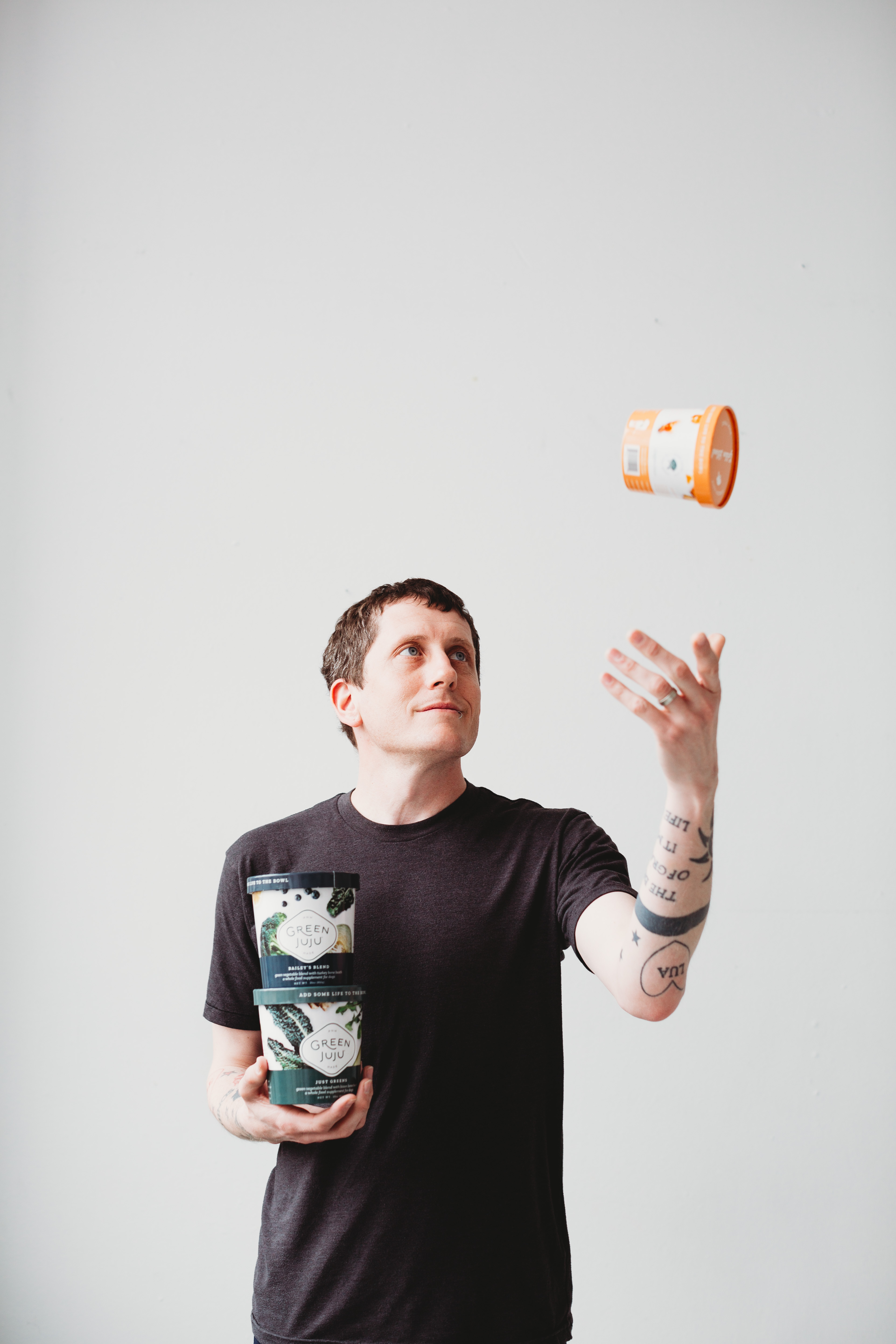
Vice President of Nutrition and Communication
Billy Hoekman is Vice President of Nutrition and Communication for Green Juju. He is involved in formulation, product development, working with farmers, science education, and sales and marketing. He participates frequently in expert panels and speaks nationally and internationally in venues ranging from universities and conferences to public libraries. He also serves on the board of directors for multiple organizations, attends AAFCO meetings, and has numerous published articles. He is a trusted pet health advocate that specializes in turning hard to understand nutrition concepts into plain English. He lives in Lancaster Pennsylvania with his wife, their daughter Maple, and their dog Huckleberry.