
 Apple Podcasts

 Spotify

 Castro

 RSS Feed

 Goodpods

 YouTube

 iHeartRadio
231. Are Pet Supplements Safe? How to Vet Brands Like a Pro

Are pet supplements safe? In this episode, I sit down with Rebecca Rose (inClover) to cut through the hype. We break down how to vet brands like a pro—third-party testing and COAs, standardized ingredients, real dosing, label red flags, and a 60-second audit you can use before you buy. Practical picks for gut, skin, and joint support—no fluff, just what works.
🐶 🐱 Nutrition & Holistic Health Consults: https://www.wildwellnesspet.com/collections/consultations
🐶 Get to the root cause with the Wild Wellness Bioenergetics at-home testing kit: https://www.wildwellnesspet.com/products/bioenergetic-sensitivity-testing-for-dogs-full-scan-wild-wellness-powered-by-pet-medella
💛 Follow The Pet Parenting Reset on Instagram https://www.instagram.com/thepetparentingreset/
🤍 Follow Wild Wellness Pet on Instagram https://www.instagram.com/wildwellnesspet/
📩 Get email notifications for new episodes:
https://jessicalfisher.kartra.com/page/tpprnotify
0:00 It's time to rethink how we raise our pets. A reset to naturally healthy dogs and cats. My name is Jessica. I'm a certified professional canine nutritionist, raw nutrition certified for dogs and cats, a holistic pet health coach, the founder of Wild Wellness Pet, and the host of the Pet Parenting Reset podcast, where every pet deserves the absolute best and every pet parent is welcome. Learn from the best holistic and integrative experts in veterinary medicine and nutrition every Tuesday right here on this podcast or get individualized help with your pet through one-on-one consultations and take a deep dive into the root cause with the Wild Wellness Bioenergetics at Home test kit.
0:47 If you've been feeling like there has to be something more, something better, a better way to raise healthier pets, welcome to the pet parenting reset. Welcome back pet parent. Today's guest is so interesting to me. I was actually introduced to her through our good friend Lauren Beck's from Girls Gone Raw. And you guys love when Lauren comes on the podcast. So anytime she has a recommendation for me, I jump on it. And I was like, Oh my gosh, once I talked to her. So Rebecca Rose is the founder of In Clover, and they are doing pet supplements. But there's a whole history that we need to talk about. So welcome to the podcast.
1:30 Rebecca, how are you doing today? I'm doing great. Thank you so much for having me on the podcast. Of course. So the first thing I would let, so there's a whole history that you have in the space and before the space that I would just love for people to get an understanding of how you got to where you are now. Because I think that is actually one of the most important parts because supplements are everywhere and it's really hard for most pet parents to be discerning. And so your history is what helps us understand why, why we can trust more in in in Clover.
2:14 It is confusing and, and even for me, I do this every day all the time. And when I go into a store and I look at the supplement shelf, it's overwhelming. And so backing up just a little bit to how I came into this space, it was pure serendipity. So I was working in biotechnology. I am a biochemist and I had been working on some projects that were funded by the National Institutes of Health and the Center for Disease Control to really look at how can we bring Wellness to the ultimate level. So find out what is it inside the body that allows us to be at our best. And that to me is fascinating because I think we all have potential within ourselves.
3:06 We're all very different. And so looking at that from a scientific standpoint, what we discovered was that there are things that we can do from the inside out to make for healthier, happier, just overall more Wellness within a person. After doing that research, I decided I really didn't want to be inhuman the human side of things anymore. And a lot of it was that working with those big government entities, there were questions that were so how many ballerinas dancing on the head of a pin sort of thing, things that were just almost impossible to answer.
3:48 And so I went into animal Wellness seeing that nobody was looking at really high quality ethical scientific research on the on the our pet Wellness side of things. And I could take what we had learned on the human side and really work to get a more healthy overall healthy animal. So we focused our research at In Clover on how can we make a healthier dog or cat. And interestingly enough, we have moved from how to make a healthier dog or cat to now our products are sought out by a zoo, veterinarians, rescue groups that to to work with animals all the way from dogs and cats to lemurs and elephants and giraffes and sloths.
4:40 We have a lot of sloths in Costa, in Costa Rica that take our product. So if you work on really basic, how to make an animal healthier from the inside out, that's the foundation that we started with when I founded in Clover about 20 / 25 years ago. We started with that foundation and we started doing clinical studies and what we discovered was that nobody had ever done a clinical study on supplementation using pets. So just taking people's pets and inviting them to participate in using our supplements and doing it in a university setting where we were measuring how much in this particular research we were doing hip and joint health.
5:33 And so we were looking at animals from age 6 months to 19 years, so all life stages and looking at very quantifiably how much weight could they put on each particular joint. So we didn't exclude any animals. We included all of them. We tested them using X-rays to find out if they had indeed had joint problems. And then we moved from there to look at can we improve on that using the same process that I had used in this very large research project. And what we learned was that in over 9 out of 10 animals we could see who were diagnosed with severe joint problems, we could see significant improvement through a natural safe supplement in on average 15 days. And that was wearing.
6:31 Clover was born. You know, the studies are so important. And I mean, truthfully, like to me, being in a more holistic space, anecdotal evidence is important to that's where science starts, right? We have to see like this is happening and it's happening over and over again and multiple people are saying that this is happening. Maybe we should look into this and like actually do a study on it, right? But I know in talking to you previously, one of the things that you talked about was also being part of founding NASC, which I have heard competing views on.
7:12 So I'm curious, like I feel like we need something, right? And it's what we've got. We need something even if it's not perfect. But of course, I'd like to hear your story about that as well because I'm sure that's probably why you're like, we have nothing. Let me create something right? It was really interesting the way. So for folks who don't know, NASC is National Animal Supplement Council and NASC is a nonprofit organization that works with brands, supplement brands and regulators. And the regulators that they work with are the USDA, so that the Department of Agriculture and the Food and Drug Administration and they have NASC has created this collaboration between the brands and the regulators to set standards, quality standards of supplementation for animals. And in the early 2000s, we were, we had already done our clinical studies at in Clover and we were deciding to bring our product to market.
8:29 I was invited to go to Tufts Veterinary school to give a talk to veterinarians about the work that we had done in supplementation in the clinical studies. And they were going to offer continuing education credits, which is something that veterinarians are required to get. I flew to Boston. I'm, I'm in Colorado, so I flew to Boston and big, big lecture hall was set up. I was ready to give my talk. I was very excited to share the research that we had done and how this will allow us to get better results with animals than what we have currently. Not one veterinarian came to my talk. Crickets.
9:12 Nobody came. They just weren't ready, right? They weren't ready for that kind of very different approach to what they were used to. I went back home with my tail between my legs and started thinking about how we could get these products out to the marketplace. So as we started to look at, and this is where we are today, 20 some years later, we looked at the independent pet stores. These are pet stores that are in neighborhoods who are so well educated. They have relationships with customers and I thought this is great because they understand what the consumer is asking for. They know what the pet parent needs. I started talking to them, started getting some product into the marketplace and we were contacted by the state of Texas with a stop sale saying that we could not sell our products into the state.
10:06 Then all of a sudden more more states contacted us and said you have to pull your products off the shelf, you can't sell them anymore, they're unapproved. And that was what really sparked the brands that companies to come together and say we need something to help talk to these regulators, educate them about what we are doing so that they are not just taking the hammer out and stopping consumers from having access to these products. So we met as a Group, A group of brands met at a tratro in Florida and we talked about what are we going to do and decided that we needed to start an organization from that.
10:51 National Animal Supplement Council was formed and it really was a crawl, walk, run process where we started with the regulator said we're going to now stop specifically any products that have glucosamine in them will stop them from being available on the marketplace. And in the meantime, I'm going to each of these States and I'm sharing our double-blind placebo-controlled clinical studies that were done at Massey University in New Zealand, which is still the global leader in research for any kind of pet products. I'm showing them all of the studies and they're asking me things like was it done at Texas A&M? Clearly there was a disconnect there and what NASC did when the regulators decided they wouldn't allow glucosamine in the products, NASC said we're going to push back because we know that companies have done clinical work. We shared all of our clinical data. The folks that make Glucosamine shared some of their data because our data was the one that was in, it's in actually in pets and in nobody had done this before. It held a lot of weight.
12:07 And ultimately the regulator said, OK, we'll allow glucosamine in products and we will really look at what you're doing because what you presented us makes sense. NASC then formed as a nonprofit entity and in Clover is a member of that entity. They do three things that I think are really important and the first is that they have a secret shopper program and the secret shopper program goes out by supplement products at the shelf and then test them to make sure that what it says on the label is in the product. The second thing is that there is a national Adverse Event reporting system, NARES that Nair system is accessible to the regulators, to the Food and Drug Administration, to the USDA.
12:59 We are required to enter all of our ingredients into that Nair system. And so if there is ever a problem with any ingredient, then NASC has this database. Additionally, we are required if we get any adverse event for any of our products, we're required to enter that into the database and that is stays in the database forever and the regulators have access to that. And I'll give you an example with our hip and joint product, we enter for this database, we enter everything, anything that happens that a customer says, I'm not sure my, you know, something has happened and it looks a little different, may or may not be because of the product, but we entered in because we believe that data are power and we want more information.
13:54 And, and the most common adverse event that we have in our database is that a dog, usually it's a Labrador retriever, has taken our product off the shelf, has opened the lid because Labrador retrievers do that and dumped it out and eaten the entire container. And what we can tell them is there's no problem that this is safe ingredients and taking too much of it may cause a little bit of transitory diarrhea depending on the system and the size of the animal, but it's not going to hurt the animal. And we have over 20 years of data to show that. And to your point with anecdotal data, we also have hundreds of thousands of dogs and cats and other animals have been on our product over the past two decades to show that they are safe.
14:43 And I think it's important not only to have that field data and to have the adverse event database. So that's the second thing that that NASC does. The last thing that they do is that they have a third party audit program. So we have auditors come into our facility and in our case, they spend 8 hours, there are 491 questions. We're just audited. They ask 491 questions and they go through all of our standard operating procedures, all of our records to ensure that what we say we're doing, we're actually doing. When you pass as a company that really rigorous audit, you earn the right to have the NASC benchmark of quality seal on your label. So that's a yellow seal with the NASC letters on it. So just know that that's, that's sort of for my opinion, that would be like a barrier of, of, of safety to look at in quality for consumers.
15:48 So when you're looking to buy supplements, spin the bottle around and make sure it has that yellow seal on it, because then you know that that company adheres to national adverse event reporting, to secret shopper access, and to a third party audit. Interesting. So I'm learning a lot from my perspective as just where I sit because I don't do what you do. I haven't had, you know, all the experience that you have had. I look at and I see, OK, and this is a lot of my audience to This is why I'm bringing this up. I look at say, and this is, you know, looking at the human industry versus the pet industry, like where medicine and supplements and like pharmaceuticals and supplements and all of that is concerned.
16:42 For a long time there was a huge delay between what was happening in the human world and then how long it would take to get to the animal world. And I think that gap is closing pretty rapidly, especially with social media in the past decade or so. It's like it's really closing that gap. So if we go to, I don't know, say a Target or a Walmart and we look at the supplement aisle for humans that they have or even pets, but specifically humans. Because when you talk about the FDA and the USDA, like that's their primary, well, the FDA, their primary concern is, you know, human medicine and supplements and what they want to call food. But if we look at a supplement aisle and we actually break it down and we go through and see who owns all of these supplements, who actually owns all of these companies, it all typically, for the most part, the majority of these aisles are going to boil down to these like huge investment companies that somehow or another wind up with like State Street, Vanguard, BlackRock.
17:52 That's who actually owns everything. They also own the pharmaceutical companies and supplements are a huge, they take away at least pharmaceutical companies see them as taking away profit. So it's like, well, if they can at least own these supplement companies, then they're then somehow some way, shape or form Black Street, Vanguard or whatever they are, BlackRock, Vanguard, State Street, they're still recouping their money in some way, shape or form. So for a small company that isn't owned by these huge conglomerates, these like investment companies, then that's really where they're from.
18:34 What kind of what I heard from you too, that's where they're like, oh, no, you can't do this. And so in ASC, as far as what I just learned in ASC forming, that was the pushback to say no, this has a place. Yeah, Yeah, it and it's, and what you say is so interesting because the pushback that we've gotten is that and the reason that we were pushed back is because there are large companies like Purina who have done some testing on. I'll give you an example. We have a product that is a supplement product and it works on hairballs and cats. It did not occur to me that we could not put hairball on our label and we're a small privately held company. So I'm the owner of in Clover did not occur to me. We put hairball on the label and we got stop sale all over the country.
19:34 I talked to the regulators and they said hairball is a drug claim and I said this is a hill I'm going to die on because hairball is not a drug claim. And so I, I, I pulled scientific data, I showed how, what the mechanism, the physiological mechanism of hair balls are. It's a natural process as cats clean themselves and, and presented all of that information. And I learned that Purina had done a study which the regulators accepted that stated that there were only unless a product had a specific ingredient that Purina's product has.
20:16 They could not put hairball on the label. So basically they have excluded everybody else. And that's I think, I think that's sort of the spirit of what you're talking about is that that is not in the best interest of pet parents of pets of the industry to have that sort of a consolidation in that amount of money in the industry that can sway things. So what I would say from a brand, a tiny brand who is out there and has been for decades, sticking with the same foundation that we've always done, where we will look at the Physiology of the animal, what's needed and formulate to what the animal needs and make natural products based on that. Because I have experience in understanding that allopathic world, that pharmaceutical world. I understand what we're up against. I understand how they're solving problems. And it's very much on that, on that pharmaceutical side of things.
21:27 Solving the problem is trying to mask a symptom. Our approach is to work with the body to actually supplement those good things in the body that allow it to heal. And that works. It's proven over and over it works. And I what I would say to consumers is be curious, ask questions, ask those questions about who's formulating your products, who's who's, who's coming up with these, these ideas of what what ingredients to put in and then ask specific questions about. I'm curious, why are you asked? Why are you adding, you know, a prebiotic into this? Why do you not add probiotics in any of your products? That seems odd.
22:17 And ask those questions because the answers that you're going to hear are going to tell you whether the company is sourcing ingredients because it's they're the, that's what everybody else uses. And they get an economy of scale because they're a big company. They're making a lot of things. And so they get an economy of scale by using the same six ingredients in all of their products. Look at the ingredient deck and ask questions is what I would suggest. There are still good supplement companies out there. So I don't want to paint the industry as being a sellout. I will say that I have seen, having done this for two decades now, I have seen so many changes. And I agree with you that in the last couple of years, we are seeing it go faster and faster to getting closer to that human side, where on the on the pet side, pet supplement side, you've always had companies that are independent and we know that we're not, you know, we're not going to, it's not the cash grab that a sub a human supplement would be. So, so the advantage of that is that I'm able to innovate in a really profound way.
23:36 I'm able to have a company that is, is sustainable, employs great people, has been around for decades on the human side. You could not say that because they develop products to sell to those people that you need. Right, Yeah. So I think you may have just answered this question with with the background that you have in understanding the Pharmaceutical industry. But because you did come from the human side, what do you think you bring to end Clover that most other pet supplement brands just don't have?
24:20 It really is innovation is it's understanding how the body works and being able to innovate based on that. Contrast that with another approach would be to go online to look at what ingredients are popular right now. I think I'll put turmeric in everything because that's popular. The second thing, and this goes a little bit deeper, is that we have dandelion leaf in some of our products. We know that the efficacy of the leaf is very different than the efficacy of the root or of the flower. We have blueberries in our products. We know that we can put the word blueberry on our label even if we just add stems and peels, but we know that the good antioxidant, the good juicy nutrients are in the full blueberry.
25:18 So we would never do that. But if you don't know that and you're just going out and you're sourcing blueberry and you're looking at price, you're going to go, wow, that's a way better price. I think I'll buy that. And it's not going to be effective. You're not going to see results. I, I think we have a certified herbalist on staff. I think that's what we really bring. That is a huge point of difference in this industry. And I'm not sure I, I'm guessing that your listeners understand that and appreciate that. And I feel like we need to get more of this education out that there is a difference. And if you care, be curious and ask about that. So having spent so long at this point in the supplement industry, what outside of the NASC label, what would you suggest for a pet parent listening to this to go in their cabinet right now and grab the supplement and read the label and what are you looking for?
26:24 What are the first things you're looking for? What should they be looking for? I do look when I and I read supplement labels all the time and I am looking at what they're two different labels. With supplements there is what's called a dose form label and on those it reports the active ingredients and it tells you exactly how much of every active ingredient. Then it reports the inactive ingredients. The second type of of label is what they call a feed label and that reports all of the ingredients, but it doesn't report them by active ingredient or inactive ingredient. It just has all the ingredients.
27:12 And so I have at my desk, I have to, this is the tricky part is that our products are 100% active. So it doesn't really matter because everything in them is active. But when you get to a product that's not 100% active, and I really look at the labels, if it is a dose form, like I said, it'll say active ingredients on it and it will have those active ingredients by amount. So look and see what the amounts are. And then in the inactive ingredients, it will report them by alphabetically, which is crazy, right?
27:56 So you'll have the active ingredients and those are important. But if you have like we do a soft chew, so we have to put some binders to make it into a chew, those would be considered inactive ingredients. Those are listed alphabetically. So you don't really know how much is in there, right, Right. So for that kind of label, look at the actives and make sure that there's enough of the actives and that it's, it's not just the ingredient du jour or they just didn't add a whole bunch of the ingredient du jour in the other type of label, which is the feed label, it's going to say guaranteed analysis.
28:37 When you spin it around, those ingredients are going to be listed by quantity. So how much is in there? So look at that and and those are the labels I read really closely where it's late listing them by quantity. And what I want to see is if it says we have digestive product that has prebiotics on it, I want to see those prebiotics really close to the top. I want to see organic inulin way up at the top. I don't want to see it as the 23rd ingredients because then I know they just added a spoon wave of it. It gets more complex because we add Turkey tail mushroom to our products.
29:21 You can put Turkey tail mushroom and add the mycelia, which is what's underground. We add 100% fruiting body because that's where the nutrients are. So just reading the label, you're not going to understand, are they adding really the active component or are they just adding so that they can put a bigger number? Are they adding or put it closer to the beginning of the ingredient deck? Are they adding that blend of not so great ingredients? So that so reading the label and ASE quality seal benchmark, that's like a low bar to make sure then reading the label and then looking at the brands.
30:04 What we find in this industry is that if you have a brand that does it well, they do it well across the board. They're not going to just source one product. If you've used say their hip and joint product and you found great results for that, then support them, look at their other products that you could that and really support those brands who are doing the work to curate the right ingredients. Every supplement label has a contact. It has contact information on it that's required if they're labeled correctly, I guess that would be the other place. If you pull up a supplement and it doesn't have the company phone number on it and how to get in contact with them, that's not right. You should be able to get in contact with them. That might mean that they're just, you know, they're, they're not really in the business, they're just doing this as a money grab.
31:02 And so make sure it does have a contact. And when you call them, you should be able to talk to a person. I always like to say, ask them if they can talk, if you could talk to the person who formulated the product, because that's going to be really telling. Because if they don't know who formulated their products, who came up with this this formulation, that's a bad sign. That's yeah, very interesting. You know, and one of the things, this is just a side tangent honestly, that I've learned in life is that companies, so many companies tend to put somebody on the phones for customer service, whether that's somewhere you go in person or an online store, wherever that is like completely under trained, the lowest paid person on the staff.
31:56 And this is often times like this is your company's representation to the public a lot of time. And it's like that should be one of your most well trained staff member, But that's just not like the world we live in. People don't value reception. Like you know what I like it's it's very interesting. That's just a side tangent that I. That is interesting and I agree. And that is something that if if I call a company and I get that person who has no idea or just has a script in front of them and isn't able to have agency to to even talk to me off script, that sets off some red flags. Yeah, I mean, I like I get being a small company and you know, trying to trying to be everything to everyone all the time and, and trying to fill in, fill in gaps. But yeah, it is definitely difficult because you really do, like you said, you, you anything public facing, anything talking to whether it's your website or who is answering your phone like it, it really is so important and so many companies just don't value that.
33:12 Not just, and I don't just mean with like in the pet and I mean everywhere. Like if you think of anywhere you call, like how frustrated are we with customer service just anywhere we call? Absolutely. Yeah. But anyway, that's a tangent, a little tangent. I went on what you mentioned earlier about when you were talking about innovation. You also said something about like sustainability because and there's a lot of different ways you could look at sustainability. You can look at sustainability as far as, you know, the ingredients that you're using and the impact to the earth and the the environment. You can also look at sustainability as like you know, are you going to as a business be able to grow and provide these the same quality of product as you're growing to more and more pets. And I'm curious what your thoughts are on what you meant earlier by sustainability?
34:09 I love your insight on that because when I said the word sustainability earlier, it really was that we have a good foundation as a company that allows us to continue to provide products 2 pets over a long period of time. And that's really important to me foundationally as a company. We're not built on a House of Cards that's just held up so that we can then, you know, move it to somebody else and do other things. We have deep roots. We have a deep foundation. We also are passionate about the other meaning of sustainability, which is interesting to me because yesterday we took our full team over to the Pet Sustainability Coalition, of which we're members were actually a top award impact leader for supplementation for the sustainability through third party audits.
35:14 So very important to us. I also give back, I volunteer on the board of directors. I really believe in sustainability and giving back. We went over and we did a class on sustainability one O 1 to learn what it means and it means so many different things to so many different people. From our perspective, it does mean to respect and give back to people, planet and pets and and that for us is critical what we're doing. We need to, it's a journey and we need to continually improve upon the ingredients that we're sourcing, the packaging that we're using for those ingredients, making sure that we're aware of what our impact is at every step of the way. We also have a lot of passion around community and inclusion. And we have over the past decade, 2 decades, we have hired over and had working at our facility over 45 individuals with intellectual and developmental disabilities. And so right now if you purchase our products, if you're purchasing our, we have a connect in soft chew 20 count, which is a small container that has to be assembled. So we put the the soft chews into a sealed bag and then that goes into a container with a
36:49 label on it that is assembled by individuals with intellectual disability. If you buy our Optojust sticks, same thing. They are put into containers because we believe that we should provide a world for all abilities and that allows us also as a company to have that diversity of thought and it really makes us a better company. It is such a win, win situation and in all of those things I see as part of sustainability. And, and this is, this has been a huge journey for me because when I first started 11, almost 11 years ago, we joined the PET sustainability Coalition. I thought that sustainability meant that all of our packaging was recyclable, which we had already done. So I was like, check, we are a sustainable company. And then I learned that, Oh my gosh, this journey is we're just going to continue on this.
37:49 Yeah, it is. There's so much to think about, South, Very much to think about. In fact, I'll just one thing I learned this year, early this year, I was listening to Rita Hogan, who's a canine herbalist that everybody's familiar with. Actually, it was on one of the podcasts I had with her and I was talking about essential oils and because she obviously works with plants and essential oils are derived from plants, obviously. And she was like, yeah, but it's not sustainable to use essential oils in the way that we're using them today, which also is probably why there's so many, like, counterfeit, not actual essential oils that are labeled as essential oils on the market. And that has really made me rethink how I utilize essential oils, not just for me and my pets, but in my practice working with clients one-on-one.
38:45 And there are a handful of things that I do like that, that I am like when, when I realized like with colostrum or something like that, I realized there's an ethical concern. It is definitely not the first thing I reach for anymore. It's something that I'm like, it's there. It's really effective. But let's try some other things first because it's, it's not sustainable in the way that we're using them right now. So I, I appreciate that very much and I love to continue to learning like what is and isn't sustainable. And you know what? This, whatever I'm using a recommending has an impact on to the planet, to the environment because it's it's, you know, it's just actually recording a podcast with Billy Hookman yesterday and he brought up kelp.
39:31 And I was like, yeah, you know, kelp was a big deal this year because we realized that apparently there isn't, I don't know, like, I haven't done a deep dive, but apparently there isn't a source of help anymore that doesn't contain some amount of lead in it because we've destroyed our planet, right? And like this things like that that just make me think like, how can we do better? And not just, you know, bitch and moan at manufacturers for putting out a product that has lead in it, but realizing that we have done this to our planet and this is where we are now. So what do we need to do to backtrack and fix things? Another tangent, I'm sorry. But that is, that's something that you have degenerative practices and then you, you have sustainability and then you have regenerative practices. And we are at a point where we can't afford just to go to sustainability.
40:28 We have to go to regenerative because we've done the degenerative piece of it. And, and, and it, it is, it's a heavier lift and it is possible. And, and I'm, I'm going to give you 1-2 examples, one action item. So one example is that we use a very specific kelp, ascofylamidosin and two of our products. And this kelp is a huge and this is to me is fascinating because of the sustainability story. And and it gave me goosebumps when you talked about Rita talking about essential oils. Oh my gosh, that is powerful it and with the kelp it, it is we have to be, we have to be thoughtful about this.
41:15 So our source of kelp comes from a farm in northern Maine that's harvested off the Atlantic Ocean. The the, the woman who owns this, she's been doing, has been doing this for 35 years. She has been a good friend of mine and of sadly, she passed away this year. And that's is her, her work is being carried on and she has pictures of over 35 years how her kelp beds single strain, so very important that these are her kelp beds are have flourished more than the native kelp out in the ocean, which she is in the ocean. But she has her own beds, but they flourish more. And the reason is because she's cutting them back. She's tending to them.
42:07 And if you've, you know, if you've gardened, if you've grown roses, you know that you can make them better by cutting them back and tending to them. She is very careful about how she handles her kelp and when she harvests from harvest to when it goes into our dental product or into our daily multi product, it's 8 hours time. So it's not just laying out on a beach, getting contaminated, it's going right into her facility, all of those things that are thoughtful and careful. And even though we still label it kelp, it's very different than going out there and getting some polluted, some polluted kelp. The action that you can take, and this is totally a tangent, is that we make decisions about what we're going to put in our supplements and use sustainability as one of the factors.
43:04 We don't have very many meat products in our supplements and the meat products that we do, we're using like the trachea that would be thrown out in many cases. So we're taking pieces, parts that we can pull nutrients from. Overall, we're using a a plant based or fermentation based structure. When you buy pet food it's going to have protein and typically that will be meat, beef, chicken, Turkey, lamb as one of the top ingredients. Our pet food companies have become marketing companies and as such they have marketed human grade ingredients as being critical. What we're taking from our protein meat chain does not have to be to go into the pet market, does not have to be the human grade ingredients.
44:04 We can pull those nutrients out of the byproducts and Co products, the organ meats, the things that are full of nutrients and they're things that humans don't want to eat. They don't want to eat the lungs, they don't want to eat the organs. But our pets can derive those nutrients from those pieces, parts until we recognize that the marketing piece of this and saying look how good this is, this is all human quality is not a good thing for our planet and it's not necessarily a good thing for our pets. They need some of these other nutrients that are available. Let's put another lens on this and let's say in our pet industry, let's purchase things that are the nutrient dense Co products. Let's look for that, and let's not be so hung up on human grade everything.
44:57 I totally agree with that statement about human grade being just so I'm very entrenched in the pet food world and it is something that a lot of people are like no, this is the hill I'm going to die on and I'm not buying anything that isn't human grade for my animal. And while I appreciate where they're coming from and what they think they're doing, it isn't like you said, like, but also we allow so much like it's looking at the wrong things, just like you were saying it's looking at the wrong thing. Like, yes, do I want to make sure that it's not, you know, slop that has been left outside that, you know, it's rotten and rancid and going into my pet food as a meal product, yes, I do want to make sure of that.
45:46 But also like I want to make and I want to make sure that it's not a carcass that was failed by the USDA because it has a cancerous tumor. Like those are the things that I do want to make sure of. But just like you said, like there's so much that doesn't go into the human food supply that is perfectly good and has really incredible nutrient value that just humans won't eat. But it's amazing for our what it probably would be really good if we did eat it, but we're not going to really amazing for our pets. So it is like you just said, it's, it's, there's so much marketing and, and like there's a piece of it that is true that we do want to look for, but then there's this whole other piece that people aren't thinking about.
46:30 Yeah, it can be confusing because I don't want to feed my my animals Animal Digest. I don't want to feed them anything that comes. You know that I am, I feel so strongly about the, the high quality and being knowledgeable to understand how to differentiate the folks who are trying to put Animal Digest in a bottle and say this is good and the folks who are putting organ meat in a bag and saying this is great. And I love, I don't know if you're familiar with, there's a company called Bond Pet Food who's doing work right now researching fermentation, making protein through fermentation. So taking a cell from a chicken, putting it into a microorganism and then putting it into like a big soup kettle and growing meat that tastes like chicken, but it doesn't necessarily look like chicken, but it has the nutrient profile of chicken. So it has all those nutrient dense things. So somebody who has seven chickens who are pets, members of my family, all name I, I feel like that's an interesting approach that we can, instead of having these mass chicken farms where we're growing meat chickens in a very inhumane way, we can look at other options of how we can grow chicken without having to kill chickens and do
48:06 it in a very sustainable way. There's still work that needs to be done to make this something that's commercial and something that we would be interested in. But it's an example of how pet parents can drive that kind of sustainable innovation. Because as humans, we may not be willing to eat a Patty that has the same nutrients as chicken but isn't chicken. But I promise you, our pets will not have that squeaminess that we have. Yeah, I mean, I, I'm so big into regenerative agriculture because it's not just about making sure that the animals that we eat that are pet seed are as healthy as possible, that their lives are as good as, you know, they have the best quality of life possible.
49:01 But it's, you know, regenerating the soil, which is like so much of our soil is dead, which also means that the plants were growing aren't as nutrient dense as they should be. Like we we may not be getting even the medicinal qualities out of them because they are they're being grown in dead soil or maybe not growing at all in areas they should be growing. And it's, it is very complex for sure. And there's a lot that needs to be done. A lot. And there are a lot of groups right now that are doing work with regenerative agriculture. Dave Carter at Flower Hill Institute is doing amazing work and supporting small, diverse ranchers at providing help to make their ranch more, more regenerative.
49:52 And so I think there are, there are folks out there that are doing the good work and for consumers to understand that that work is happening, it's happening today. And, and educating ourselves, being more aware, understanding why it's important because we've already the degenerative side has, has taken us to a deficit, which means that our plants don't have the nutrients that they had before. And even on my tiny little, I have 4 acre ranch and, and in this tiny little ranch, I figured out a way to work regenerative agriculture into our pastures. So we have horses that are grazing on pasture land.
50:34 We take the manure from the horses, we put it back out to amend the soil, put the horses out so that then they can make the divots in the pasture and then their urine provides the nutrients, the nitrogen, and also as they're defecating out in the pasture is providing nutrients back. We had our local department of AG person come out and look at the soil and look at the plants because that's what our animals are eating. And they're like, yeah, they're native. They're not weeds. We have no irrigation. We have no water on that. It's just us amending and caring for the land.
51:15 And it's a very small, tiny little way that we can make an impact and make a difference. But we can, by educating ourselves and understanding we can make a difference in just a number of ways in our world. You know, I love this conversation because like surface level, somebody who's who might be listening to this podcast for the first time might be going, I thought we were talking about supplements, but like we are like this is it goes so much more deep than just what's on the label of a product. And I think that's why I like having this podcast so much, so that we can get into like a little bit more of the nitty gritty of the things that are in my brain that I wish were in other people's brain. It's powerful because that's how people are going to be educated about this.
52:08 And your, your point is so relevant that yes, you can have a company who just, they just ask somebody else to go out and buy and they, they just cuz they, you know, we, we know that hip and joint cell phones are big and, you know, we want to do a price point of this. And so come up with a formulation and you can do that. And it will sit next to a product that has gone through a totally other process. And being able to educate and understand. The way to do that is by listening to these insights and making your own decisions that in an educated way. OK, so we are quickly approaching an hour so I have just a little lightning round to end this off.
52:53 What, in your opinion, is the most overrated claim on a PET supplement bottle? This won't be popular, but I know people like to see it, but I'm going to say natural. And for all the reasons we just talked about, Jessica, that a plant isn't a plant. It it doesn't necessarily have all the nutrients. It can be natural and not have all the nutrients. So I'm going to say natural. Yeah, well, I mean, it's completely unregulated too, so you can say whatever you want. Let's see if you could make one change to PET supplement regulation tomorrow to snap your finger. What would it be?
53:38 To make a requirement that we have evidence based supplements, there has to be science behind it. And what does that look like for you? Is there a number of studies? Are you, are you just looking for a study at a reputable university? Like what are you looking for as far as what does what does evidence base mean to you? It means having the ingredients and I'll just give you like the here's a kind of a bar that I would say it has to be crossed having the ingredients used in the species that your product is marketed.
54:23 Perfect, that makes a lot of sense. Is there one hill you'll die on about digestive health? No probiotics, only prebiotics. And what that means is I don't want foreign microorganisms in my digestive health product. I want food for good native bacteria that are in the gut of our animals and are personalized to our animal. I want to feed those bacteria with prebiotic and I don't want to add a foreign strain. Interesting we might have to do another episode on that because that I completely understand what you're saying, but I think we, you know, probiotics are so popular right now and they're in everything, which drives me up the wall. But it's that's that's something that's something to talk about. Well, thank you so much for being here, Rebecca. I appreciate you.
55:20 I appreciate all of the insight and knowledge you bring. Where can people find you find in Clover learn more about your products all of the things. You can find us at in clover.com and you can find our products at your favorite neighborhood pet store. There are 8000 of them in the United States and you can learn more about us if you if you go go to our website and you subscribe, our emails are going to talk about educational things. So you can learn more about that. And of course, in the socials, Facebook, Instagram, we're in Clover. Awesome, thank you so much for this chat. I had such a good time.
56:08 I learned a lot of wonderful things and I just want to say thank you for being here, guys. Check the show notes. Everything that she just mentioned will be in the show notes for you to click and go straight there. Make sure to follow in Clover. And with that, I'm going to say have a great rest of your week. Please give your pets some extra love from me and Rebecca this week and I will talk to you next week.
CEO
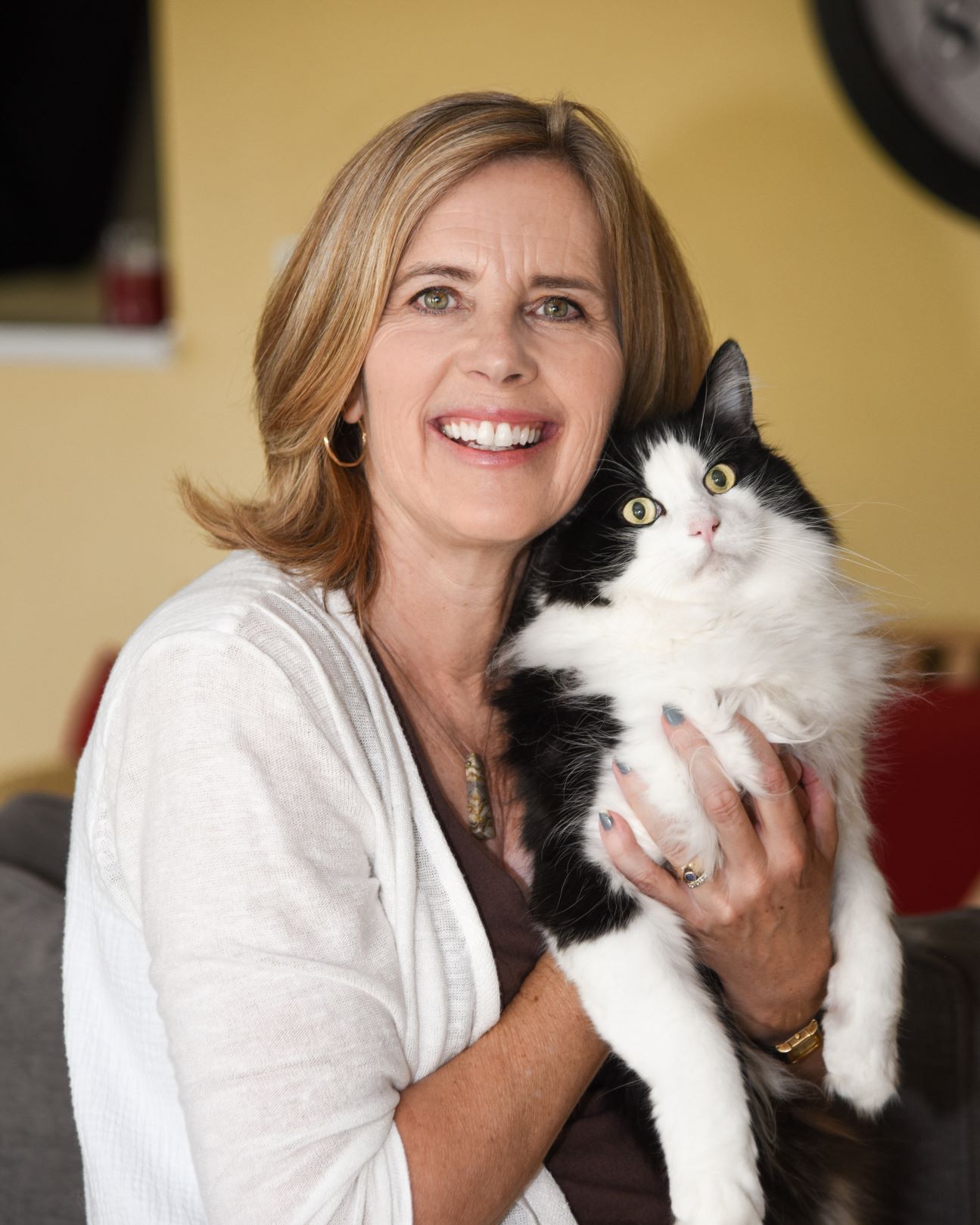
Rebecca Rose is the CEO of InClover Research, a leader in scientifically formulated supplements for animals. Prior to entering the pet industry, Rebecca enjoyed innovating in the biotechnology space, ranging from Fortune 500 to playing a pivotal role in four start-up companies. She is a biochemist and author of three patents on treating joint disorders. She has an MBA from Daniels College of Business (University of Denver).
Her work with InClover includes product innovation and sustainability. Rebecca serves on the Pet Sustainability Coalition’s board of directors and the executive committee. InClover continues to build on their commitment to pets, people and planet. They have employed over 40 people with intellectual and developmental disabilities at their Boulder office. Rebecca serves as the Chair of the board of directors for Imagine! helping to create a world of opportunity for all abilities. She is involved in the Professional Mentorship Program at the University of Colorado and provides significant internship experiences for students.
Rebecca enjoys spending time with her family and playing on their Boulder ranch which is home to two amazing horses, seven chickens (6 strong hens and one rooster), two dogs (who work full time at InClover), one mighty cat and a host of wild visitors.
Her 2 words for 2025 are Connection and Gratitude.
Social Media Handles:
Facebook https://www.facebook.com/InCloverPet/
Instagram https://www.instagram.com/incloverpet/
LinkedIn https://www.linkedin.com/company/in-clover-inc/