
 Apple Podcasts

 Spotify

 Castro

 RSS Feed

 Goodpods

 YouTube

 iHeartRadio
233. Can Mushrooms Help Senior Dogs Think Better? CCD Study Results w/ CBD Dog

Do mushrooms help “doggy dementia”? In this episode, I sit down with Carter from CBD Dog to unpack their senior dog study on Canine Cognitive Dysfunction (CCD)—what they tested, what changed, and how you can use it. We cover the mushroom blend (think Lion’s Mane + supportive allies), study design and real outcomes (orientation, sleep, anxiety, engagement), how to dose and stack with food, and simple lifestyle tweaks that make the brain gains stick. Clear guardrails, practical takeaways, no fluff—just what works for aging dogs who deserve a sharper, happier life.
🐶 🐱 Nutrition & Holistic Health Consults: https://www.wildwellnesspet.com/collections/consultations
🐶 Get to the root cause with the Wild Wellness Bioenergetics at-home testing kit: https://www.wildwellnesspet.com/products/bioenergetic-sensitivity-testing-for-dogs-full-scan-wild-wellness-powered-by-pet-medella
💛 Follow The Pet Parenting Reset on Instagram https://www.instagram.com/thepetparentingreset/
🤍 Follow Wild Wellness Pet on Instagram https://www.instagram.com/wildwellnesspet/
📩 Get email notifications for new episodes:
https://jessicalfisher.kartra.com/page/tpprnotify
0:02 Hey there, it's Jess. If you're new here, I'm a certified professional canine nutritionist, raw nutrition certified for dogs and cats, a holistic pet health coach, the founder of Wild Wellness Pet, and the host of the Pet Parenting Reset podcast that you're listening to right now, where every pet deserves the absolute best and every pet parent is welcome. Learn from the best holistic and integrative experts in veterinary medicine and nutrition every Tuesday right here on this podcast. Or get individualized help with your pet through one-on-one consultations and take a deep dive into the root cause with the Wild Wellness Bioenergetics at Home testing kit. It's time to rethink how we raise our pets.
0:46 A reset to naturally healthy dogs and cats. If you've been feeling like there has to be something more, something better, a better way to raise healthier pets, welcome to the pet Parenting reset. Welcome back, pet parent. As you know, because I talk about it all the time, Kimberly, my dog is, she just turned 12. We just celebrated her 12th birthday and I have had her since she was about 2 1/2 years old. I decided based on all of the information that I had that she was probably born sometime in October. So Halloween is like my favorite holiday. So I decided her birthday is Halloween. That's when we celebrate.
1:28 So she just turned 12. And The thing is that anybody that looks at her, anybody that interacts with her for years and years and years, nobody believes me about how old she is. They're like, no way. She's still a puppy because she has puppy energy and she's blonde, so it hides the white fur really, really well. But I notice because she's my dog and I'm with her all day every day that they're definitely, I mean, granted, we've talked about this, it's been a real 2025 has been a very tough year for a lot of people. I was not excluded from this. I in fact, I feel like I was like the maid of honor. It's somebody who's I don't know what was happening, our moment this year, but it's been stressful. And I've definitely noticed that Kim, like I'm, I'm seeing that she's aging a little bit and just various things that she's doing.
2:18 And so I've been changing up a few things in her routine. One of the things that I recently started her on is Mycodogs clarity, the mushroom blend that they have specifically because she's aging. And so my guest today is Carter Easler. He is the director of research and education with CBD Dog Health and Myco Dog. And we are going to talk about something really. And I, when I say this is cool, this is like the coolest thing that I know that anybody in our space has done in a very, very long time. They have actually put together a study showing the benefits of specifically their Clarity Blend from Mycodog.
3:00 So, Carter, welcome first of all to the pet parents. Jessica, happy to be here. We like we were saying before we started here, this has been a long time coming. I get to see you like a few times a year. It's always a delight at these different, you know, learning conventions and industry events. And I feel like you are always like right in there at the source of information that is so helpful for pet parents. So I'm, I'm grateful that your show exists. I'm grateful that you exist. So happy to be here. Thank you. Well, I'm thrilled that you're here because yes, I feel like we have been trying to do this for a very long time and it's just been so much of been going on and you were actually a very big participant in getting this study done like this was your baby. This is my baby.
3:50 I want to talk all about this study, but before we talk about this study, we have to talk about the history of CBD dog health and Myco dog. So you know, Angie has been on the podcast before. We talked about it a little bit, but it's been a while. So I'd like to give people just kind of a refresher of how CBD dog have started and then branching into Myco dog and you know the reason behind all of it. Yeah. So it, it is like, it's been like a really vital part of my life for the last seven years. My, my work with, with Angie and, and learning and teaching about adaptogens and hemp and fungi. And it, for me, it all started when I first met Angela at her rescue farm for senior dogs and farm animals, Fireflake Farm in Florida.
4:40 And she'd already been operating this rescue for over 10 years at that point. And so I came into this kind of like magical paradise, like tucked into the woods in, in Florida where she had all these old dogs that were thriving and all of these, these, all these, this kind of menagerie. And so I got to live and work there and kind of watch what she did. And you know how people would come and they would drop an old dog off on the door and they'd be like, listen for, for a variety of reasons. But so often, like, you know, my, my mother, whose dog died, my mother died and this is her dog.
5:24 Or I've spent so much money and I'd literally just can't afford it anymore. I've the vet told me that there's nothing I could do. And they would leave these dogs with us and with Angela on the farm and, and depending on the dogs or the animals, one time she got 15 chickens were just left. They were these fluffy little chickens. They were so cute. And I would watch her adapt her strategy and use the different holistic modalities at her fingertips to really care for these animals in a very individualized way, using the things that I have always been passionate about. You know, the using nutrition and medicinal cannabis mushrooms that I have always been a huge passion of mine.
6:11 And we just kind of like fell right in step with one another. And our passion for, for learning and for the, the why behind the use of these things just kind of meshed. So I've been, I've been working with, with these herbs and mushrooms and with Angela for, for a while now. And this has been one of my favorite things that I've gotten to do, making having this research to, to be something that I could focus on and, and work with our veterinary team on as a principal investigator is so exciting. Well, I think first of all, just anyone, anyone who has the the the opportunity to speak with Angela ever is like, you just get drawn into this like, yes, Utopia, like actually exists and like, oh. Yeah, her passion is electric.
7:07 Yeah, it's kind of amazing. But the reality of the products and obviously, you know, nobody comes on here to be like buy my product, right? But the reality of the products that CBD dog Celtic microdog are putting out on the market, they are beneficial, I feel like for every mammal in so many different ways. Absolutely. I mean we have evolved alongside these, the reishi and the Hemps and the lavenders for millennia, for millions of years. And so they are a vital part that we must integrate into our health systems because it the this kind of area of it being removed from us is new. That is as in the last 100 years as we've moved into this structure of society that we're now in, which is really different from how it used to be. So like, this is not, it can seem like, whoa, mushrooms are so big right now.
8:10 This is just a return to normal. And with that comes a lot of learning. There's a lot of learning. There's a lot of unlearning about, you know, what is medicine? What, what is the difference between the mushrooms that I'm getting at the grocery store, which love them, cooking them every day for myself and my dog? What's the difference between that and a practitioner grade therapeutic extract of different functional mushrooms that have different therapeutic profiles, different purposes? And how do we make them in such a way that they are going to be the the most potent, the most effective, the safest?
8:51 And there are both, you know, again, thousands of years of traditional use that we can look back to for guidance. And now more, more and more frequently. We have really great evidence. We've good science that is confirmatory of what we've always known. You know what is, as Angela says, the original medicines. Yes. Well, and I want to talk about that science. But before we talk about that science, how does micro dog look at what you just said? What is the difference in a mushroom that you're getting at the grocery store or even maybe at your farmers market? What is the difference in the mushrooms that you're getting in say a micro dog tincture? And how does that you get it from a mushroom into this liquid form that we're giving to our pets? OK, well, I before I just ramble on forever, I will catch myself. I also I've got like a a handout that I can give you. That's just my hit list on if whether you are looking for a mushroom extract for yourself, for your pet, for your your dad who forgets his keys everyday.
10:03 This is a hit list that I'll I'll send to Jessica that is like just the top factors in something that's going to be really high quality, safe and hopefully effective. The first thing, the first kind of main difference between what you're going to find in your Bella mushrooms at the stop and shop and something like a dual extracted reishi mushroom from the fruiting body is, you know, the first thing what what was it grown on? Was it grown for the purpose of growing fast and full? You know, think, think like our, our mutant chickens, are they, are we growing this thing to just like produce as much as it can as fast as we can so we can get it to market and make money on it or sell it?
10:48 Not saying that our grocery store mushrooms are bad, not saying that they're, you know, that it's just a different purpose. Like is it, is it for just kind of a food stuff? I would argue that our food should be as organic and, and well sourced as possible. But regardless, there's a delineation between that and something that is for therapeutic use. You know, you, you, it's just like a different scale of focus. And so as I was saying, what it's grown on is kind of #1 for me, different mushrooms natively grow from different substrates. Substrates are like whether it's hardwood or leaf litter or dung, they grow on different substrates.
11:31 And it's important to recognize what they're getting from those different substrates. Is there the, the, the bitulantic acid that's in Birch trees, you know, the, the different nutritional compounds of, of these different substrates. And so when we're growing these mushrooms fast and fierce, most of the time they're being grown on oats, rice grain, industrial byproducts like wood pulp and those things. While you can grow chaga on wood pulp or, or oats, it's not going to have the same chemical constituents and molecular, molecular makeup, forgive my science overload, but without it growing on kind of the right stuff, that's, that's kind of #1 And that is if you can find out that at the beginning, that will cut away a lot of the fat of what you're looking for in a medicinal mushroom product.
12:24 That's, that's really key. And it makes sense, right? Oh yeah, yeah, absolutely. And I think I want to talk about some of the things that we are looking for to say, OK, you know, you have a few different blends. You also have some like individual, you can just buy the individual mushroom tincture. But the blends for me is like where it's at, like these were put together for a reason, for a purpose. They work really well together. They kind of that's. That's one of the points on my hit list is you want to be using a blend of mushrooms, you want to rely and take advantage of the synergistic properties with combination of different mushrooms because as as we talked about there, there's different specialization between them. There's also a lot of overlap in the therapeutic properties. Many of the different mushrooms are immunoregulatory, They balance inflammation, they're good for, they've been shown in research to be beneficial for a whole host of different types of cancer.
13:29 So there's a lot of overlap and then there's specialization. When you use them together, the, the whole is greater than the sum of its parts basically. So the reason that we have those single extracts is just for, for the most part for like kind of a fine tuning of the focus, you know, being able to go, you know, my dog has respiratory issues. I've got them on breathe, but she's getting a little older, getting a little little slower. Let's add a little bit of lion's mane to that and, and have that kind of round out what is this individual dog's set of needs. Yeah. So definitely be using a blend that's that's a high recommendation. So I just want to switch gears a touch sure before we get too far down the rabbit hole of mushrooms because that's. Yeah, you just cut me off because I I get into like science mode and I just start ranting. You're I well, because we're going to talk about the senior dog study.
14:25 That's kind of the, the point of, of having you on today and what I am so excited about. But I want, I don't want to ignore that a full spectrum hemp extract is also insanely beneficial for our dogs. Still, so many people are scared of it. And I say this like I forget sometimes. I have certain people in my life that will remind me very often that they're like, not everybody knows what you know. I, I have to be reminded of this so often because I'm just like, this is this feels like common sense to me. And it's. Not necessarily. For most people, in fact, like I was literally talking to my mom earlier this year about one of her animals and herself, and I was like, well, I know you bought that bottle from CPU dog health because I sent you the link, blah, blah. I know you got, I know you have that at your house. Use it.
15:20 And she's like terrified even for her dog because where she she's, she works for a government contractor and they have just like, scared the crap out of her. About yeah, the testing and the. Yes, about weed, like she doesn't understand the differences and so if you can kind of explain that a little. Bit Oh my God, we could have a whole conversation on, on this topic, but it has to do with the, the unlearning. It's, you know, we, we are really coming out of 80 years of prohibition and coordinated concentrated attacks on not only hemp and and CBD, but pretty much anything that was competitive against industry, especially the Pharmaceutical industry throughout the last century. So like that's, that is not me just like griping that is documented, factual.
16:16 We all know there's all the guests on your, your podcast, they get this, but you know, there is a fear of this stuff. And I think that with any natural modality, just as with pharmaceuticals, there is a safe and effective way to use them. And it's about being knowledgeable about what it is as a therapeutic tool. So really like while there is a way greater safety profile among these things, it is super important that you are getting it from a trustworthy source. Cause 1 hemp extract is not the same as the next. And even at a high quality, even at like a really high standard of quality, some strains of hemp are going to have very different effects from other strains because it's CBD is not CBD is not like that. CBD is 1 molecule.
17:08 We are talking about the full spectrum extract of a medicinal plant with thousands of different unique compounds. So that's why with CBD Dog Health, we have different strains of hemp for different purposes. You know, if we're going for neurological issues, cognitive support as like kind of a companion to a mushroom, you know, we're going to have cannabinoids in there like CBG, which has been studied for its benefit for sleep, cognition, memory in both humans and dogs. And, and understanding that there's that big difference can can really help you guide your, your strategy. So when you say there's for example, you just said if there's like a higher concentration of CBG, for example, you're still talking about this is still a full spectrum hemp product.
17:59 Can you tell me why people want full spectrum even if 'cause I think that can be confusing too. If you're like, well, we have a higher concentration of CBG in this. Right, right. That can just sound like we're sprinkling more of that in that. Or is it not full? Like I think people get confused, Is it not? Is it full spectrum? Is it not full spectrum? Where are you? I think people get really confused about that. Totally. OK, well, think of like, let's let's go apples to oranges. Are you having a Honey Crisp? Are you having a Macintosh? Are you having a navel or are you having a blood orange? These are genetic variations on a plant that produce different fragrances. Flavors have different just overall chemical makeup. At the same thing is true of hemp plants. You got you got different flavors out there and so they they have different compounds.
18:52 CBG is one of over 141 unique cannabinoids, CBDCBGTHCV, you know CBN, they are all different. CBD and THC are the most abundant. So in any full spectrum extract you're going to see high content of CBD. But then if it is a true full spectrum, you should have a breakdown of a bunch of other what we call minor cannabinoids like CBGCBN that have their own therapeutic benefits. And so in any extract, you do want it to be in its most raw and unprocessed form because then you're going to get that incredible diversity of not only cannabinoids, but terpenes like beta charyophylline, fantastic for inflammation, studied for its benefits to cancer, flavonoids like quercetin, you may have heard of great immunoregulator, really good for itchy dogs.
19:49 So we want all those different compounds and when we start to isolate them, when we, you know, have somebody who is rightfully scared like your mom because of the the onus that's been put on her, like if we detect. A Micron of THC in your blood, you lose your job. People are scared of it. We're totally reasonably, but we start isolating it. We get it down to a broad spectrum where we've taken THC out, not just THCTHC comes out of that thing with a bunch of other stuff. And then we get down to isolates where it's we basically tried to make a pharmaceutical drug out of a plant and we're we've we've lost the plot. You know, it's like it's, it's a totally different thing at that point. So, yeah, I mean, and, and just as like a final thing on it, it's like the safety profile of this plant in its unadulterated form is incredibly high broad therapeutic window, meaning you don't have to land on a specific dosage really, you can be in this range and high safety profile. It's really amazing.
20:46 So just kind of knowing what the properties are, having a little bit more knowledge about like what's going to be what, what is my pet need again, And I'm sorry, I'm I'm to go on, but the same principles apply to how we're extracting our mushrooms. We want the broadest spectrum of those naturally occurring bio active molecules that work synergistically as possible. So different set of kind of practices because each plants are very different from fungi and certain fungi have ways that they need to be extracted. Certain plants do better in different extraction methods, but we want to rely on traditional use and science to to hone that in on what is going to give you the best outcome. And sometimes that sometimes that's more expensive. You know, sometimes you can go like, OK, well, why is this one this much?
21:39 And why is that one that much? And it's like, well, did they grow it in like a a dank basement in a plastic bag? Or was this grown in an old growth forest in the Pacific Northwest on its native substrate, you know, harvesting the, the fruiting body, the, the, the, the place where there's the most, the greatest concentration of all those beneficial molecules or the, the just the buds, the flowering buds of the hemp plant. Again, where there's all the good stuff is are we, are there any like fillers? How how look at the look at the ingredients, how many like fillers and flow agents and other stuff that's in there for the basically for the ease of manufacturing shipping, storage like that. It's a lot of it is superfluous and and unnecessary, but there are parts that are like is that we don't want to compromise on. Well, and I think today, especially our dogs and cats are the sickest they have ever been.
22:40 And you know, a lot of I, I do hear a lot of people like they want to cut corners, they want to save money. The economy sucks right now. I get. It it's rough. But at the same time, we live in the most toxic time ever that we know of on our planet. And so to be more discerning about when you are going to go out of your way to buy certain types of supplements for your pet, as an example, like, why not take the extra step and yes, probably a little extra money up front to say, OK, I know my dog or my cat is sick. And I know that dogs and cats are sicker than they have ever been in the history of us having domesticated these animals or in the process of domesticating these animals, as I like to say with our cats.
23:35 And say, like, OK, I want to actually pick a product that is the safest, it has the best efficacy. I know it's the cleanest. And that's one of the things that I have loved about CBD Dog Health and Mycodog in my years in the healthy pet space is that I feel like out of pretty much any company that's out there, I have learned more from you guys than anybody. We're doing our job then, 'cause they like, I, I feel you like it's, it's rough out there and there's a lot of information that we're getting.
24:16 We're overloaded with information about, you know, it really, it can just be easy to kind of be like, damn, things are bad. But at the same time, we have, we do have greater access to information than we've ever had. And there is a huge renewed interest in how we can use these things. And I, so I believe that if you, if, if you just train yourself, I, I, I work on myself every day when I'm like, Oh my God, there's another thing I don't know that, you know, that is not, but that doesn't have to be like, damn, I don't know enough. That is, hey, this is something else I can add to my tool belt. And with each thing that you add your tool belt, you get, you get better at incorporating it and, and you are able to better spot the gaps in your strategy.
25:06 So like it's, it's progressive, you know, it's not like you're, you're not starting at square 1. And so I believe that if you just take it step by step, learn as you go, you may need to hear something repeated a number of times. And someday you might, it just might click on something that you'd forgotten you had kind of in, in the back of your mind. Yeah. We just got to be gentle with ourselves, 'cause I 'cause I find the same thing. I meet people like, I had this vet come up to me recently at a show and we were talking. She's like, well, I just don't recommend CBD because you know, it's, it's it's toxic. And I was like, OK, and like, just like, hold myself back.
25:46 This is we can greet this in a gentle way. I'm like, I would love to hear you. Yes, I'm I'm like, I'm so curious what, why? Why that? Why you think that? Right. Yeah, good. Because like I always like I, I'm really careful with myself to, not, to not overreach and to make sure that I fully understand it to, to be a discerning eye and look at the science, like figure out where people are bullshitting. Basically, like where is the, where is the bullshit? Let's let's put our bullshit hat on, be like, OK, does this make sense? What is the information that they're providing to justify me spending 50 to $100 on something like that's not nothing. I, I, I'm, I'm relying on this and, and like my best friend is sitting there not feeling their best. And I'm that like that's, it's personal. It's, it's deeply personal.
26:43 And so I get why people are kind of like. Yeah, yeah. Well, and I want to say before we jump into the senior dog study, I, my sister has goldens and we know most goldens are going to, if they live long enough, they're going to have cancer. And this was actually a golden that her husband came to her with, but she bonded with really, really deeply. And he did get cancer for I will say the first time I think in my life, even though people in my family come to me all the time and ask me advice all the time, it never gets taken. Well, this time she came to me and she asked my advice because she was just devastated that her dog was just diagnosed with cancer. And literally the vet was like maybe a couple of weeks, like maybe you got a couple of weeks, right. And so I was like, all right, here we go. Had her put him on a ketogenic diet. I incorporated CBD.
27:40 I incorporated much I like CBD dog health and micro dog and a few other things. And she got almost 8 more months with this dog and I'm like, I'm just so I was so thankful one that she decided to take my advice, not because it was my advice, but because she got so much more time with this dog. And it was very little. Like literally I just was like, here you go. Here are some recipes, some, you know, ketogenic recipes here. These are the supplements I'm recommending you give him. And she said I'm doing 100% of it. I don't care because I love this dog so much. Right, sometimes it like it takes that shock event to spur the kind of drive to be consistent, to make those changes that seem really big.
28:26 And then once you've done that, it's, there's no going back. So I'm, I'm excited that she has taken the dive and, and, and so heartened to hear all the all the success that they've been having because it's, you know, it, it there is. Sorry, just waiting for siren to pass so loud. It's OK. Yeah, there is real change that we can affect. You know, these, these natural elements are, are no nonsense. It can really make a difference, and quickly. Yeah, yeah.
29:07 Oh my gosh, yes. Very quickly, Yeah. Talking about making a real change in your pet's life, I said at the very beginning of this podcast, Kim just turned 12 years old. And so there are a few things that I'm changing because I finally like now that we're getting to the end of the year, I finally feel like I have a little bit of bandwidth back in my own life and in my space to actually do the things that I have been doing for so many years with her. But then this year was just crazy and and a lot of things kind of fell by the wayside. And then I started, like I said, I started noticing that like, OK, there were signs of aging that I had not seen in her before. So one of the things was that I started adding my godogs clarity and to I just give it to her with her food, which I know there are lots of different ways we can do it, putting it directly on their gums, like all the things. But this is where I am at life right now. I'm putting things in her food.
30:07 It's actually totally fine for you to put the mushrooms in in the food that's recommended in. Fact and clarity is what you did the senior doc study on correct? Yes, that's correct. So it's a it's a blend of lion's mane, Cordyceps, reishi and then two other adaptogenic herbs, Ashwaganda and Bacopa monieri. So OK, you have said the word adaptogen a couple of times. Can you tell me what it is? Yeah. So I like to frame it kind of in a this or that kind of way where a let's think of like a, a common pharmaceutical like an N said like Remedil or carprofen, A molecule that is a specific molecule with a unidirectional effect in the body.
30:54 It, it affects kind of one thing and it and it's often a really kind of like either it is disrupting it and completely turning it off or, or it is up regulating it to quite a significant degree. When we talk about herbs, plants, fungi with adaptogenic properties, what that basically means is they are communicating more on a systemic level with the body's various functional elements. And so that's almost kind of like a filter often to the downstream effect. And what they are doing is they are adapting to the specific needs of the body.
31:37 The it's, it's relying on these networks and, and frameworks of function in the body, whether it be the immune system, the neurological system, it's just bringing them back to balance basically. So whether that needs that is a stimulating effect or a depressive effect, it will adapt to what the body needs in that moment. So herbs like Ashwagandha adoption, Reishi adaptogen, hemp adaptogen, but they're really cool and, and you'll find a lot of herbs and plants that have adaptogenic properties and there are, and there are also many that don't. There are many that are much more unidirectional, albeit less kind of narrowly focused, than something that is more isolated and refined or synthetic. Or synthetic, which is a whole other topic. Whole other thing.
32:26 Whole other thing. So what are so if, if somebody is looking at their dog and they're going, I wonder, I'm just wondering like I've, I've noticed some of them changes, they're getting older. What are some of the things that you would be looking forward to say? You know what clarity would be great for this dog. Yeah, it's. It's so fascinating because the process of aging can be so different for every animal, every person. And so the scoring criteria that we used in the senior dog study was a really broad look at kind of the main components that classify CCD, canine cognitive dysfunction. And so the behaviors that we're looking at are things like sleep quality, energy and activity during the day, eye contact, appetite.
33:25 Are they able to perform the commands that you have taught them and that you've been used to doing so for instance, one of the dogs in our study, she is a 13 year old scent hound. Her name's Jesse and she, her her pet parent was a like long time breeder and trainer of these scent dogs. This Jesse was kind of like the matriarch of this of this brood and and she was amazing scent dog like like top in the class awards. And as the last year or so progressed with her, she started losing the trail and not being able to perform her same tracks and and new ones that were very much at her level. And this is the dog that was kind of the model that that they would use with the other dogs to train with. So, you know, it was very like personally for them really hard. They love, you know, they love this dog so much. And to see her kind of losing her way is really scary. But she, she, she was able to sleep better through the night, which we know is so important for recovery in the brain and immune system all over the place. She was able to kind of be more present, more playful with the younger dogs that were starting to occur a little bit. And she started doing her courses again and being able to complete them little by little over the course of our sixty day study.
34:55 And so she's she's doing well. She's still on it now. We check in every once in a while. But yeah, that is so, yeah. Your your question was what can it look like? A lot of different things. And you know your dog best when there are little changes happening. Pay pay attention to that. And another thing that I learned from the study too, is like, wow, the benefits of having data to to like not have to rely on my little caveman brain to remember every little thing that happens in my dog's life and then contextualize it in weeks and months. Like you said, we are all so busy. And it's in these down times that I'm like, Archie does look a little fat in the back.
35:41 But but you know, the having in the study, the ability to track their sleep, their rest interruptions, their daily rhythms, pacing activity levels through the day using this 24 hour monitoring device that we had on all the dogs in our cohort that gave us and these pet parents real grounded information of like, Oh yeah, she, she is having less sleep interruptions. She is more active during the day that it's not, but that being then coordinated to the weekly reports that everybody was doing, asking this long list 64 questions that are really specific that we're doing once a week. To be able to correlate that with the hard data is very confirmatory and kind of like not only paints the human experience of it, but the actual quantification of those changes. I was, I'm so glad that like you kind of drew that out a little bit because I was literally tearing up when you were talking about Jesse.
36:46 Because what was going through my mind was that so many of us just accept a lot of these symptoms and kind of brush them off as it's just part of old age. It's just part of growing older. And we don't have to accept that. It's not like just because it's common doesn't mean it's normal. And I know there's a lot of a lot of people. I actually have been in a debate with people online. Like I don't really debate people online. I think it's such a waste of time and energy. Yeah, like. I, I have done this before because people are like, that's common and normal mean the same thing. I'm like, no, like this is this is the part of of like where we are now in society that is wrong, that is falling apart, that like we do not have to accept that this is just a part of aging for our dogs. Right.
37:41 Yeah, I I completely agree. It's it's so funny you bring that up. I was, I was talking to somebody else about this last week. It's the the idea that we have to become old and decrepit is just in a response to a degenerative lifestyle piece of information that came from our researches. The dogs who had the greatest improvement, who had the most success, most return to stabilization, where this middle chunk on our, our kind of scale of severity, the dogs in the middle cohort really saw the greatest improvements, which is kind of what we know intrinsically. You know, if we can catch this stuff earlier, we can do a lot more in terms of expanding their longevity. And so I, I really think that that is kind of the, the other side of the scale of this kind of mindset where degeneration is, is just how it goes.
38:36 What if we shift the lens to look at what is generative health? What, what are the practices that we were doing that literally in our bodies are encouraging Genesis create new pathways, creating new cellular energy, new, you know, more muscle more more like neurogenesis in the brain, literally creating those specialized nerve cells that communicate through electrical energy throughout the body. And that's what some of these mushrooms have been studied to do. Lion's mane is it's so cool. One of the one of the coolest things about lion's mane, you like RIP it in half and it looks like a brain. It's so cool.
39:22 It look like there's a stem at the bottom and then these like soft tendrils that go out into this like fanned Dome. It's looks like a brain. It's great for the brain. So it's both neuroprotective protects those neuronal connections and stimulates the genesis of new ones. You can study these different biomarkers in the body. In the body has previously been heavily researched for NGF nerve growth factor. In our study, we looked at another more novel biomarker of neurogenesis called BDNF which is brain derived neurotrophic factor and we're able to measure increases in neurogenesis basically.
40:04 That's incredible though, I I feel like everyday you could learn something new about a mushroom and spend the rest of your life. Learning Oh yeah, Oh yeah, they're so cool yeah I love my other favorite one is Cordyceps. Cordyceps is like the yellow stringy ones They're like, they're often called like the zombie mushroom 'cause there's there's what's that show The Last of Us. It's like an alternate horror universe involving fungi. But Cordyceps are amazing for basically their ability to number one, increase blood oxygenation, just fantastic for the brain, more, more oxygen in the brain. Sign me up. And then the other thing is helping with just creating energy on, on like the mitochondria level of our cells. So allowing these mitochondria to create more of those building blocks of energy that are then used in the cellular level to the tissue, to organs and, and also Cordyceps is often used. It really is like a vitality stimulant. Basically athletes in human studies often use it. It's been shown to increase respiratory capacity in, in athletes by up to 10% with regular use. So there's, there's so many benefits to it. And especially for an old dog, I love this combination of mushrooms that kind of target different, different parts of the experience of aging.
41:33 You know, are they slowing down? Are they, are they in more pain? Are they just like not as bright? Well, reishi can help you sleep. It's got a great calming effect. It's great for for stress and inflammation. Cordyceps, that vitality, bringer oxygen energy, lion's mane, just like open up the pathways and protecting the nerves. It's such a cool relationship between them and one more ashwagandha. I love ashwagandha. The studies have shown that ashwagandha can reduce cortisol up to 30% cortisol, the stress hormone. So a lot of this focused on sleep and sleep was one of the main changes that we really measured throughout this study. So essential.
42:18 So, OK, tell me more about the study because I, I think I just saw a clip where Angela was talking to the veterinarian that y'all worked with and like he has a long history in doing studies and in pharmaceutical studies as well. So it's not just like, oh, we found somebody who already speaks our language. Like you went out and you were like, let me show you. Absolutely. Yeah. So we were, we were looking for the right group, the right vet to work with to guide the clinical side. I mean, this is a full clinical study and we needed somebody who knew how to do this, who could do good science that would be, that would stand up to peer review. And Doctor Joel Ernstweig at the Veterinary Health Research Centers, he has, he's been a vet for over 30 years. He's been working in clinical research specifically for about 15 years.
43:19 And most of the most of the products that he was working with, most of the the novel ingredients were pharmaceutical, nutraceutical as things have progressed in the last, you know, decade for him. And then we were truly his first fully natural. I, I mean that word is has lost so much value. But you know, whole whole plant, whole fungi extractions. I'm actually I'm probably moving soon and I'm going to be facing the same issue and I'm like what am I going to do? I don't mind it until I'm on somebody's show and I have to do that right.
44:06 Yeah. If it's live and I'm like, well, you talk for a bit. Right. Yeah, exactly. OK, where were we? Yeah. So he. Yeah. So this was this was new for him and also a great challenge. You know, like, I don't want somebody who is just going to agree with everything that we say as we're designing it. I want to have somebody who will stand their ground and and know their stuff. And you know, like I'm not the authority. I'm, I, we are hiring somebody to have a really grounded experience of studying these things and bring to that our knowledge and information and practical experience and, and, and research. You know, I was, I, he wanted to do certain things and I was like, OK, but let's add, let's add this. You know, we should also be testing blood biomarkers. And even if they're more new, why don't we be the first ones to really quantify this?
45:03 We are the first clinical study to look into the use of mushrooms and adaptogens for CCD. The first one, I mean like, that's so cool. I'm so proud of that. And you took kind of touched on it earlier and this is a kind of a sidebar, but you know, it is it's not about like buy our product, do this, everyone's going to find what they need to find. I deeply believe in, in the products that we produce, but my hope for this project is that the next time somebody goes into their vet and says, Hey, I'm dealing with this with my dog, the vet doesn't say, well, there's nothing that we can do.
45:46 There is there really aren't any drugs out there for that. So good luck. Because that's what most of the clients that we worked with said about their, their experience. Or I would hope that maybe you're sitting in the waiting room and somebody goes, Oh my. I just, I actually have my dog on some mushrooms that are really helping them try this. You know, I want more people to know about this stuff that like I am out here screaming it from the mountaintop. Like this stuff is amazing. I use it every day for myself. I've got my family on it. My dog is on it. He's only a year and a half old. But no, I'm going for the long run. I'm going for the long run. OK, let me, let me stop you there. Yeah, because I think this is so important, I'm going to, I'm going to relate this back to something a little different.
46:33 But I, as I have found controversial, I actually anytime I try to talk on social media about getting blood work done for your pets early on in their life, people are like, oh, but my vet says I don't need to do that. Why would I listen to you? And I'm like, OK, but when something happens when they're 6810 years old and this is the first time you're getting blood work done for your dog, you don't have anything to compare it to, right? So that's what I'm thinking in my mind when you just brought up you have a young dog, which by the way, congratulations on your new family and you already have him started on a product that we are in the realm of products that we are talking about using for older dogs or dogs that are having some sort of deficit that we're noticing. So it is just as important to set them up for success. Can you tell me a little bit about that and how you see mushrooms and full spectrum hemp as setting our pets up for success?
47:35 Yeah, I mean, I, I don't want to diminish the use case of these later stage these animals that are in need right now of help. There are a lot of properties of these mushrooms and and adaptations and hemp that will give you immediate changes, you know, changes in their, their, their sensation of discomfort and pain that you can immediately see them just like relax. So important for old dogs, if you're in pain, if you're stressed, you're not healing. We need to help the body move into that more kind of sympathetic nervous state. And that's just kind of one of the things that you could see pretty immediately.
48:15 But then when we talk about more of these systemic modulations, just making sure that the immune system stays on its track. It's so much better to be working with these like small corrections rather than like, OK, left turn, you know, it's we got a we got a problem. Let's got to go over there now and that's really how I look at Archie's longevity is like, let's make these little corrections here and there. Try as much as we can to anticipate, you know, major shifts with things like blood work, with activity monitors and just with kind of a keen eye, making sure to check in with them and kind of see how they're doing on a regular basis.
48:59 Because it if, if we can just work strategically from the moment that we have the opportunity. Whether you got a dog that's be rescued that's five years old or you get a, a dog from puppyhood, start, start when you're ready, start when, start when it is your time. And don't judge yourself for being too late 'cause it's too late. Just just just go from where you are and, and recognize, I think if we're going in a proactive mode, just for instance, the example of your, your sister's golden retrievers, recognize what are the genetic predispositions of this kind of dog. Maybe that's something, you know, if I've got a golden retriever, I've got another large breed dog that statistically is more likely to get these sort of neoplasias and cancers and cellular just regulations.
49:49 Let's put them on these things that have been shown to help the body regulate those things. Turkey tail, it's incredible for encouraging these T cells and B cells, these cells that are these immune cells that are out there to seek out abnormal cells, mutated cells and basically take out the trash like that's that's something that we want the body the body does it every day every day, all day right now the body is doing that and we just want to like we want to keep that chugging along in an optimal way. So it's so beneficial both long term and acutely, you just kind of again, keep adapting the strategy. I totally derailed you, but we'll spend the rest of the time talking about.
50:36 Oh my God, I'm like, I'm so like I'm going way off on all this and I'm giving you like a 10 minute answer to everything you ask. I love it though, because I mean, this is just real. This is what we are thinking and trying to get out into the world. So, OK, you hired a veterinarian with extensive experience in conducting studies because you wanted this to be like with stand peer review to to be able to say we're not just out here telling you that this works, we're showing you with data that this works. So you've talked about having extensive questionnaires. You gave us an example of Jesse, the scent hound or I don't know if it was a hound, but it was a scent dog. And so, OK, how did you pick the dogs for the study? You talked about like that the like median group of dogs having the best responses to the mushrooms. What?
51:45 OK, who, who were you bringing into the study? How are you selecting those dogs and what did that median group kind of look like? So we screened over 500 dogs. So we had a lot of different backgrounds. They're they're from all over the country. They're at different household income levels, eating different foods, you know, climatically different regions and within a range of, you know, I think our youngest dog was 7 and our oldest dog was 16. So, you know, some earlier onset and some that are really trying to figure out what they can do for these basic often kind of palliative care for these these dogs. We enrolled 30 in in the end of our study both in an in person in clinic setting as well as digitally across the country. And yeah, what I'm sorry, what was here? Can you?
52:49 So that, that I know that median group, you talked about the median group having the best like success with the mushrooms. What, what were you seeing between like, like you just said, like you got this like early onset, you've got this like really later palliative care. What are you, what does that median group look like? How can we, like, equate that to what people are going to see in their homes with their pets? Yeah, so I, I, it might look like if you've ever heard of sundowning, if you've that's, that's kind of a really common parallel when we look at CCD rest interruptions through the night, pacing, having trouble kind of setting into sleep, getting settled, less consistent sleep, being kind of lost in the house, going to pee, but then getting outside and being like, what am I doing out here?
53:42 Or, or forgetting to pee at all House soiling the, the, you know, the messes that they're making in the house, aggression, discomfort, just like less interaction. So this median group, they're, they're not at a degenerative phase where they are kind of off the deep end that we've, we've really lost their personality. They're still connecting, but there's just some like faltering happening in what pet parents have kind of seen as their normal. And so this the median group we see kind of the best responses really one of the focuses is sleep.
54:22 We had a 42% reduction in sleep interruptions in this group at 12% increase in sleep efficiency. So really quantifiable levels of a change in their rest phase, which is essential for neurogenesis. So, you know, more sleep, especially for our old dogs, is really important for their ability to continue to stabilize, grow, balance, heal. So that's not to say that the animals kind of on the other end where they were maybe more in that palliative care phase didn't see results.
55:06 They just. Oh, absolutely not. No, there are the, there's a case of a dog that I met in March and this, this guy, he wanted to submit his dog for the study and he, you know, this dog was in terrible shape. It had a, it had a lot going on. They had a euthanasia appointment set in, in 10 days when I met him. And I was like, damn it, I, I wish that we had met two months ago, but so it didn't make sense for him to be part of our study, but we like, I overnighted him a bottle of clarity and I was like, just try this, see how it goes.
55:49 I, I, I hope that it helps and thanks for your interest. And he started using it and he called me three days later and he was like, she's sleeping and she up and about during the day for the first time in months. We went for, we went for a 30 minute walk today. It's the first time that I've been able to walk with her in two months like that. And he cancelled his euthanasia appointment. He got, he got quality time where this dog was less in pain, less stressed, just less kind of weary and was able to, to, to come back to him. And so it, this is, I mean, it happened to, it happened to Jenny, who's on our team with her Great Dane, as Angela was launching the products.
56:32 Like we didn't even have them in bottles yet. And Angie sent her a jar of Clarity and same thing, same thing happened where she was like, I think it's the end. And it ended up being a real lifeline, Yeah. Honestly, like dog dog tears flow out of me so easily. I'm like if I I can scroll by something and I'm like, oh, can't watch that right now. I mean, I know like I, I am that person that if, like if I hear that Sarah McLachlan song, I'm waking up like it's not, you know what I mean? Sarah's back also, by the way, not another sidebar.
57:12 She's she's back and she sounds great. I. Bet she does. I bet she does. So, OK, what what do you feel this the veterinarian that you worked with to create this study, who this was as you said first again, as you said, I hate using all natural because it is just so bastardized to use that word right now, but truly like. Organic. Functional. Yes, like this was the first time he had studied a product like this. How do you feel he came or had he shared with you? Oh, man, like as soon as, as soon as the data started coming in, he would like, he'd call me and be like, I just got this back. You're not going to believe it.
57:56 And I'm like, no, I'm like, you don't think so. I was like Joel. I, he, he tried, you tried to temper my, my expectations early on, say that the best that we could hope for was no change. And when, when we had reports starting to come back that these dogs were interacting again, that they were eat it, that they were hungry again, that they were going out even just pre data compilation, it really the results started showing up quickly and he was, he changed his tune. He was surprised. He was so excited to see his to see his like genuine excitement at something like this changing his mind.
58:36 I mean, this is a guy who's in his 70s, like he's, he's seen a lot of change, a lot of he's, he's been through a lot of clinical trials and, and working in an old style that model that he was dissatisfied, but probably at that time didn't have the tools and the access to what we do now. And so, you know, I, I respect him a lot for, for learning and changing. So what I'm hearing is that you hired a vet, a vet to conduct a study who has insane amounts of experience conducting studies, who you said I'm going to give you some money to come and help us with this study.
59:19 And he said the best you're going to get is no change. And you're like, I'm still paying you. He's like. Oh well, you know what? He didn't say that until after we'd paid him. But but we knew, we knew what the mushrooms do and like, and I saw his, I saw his papers on Java and AVMA and I was like, OK, this guy's legit. And, and talking to him, he, he had clearly had integrity and, and you know, was, was working to looking to partner with us in a way to do good science. And it was the planning phase of it was extensive and we had a lot to figure out about. The making sure that the profiles of the dogs that we were bringing into the study were aligned with veterinary standard of measuring this condition. You know, the different, the behaviors that we were studying in the, in the biomarkers that we are looking at what like what is the precedent and where are we pushing it? Where, where are we, where are we extending the science? Because that really is always kind of the goal. It's like, let's build on what we know. Well, I mean, I know I kind of made a joke of it, but the reason that I say that and the reason that I bring it up is that oftentimes when we are looking at the science, when we're looking at studies, we're like honestly going in to pick it apart because we're we're like, OK, who funded this study and who conducted the study and what happened in the study? And did they, you know, did they exclude participants? Why did they exclude participants? Like all of these things we're
1:00:50 looking at because, you know, we understand there's so much of a bias in science. So that's kind of the reason that I bring this up, that it's like we could eat probably easily do the same thing and be as biased, but you're not. Totally, I mean, there is always going to be bias or you know, some places where you don't get everything that you want. You know, I would have loved to do this study with 1000 dogs. You know, a cohort of 30 is, is what we could do right now. You know, we're just like a little, we're a little baby company that is committed to kind of forwarding this 'cause I mean, that's one thing, but but then also like you look at how many dogs were in the cohort that got remedil approved.
1:01:34 It was 8, the the kind of like pivotal study that looked at full spectrum hemp extract for epilepsy in dogs from CSU. That was only 18 dogs, I think. So, you know, we, as usual, we hold our our organic therapeutics to a much higher standard and, and not to discourage anyone from being discerning and asking hard questions of scientists and researchers and especially companies that are selling a product. We must, we must be diligent and, and make sure that they are ethically aligned and not just trying to make money. But yeah, I mean, there there's, I think that good science should invite scrutiny.
1:02:14 And, you know, I, I, we could talk about the details of this research all day and I'd be like, yeah. And this, you know, this thing was something that we need to look into more. We need, we need more information about this. But yeah, I think that if if we're coming from the right place, it it shouldn't be about like APR move. It should be about uncovering more that we don't know. Well, I know you could probably go on and on and on and on and on, and I could listen forever as well, but I just appreciate you so much for coming on and and talking to us and explaining the study and answering even the silliest of questions that I have.
1:02:56 No, it's my pleasure, Jessica. And I love to. I love to nerd out on this stuff and share it. Yeah, yeah. So where can people, if they don't already, which I'm sure most people listening do, but where can people find information on the study? Where can people find the products? So you can, if if you have been hearing this discussion and you're like, hey, my dog might be kind of a candidate for this or might be needing a little bit of intervention. We are still collecting oaks for our next virtual cohort of the senior dog study. So you can go to seniordogstudy.com and at the bottom you'll see a quick survey that will kind of see if you're potentially eligible.
1:03:39 And then we'll we'll follow up with you. Also, you can find us@mycodog.com, cbddoghealth.com. We are on Instagram, TikTok, YouTube, tons of educational content on all those platforms. If you want to learn more about other subjects, we, we really have so much that you can kind of dive into and and learn more. Yeah, my name is Carter. You can, you can follow my Instagram at at functional pet. And yeah, we're we're everywhere. Yes, thankfully, because you really do put out such amazing educational information that I I love to consume and share. Again, thank you so much for joining us, Carter. If you guys have any other questions, again, you can always reach out to me.
1:04:23 I'll help you the best I can or direct you to the right place. And with that, I am going to say have a great rest of your week. Please give your pet some extra love from me and from Carter this week and I will talk to you next week. Thanks, Jessica. Bye. Thanks, Carter.
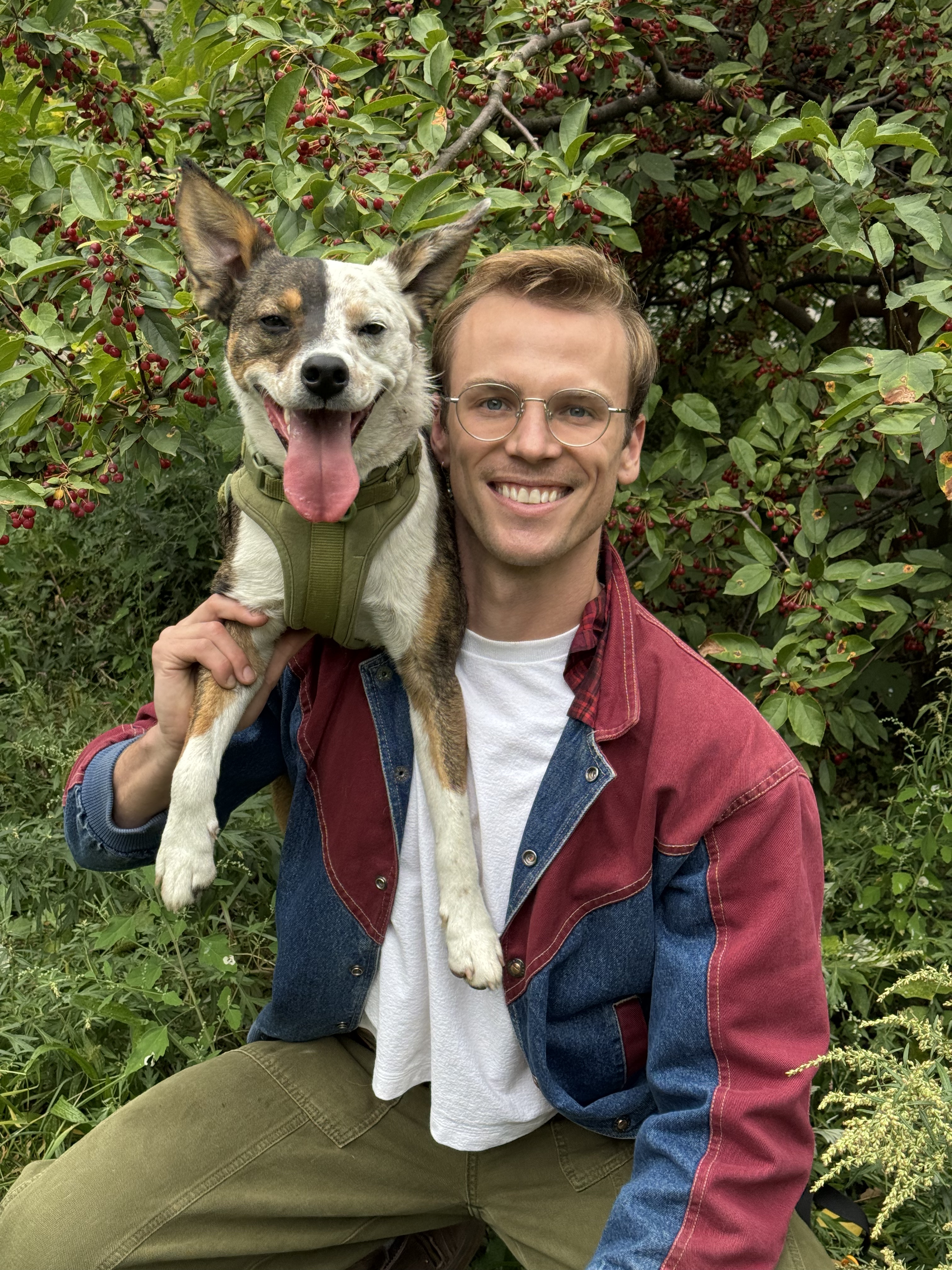
Director of Research and Education
Carter Easler is a leading voice in functional medicine for pets, uniting scientific rigor with a passion for improving the lives of aging animals. As Director of Research and Education for MycoDog and CBD Dog Health, he served as Principal Investigator on the Senior Dog Study — a first-of-its-kind clinical investigation into how functional mushrooms and adaptogens may support cognitive function in senior dogs. Drawing from years in animal rescue and advanced training through the College of Integrative Veterinary Therapies, Carter has taught thousands of veterinarians and retailers to bridge natural science and practical care. His mission: to bring clarity and evidence to the growing field of integrative pet health.
Social Links:
@mushroomsfordogs
@cbddoghealth
@thefunctionalpet