
 Apple Podcasts

 Spotify

 Castro

 RSS Feed

 Goodpods

 YouTube

 iHeartRadio
242. Fix Your Dog’s Gut: Microbiome with Dr. Odette Suter

The gut is where everything starts. In this episode, I sit down with Dr. Odette Suter to go deep on the canine microbiome—what actually drives gut health, where things go wrong, and how to start fixing it in a way that makes sense. We talk about dysbiosis, yeast, digestion issues, and why so many dogs are stuck in cycles of loose stool, itching, and inflammation. Dr. Suter breaks down how food, environment, stress, and even the nervous system all play a role—and what you can do to support the...
The gut is where everything starts.
In this episode, I sit down with Dr. Odette Suter to go deep on the canine microbiome—what actually drives gut health, where things go wrong, and how to start fixing it in a way that makes sense.
We talk about dysbiosis, yeast, digestion issues, and why so many dogs are stuck in cycles of loose stool, itching, and inflammation. Dr. Suter breaks down how food, environment, stress, and even the nervous system all play a role—and what you can do to support the gut without overcomplicating it.
If your dog has ongoing gut issues, allergies, or just isn’t thriving, this episode will help you start looking at the root instead of chasing symptoms.
🐶 🐱 Nutrition & Holistic Health Consults: https://www.wildwellnesspet.com/collections/consultations
🐶 Get to the root cause with the Wild Wellness Bioenergetics at-home testing kit: https://www.wildwellnesspet.com/products/bioenergetic-sensitivity-testing-for-dogs-full-scan-wild-wellness-powered-by-pet-medella
💛 Follow The Pet Parenting Reset on Instagram https://www.instagram.com/thepetparentingreset/
🤍 Follow Wild Wellness Pet on Instagram https://www.instagram.com/wildwellnesspet/
📩 Get email notifications for new episodes:
https://jessicalfisher.kartra.com/page/tpprnotify
0:02 Hey there, it's Jess. If you're new here, I'm a certified professional canine nutritionist, raw nutrition certified for dogs and cats, a holistic pet health coach, the founder of Wild Wellness Pet, and the host of the Pet Parenting Reset podcast that you're listening to right now, where every pet deserves the absolute best and every pet parent is welcome. Learn from the best holistic and integrative experts in veterinary medicine and nutrition every Tuesday right here on this podcast. Or get individualized help with your pet through one-on-one consultations and take a deep dive into the root cause with the Wild Wellness Bioenergetics at Home testing kit. It's time to rethink how we raise our pets.
0:46 A reset to naturally healthy dogs and cats. If you've been feeling like there has to be something more, something better, a better way to raise healthier pets, welcome to the pet Parenting Reset. Welcome back, pet parent. I'm really, really, really excited to bring back Doctor Odette Souter for you guys today. If you remember, it's been a little while since she's been on the podcast, but if you are an OG, you remember when she was on and you Remember Me saying that one of the very first books I ever read when I first started going down this journey of integrative holistic modalities, bringing them into my pets lives. It was her best selling book, What your vet never told you. And so first of all, let me welcome Doctor Odetsir back to the podcast.
1:40 How are you doing? I'm good, I'm good. It's so nice to be here and chatting with you, Jessica. I never knew that about you. Know that that was your first enjoying troll. Yeah, You know, I think that because it's been so long. I mean, it feels like it's been so long now because I've kind of immersed myself in it. But I remember the very first thing I ever found was a Facebook page that was it was not Rodney or Karen, even though they have some of the biggest Facebook pages. I found another Facebook page that led me to them. And when I first started, like just doing a deep dive. I love to read. I love books. I love to read. Give me me all the books I'm going to. I have, I have a stack this big of my to be read pile, but not to mention my audible wish list.
2:24 But yeah, it's, it was one of the very first books that I actually read and I, and it's very approachable. So that was one of the things when I got started, I was like, OK, you know, there are books that are this thick, you know, 4 inches thick. And, and I'm like, OK, I can do that, but it's going to take me some time. So finding your book, I was like, oh, I, I got through that on a plane ride, like, but it was impactful. So thank you for this. Yeah. You're. Welcome. Yeah, that's how people tell me they read it in an afternoon and and it really kind of gives them the, you know, the lowdown because in the end, you know, you can get into all the details and sort of lose the forest for its trees.
3:11 I think that's how we say. It right, I always say. But in any case, and I'm also somebody who doesn't really beat around the Bush, I'm a very bad storyteller as a result of it because like, OK, it started here and then here's the end. 2 minutes later, I'm telling you the story. So that's my book. You know, in a way as well, you know, just kind of what really what really matters rather than going on too many tangents and making it more complicated because I think we have enough of that going on in this world right now. I call it the Internet vomit because there's so much information out there. People get confused. They are overwhelmed with that information. They don't know what to do with it. Either they go and buy a bunch of stuff that's not really helping, or they end up just completely paralyzed, not knowing where to go from having bringing it down to basics to kind of clear things and and make it more understandable in the sense of what is really what really matters is very helpful for people, obviously.
4:13 And I just realized I forgot to put on my poop hat Rabbit real quick. Anyways, yeah, yeah, we're going to be talking about the gut and everything, you know? Yes, yes. Higher here. Well, yes, we are going to talk about the gut and but before we do that, I just want to kind of continue that conversation you just started around this like vomiting of information, not all of which is true. There's so many opinions and not to say that opinions are bad or wrong, but it's, it's overwhelming for a lot of pet parents and even people like me who, you know, I try to stay up on what's going on and what works and what doesn't. And, you know, all the different, some of the different harvesting modalities.
5:01 And there was a time this past summer in 2025, I was at a conference and there were multiple speakers. And one of the conversations that I started at the end of the conference was that this is This is why pet parents are so confused. Because even among all of these amazing veterinarians and pet food formulators and all of the wonderful people that we love to listen to, in one conference, we had conflicting viewpoints from two different speakers. And it's like both of them seem right, right. You listen to 1:00 and you're like, you make so much sense and you listen to the other and you go, you make so much sense, but you're saying exactly the opposite things.
5:47 So what do we do? And and that's just confusing, but also to me kind of points us right back around to the reason why so many people are finding functional medicine again, because everything is it needs an individualized approach. And what works for one dog may not work for another dog. Yeah, yeah. And I think, you know, the different things that each of us learn and bring to the table is based on our experience, our lives, our lenses, our views of things and what we were diving in. And so then if you get conflicting information, doesn't mean that one is wrong or the other one is is right.
6:28 It's, it's more that it may just fit different, different situations basically, but we certainly also have so much information and so much more knowledge that's coming out. For example, microbiome research has exploded. When I was doing my lectures at the AHVMA conference, I just for fun sakes, I googled, you know, how many new papers were coming out every day And within like a five day period back in, I think it was in 23 or 22, there were like 700 new papers in five days that came out. So that's like, you know, a bit more than 100 new papers every day. There's no way anyone can keep up with that.
7:10 You know, there's, there's no way. And so it's not just microbiome research, it's mitochondrial research, it's research and cancer. It's research and inflammation, Well, danger response is one of the things that I've been kind of looking into a little bit, you know, chronic diseases, there's exploding and information that is coming to light now and that that makes it really confusing. I mean, it's for me as well. I feel like I know this much, you know, in the grand scheme of things. And so I tend to focus back on, we have a little visitor there. So I tend to focus back on what's simple, you know, what makes sense, what's common sense, what what is nature doing and kind of going back to that as my anchor because otherwise I would also get lost in the weeds because for example, in the mitochondrial cell danger response, I can talk a little bit more about what that is, But you know, there's and then decided, you know, coming up with some kind of a drug to manipulate it.
8:09 And I'm like, OK, probably not, not the best idea. So, you know, it gets really confusing and you can kind of get lost in the weeds and losing nature. And that's a little bit what happened with the whole pet food industry. I mean, frankly, I mean, if you were to, you know, bring a bag of kibble and write down, you know, with all the list of ingredients that are on there and you give that to a person from like 200 years ago, they're like, what? You know, it doesn't make, it makes no sense. You know, there's no rationale to feeding this junk that we're providing the animals. And so we have to kind of let go of, of some of whatever other people are saying and such and kind of get back to common sense. You know, what do we know, right? We know we need oxygen, we know we need water. We know that we feel better when we're out in nature, You know, these things and and we the body knows what it needs to you know what, what feels good and the animals will tell you as well. You know, for example, my neighborhood dog, my neighbor's dog, if Ioffer him a piece of celery, he is like you crazy. I don't want that stuff I eat that, you know, so we have to kind of listen and and go back to that. And I think that's a little bit, you know, what's what we're being asked to do nowadays is to find the power inside of us, the knowledge inside of us.
9:31 And sure, it's great to have additional knowledge from, you know, because it can make sense and put some pieces together and all of that. But in the end, we just have to focus on on re empowering ourselves, taking our power back rather than giving it away to someone else and thinking that all they know better. In the end, as a pet parent, you're the expert of your animal. You know what works for your animal. You know what makes sense for them. Listening to be your guts, pun intended, is important. Well, yeah, that it's hard to get back to that where you actually kind of know what your gut is telling you. I feel like it's it's become difficult to get back to that.
10:11 But so you have done tons of research into the gut microbiome and so much so that I'm like intimidated. I don't really even know what to ask you because I have no idea what you know. I think at the end of the day, we can probably bring it back to a very simple statement like you just made about getting back to nature. What are some of, if you don't mind divulging some of like if I were to just ask you what's like the most interesting or coolest thing you've learned in your research, What comes to mind? Well, I think the, the coolest thing is really that most every microbe, parasite, yeast, whatever fungal, you know, Organism or whatever is out there, they're not our enemies.
10:57 You know, because we were trained and not for not that long, we were, we have now been trained to look at everything as our enemy. And that's not the case because most of these, you know, bugs, they, they've been living on this planet for like 3 plus billion years. And they've not really, I mean, they've kind of evolved and they've also discovered and, you know, perfected strategies of survival that are absolutely necessary on this planet. And we are at a place in, in the world right now with all the pollution and the destruction and the diseases and everything that we've created. We are in a place where either we are going to find some survival strategy that is going to let us survive and keep going, or we're going to perish and all, you know, die and it's not going to be the parasites and the bacteria and so on. They are probably going to do just fine because bacteria, for example, they can evolve in like a short 2 hour period. They can completely change and adapt to the environment as humans, you know, animals, we have so many cells and so much going on.
12:11 There's no way that we can adapt so quickly. But you know, we can't forget that we're only 10% cells and 10 and 90% microbe. So we have all of these amazing survival specialists and experts to help us adapt. And so if we can keep them alive in US and have that diversity of of microbial of the microbial community, then then we stand a much better chance. And there's a lot of research going on these days with microplastics. You know, how can we destroy my microplastics? And there are some probiotics, I think it was from the Lactobacillus family. I can't remember for sure now.
12:53 But if you have some of those in your gut and take some of those, then it will limit the amount of microplastics that go into the system. So microbes are big going to be saving us because they can do so many things that we can't do. They can process something that would take years or even decades for us humans to do that in a in a lab at temperatures much higher and also creating a lot more pollution in the process. So they have like they, they have incredible abilities to to do things. And so making friends, I think is the is the is a kind of at the forefront for me is, you know, we have to be friends with them. And that's why I post photos of me in the bathroom.
13:35 And I know you kind of picked up on it too. I mean, I haven't done it. Of a airport, fully dressed. I want to yeah, clarify. Fully dressed. I know I haven't done it lately, even though I was traveling recently, but I every time I stop in a bathroom in an airport, I always think about it. I like even one time I went to go do it, but there were just too many people in there. And I'm like, I'm going to be the weirdo taking a picture in a bathroom with everybody looking at me. Like, I know you're not trying to take a picture with me, but it is, it is very funny. And I said I actually said something to someone recently when I was traveling because he was talking about how like health conscious his wife is. And and somehow we got on the topic of porta potties. And I'm like, well, I mean, you know, public restrooms, They're they're they're great natural FMT, right? I don't know.
14:31 Yeah, yeah. Well, yeah, And I don't want to say that everything happens for a reason. I truly believe that. And there's a trajectory and there are learning curves. But germ theory did a lot of damage. And the way our doctors are taught now where it's just like kill it or cut it out, basically like the, everything they, they, they try to do doesn't when you, when I hear you say, well, we're only like 10% of us really like then it really like really puts it into perspective as to why that's not ever going to work. And it could work in some certain situations, like it might be necessary.
15:22 I don't ever want to say that. I mean, thank goodness for emergency medicine, right? Goodness, we have that, but it really puts it into perspective as to how detrimental it is for us to always reach for that first. Yeah. So when we think about, I truly believe we're like as humans, we're in a health crisis. We have been in a health crisis. I think people are waking up to to the fact that we're in a health. Not everybody, but I think people are waking up to the fact that we're in a health crisis and that our food and environment are huge factors in that. And the same is true for our pets. You've already talked a little bit about pet food and certainly I talk about pet food all the time.
16:08 It's it is my thing that I will always talk about and hydration. And like all the things. I actually, the reason I hydration came to mind is because the, the, the day we're recording this episode that's going live tomorrow is with a water expert. And I actually like put this off for so long because for whatever reason it feels so overwhelming to me to tackle how terrible our water supply is and not really knowing the best answers for it. And also knowing that this is just a tangent I'm going on. The EPA guidelines are detrimental to women because they're based on 170 LB man.
16:53 But then to think about how detrimental they are to our pets just because all of the EPA guidelines are based on 170 LB man. Like we don't even think about this. And my mind is being blown. I just edited the episode and I'm just like, this is so over. I don't even know if I want to put this up. I'm going to put the episode out. But to me I'm like, I'm still so overwhelmed. And so overall, just the idea of keeping ourselves and our pets healthy can just feel so overwhelming to pet parents, to even pet professionals. I feel like even somebody like you who you know, you're professionally trained as a veterinarian, like, do you have moments of overwhelm still, especially when you dig into, like, as much research as you've been digging into, do you still have those moments of overwhelm?
17:45 Yeah, yeah. Because it feels like there's so much more that I want to learn, and it just kind of flattens me out when I just think about it. Except it makes me tired, you know, to think about it. But certainly, and, and, you know, in the end, you know, I'm not the youngest chick on the planet anymore, you know, So I've had time to sort of go through the process of coming out of that school thinking I have to know everything, behaving as if I need to be God because there is no God that's going to save all the animals. And if I don't do it and you know, there's, it's not going to happen type of thing, which, you know, it's more of a subconscious thing. It's not like, you know, I'm going in there. I don't have to save this animal. I mean, certainly there's, there's some of that, but I've kind of come around, you know, in a circle where I'm, I'm more at peace with not knowing because I've realized that when I'm, when I'm in that space of not knowing, then usually I get some answers.
18:40 Something will come up. And sometimes something comes up with an animal and I just sit with it for like a few days and then all of a sudden I'm like, yeah, that's what we need to do. So it's changed that way, but it's, it was, it was not easy to, to get here. You know, I had to do a lot of work on it because it requires a lot of trust and a lot of well and, and experience that things will turn out OK. Because if I look back, you know, even though things weren't always all nice and peachy and and rosy, in the end, everything is seemed to always get better. You know, like it was kind of like a upward spiral. Basically. You revisit some of the same things, but it's it's always getting a little bit better. And so that, you know, looking back kind of creates more trust that things are OK and we're going to be OK. And, and certainly learning from all the experiences and realizing that life is giving me things. It's not doing something to me.
19:41 You know, it's not about punishment, you know, whatever the lessons are. It's about helping me to grow more and have developed more wisdom, more trust, more faith, more, whatever it may be. So I hope that answered your question. Yeah, yeah. Well, and I think the undertone to all of that is this like grip that we have on trying to control everything that we have to be able to let that go. And like you said, trust that it it's all going to work out. That can be really, really hard. That's not easy because we're in the survival. I mean, we're survival beings, you know. I mean, the physical body is about surviving.
20:22 I mean, that's the main function of the body, survival and procreation. And so, yeah, you kind of hit it on the head about the control, you know, and the more we try to control things, the worse it gets, generally so. I know you have a program that pet parents can join and we can talk a little bit more about that later. And I'm sure there's a pretty heavy focus on the gut and what you can do to support the gut in its natural processes of repairing and just overall health. What I actually want. Like, I would love for you to answer this question in two different ways. I would, I would love to hear what like if you could only tell pet parents one thing to know about keeping their pets gut health in in line, But then also what would you tell veterinarians? Like the tradition average veterinarian in America who is probably very overwhelmed working for a corporate corporation, like doing all the things that most I think veterinarians in this country now are doing. I can imagine they're probably two different things. I'm curious, what would you tell if have parents? What would you tell veterinarians? Actually, it would be the same, yeah. I would say, you know, what is nature, you know, what did nature give the animals to be able to survive? I'm sure with a veterinarian, I would probably go a little bit more into Physiology and ask
21:53 them, you know, do you really think the Physiology of an animal has changed in the last 100 years when it took 3 billion years to get where we are now? I doubt it, you know, I mean, you'd have to show me that certainly the pathologies have changed because we've made a mess of things. But if you look at it, you know, I think an animal will still thrive much more on, on what nature provided if they're decently and if they're in decent shape. I mean, if you take a dog or a cat who has major inflammatory bowel issues going on or whatever it may be. I mean, I see so many animals that are hypersensitive to everything. You know, you change, you give them one treat and they have diarrhea from that.
22:34 And you know, I'm talking about, you know, this much. So I'm, I'm not talking about those animals, obviously. Yeah. Sometimes with those you can't just switch things around, but or just say we're gonna do what nature provided because they can't handle it anymore because they're so sick. So we have to get them back to the place where they can handle nature. So that's how far away we've gotten from from nature that we can't even handle nature anymore, you know, the way it was meant to be because we've gotten so, you know, so sick. Basically, I go with veterinarians. I would probably talk a little bit more, you know, in that direction and yeah, have them look at Physiology and, and maybe see if I could kind of wake up a little bit of the common sense. Because I have to be honest, I don't really understand how they how any a person can think that some food out of a bag that's been highly processed can be something that would be healthy. Because I mean, if you were to tell somebody, a human, you should only eat like cereal out of a box for the rest of your life and never change.
23:42 Always the same one, always from the same brand. I'd say they would probably say I'm insane. I mean, I hope they would say that. Yeah, I would hope so too, because it. Is crazy there's a big question mark I don't know what's going on you know why why there's you know how they got bought like that somehow, but. Yeah. And I may be wrong as well, you know. Who knows? Yeah. I just don't think I truly, I, I will say this as many times as I am afforded the opportunity to say this, I feel like even though it feeds still the majority of animals and we have shelters and rescues and it's that it's in itself is overwhelming and sad to think about.
24:30 I still at the end of the day feel like kibble is just a failed experiment. And like at some point we're going to have to all collectively come to that realization that this kibble is the experiment and we are seeing that it has failed. Like just look at if we look at nothing else but cancer rates, it's it's failed. Yeah, it's failed. We're humans, we love to experiment. I mean, that's how we learn, basically. I mean, you look at a kid, right? Or a dog, a puppy, they're gonna take everything into their mouth to kind of figure out what it is, and then they'll go, well, that's not good or whatever it may be. So we all learn through experimentation, and we as humans have experimented in a lot of different directions with a lot of different things.
25:17 And unfortunately, you know, there have been some good things that have happened. Obviously, you know, we have electricity, we have all kinds of things that we didn't have. We have running water, we have wheels, you know, we have, you know, tools and stuff like that. But with everything good that has come out of the experimentation, it's also brought in something not so good. You know, for example, electricity creates a lot of electromagnetic, magnetic radiation that affects the body with running water if it goes through pipes that have mercury or whatever. No lead, lead pipes. That didn't really work out very well. So a lot of the progress comes with some negative to it.
25:59 You know, airplanes, we can fly airplanes, right? Which are still kind of surprised. I still don't know how that's possible because I tried to flap my wings and nothing happens. But then at the same time, they create a lot of pollution. So on this planet, unfortunately, everything positive always comes with a negative because we live in a world of duality. And so, you know, with all these experiments that we've done, you know, a lot of them have kind of gone in the direction that have created a little too much negativity. And then the compounding of all of those has then gotten us to where we are now, because it's not just the food. Because way back when animals, you know, dogs were probably able to live on cable their whole life and nothing ever happened and they were fine and they died at what, 1516 or something like that because they didn't have all the other compounded things on on top of everything.
26:51 But now we've compounded everything so much. And again, I'm not saying we should feed kibble. I'm not saying that at all. But it's like when you're only dealing with one thing that's really impacting the body, then you're more likely to survive it than if if you have a compound of multiple things that are affecting it, including also the genetic and epigenetic changes that have happened from one generation to another. You know, thinking about the Pottinger cats, I don't know if you've ever talked about those in the in your podcast. No, I haven't, but it you know it, I have so many things that are that I want to ask you the well first before I go down my crazy thought process, tell me about the Pottinger cats. Yeah.
27:40 So Pottinger was a Doctor Who lived kind of in the 1940s, and he had a sanatorium that he was where he was basically treating people with tuberculosis. And at the time, he was using adrenal extract from cats. And when people around the area heard about it, they started dumping cats at his doorstep. So he ended up with about 900 cats and obviously having 900 cats and needing to feed them, that was a little bit of a challenge. So some of these cats, you know, he had two groups. So some of these one group of cats, they were getting raw, raw foods, so leftovers from the butcher, that sort of thing. And then and raw milk.
28:22 And then the other half, the other group, they got cooked things, cooked foods, cooked milk, etcetera. And obviously, you can see there's not a huge difference. You know, it's just from raw to cook now we are going from raw to like highly processed kibble. That is really totally inappropriate physiologically. Plus, he also lived in the 1940s. So pollution was not really a thing back then because, you know, there were what, like very few cars around. Well, maybe the coal industry, I don't know. But in any case, pollution probably was not not what it is. And quality of food was still better than what it is now. But in any case, with each generation, these cats that were on a cooked food diet, they were getting worse and worse. So they were eventually losing the Bony structure so that their skeletal structure of the face became different. So if you have a cat that has a very narrow type of face, they probably don't have a ton of bone structure, not the same way as like a real tomcat with like the round face, right? They were getting allergies.
29:23 They were getting other kinds of chronic issues. And then by the 3rd generation, the third generation wasn't even able to reproduce anymore on the diet that they were on. Whereas the cats that were fed raw diet, they stayed healthy throughout the four generations. And then he tried to also see how long would it take to take these diseased cats? How many generations would it take to get them back to health? So he took the first generation raw, cooked food, cooked, fed animals and turned them back. We got them back on the raw food diet and it took about four generations just to get them back to, you know, closer to where they they were.
30:05 They never were completely healthy. If you imagine with humans or animals now, you know, both. Obviously we start out with a generation that was really healthy. The next generation got more pollution, more things compounded. So they aren't as healthy. The next generation gets whatever this generation is passing along, plus whatever their generation is getting, which is more pollution, more deficiency, more of everything and so on. So that's why now you see more animals be sick, being sick from very, you know, basically as soon as they're born because they're getting whatever mom is passing along, you know, generation to generation because from a pollution standpoint, toxins are passed along for generations.
30:52 Epigenetic changes are also passed on at least 4 generations. But because each generation gets their own junk and, you know, exposure, it's like it's so compounded that it just grows exponentially. The the effect of the, you know, the yeah, the effect on the body basically is is gross, exponentially so. Yeah, we so BC Henshin and I talked about that without really knowing what we were talking about, but we when we it was about two years ago now that a very popular pet food brand and a few ancillary brands started popping up as well.
31:33 Seemed to be causing a lot of animals illness and unfortunately quite a few animals died like with new bags of food being opened and there was never any resolution to that. But that is what I had BC henshin on who has been in the pet industry, pet food industry for decades. And we were talking about like what, what could this in here? We were just talking about like his perspective and seeing how like there are cities and counties that there is no way they're going to let anything happen to a manufacturing plant, a pet food manufacturing plant because it literally provides all of the tax revenue and you know, all the things. So it was all of the like behind the scenes type things. But that was ultimately what we got to was that, you know, if we're testing for the same things we've always been testing for in a pet food bag, that maybe it's not hitting any maximums, Maybe it's not hitting any like, Oh my gosh, this is horrible.
32:33 This is going to kill an animal. But the fact that so many generations of animals have been sick and they're getting sicker every generation, that what was a maximum before, like maybe that maybe it's different now for these animals because they can't handle as much as four or five generations ago could handle. So I'm glad you actually have like the scientific information to put behind that. Theory. Yeah, I know, and that's true. And that kind of would sort of bring me back to that cell danger response that I mentioned earlier, right? Yeah. Because anytime the cells the body gets exposed to something that could potentially kill it, there's a response from the mitochondria.
33:20 They switch to, you know, from energy producing to basically sending out signals of danger. And what's happening nowadays is that we are exposed to so many things that are basically triggering this danger response that then we sort of get stuck in it. Because, for example, when when you cut yourself, right, initially you have some inflammation, you have more immune cells that are coming to make sure it's cleaned up. And then you have some chemicals that are being released to help to breakdown and eliminate some of these damaged cells that are then gobbled up by the cleanup crew of the immune system. And then eventually it starts to regenerate new cells. And then eventually the cut is healed, right. So that's, that's how a normal healing response is supposed to go.
34:08 But when we have all these chronic diseases, it's basically we have the initial whatever it is that caused it, so that started it, and then it just kind of stays in that loop. It never comes out of that loop. It never heals. So it gets stuck in the process of healing. And so with chronic diseases, we have this constant cell danger response that's that's present and healing doesn't go anywhere. It just kind of stays there. So if you then add more danger, you know, if you add 1 little added danger to it, it can just throw everything off. And that little danger could also be, for example, a supplement that should actually help, you know, And that's how then some animals will react to a little bit of enzymes in their food.
34:53 I mean, that should not cause a reaction, right? Or switching food from rabbit from the same brand to Turkey should also not cause a reaction, right? But because there are, you know, all the cells are already in so much cell danger response and and, you know, kind of stuck in the cycle of of not healing, you know, things just end up getting worse. So when you're saying that, you know, it could be a multitude of things that could have happened with these bags. Yes, because you know, those animals who were probably in better shape, they probably had less of a reaction to it, whereas those that were already sick, they probably would have had more problems with it.
35:35 Yeah. So I kind of want to switch gears a little bit, but kind of also back up because you brought up cats and eating raw food even versus cooked foods. One of the things that especially in the raw feeding community is still talked about a lot is feeding vegetation. And I know in well, I don't want to say I know, I believe a lot of the research that has been presented to us show that, you know, more diversity in the microbiome overall, generally speaking, is better is going to lead to a healthier microbiome. And there are some people that say that vegetation and feeding lots of different types of vegetation is the way to get there. There are some people that believe that it, you know, still minimal vegetation and more like fur and feathers and all of like there's, there's so many different like ideas of how we actually get the fiber into the diet of how we diversify the gut.
36:39 And then I'm curious as to your thoughts on both cats and dogs, because cats being obligate carnivores, are we still concerned with diversity in the gut microbiome in the same way we are with dogs? Are we supposed to get there in the same way? How do you view that? Yeah. So every species on this planet thrives on diversity. Diversity is key for survival. So that goes for cats as well. Now they will have a little bit of a different microbiome than a dog, for example, or a human just because of what they eat. But they too need fiber in their in their diets because certain microbes need fiber in order to make the short chain fatty acids, for example, like butyrate, which help with the energy production of the cells and gut healing. It has all kinds of other functions as well. But we do need to feed the microbes and some microbes do get fed well with fiber.
37:38 They need a little bit of fiber. So we all need a little bit of, of that, But a cat may need less than a dog, for example, because of how their GI tract is and such. But in the wild, they, they would chew on little things. They eat a little bit of grass, right? They, they will eat a full mouse because usually what they leave of a mouse is usually the kidney. So there's some something, but the guts usually get eaten. And what did the mouse eat? It ate fiber, right? And mice have a much bigger GI tract compared to body size compared to cats, for example, and dogs because they have a much shorter GI tract or a horse, you know, huge, obviously, or a cow. But because we'll all, all herbivores have a bigger GI tracts than carnivores.
38:23 And so a mouse will have a bit of a bigger, you know, GI tract as well. And so there will be more material in it. There will be more bacteria in the gut of a mouse, for example. So they they would get that too in nature. So again, we need to go back to nature. So can we try to feed them as close as possible to what nature would provide? And I know there are some companies that sell ground up mice, although I did try to give that to my sister's cat once. And he's like, I'm not eating that. I mean, I have to. I had to agree. It looked a little disgusting. Maybe you crossed it too long or something, Who knows. But in any case, yeah, again, mimicking nature. Yeah.
39:03 Yeah, I will. And that brings up another topic of probiotics, which are all the rage and everybody talks about them and everybody thinks that everybody and every dog and every cat and everybody should always be on probiotics. And I'm not saying that there isn't some truth in there, but I definitely have talked to different people again that have different opinions on the best way to get probiotics in an animal. I certainly talked to some people, people who believe that it should come as much as possible from food sources. And then of course there are people who love their supplements. And the only real negative I've heard, and I'm just curious your opinion on this about like supplementing probiotics that are not necessarily food based probiotics is that to have the shelf stability, you're not getting the really like fragile probiotic strains and and those are often what are actually missing and need to be supplemented.
40:11 So they would be better found in whole food sources. Of course, there's also the. The idea that, you know, we need to be rotating, no matter what kind of probiotics we're giving, we need to rotate them because that's again, the whole point is diversity. So what are your thoughts on like food and getting probiotics from food sources versus supplementation? Yeah. So when we look at probiotics in the probiotic industry, that's a multi billion dollar industry. And when, when I looked, you know, when I did my Biome research, I looked at what, what are the trends, you know, and so the trend of probiotic sales is going up, but what's the trend of GI issues?
41:00 It's also going up. So if the probiotics were to actually work and be this like magic bullet thing, then the GI diseases should have gone down, right? Or both of them should have gone down, but that's not the case, right? So I don't think that probiotics are, are the full answer. You know, they can help and in certain cases certainly. But you mentioned the viability of, of microbes. The thing is that the GI tract itself in the stomach, it still has a little bit of oxygen, still a bit of an oxygen in the small intestine, but less. And as it goes further back towards the anus, there's less and less oxygen in the in the gut.
41:42 And so we also have bacteria that thrive in oxygen. They need oxygen to survive. And then we have bacteria who would die in oxygen rich environment. So they're the anaerobes, right? And then we have some that are in between that can survive in both oxygen rich and oxygen poor environment. So when we're trying to replenish the microbes in the oxygen poor areas in the GI tract, we need oxygen. You know, we don't need the oxygen loving at once. We need the other ones. And they're much harder to culture because you'll have to also culture them in an oxygen poor environment. And that is much more difficult than just the, the regular probiotics that you can find on the market that are, you know, easy to culture. So that's, that's a little bit of the problems. They there are now processes on projects going on to make some of the culture, some of these probiotics that would be found more in the large intestine, because that's where most of the microbes are.
42:45 You know, we have a lot more microbes in the large intestine than we do in the small intestine or in the stomach. So stomach has the least amount, small intestine has a little bit more and then we have a lot in the large intestine. So there are definitely some project on the way to culture some of those, but they're not easy to, to culture. And so that's where the shelf stability, shelf life and all that would obviously then then play a role for sure. But you know, the, the problem with probiotics is that if you're lucky, there's maybe 20 different species in it. If you're lucky, most of the times it's maybe four or five, if that. And the gut microbiome has between 300 and 1000 different species, at least of microbes.
43:26 So you're never going to be able to replenish that with like a small little bottle of, you know, 5 different strains of or species of microbes to put into the gut. It's not possible. Plus I obviously am a big fan of doing fecal transplants because with fecal transplants you get the micro, the bacteria, you get fungi, you get protozoa, you get the viruses because there are a lot of viruses in the gut as well that actually keep the bacteria in check. So there are viruses that are specific to to individual microbes. So for example, E coli has its own viruses that keep the E coli level in check. And these viruses in the gut that we call them bacteriophages. And so these bacteriophages are also in a fecal transplant. So they will also help to kind of balance out things. And then you also have all all of the good nutrients that these microbes just made.
44:21 You also have that in the poop. So when you're doing a fecal transplant, not only are you putting all the microbes in it, you're also putting in all the bacteriophages. And then you're also putting in all of the good nutrients. You know, the post biotics, I call them the poop and the bacterial poop, you're putting that back in and that will then basically potentiate everything. So that's why I like fecal transplants much better because I'm not really big into wasting money on some something that may not work as well. I much have rather have a sledgehammer to get the nail in than little, I don't know, a spoon because it doesn't work. Yeah. Yeah, interesting.
45:02 Well, and gosh, I feel like I could probably just ask you questions forever, but we are we're getting close to that hour mark and I want to give you the opportunity to talk about your program. And I think probably for me, the best way to learn about that is obviously every animal, in my opinion, every animal is going to require some sort of individualized approach because they're just so many factors that are different from animal to animal, even living in the same household. But do you have like a standard like protocol that you go through to start with to see where, where everybody's at? Like, OK, let's fix these, I don't know, 5 environmental things and then let's see where we're at. And like, how do you start out with a new client, you know, talking to a pet parent?
45:55 Like how? What is that framework that you provide? Yeah. So I always start out with an assessment call, so people will fill out a lengthy questionnaire so that I have a bit of an understanding of what the challenges are and what they're facing and what's, you know, how is affecting them too, you know, though the owner themselves. And then based on that, you know, if they decide to sign up, I will have them send me all of the medical records and I will go through them. And then based on those medical records, I will then design a plan to get started. And usually that starts out with like very simple things. Let's add a little bit of enzymes. Let's talk a little bit about diet. You know, how can we start to make some small changes, you know, add a bit of apple cider vinegar to help digest things. And then I will give them the list of tests that I want them to do depending on whether they, you know, just had a what panel with their vet or whatever it may, you know, they may have already have done some of the things. So I will just add to it just to so that I can get the information that I need in order to really move forward with them and really create a real plan.
47:05 So that's kind of the strategy appointment that we we have. And then they do the blood work or the lab work. It's not just blood, it's hair analysis, you know, to see what toxins are they exposed to, what nutrients are deficient and what is their overall tissue level health, You know, for example, if they're really deficient, then I know I have to go slowly with that animal and I can't already going to detox. So it will give me a bit of an idea of how quickly can I move forward. What are the next steps that we need to do for that, you know, take for that particular individual. And then in the meantime, people will go through the process of watching the modules that I have. So I go into like the foundation of knowledge because you know, as we mentioned earlier, there is a lot of information, people are overwhelmed with it.
47:50 So I give them that foundation of knowledge that they really need to have. So bringing all of the pieces together so that it makes sense, because I find that most pet parents have a very disorganized knowledge base because they're just picking up pieces here and there. And so it's not organized and when it's disorganized, then the process of healing is disorganized too, because then they jump from one supplement to another trying and trying to see if that will help. But I help them with the modules. They get that organized foundation of knowledge that they can then build on. And that will get empower them in knowing how to you know what to how to look at things as well. Because it's healing also requires rethinking, you know, looking at things differently. And that's what my book is is about as well is like, you know, we need to move away from, OK, I have a symptom. What pill can I use?
48:39 That was kind of the old module, but then it switched into this what I call fullistic medicine, where instead of the pill, we are now looking at herbs and supplements and things like that. You know, so I have a symptom. What supplement can I use? You know, for example, my dog can't jump on the couch. What's what fish oil can I give? I'm like, well, yesterday was your dog still able to jump on the couch? Yes. OK, so it's not a deficiency of fish oil, right? So let's just do some Cairo and look and see what's going on. You know, if there's some pain somewhere. So in any case, I I teach, you know, the whole process is really to also teach people to think differently and, and ask critical questions that we ask with everything else.
49:21 Because, you know, if the car engine light goes on, right, we don't just put a piece of duct tape on it. We ask, OK, what is it, you know, have it diagnosed by, by some mechanic. And so we need to kind of think that way again with the animals and, and their health as well. So anyway, so they get that foundation of knowledge, they get like some rethinking done. And then at the same time, then I will also guide them through the process because I will lay out a plan for each animal on how to move forward. And then we move forward on that plan during the six months. So every week we have live sessions where they give me updates, you know, they let me know what's happening, they ask questions, whatever's on their mind, and I will give them the next steps to move forward. So that way they are really being coached week after week after week through this protocol that I set up. And as a result, you know, not only will the animals improve, but they will also have much more knowledge because they see how I think about things, how I go about things. And that will then help to kind of move along and then also help them with any other animals they may have and, or for their own bodies.
50:29 A lot of people tell me I'm doing the same thing for me now. Yes, my gosh, yes, we need it just as much. And everything that I learned is from my own journey. I mean, I had a lot of chronic health issues from a relatively early age and it was a real pain to get through it. And because I had no strategy, I was just kind of winging it. You know, I tried a little bit of this, a little bit of that. I mean, I give gave everything a really good try. So it's not that I gave up like 2-2 days in or something like that. But nothing really worked until I figured out what it really takes, you know, what the strategy needs to be and that you have to really put all the pieces together to to get there. And for each animal, these pieces look, I mean, they're the same, but they will look a little bit different in the sense of when are we using what, you know, for example, for a really old dog that's, that's already sick, I'm not going to do a bunch of detox, you know, I'm going to build the body up, you know, decrease a little bit of the inflammation and build the body up.
51:34 And then if we ever get to detox, sure, that'd be great. I mean, I mean, as the body gets healthier, it will start to detox a little bit on its own, but I will not be pushing it so. Yeah, Well, I love all of that. That sounds absolutely amazing. And I definitely think that it's a, it's a great, it sounds like a really incredible program for pet parents to go through to be able to, I mean, even even if you're just starting out, I can't tell you how many people reach out to me. I talk to them, I give them like, you know, I have a good conversation with them and learn a lot about their animal. And you know, say, you know, I think you would really benefit from this type of testing and blah, blah, blah, going through all of the things, usually some sort of HTMA like, and, and six months and, or a year later, I'll hear back from them and they're like, OK, I actually need to do something now because I just left the emergency vet. And I'm like, you know, it just, it gets, it gets worse when you don't, don't act on it.
52:38 And like, I don't know, maybe, maybe people are getting there quick. I hopeful. I'm hopeful that people are getting there quicker. Yeah, well, because I mean, we don't like to see anybody in pain because it's not just that's in pain and suffering, it's the people too. I mean, I talked to one person. They, their dog was so itchy that the husband who was older already, like in his 70s or something like that, he had to actually sleep on his recliner with the dog on his lap to keep the dog from scratching herself bloody, you know, that deciding it was not worth their money. And so I'm like, OK, well, there's nothing I can do about that then, you know, So I think in the end, working with animals, being in the service business, we have to also learn to just take people where they're at and, and know that whatever they're experiencing is exactly what they need right then and there, whatever they decide. And that certainly is, is a challenging one too, because we want to change the world, right?
53:38 But we can, it's kind of like with addicts, right? You can't make them change unless, until they kind of hit rock bottom. And I think, you know, for us humans, it may be that way in other ways or in some ways as well, because we tend to learn more from pain than we learn from from joy and love. Yeah, sadly, but that goes back to being creatures of survival, right? Like that's how we're programmed for a reason. But I think I could continue to ask you all the questions, but I think that's a good place to end with that thought and where I would just love for you to tell people. It'll be in the show notes so you can just click the link and go, but where can people find you and find the program?
54:22 Yeah, they can just go to my website, itsodetsutordvm.com. They can just go there and find it there. I have my master class there or a link to it. So if you go there, then you can from there. You can then schedule the assessment call and then we can kind of discuss. Awesome. Well, thank you so much for being here and sharing all of your knowledge. I know, I don't know, I can't even fathom the amount of time you have put into researching the microbiome, but I know we all appreciate it because you are the kind of person that is going to hand this knowledge out into the world so that we can all benefit from it. So thank you for that. And guys, thank you for listening to today's episode. Please make sure to whatever app you're on listening to this, rate the show and share it with others. That is the best way to help us continue to put the show out for you.
55:17 And with that, please give your pets some extra left for me and from Doctor Souter this week and I will talk to you next week. Yeah. Thanks everyone. And thanks for having me, Jessica. It was fun. Thank you, Doctor Sader.
Veterinarian, Autor
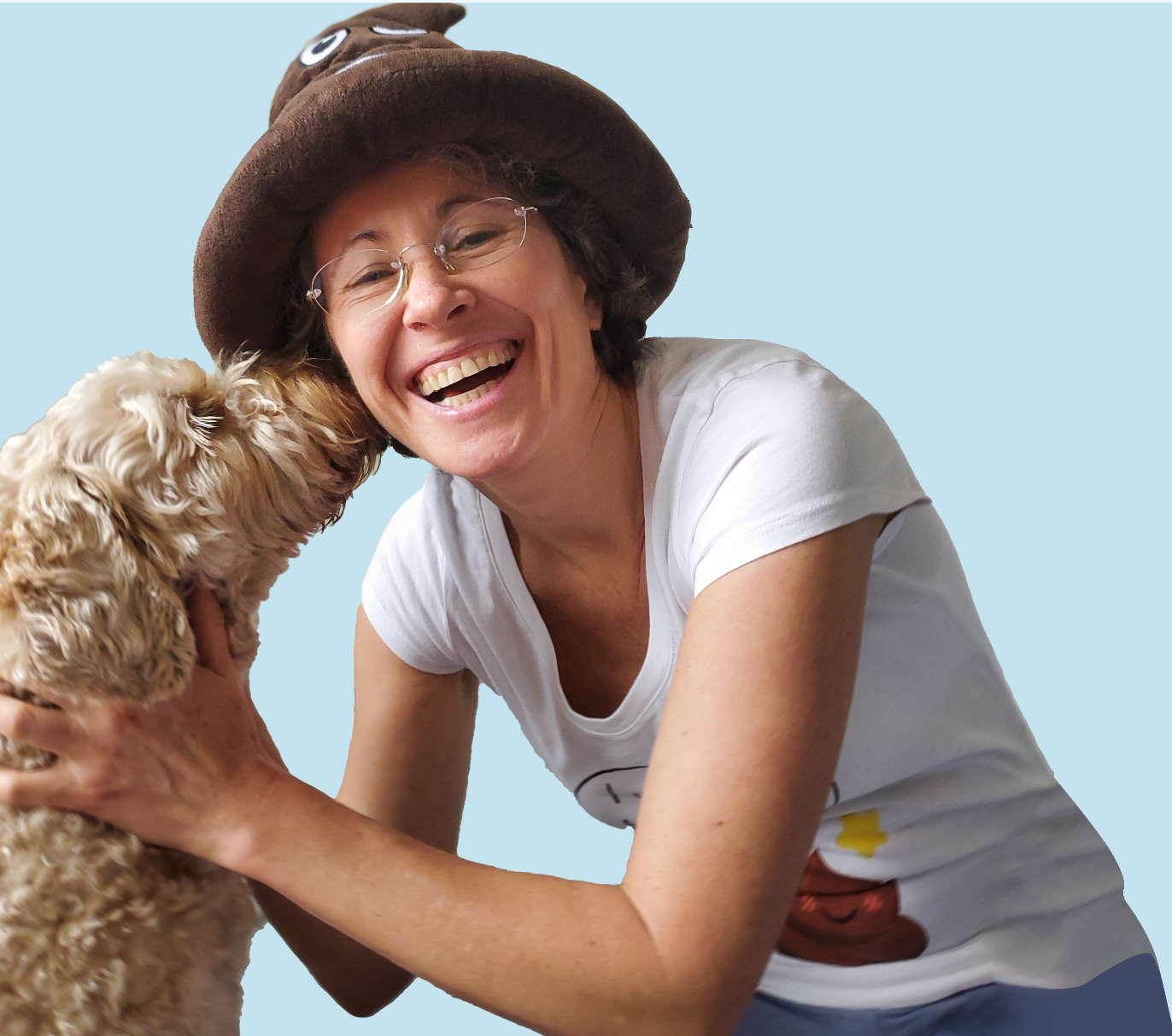
Dr. Odette Suter (aka “Dr. Poop Lady”) is a holistic veterinarian who helps pets struggling with gut problems, allergies, and other complex chronic health issues finally heal at the root. Her approach goes beyond chasing symptoms to repairing the microbiome, supporting detoxification, calming inflammation, and restoring health at the cellular level. Through her signature program, the Pet Health Accelerator, Dr. Suter helps guardians cut through the noise of conflicting advice with a step-by-step roadmap. With personalized coaching, pet parents learn to understand what’s happening in their pet’s body, take the right actions in the right order, and watch their animals regain health and vitality. She is the international best-selling author of What Your Vet Never Told You and The Inside Effects, and shares her expertise as a speaker and teacher with audiences worldwide.