
 Apple Podcasts

 Spotify

 Castro

 RSS Feed

 Goodpods

 YouTube

 iHeartRadio
244. Real Food for Dogs: Why It Changes Everything with K9 Naturals

Real food changes everything—and once you see it, you can’t unsee it. In this episode, I sit down with Heather Enajibi of K9 Naturals to talk about what actually happens when you move dogs (and cats) off ultra-processed diets and onto real, whole food. We share real-world examples of changes in energy, coat, digestion, and overall resilience—and why those shifts make sense when you understand how the body is meant to function. We also get into the mission behind K9 Naturals and Feline Natural...
Real food changes everything—and once you see it, you can’t unsee it.
In this episode, I sit down with Heather Enajibi of K9 Naturals to talk about what actually happens when you move dogs (and cats) off ultra-processed diets and onto real, whole food. We share real-world examples of changes in energy, coat, digestion, and overall resilience—and why those shifts make sense when you understand how the body is meant to function.
We also get into the mission behind K9 Naturals and Feline Natural, what sets their sourcing and formulations apart, and why New Zealand has become a leader in high-quality, species-appropriate nutrition.
If you’ve been thinking about upgrading your pet’s diet—or you just want to understand why real food makes such a difference—this episode will give you clarity and confidence to start.
🐶 🐱 Nutrition & Holistic Health Consults: https://www.wildwellnesspet.com/collections/consultations
🐶 Get to the root cause with the Wild Wellness Bioenergetics at-home testing kit: https://www.wildwellnesspet.com/products/bioenergetic-sensitivity-testing-for-dogs-full-scan-wild-wellness-powered-by-pet-medella
💛 Follow The Pet Parenting Reset on Instagram https://www.instagram.com/thepetparentingreset/
🤍 Follow Wild Wellness Pet on Instagram https://www.instagram.com/wildwellnesspet/
📩 Get email notifications for new episodes:
https://jessicalfisher.kartra.com/page/tpprnotify
0:00 It's Jess. If you're new here, I'm a certified professional canine nutritionist, raw nutrition certified for dogs and cats, a holistic pet health coach, the founder of Wild Wellness Pet, and the host of the Pet Parenting Reset podcast that you're listening to right now, where every pet deserves the absolute best and every pet parent is welcome. Learn from the best holistic and integrative experts in veterinary medicine and nutrition every Tuesday right here on this podcast. Or get individualized help with your pet through one-on-one consultations and take a deep dive into the root cause with the Wild Wellness Bioenergetics at Home testing kit. It's time to rethink how we raise our pets.
0:43 A reset to naturally healthy dogs and cats. If you've been feeling like there has to be something more, something better, a better way to raise healthier pets, welcome to the pet Parenting reset. Welcome back, pet parent. Today is going to be just a fun episode, I think, because I have Heather and Ajeebi here with me today with canine and feline natural. And first of all, Heather, congratulations on getting your CPCN. Thank you so much. I'm really excited and I know you've got it as well, so. You know the thing with the CPCN that I tell people all the time, like anybody that asks me if they should get it, of course I'm like, yes, of course I want this information out there. But I'm like people who actually are trying to use this information professionally.
1:37 I'm like, just understand that you were going to go through a roller coaster of pulling your hair out. Why is this so hard? Why is it so hard to feed a dog and then, oh gosh, this is easy. Why? We don't need to be doing like we don't need to be dealing with all of this. This is this is easy. Just follow nature and you're just going to go through this roller coaster. You know, I have to say I got really bogged down in vitamins and minerals. You know, I've been, I started this journey 20 years ago with raw feeding and making my own, not knowing what I was doing. But I had a dog with severe issues. So I just literally pulling dandelion greens and lambs quarters out of my own yard, burdock root from the Asian grocery, you know, buying from the butcher, just kind of doing it myself. So, you know, I kept getting afraid of not being able to remember so much of this, but then kind of going back to wait a minute.
2:31 So much of this is just common sense and how often do you and I eat complete and balanced on a daily basis? And you know, it's so, so much of it is common sense. I just thought it was really great to, I know it's sort of for me, there was a lot of confirmation and, and what I've already seen throughout my life and just, you know, be official about it now. Right. I think well it is interesting because it only really matters if it's on a professional level. We're trying to meet AFCO or Fettia for inner like if we're trying to meet these minimum levels of nutrient profiles for which you know that formulators at canine and B like natural are absolutely.
3:25 And and that's where it it matters. But also like I keep having to remind myself that this is based on like all of this information that we think we know about what dogs and cats need is really based on synthetics and studies with synthetics and not only studies with synthetics, but studies with synthetics in a vacuum. And it's like when we're feeding real food, it's like we just let nature do all the work and really don't have to think about it that much. Yeah, yeah, for sure. However, at the end of it, I, I also realized I'm really fortunate that I get to hit the easy button or working for canine and feel like natural. I know the work and the care and the, you know, I have so much trust in them and what they do that I was like, I, I get to just, you know, and it's just so nice to hit the easy button because not everybody has the time or, or the desire to, to make their food, you know, and just knowing that I can feel so good about what's coming out of New Zealand. And you know, our, like you mentioned our formulators, they are so careful and so educated and you know, it just it's nice that I've got this knowledge, but I don't have to use it in my own feeding.
4:45 Yeah, yeah. Well, I'm going to tie this together really quickly and we're going to move forward. But I had Jeff Bowers on the podcast not too long ago. We were talking about Totonics, which I this is not an advertisement whatsoever. I just happened to really, really love totonics and I do recommend it a lot. But he was the original formulator for Canine Feline Naturals. And so for anybody who's interested in really doing a deep dive on the history, you know, I would say go go check out that episode when you're done with this one. But I would love to hear. So you've already told me a little bit that like you really started this journey 20 years ago.
5:31 You have had at least one dog, but I know multiple now that you have had to work with to help get them to a better place where they're actually healthy and they have a quality of life. What has that road look like for you? How long have you like, how did it? How did it bring you to Canine Naturals? Yeah, so I 2020 plus years ago, I was with a rescue and I accidentally ended up owning the rescue. Long complicated story, but my first rescue dog out of that, Nina, she was allergic to everything. And I was giving her cortisone shots because that was the the protocol. And she ended up with Cushing's and I'm sure it was from the repeated cortisone use.
6:18 I got her when she was 5 and she'd already had probably 4 years of steady cortisone. I did it for another year or so, not knowing better because, you know, none of us can do better until we've kind of run into these situations. You're not born with this knowledge. And so I started to learn with Nina and that's when I started to build her own diet because I realized there was, I couldn't find a commercial food at least 20 years ago that she didn't react to. But I did discover I could make it my own way. But I did treat her conventionally for the Cushing's and she didn't live very much longer. I this last May, I took in a Hospice foster with Cushing. So I'm kind of having a full circle moment now and I consulted with Chelsea Kent was she's one of my favorite people in the industry and the smartest person I know. So what we decided to do was 75% canine diet, the Hokie and beef specifically, and 25% of the Kefir Kiefer. However you want to say that word, every time I think I get it right, I get it wrong.
7:26 And then followed the doctors Marsden's protocol of four marbles. And we have turned this girl around. I mean, she's still somewhere between 13 and 15. And you know, we're, we're still technically Hospice. But to see what I could do with alternative diets for a very horrific illness that is just heartbreaking to watch and to see her so quickly, it just reaffirmed with me kind of what we're doing and how much sourcing matters. And, you know, if all disease stems from inflammation and an unhealthy gut, you know, like, let's reduce this inflammation in her body.
8:08 Let's heal her gut. And it wasn't that hard to do. You know, I think it's just you just got to know the right people to talk to or the right products to pick. But you know, I that's the beauty of podcasts like this that people can listen and learn from other people's experience. It took me so long to get here, but that is how I ended up with Canine 10 years ago was because through the rescue world, I was getting food donated from other companies and I got to know all the people and I was so thrilled to be able to come to Canine. And yeah, yeah, Jeff is phenomenal. Our founder Shane, who's kind of the the number two in the company, is one of my favorite humans on the planet.
8:49 Can't wait to see him in Global next week. And Teutonix is in every bowl with Rose now. I love that product. I think it's phenomenal. And there again, just reducing inflammation. That's just kind of mention with her and that's how I'm doing it. So yeah, Teutonix, phenomenal. Jeff's brain? Phenomenal. I know, right? Well, you know, I like to go on tangents. I'm a rabbit hole girl. Let's go. So, and I also, I say this so often and so many of the podcasts that I put out, but it's, it's so true. I go through these phases where I feel like the universe is bringing some like one thing to me from so many different directions at one time that I'm like, this is what I need to be talking about right now. And I was actually just, I had to go run some errands before recording this podcast with you.
9:41 I was listening to a new podcast. I'm forgive me, everyone, I'm I I used to like 20 years ago, I was not a fan of Joe Rogan, like I did not like him with a passion. And today I, I, I can't wait for his next podcast to drop. But but he had Brigham Brigham Bueller on who he's been on the podcast many times. He's the founder of Ways to Well and talking about peptides, but more generally talking about the capture of the Pharmaceutical industry and how kind of twofold that we are really in like our healthcare care system is is a sick care system and we don't.
10:32 But even Even so, we don't even really have a healthcare or even really a sick care system. We have a system that is completely pharmaceutical Bay that is just OK. How what is the next pill that I can give you to quote UN quote, make you feel better? And that's really all we're doing. And that has trickled down so far into the veterinary industry as well. Unfortunately, not to say that there aren't some really amazing veterinarians out there. There still are some really amazing veterinarians out there. But I was doing a like a pre podcast chat with a veterinarian yesterday and I always like to, you know, just talk to people to kind of get a sense of who they are before we actually record. Because now I know what I can talk to you about and what I can't talk to you about kind of things. And, and to make sure that we can even have a conversation like I've, you know, I'm almost five years into this now. So I've realized that you can't have a conversation with everybody, but you know, he was, he was also bringing up the fact that you just when you go into corporate medicine and, and the veterinary industry is completely bought up. I mean, almost completely bought up more, well, more well over 50% of I think the veterinary practices in the country right now are corporate owned, especially when we include like emergency and urgent care.
12:05 That's and like there's no relationship there, but not just like there's no relationship with you and the doctor, but there's no relationship between a patient and the other. So like if we actually look at your dog or your cat as the patient, because they are, they have no relationship with the person who is supposed to be giving them care. And that is pretty detrimental overall, which is why all of that to say, I think This is why people like you and I spend so much time talking about nutrition because it is so foundational and it is something that you can do and change in your home today with really not even having to do too much research anymore. Like you can go and buy a commercially available, biologically appropriate food for your dog or your cat and make a huge like if you have a dog with cushions, right? You may not get everywhere you want to be just changing the diet, but it's going to help a ton and it's really going to give you like that starting place. And I just took over the conversation. I'm sorry, but I'm curious like that seems to be wait when I talk to you like that's that's kind of your focus. Yeah, yeah, nutrition and and sourcing, you know that was that came up with the feed reel at the end of it. You know, you build the diet for your final. And I have become so suspicious
13:38 of sourcing because I work for a New Zealand company and I, I've learned a lot about US manufacturing, US sourcing, factory farms. And it was really, really hard to make that final diet for me, knowing what I know, because it wasn't easy to find everything I needed that I trusted the sourcing of Some of it was great. I, you know, I was like, Oh, I feel really great about where I got this, this pork loin from or this, you know, but some of it, I was just like, oh, that was, it felt sketchy to me, which was hard. And that's one of the reasons I'm so proud to work for canine and feline natural is because of that New Zealand sourcing. I mean, I know our, our people are so educated and care so much, but it's also we're starting from this foundation of this amazing country.
14:29 And whenever I talk about us, I get, I sound very obsessive towards New Zealanders. And we're actually going there next month. And I, you know, they probably, they, they worry about me coming because I'm, I'm such a fan. Well, tell me a little bit about that difference, because I know like when I when I make food or even when I did because I don't really, I really have never been much of ADIY feeder. I'm just, that's not the season of life that I'm in and sourcing is hard. And I feel for people that are trying to source, especially the ones that are trying to do things as inexpensively as possible because the sourcing isn't going to be great. And I mean, granted, like a fed dog is better than a starving dog, right?
15:20 But that sourcing does matter. And I know when I was having to make the food at the end of the course as well. I'm like especially the organ meats and that only like these are I have no idea where these are actually coming from like that. They're not easy to find really good sources of individually. I don't unless you have a relationship with a farmer or a Co-op of farmers that you're comfortable with. Like it's hard. It is, it's, it's, it's really hard and you know, when you go to get the goods sourcing, it's quite expensive. It's you know, you can find very cheap meat, but say the more you'll, the more you learn, the more worried you get.
16:07 And with New Zealand, you just don't have to worry about that. You know, it's no hormones, no antibiotics, no GM OS and anything. You know, in 2016 the FDA or USDAFDA changed the definition of grass fed. They've removed the definition so grass fed could be one day and that, you know, an animal that is finished on a feed lot, much higher levels of Omega sixes, much more saturated fat, higher bacterial count. It's just, it's awful what happens in that meat to get that corn fed thing that we like, you know, when you're in New Zealand, everything is very lean because these animals are 100% grass fed, pasture raised, rotational grazing. There's all these different terms for it, you know, because even grass finished isn't accurate because they are rotational grazing on kale, Brussels sprouts, It varies depending on the of the year.
17:02 So these meats are very, very different. And I am also a really strong believer in cortisol levels. And, you know, if that animal was stressed and full of fear, I think it does definitely change the meat. And that's what we're feeding our companion animals. So, you know, I just feel so good about what's coming out of New Zealand the way they do it. But it is just one bad day. When we were there last time, they, they, the rest of the team watched us slaughter. I did back out because I am. Yeah. But I backed out. But, but our CEO was just, he, he wanted us to understand, you know, we're so far removed away from our food chain that he really wanted the team to understand how much different it is there because of the, in 1999, the New Zealand government made all animals sentient beings by law.
17:57 So they acknowledge that they have feelings and the five freedoms are a big pillars of what they're doing there in New Zealand. So I just feel like I've got such an easy button getting, getting everything out of New Zealand. And, you know, for our own food, you can frequently find New Zealand meats at Trader Joe's. They will frequently have ground beef or ground lamb. So if somebody out there looking to get some of that amazing meat, but you know, it's that's part of the anti-inflammatory that I always kind of focus on is it starts if if your diet is 85 to 95% meat, you want to make sure that that meat is impeccable and that thing that that entire country can offer us. So it's a really nice, like I say, an easy button to push that it's all put together for you.
18:50 So this is, this is a harder question. Yeah. But I am curious and this is just us. This is just our opinions. One of the things that I recently spoke to somebody about on the podcast was sustainability. And it's a big topic and like it's a really big topic. And like how we, we certainly can't expect, even though they have a very large population, like animal population in New Zealand, it's a very small country. We can't expect them to be able to feed the world, especially if we're looking at the human population and the animal population. Granted, it's not the only food available. There's a lot of food out there, but with it being, I mean, I think pretty well everyone agrees that they have some of the best food in the world.
19:51 Yeah. They also can't feed the world. They do they, they do aspire to be the world's farm though. I've heard that times, you know. And there is I think a latest figure I think I heard was 4 sheep to every human in New Zealand. So I mean it is, there's a lot of wide open spaces. And have you been? No, I want to so badly. Oh my. God have to go. It's so different. It's so it's farms, it's just family farms and just, you know, you go for a hike and you just randomly walk upon some sheep or some cow or, you know, it's, it's just the strangest thing because it's, I'm, I'm in Seattle.
20:32 So, you know, things like that just don't happen here, you know? And they don't. I don't think there's any shortage, I guess is, is what I'm what I'm saying, at least not at this point. I mean who knows where, where things go. But on that sustainability, I'm so proud. We just got our certified B status. So we are, we're going to be a global next week kind of announcing it, which is a really big journey that we've been on for a few years and less than 10% of companies that go for that get it. So we're really, really proud of our sustainability practices. You know what, doing everything we can. Can you tell everybody what that entails being AB status corporation?
21:17 Yeah, I wish I had the definition up, but I don't. But it's basically it's you're a for profit company for good. And there's many different areas that you can focus on, but it's independently audited. So it's not like we just tell somebody, hey, we're doing all the right things. They we have to prove it and prove it all the time. But that means they're better for the they're doing things that are good for the environment, good for the world at large, good for their employees. You know, they're just, it's, it's a, it's a really important certification that I'm just, I'm, I need to get, I need to get the talking points down, Jessica, because, you know, it was a big deal and it took us, like I said, several years to get. And, and we were also the first New Zealand company that was accredited through the Pet Sustainability Coalition. So, yeah, you know, I, I think your, your main question there was kind of about the viability of how much meat can the world. And I don't know the answer to that, you know, but there's certainly no shortage.
22:19 Well, and I, I think it's a really good testament to how, I mean, here we caught, we, we have to have a word for it here in the States, right? Because of course my dog is like, yes, because it really sucks. I think that we can't have an apple and an apple grown with poison like the the organic apple has to go through all the hoops, right to be labeled organic, when that should just be the apple and then the other should have to be the one like disclosing what they're doing right?
23:02 It it and it it really sucks. And I think that's why we're at this point where we're like, we're talking about regenerative agriculture. We have to put a name to how how plants and animals should be raised as far as like actually working with the earth and not against it creating healthy topsoil versus killing all of the topsoil. And so I, it sounds to me like New Zealand is kind of that case study that shows we're not, we're not making all of this up like this actually will save the world if we just did.
23:45 This we follow it, yeah. And it's and it's, you know, it's they're, they have the benefit of being an island nation, So they're really protected in ways that, you know, for example, I don't think North America could turn a lot of this around now. It's kind of it's the, the, the genies out of the bottle, cats out of the bag, whatever you know, you want to talk about. It's, it's difficult to find this kind of sourcing where New Zealand's done a beautiful job of sort of protecting their bio security measures are very, very tough. Few years ago, I went to a bird sanctuary island there and, you know, your bag had to be fully searched because so they were so fearful of something coming in, like if you had food in your bag, what could that contain?
24:31 What could you know? It just, it's every step you go there is they're so careful and it's just, it's, it's, it's amazing. And I it'd be tough for other countries to do in that way, but it being an island nation, they're just, they're protected. Yeah, I'm just over here wondering like what you have to do to be able to like go live there. How would that work? I know I've thought about it. I would probably get Island fever, but I do love the ability to go visit. But yeah, it's just, it's gorgeous. It's so and we're so kind and yeah, just happy animals everywhere. That sounds so idyllic and to think that it actually exists is like, wow, I know.
25:20 So Doctor Katie Woodley, she don't quote me on this, but I think she actually went to veterinary school there. And. Probably, probably I don't, I don't remember off the top of my head, but it definitely like the way because she has told me about it for years and I'm like New Zealand sounds absolutely amazing. It is. I don't know why she ever left. Yeah, but OK, So with canine and feline natural, can you just tell me a little bit about because yeah, so it's been around for a while. And this is one of the this is one of the things that I have been trying to be a little bit more intentional about with the podcast is that, you know, it's really great and wonderful to bring on the new companies and every time and you know, new shiny object comes out to be like, oh, that's amazing, right. But to go back to there aren't many, but I had these handful of companies that have actually been around for a while who started out doing it right and are still doing it right. Like that's a hard thing to find. And, and so being able to give voice to that has been important to me lately.
26:43 So I really want. The opportunity then to talk about it. I really want to hear about like what it is that what is the the mission and what it is that Canine and Feline Naturals has to offer. Yeah, you know, so we've been around since 20 O 6 Jeff Bowers, founder. He was a British police canine police officer. I'm going to probably mess up the story, but I think he told it a little bit on his on his episode with you. But you know, for a police officer and their canine partner, there is no stronger relationship and he wanted to do right by them.
27:25 So really shortening that story. He ended up moving to New Zealand and then he decided to build this diet, truly species appropriate diet, learning a lot from the Gray wolves and kind of pulling a lot of that information and science down into feeding his dogs and Canine natural was born And then shortly after, I think three years later, feline natural was born because obligate carnivores, they, they need it even more, you know, so very, very high meat. In fact, in this last year, we've actually bumped up our meat content from 90 to 94%, so we went even higher in the last year. Our feline diet is 98 1/2 to 99 1/2% meat. Again, I'll eat anything else and all of those meats sourced from New Zealand.
28:16 We also have greenlit mussels in all of our diets, which, you know, greenlit mussels have over 90 different fatty acids, a true superfood, have that in all of our diets. And then trite, which is I just, I, I call trite magic because it's, it's, I've just seen what it can do for so many dogs. Guts. And you know, when we were talking about grass fed, grass finished or 100% pasture raised, when you're feeding organ meats, like we were talking about organ meats and feed, you know, the feed reel, it really matters for those organs, you know, is that animal pump full of antibiotics and hormones and corn and soy. And you know, it's like the organs specifically need to be grass finished.
28:59 And to know that, you know, I don't have to worry about that because our organ meat we're, you know, up to 40% organ meats and some of our diets like really high organ content in there and just kind of doing it the way it should be done, high meat. And that's what our carnivores need. We are coming out with a new product right now we're, we're making quite a departure. I'm looking at it like it's a ladder of nutrition. So we are opening up a new run. We are coming out with a dry food. But we really, I think we did it right, 40% protein, absolutely no meals. So there's no rendered meals in this Food, First aid ingredients or meat, you know, and that's really because what we know is 80% of the people are still feeding kibble.
29:47 Let's get them on this journey because I think once they get on that journey, once you start to learn, I mean, that's it was true for me, I'm sure it was true for you. Once you started to learn, it just got so exciting and, and keeping everything low carb and low starch and low, you know, just trying to do your best for them. So I'm actually really excited to introduce new people to our brand because I think that'll open a door for us. And then and then I can talk about my favorite freeze dried. Well, it it, it is very interesting to talk about.
30:27 You know, the vast majority of people in the United States are still feeding a kibble product, whether it is exclusive or, you know, a hybrid diet. I I think there's still a pretty large percentage that is, that is exclusive and to be able to meet those people is, is it it's not an easy thing to do when we know what we know, right? Like when we realize, especially with cats, that that and I, I know some dog people like get kind of frustrated with me when I, when I say things like this, but I'm like, if, if I could focus more on cats like I like they need it. Like you just said, they need it even more like our dogs need it. But.
31:20 Yeah. Only do our cats need it even more and it's harder. It's harder to transition a cat. I think it's harder to transition a cat parent. We have this like really weird thing in our society where we think cats are easy pets. And I think they're harder. I think they are way harder than dogs. And I've had a lot more cats and I've had dogs and I think they are way harder than dogs. And Jay and Adrian want to like, smack me upside the head every time I say that, but it is the truth. But they're also smaller animals, so I'm really passionate about that because it doesn't cost as much to feed them right as it does, you know, dogs are 60 and 80 lbs. So you know, when you're talking about a 1215 lbs animal, it's and I know that the big hump is getting them to eat it or getting or getting the owner to buy it in the first place, of course.
32:16 But I just think I'm so passionate about getting the cats on an appropriate diet because these expensive, expensive conditions that they keep ending up with are really it's the diet. It's, you know, with dogs, it can be so many things, you know, and you're taking your dog for walks and you're walking on land that may have been treated with, you know, there's just so many things. But say you've got a house cat and they end up with kidney disease or diabetes or, you know, it's like you can control so much in that in your home and it doesn't cost that much. And I think there is, there is that thought that you don't need to or it doesn't matter. And then I hear about, you know, my vet bill was $600.00. It's like, oh, what you could have done with that $600.00. How would you get a diabetes diet diagnosis or you know. Yeah, no, I'd be happy with a $600.00 bill, honestly, like I have had.
33:17 These days. I have spent so much money on my cats in the past. Granted, like most of the cats that I have had I the first half of their life they spent with me like very conventionally raised and I sadly only have one Kitty cat left right now. My baby boy. I know my little 17 year old baby, but I have had cats in well I had a cat in the emergency clinic for nearly a week cost me over 10 grand though.
33:57 Actually the cat that I have right now that he is still with me, he had to have a perennial urethostomy surgery. So I had to unblock him once which was not cheap. And then to have the surgery was like 5 grand. And he, it's a crazy story. Like he actually died under anesthesia and was brought back and it took me like over a month to get him to learn to walk again. And he can't see anymore. He the brain damage that he had caused his like his eyes physically are in perfect shape, but he can't just with the swelling on the brain, he can't he lost the ability to to see and and it has been.
34:44 I have spent so much money on cows. I'm like a $600.00 bill sounds amazing. I'm still paying off my last one. Yeah. But yeah, I always just, I encourage people to think about it that way. Almost like it's a, it's a payment plan at the pet store. You go in, you know, you go into your pet store, you buy the appropriate diet or make the appropriate diet. And yeah, I know it can be a real big journey getting a cat to eat appropriate. You know, we've got a phenomenal can that is that same freeze dried recipe. We've just added water and cooked it. So no gelling agents. So, you know, I know a lot of cats do better with a, with a canned product.
35:27 And obviously I want 80% moisture in every cat's mouth all the time. But I, yeah, I just, you could, you could avoid so many things just by doing. Yeah. And I know growing up we lost a lot of boy cats because kibble, you know? Well, and I think it's, it's really interesting and and things I'm thinking of like while you're talking about cats is that they are smaller and our homes are very toxic for them. But they one of the things that we're noticing right now with what I think is being called spay and neuter syndrome, like it's really affecting dogs and it doesn't really seem to be affecting cats. Obviously they're two different species, but it's interesting that like even the toxic environment in our home seems to be affecting dogs and cats a little differently as well, because cats don't get outside to off gas, typically speaking, like some cats do, but most cats don't. Whereas dogs can get outside to off gas and it and, you know, they clean themselves a lot more than dogs do. So they're ingesting chemicals if they're walking on, you know, chemicals that you just put on the floor on the counters or whatever.
36:50 And I'm sure it is. I know it is affecting them, but it doesn't quite seem to be affecting them in the same way that it is affecting our dogs. And I wonder, like, they just have very different metabolic pathways. And I mean, some are the same, but they also have different metabolic pathways. And, and I'm wondering like, yeah, it is interesting how much more we can still do with our cats just by switching the diet. Yeah. And I again, I just think it's when it's a smaller animal, it's more affordable and you know, like, well, you know, like I'm reading about kind of adoption rates and, and, you know, people living in cities and opting for cats. And, you know, and I just think it's, it's something that we can control. And, you know, there's so much we can't control. Like you were mentioning offices and you know, and we can certainly control cleaning products in our own home, but if you're taking them outside of your home, you, you've kind of lost that control.
37:47 There's so much we can do. And diet is such a big, the biggest, I think component to all of that, because even if they have genetic issues or, you know, hormonal issues, you can, you can support so much of it through food. And I just want people to know more and do do more, you know, and I think everybody wants to nobody, nobody. I've never met the person that's like, I just don't care if my animal gets sick. Yeah, I'm sure that that person exists. Never met them. You know, it's like everybody wants to do better. It's just that they've, you know, marketing and advertising for many, many years. You know is is really, you know, don't change the protein kibble, cleans teeth, all these things that we've heard for so long that we're just advertising campaigns back in the day, you know they.
38:43 Are advertising campaigns That really really sucks. So OK, you mentioned freeze dried. Tell me what you love about freeze dried. Well, the convenience is the big thing of course, but also that it's been able to keep like we didn't have to add with the kibble, we had to add some parts to hold it together where with the freeze dried we didn't have to do that. And, and coming from New Zealand, we don't have to HPP or irradiate any of those things, just test and hold, test and hold. So I would say that our freeze dried is one of the least processed out there, which I think is really important. You know, Chelsea can't, can wait. She and I can talk about HPP for a while. So, you know, and, and her store, you know, she doesn't carry a lot of brands and it's because she asks a lot of questions and not everybody wants to give those answers. So I've always been really proud that that we, we've passed her tests.
39:41 But yeah. And, and just add water, add bone broth, add goat's milk, add, you know, as your moisture. And it's, it's got the convenience of kibble, but all those nutrients. So that's what I love about it. In fact, when I first started working here, we still had our frozen raw diet, which I absolutely loved. But you know, we're coming from New Zealand. That's a really tough, tough thing to maintain and and compete with American companies that don't have to travel halfway across the world, you know? So I loved our raw food, loved it, but I also really loved getting that drawer in my fridge back. That was my deep drawer, you know, so a big fan of having my whole fridge back except for goat's milk and fish jiggles and all the other, you know, liquids that I have in there for them.
40:34 But the the base, it doesn't have to be in the fridge anymore, or the freezer. Yeah, I have. I have most of my fridge is pet food and various things to go with pet food. And I did, I had to buy another. I had to buy a chest freezer because there's no way I just can't. And I'm, I'm that person that I buy. I don't go to the store every week buy buy for months at a time because I don't want to go to the store constantly Yeah and yeah, it's that that chest freezer gets is worth its weight in gold, I think because I just can't. I literally I don't know what I would do without it. I even getting down to one chest freezer was hard. I move.
41:31 When I moved I had the fridge in freezer in my house, which had enough in it to like get me through the week or whatever at a time. And then in my garage I had a chest freezer and I had another fridge in freezer. I I had actually just bought a new chest freezer when we discontinued our frozen raw and I I remember just being like, Oh no. But for my own personal diet. I, I've started this is not an ad, but butcher box which has amazing, amazingly sourced meats. And so it's now full of, of food for me. But you know, yeah, that's good. The, the convenience of freeze dried really, you know, matched with the nutrition is really amazing. And you know, we've, we've got a 4 LB bag and an 8 LB bag of freeze dried.
42:24 So we're, you know, your RV travelers, your, your dog show people. We've got a phenomenal option for them. Those are large. Bags it makes a difference really it does. So I know when we talked before you were talking about the and you talked a little bit about the dog that you had the foster that you have right now. But how I just, you mentioned how impactful diet has been, but this is this has been a long journey for you. I'd really love to hear any other stories that you have about how nutrition has impacted any of the animals in your life or even like client testimonial.
43:25 I'd like literally anything. Well, I mean, there's so many, right? I mean, it's like running the rescue we would, I've, I've fostered a lot of dogs or adopted a lot of dogs and typically the, the kind of rescue we were, we were predominantly like pit bulls or seniors. So we were taking in some hard cases with a lot of stress and I can see the different. I mean, I, I wish this was, I don't know if there's a way maybe on your show notes. I've got a great slide showing a three-week difference in rose. What what we did for in three weeks and it's, it's just phenomenal. And the eyes clearing up the ears clearing up the, the paws, the smell. Oh, when I got Rose, I can't, I feel like I can still smell that because she was so yeasty and so oh, she was so uncomfortable. It was, it was hard to see.
44:25 It was really, really hard to see. And then just to see food, Whole Foods and, you know, 11 Chinese supplement for marbles, which was $20.00 a month, you know, just to, to turn this around. But yeah, I mean, I've, I've had so many dogs through my house in my life and they all benefit. I've never seen anybody not benefit from putting better food in them. So I mean, yeah, sorry, like not certain stories or, you know, right now I'm focused on the Rose, of course, because she's the dog in front of me. But yeah. And then my, my other dog, Pedro, he he got hit by a car when he was a puppy.
45:10 That's how he ended up with us because the person had decided not to pay for the surgery. So the vet said sign him over. But he had three rounds of antibiotics and pretty short because he had three, three surgeries in a row. And I mean, we had to change his water. That was a big thing that I learned. You know, we were doing tap water, and we just couldn't get him quite right. He's still hives. And, you know, we gotten him pretty close. And then one day he fell in a friend's pool, which obviously is treated with chlorine and all kinds of stuff, too. But then he had open wounds just from falling in the pool. And that really opened up something new for me. I was like, wait a minute, even though, you know, I'm, I'm in the Pacific Northwest and people think we've got good stuff here.
45:57 I looked at the water and the water is terrible here. So, you know, changing up his water really made a difference. There's just all kinds of things that you just don't think about, you know, that really, really make a difference. And I, you know, the antibiotic usage just repetitively, especially as a puppy, I think, you know, really, really screwed him up. But there. I actually had somebody come up to me. I was at a, an event a few weeks ago and I had some, it was, it really caught me off guard. And I, I hate to say that because I feel like I should be more open and understanding, but it really caught me off guard because the majority of the people that I talked to, even in a setting that I'm not typically in, this was a pet sitter's conference, are really, really open to the idea of what food can do for an animal.
46:58 And I had somebody come up to me and she was like, I didn't want to ask this while you were on stage, but like, do you really believe all that stuff you're saying? Like literally she was like. Is. There even any proof that you know, real food can do this for animal. And I'm like, I I so many things ran through my head and the only thing I knew to tell her was like, yes, I absolutely believe it. And if you really want like go buy the forever dog book because there's so many studies referencing. And that was like the first thing I could think of that I'm like, here is a compilation of so many studies like I don't know who can refute. That right?
47:44 And but I was just like, wow, I, I just haven't been exposed to that in so long. But I know she's not alone. And I'm wondering how to get to those people. Yeah. Well, and I, I mean, I am, I am looking at our, our new product sort of in that way like this. This is how we're meeting them where they're at. But yeah, I mean, I and also I, I struggle with the common sense of that. I mean, you wouldn't feed your your kid Cheerios 3 meals a day. Just very much agreeing.
48:26 Yeah, no Cheerios you. Know I'm sorry. We're in the right industry for this. I just, I, I don't know why people don't have that disconnect. And I don't, I mean, I, I genuinely think it's just many, many years of marketing. And, and also I hear all the time, you know, when I was young, when I grew up, our dogs lived to 17. It's like, I think even then that the cheap kibble was better. I mean, things have changed a lot. And it might have been horse meat back then, but at least it was higher meat content. I don't know that to be a fact. I just, you know, I, I think, I think some of our regulations, there was probably just other meat in there which served divorced better, you know, and, and also our world was different.
49:15 The chemicals were different. Everything was different back then. So I get really frustrated when I do hear that, you know, that my dog was on Purina lived to be that that all our dogs, you know, but it's like the world has changed and we all know better now. Like we know it's not good to feed ourselves process to all the time. So why do we think that that's OK for our companion animals that have short lifespans? They don't live long enough as is. I want to do everything I can to extend that in every way I can, you know, and I'm I'm always learning. I, it's, I don't pretend to know one fraction of what I need to know, but I'm always learning and always seeing what works and hearing from other people. And I just, I, I just think the more, you know, and I realize that freeze dried is not a fresh food per SE, but it's minimally processed with all of these great ingredients. And so that to me, I, I see that as such a great way to get people comfortable with it and adding in some good stuff on top of that.
50:24 Yeah, I, I, I really struggle with people that just think that free feed throw out in the bowl and I don't know, I want to be more involved with my pets. I love to see their faces when I give them a ratat, you know, I, I love that stuff because they're, you know, I, I don't, they're my kids, you know. So for me, it's all about how do I food is love and I, I want to, I want, I want them to enjoy all of that and that's something I can offer. The dogs are going nuts. I'm sorry, muting myself. There's a newbie this guy out there. You know, it's, it's yes, like my nephew is home and he's outside playing basketball, so that's a thing. But also my dog is not she she doesn't really like any other animals and she tends she tolerates some when she has to and she is not a fan of my brother's dog at all. So my brother's dog is always right here with us and she like it has gotten really bad lately I think. I don't even know why I I I'm trying to figure out why, but like in the past couple of weeks, she is just. Any time my brother's dog comes around, she is just like really going at it with barkiness and bless his heart, he just does not like.
51:56 He's not reacting. He he doesn't get it, like, oh, your brother, my brother's dog is just like he will stop and pause, but like it doesn't deter him from doing anything. He's just kind of like, don't they don't do it's, it's my my dog is like, I don't understand how you don't understand. We're giving you very clear signals. Oh my goodness. So anyway, yes, I thank you.
52:37 This is what she's doing right now because he got off of the bench and now he wants to get back on the bench. So she's. Yeah. Yeah. I'm so sorry, but yeah, so I think, you know, thank you for coming on and discussing the brand and just chit chatting about nutrition in general. I'm, you know, obviously I don't think either one of us are kibble feeders, but I, I do have a very deep desire to help reach more people. And I think you know, if we can try to bridge that gap with like what you're doing with the the new product then. Yeah.
53:22 Trying to get people to. Yeah, I'm looking at it because I think it's going to start that conversation. You know, why? Why is your protein that high? Why are you baking it in bone broth? Why are you adding Kiwi fruit? Why is there greenlit mussels? Let's start that conversation. Why does it matter that the first eight or nine ingredients are meat? Well, let's talk about it. You know why it matters. You know, let's talk about the heat that goes in there. You know, it is, it is a kibble product, but let's also talk about adding 20% fresh on top of that. Let's, let's have those conversations. Let's start having fun with our food bowls. I, I don't know, I enjoy it. I, I like to add, I like to, you know, our food is complete, but I, I like to have fun with it.
54:05 Sometimes I just feel like an egg is going in. I sometimes I feel that sardine is, you know, I just in green lint mussels. They're falling out of the sky around here. Love a green lint mussel for myself and them. Well, thank you so much for being here, Heather, and for reminding us all about canine and feline natural. Anybody who's dealt with raw
56:11 tripe never wants to deal with it again. So that's a beautiful way to get a DIY. No, no, they do. Not we hear that from stores all the time that people buy our tripe for DIY. Why? Why? Because they don't. They don't want to deal with the real. Yeah, I get that. I get that. It's one of those smells that you're like you talked about earlier. You're not going to forget that smell. No, I got a 5 LB chub once donated to me and I was so thrilled. I thought I had a pretty strong stomach. I do not once I once I started chopping into that I was just I'll. Yeah, I bet. Mike smells like a a petting zoo. That's right.
56:57 Yeah. Yeah. Good way to put it. Well, thank you so much for being here, Heather. I appreciate you. And guys, thank you for being here and for listening. Please give your pets some extra love from me and from Heather this week and I will talk to you next week. Awesome. Thank you.
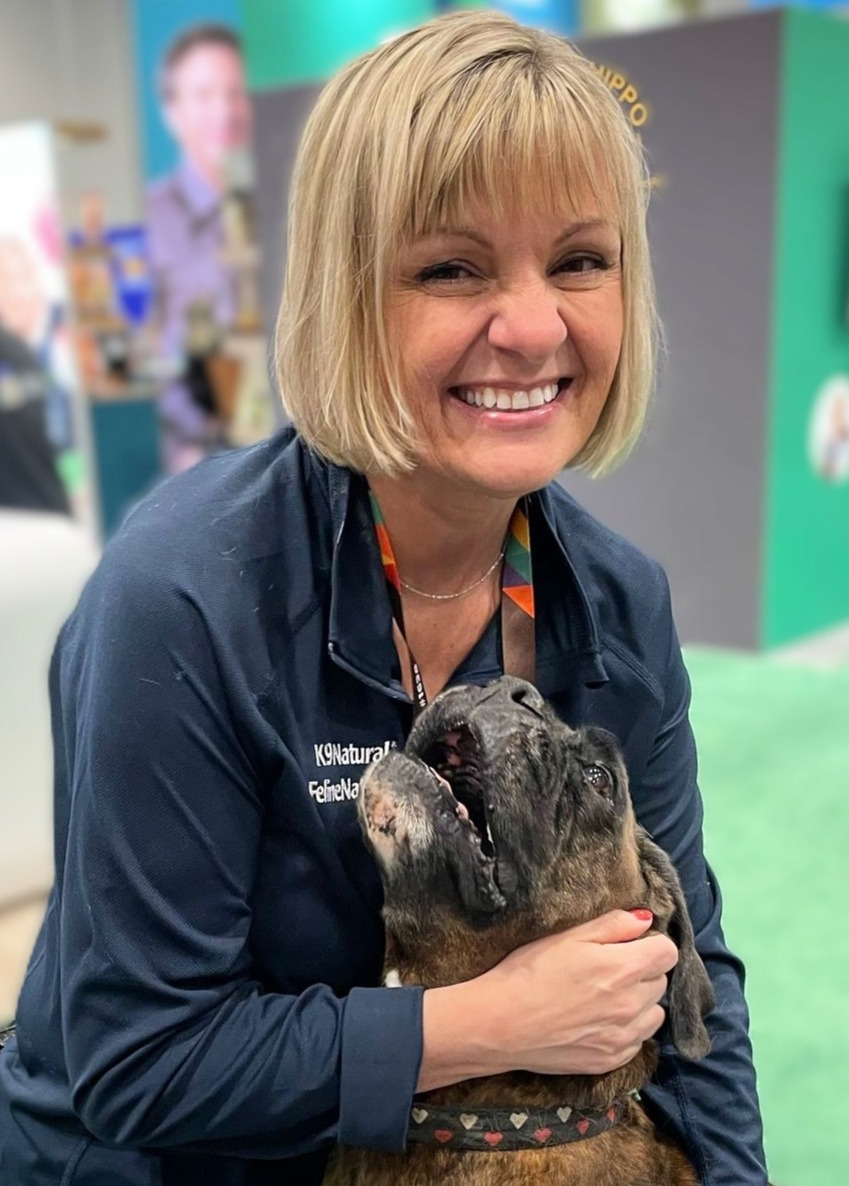
CPCN, Brand Ambassador
Heather Enajibi is a lifelong animal advocate who began her journey operating an animal rescue and discovering the power of nutrition through her own ‘heart dog’s’ severe allergies. With over a decade in the pet nutrition industry, she works for K9Feline Natural, a New Zealand company known for its commitment to sustainability and animal welfare. Heather’s mission is to help pets thrive through species-appropriate food and informed choices, building strong relationships with both retailers and pet parents.