Apple Podcasts
 Spotify
 Castro
 RSS Feed
 Goodpods
 YouTube
 iHeartRadio
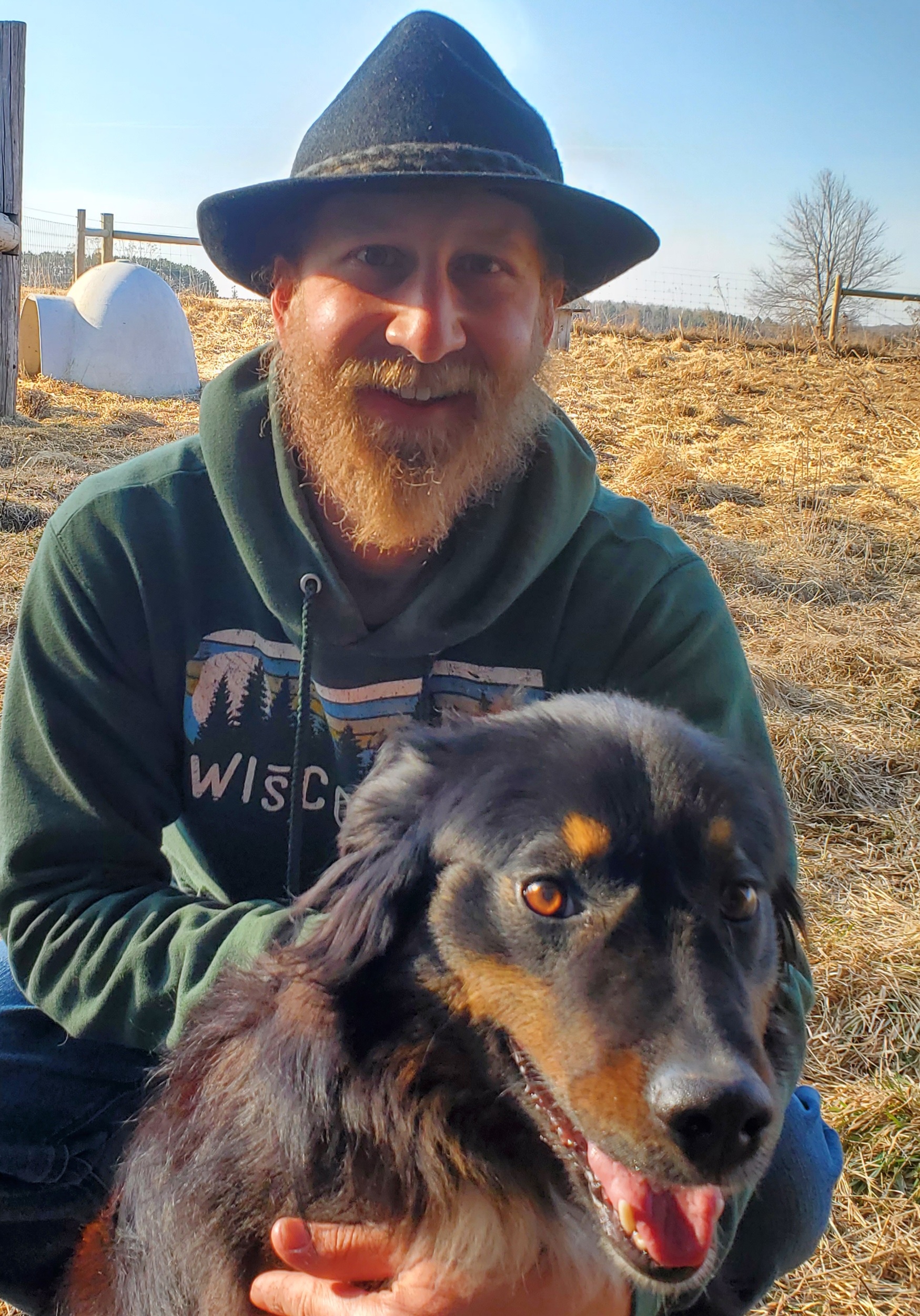
 Choosing the Right Dog for Your Life: Lessons from a Regenerative Farmer with Seth Thompson of New Plymouth Farm
Choosing the Right Dog for Your Life: Lessons from Regenerative Farmer Seth Thompson takes us out to New Plymouth Farm, where the land, the goats, and a working dog named Dutch all have something to teach us about how we pick our canine companions. Seth shares how regenerative farming reshaped the way he thinks about animals, responsibility, and what it really means for a dog to have a job and a purpose. We talk about how he chose Dutch, what life looks like for a dog who herds goats, and what pet parents can learn from working‑dog relationships even if they live in a city apartment. You’ll hear real stories from the farm and practical takeaways for choosing a dog that actually fits your lifestyle, energy, and values—so both you and your dog can thrive, not just cope.
🐶 🐱 Nutrition & Holistic Health Consults: https://www.wildwellnesspet.com/collections/consultations 🐶
Get to the root cause with the Wild Wellness Bioenergetics at-home testing kit: https://www.wildwellnesspet.com/products/bioenergetic-sensitivity-testing-for-dogs-full-scan-wild-wellness-powered-by-pet-medella
💛 Follow The Pet Parenting Reset on Instagram https://www.instagram.com/thepetparentingreset/
🤍 Follow Wild Wellness Pet on Instagram https://www.instagram.com/wildwellnesspet/
📩 Get email notifications for new episodes: https://jessicalfisher.kartra.com/page/tpprnotify
0:04 Welcome to the Pet Parenting Reset podcast. If you're new here, my name is Jess and this is a space where we talk about all things health, span, and quality of life for your pets and you too. I'm so excited that you're here. Let's dive in. Welcome back, pet parent I There has been a question that has been etched in my brain for so many years, and it's a pretty confronting question. And that is that should we all have dogs? And one of the things that I remember seeing way, way back, I don't want to date myself too much, but when I was doing rescue work was that every dog deserves a home, but not every home deserves a dog. And I think people kind of can take that differently depending on how that might hit you when you hear it. For me, it means just being able to give the dog quality of life. Even though we talk a lot about food and nutrition and holistic health and all of the things on this podcast, to me, ultimately a fed dog is better than a starving dog. But being able to provide your dog just the the things they need to thrive in life, to have a quality of life. That's all I think of when I when I hear that question, but it can be very confronting to a lot of people. And so when I got an e-mail from
1:36 today's guest asking to come on the show, at first I was like, I have no idea how we're going to make this work. But I think it's an important topic to talk about how to choose a dog for your family or for you if if you're alone and there are lots of different homes, there are lots of different situations and circumstances. And do you, do you have kids? Do you have pets? You know, what do you have time for? There's there's so many questions. So before we get started into that conversation, I'd like to welcome Seth on to the podcast. Thank you so much for being here. I wish, I wish there was a way to just like include dogs in the podcast, but. They no wouldn't that. Be Fun doesn't come across on a podcast very well. Yeah, yeah.
2:21 Thanks for having me. I appreciate you letting me. Come on. Yeah. So you reached out because of your dog, Dutch. Yeah. And you are a farmer in Wisconsin. And before we get into the topic of today's conversation, one of the things that you put in your profile that you sent to me was that you are working on your farm to restore, restore the health of the land. And that's also something that I talk about on this podcast. It's harder to to find guests to come on to talk about that. I think it's, it's kind of sad that we have to label it regenerative farming, like we have to label organic apples or you know what it like that should just be an apple and the other thing should have to have the labels on.
3:13 But I'd love to just start off by because I think you were you, you probably started your farm before you got Dutch. So before we get into Dutch and how that came about, can you just break down for me like what, what is your overall goal? What are you trying to do with the farm? Yeah, well, we, we wanted to, I wanted to be a grazer, you know, somebody who brings the animals out and has them out on pasture because a lot of people do what's called setstock grazing, which is harmful for the soil, which makes it harder for the the soil or for grass to infiltrate into the ground.
3:54 And I think we, we treat the ground very poorly and not like a, like something that we can extract versus something that we, that we should have a relationship with to, to pour into. We extract rather than pour into. And I thought, this is nobody's doing this. And, and I, I want to be somebody that's helping the soil. And so I got goats and we, and we said, OK, I'm going to, I'm going to make soap. I'm going to make goat milk soap. And what I realized as I had more goats is that there are, they have to go in and out every day to pasture or else it's, it's just not great.
4:43 And moving them from this place to that place is difficult. It's it's it's not. Turns out there are herders for a reason. And what does the herder do? The herder has a dog. I, I learned this. I tried with a bell and it worked OK, but I thought, Oh my goodness, as we have more animals, the bell is just not going to work. And so, so he is my dog Dutch. He helps us actually do what we need to do to get the goats from the barn out to the pasture. And I mean, as far as regenerating the soil goes, you know, we couldn't, we couldn't do it with our goats without him.
5:32 So he he plays a huge role and I'm very thankful for him. Yeah, I just in case anybody listening is like, what the heck are you talking about? What what kind of farming are you referring to? I had, I was very fortunate to have Ian Somerhalder on the podcast a while back when the second documentary came out. The first one was called Kiss the Ground and the second one is called Comic. I think I got that right one. Yeah, one of them is called Kiss the Ground. One of them is called Common Ground. And it really outlines exactly how we are killing our like, if our topsoil is dead, the planet is dead, and how so much of the topsoil around the globe is dead. And regenerative farmers are bringing that back to life through working with, just like you said, like there's a symbiotic relationship between US and the Earth, and that includes the soil and all of the organisms living in the soil. And so if, if you are interested in that, I would, I would suggest checking out those two documentaries because for me, and I, I don't say this lightly, because I watch, you know, I, I have to consume a lot to be able to produce a lot so that I know what I'm talking about or at least start to know what I'm talking about.
6:54 And those two documentaries changed the way I look at everything else because something as simple as dirt, which I don't know about you, I mean, hopefully you didn't. I grew up in the city thinking, Oh my gosh, dirt. Like I don't want to be dirty, which is actually really, really, really bad for us to think that way anyway. So switching topics a little bit, you got Dutch and Dutch is a herding dog and he works for you. But it's when we talked, it kind of sounds like he is part of your family as well. So can you talk to to us a little bit about Dutch and what he does and then we'll kind of get into selecting and providing for?
7:44 Yeah, so he is an English shepherd, which means he is, if you're thinking of a border collie, he's actually kind of the opposite. So border collies, when they want to move an animal, they will stare at them and look fierce. And then the stock decides, OK, I don't want to be near this dog. So they that's what's called a strong eyed you look at them that the dog looks at them and is, you know, scary and intimidating. Dutch is what's called a loose eyed dog, which means he it has, which means he gets closer to the stock. And so he pushes the goats more with his physical presence, which I think is helpful for goats because they tend to be more stubborn.
8:38 And so if you're if you're, if your animal was, for instance, they might look at look at the border collie. And I've never tried moving stock with the border or my goats with the border collie. But in theory they might just say, OK, you're looking at me. So what? But so they they needed they needed somebody to kind of get them going. And that's why I thought though, that the herd or that the excuse me, the Lucide dog would be perfect because they would respond to the physical dog being right there. And we did. We did a lot of training, you know, come by away to me, all that stuff. And he's incredibly smart.
9:26 And it's one of those things where the, these dogs, they just have something in them to where that just a natural gifting of, of knowing what to do with the stock. And so even if I'm he, he senses also, OK, we're trying to accomplish this goal. We're trying to get the, the, the, the goats in this location. And, and he does a really good job of assisting me. So for instance, he'll, he'll even pick up on my, my hands, my hand cues of pointing this way or that way, even if I don't speak, he'll be able to, you know, go each different way. So yeah, when we, when we're out on pasture, we're having a lot of fun.
10:18 It's, it never goes exactly the way you plan it to, but that's OK because they're, they're eating grass. So we don't, we don't have to stress too much about, you know, how we got there just then once we're where we're at, we just get to kind of relax and and have fun and yeah, and be there. I think that's one of the things that that a lot of people don't quite understand with their dogs. And this isn't necessarily true every single breed, but probably most breeds of dogs that they were bred to do something. And it really is our responsibility to engage them for whatever they were bred to do.
11:01 And that doesn't necessarily mean we have to go buy a farm. I'm sure that that would be amazing for every dog because when we look at the oldest live dogs, the one thing they have in common is that they do spend the majority of their time outdoors. And that's kind of a whole, whole other topic, but being able to provide what your dog needs doesn't just mean food and shelter. It also means being able to engage their brain, being able to provide them whatever physical exercise they need. So, you know, there are so many rescue dogs out there. And I have a heart.
11:41 I have a big, big heart for rescue dogs. A lot of rescue dogs, not all of them, but a lot of them are mixed breed. And I do think it's important to know to to use the DNA test out there to find out what mix of breeds your dog is so that you can understand them better. For example, one of the breeds that my dog is her two main breeds. She has a lot of breeds, but her two main breeds are Chihuahua and Poodle. Those are two very different dogs. Yeah. Very different dogs and she has a lot more characteristics of Chihuahua when I look at her personality then poodle. But I, I need to understand what both of those are and what she needs.
12:27 And I, I just think that can be so, so important. So how when you went through this process of figuring out what kind of dog you need, like you knew what you needed or what you were looking for, what or do you have any tips for people when trying to to choose what kind of dog is going to work in their home? Yeah, I think, yeah. I mean, sort of like what you were saying is it's more of a responsibility. You don't and of course you're going to develop an attachment to the dog and you know, our, our our animals, they're they're it's important to like we treat the soil with dignity and honor all an animal.
13:16 We need to do that as well. Well, and I'm reading right now a book about a Joel Salatin book called The Marvelous Pigness of Pigs. He's just the best. He's awesome. I really appreciate Joel Salatin. And I think maybe that that gets to the dogness of dogs and, and even the poodleness of poodles, right. And, and the considerations, yeah, of OK, well, for instance, if you're going to get a dog, think about am I living in an apartment where it's the, the barking is going to be a problem?
13:59 Well, OK, maybe I want to rescue, but and that's well and good. But if you live in an apartment where dogs, maybe they're OK, but the barking is going to be a problem for all your neighbors. Are you actually helping, you know, because who knows, 3-4 months from you down the down the line, maybe maybe you're going to have second thoughts about the doubt that dog and and then maybe maybe the dog misses you, right. And now they're back where they were before. And now they just have one more person that that kind of, you know, brought them back to the shelter, which is, you know, unfortunate. So I think, yeah, I think temperament is really important.
14:43 And then kind of being in a good position to where you can provide that area to thrive where that dog can be the the dogness of the dog, so to speak. And I think it's important to know that there are there are resources available to us. So if we do live in an apartment or we do, you know, we maybe live in the city versus the country, there are facilities where we can still train agility. There are barn hunt facilities there. There are places we can go. There are things we can do with our dogs outside of, you know, scent work classes.
15:26 There are things that we can do for our dogs to get them out of the house and and provide for them in in those ways as well. But would you, would you think that a dog like Dutch would be happy living in like a suburban neighborhood? How do you see something like that going? You know, I, I do, I do. If I if I had Dutch in a suburban place, I would try to, I would try to have him around to people because as much as he likes hurting and he likes it a lot, he really, really loves people and playing like so fetch And there are there are 1,000,000 places where you can play fetch, I think if so, I think that he would be totally fine not on a farm. I think he really enjoys it here. But kind of like you were saying with the the options for I've never heard of scent training, but it sounds pretty cool. But I was fortunate enough to get to go to a kind of a hurting coaching situation in Minneapolis one time. And this wanted, OK, what does a dog look like when they're hurting, when they're doing their job? And what I found was a, a bunch of people who have herding dogs that don't have a farm.
17:02 And I mean it, it was not a small group. It was, I mean, 10, 10, maybe a few more people who all had dogs and no farm and it was just really cool to see them to see all their dogs in action. So I think it's definitely doable and, and training a dog and then getting to go do that and put them and really put them on display and allow them to, to be themselves. It's it was really cool. And if we could do that more, that'd be fun. But but, you know, so yeah, I think, I think you could definitely have a dog in a suburban area and make it work, or at least a herding dog too. Yeah.
17:48 So I'm wondering what the process was for you to get to the point that you selected Dutch. You obviously had a role in your family on your farm that you were looking to fill. I'm wondering what that process was like for you and how we can adapt that to any individual's situation because unfortunately we just don't have that many farmer. So people want dogs, but they may not like. I think a lot of people, like we said at the beginning, don't realize that dogs have jobs and need jobs to, to feel fulfilled, just like we need to feel fulfilled and have things to do in our lives.
18:39 So I'm, I'm curious how like what did that whole process look like of you deciding on Dutch and then again, how we can adapt that? Yeah, it was quite involved once. I so I, you know, you look at, OK, there's this breed and there's that breed and they're all really cool and they're just amazing and, and eventually I decided, OK, I want to go for the English Shepherd for the reasons I said before the especially the loose eyed for reason. But then I had to find a breeder. And so I went on to, I forget, there's an English Shepherd website somewhere.
19:27 And I, I just went through the list and I just, you know, called, called this person, called that person, this isn't going to work out. And then this one. And eventually I had somebody say, oh, you should talk to so and so. OK, well, so I called and sure enough, she was, she had puppies and we were, and she did something called she, she allowed him to be around the stock to kind of get an idea of if he was going to be scared around them or if he was going to be brave, which is extremely important. And he was, he was brave around them even as a little puppy. So that meant that he was good enough to be, to be, to take a chance on him because now they don't always work out. And so and so we brought him here and. He and one of the things is that you don't put one when they're really young, you don't want to risk getting them scared around the stock because even if they have that instinct, they might, they might get scared and then they might see the stock as scary and just grow up and, and just not work out. So you have to wait until the dog is fast and big in order to bring them and actually start
20:59 training them with the stock. And so I think thinking about your to answer your question, I think the thing to consider is like, how would how would a person replicate what I did? I think it would be being very intentional about where am I getting this dog and are they going to fit in my particular situation. So I think knowing yourself and knowing what you're looking for is that's what I would say. So if I were to be in a suburban area and I would think, OK, do I like playing fetch? If I like being playing fetch, OK, that helps me figure it out. OK.
21:46 Or do I want a dog that will sit with me and watch television? OK, well then, you know, that effects also what I'm looking for. Am I looking for a hobby? You know, if I'm looking for a hobby, maybe I do want to get that herding dog, you know, something to do on the weekends, something like that. And, and then finding and then, well, you know, once you figure out, OK, kind of what you're looking for. I've only done, I've only done the, I've only done it once where you find a dog. And so I'm sure you probably have more experience than I do, but finding the right person and the right situation I think is important as well. If, for instance, I, I found a breeder that said I typically my dogs are more for pets and it, but he was right down the road and I so that would have been really convenient, but I had, I had to say no to that breeder because I just thought I am putting way too much.
22:54 I need this to go right. And so if I try to get a pet and I try to make him into a herding dog and I'm just kind of setting myself up for failure. So I did the hard thing and I said I need to find a breeder that fits to my needs. And so I feel like, you know what, if you're going to have a dog, you're going to spend a lot of time with them. Do what? Do the extra work to really find a an animal that will really fit into your situation. If you're here, it's because your pet isn't just a pet, their family, and you can feel when something's off, even if the labs look normal. That's why I created Wild Wellness Pet and the Wild Wellness Bioenergetic Test to help you see the hidden stressors your pets body is quietly carrying and give you a clear, holistic starting point.
23:53 Head to wildwellnesspet.com to explore the Bioenergetic Test and the Apothecary and take the next loving, protective, proactive step for your pets healing journey. Yeah, and I think, I mean, there's no one right way to go about it. I know it, it can be easy to sit back and say, oh, because again, I come from the rescue world. So it can be really easy to sit back and say, oh, we don't want to buy from breeders. We only want to rescue because there are so many animals that, that need a home. However, you know, and then this is a whole other conversation that we don't need to have today.
24:36 But choosing A breeder that you're comfortable with that is reputable, that isn't like a backyard breeder that is, it is actually caring for their animals in a way that you're comfortable with asking to see the mother and doing all those things. Those are, that's again, a separate conversation. I don't think necessarily that wanting or needing a certain breed of dog is bad, especially if you have specific circumstances that you sorry, hang on just one second. Sorry, my dog was getting in the cat food. So you know, if, if, if you have something very specific that you are needing and looking for or knowing that one of the things that I'm I'm have been very, very intentional with lately is not just knowing what you don't want, but actually knowing what you do want.
25:30 And that's a lot harder to that's a lot harder for people to pinpoint. It's really, it can be very easy to say, I don't want this, but OK, what do you want? And so when you are very particular, you know, looking at certain breeds can be very important. The other thing I would say is that, you know, this is where a lot of rescues shine, not all of them, but a lot of rescues shine. And some shelters can as well because they spend time with the dogs. Some of them, not necessarily shelters, but rescues will DNA test their dogs so they know what breeds they're working with and so they know the temperament of the dogs.
26:16 And so if you are a person who is looking for a pet or looking for a family pet, I know that people that have children tend to have different wish lists for dogs and people who do not have children, right? I mean, obviously nobody wants a dog that bites, but finding a dog that has the right temperament for especially young children is, is definitely going to be huge on somebody's checklist if they have young children. And some breeds are going to be better at that than others. Some breeds are more nippy than others. Again, going back to what were they bred to do in the 1st place? And I'll just give a little example.
26:58 My, my mom has had she, her current dog is not a specific breed, but in the past she chose, she did the research when I was younger, when I was growing up and she decided she wanted Lakeland terriers and she had a couple of Lakeland terriers. And it's was a little bit confronting to my stepfather who takes so much pride in a meticulous lawn that these terriers were digging up the yard. Well, what are these dogs bred to do, right? They pull animals out of their holes. So of course, they're digging up the yard, especially when there are like moles and bulls in the yard that they're trying to get to.
27:44 So knowing these things about your animal can really make a huge, huge difference in not just selecting an animal, but knowing what you want and what you don't want it in an animal. And I think that is just something that we don't think enough about because compatibility is important. Again, like I said at the very beginning of this, I believe every dog deserves a home. And and maybe instead of saying not every home deserves a dog, it would be a little nicer to say that it's our responsibility as humans to do the research for what we actually want so that we are not setting our dogs up to fail. Oh yeah, absolutely.
28:32 I agree with that. Well, then I mean similar, similar to like the pigness of the pig. But what's OK? Well, what's the soilness of the soil, right. OK, that it's the point of purpose of the soil is to grow grass or, or to produce a crop. And, and we respect, we respect those various things by bringing out their, their nature. And, and so with, with a dog, what do we pay? Well, we want to respect them. We want to bring out their nature.
29:13 So then we think, OK, well, what's, you know, in a suburban, in a pet situation, what, what are we wanting them to do? What are what, how can we help that animal to, to perform their duty best and in a respectful way? How do we be respectful to that animal? And I mean, I think, you know, play is, is, is important. And it's also if you're, if you have a family, you know, OK, let's, let's probably find a dog that likes to be around people.
29:55 And I mean, even even beyond the breeds, you know, each dog has their own character. And so I know somebody, a gal and she has a really big dog with, you know, a big personality and, and it's, it's fun to see them together. She, she also kind of lives in the suburban area. And I think the two of them together, they've really grown over the years in that they, they're, because he's such a big dog, she's had to kind of grow into a, how do I, how do I bring him places? How do I, how do I allow this big dog to do big dog things that kind of put put her outside of her comfort zone in a good way in like in a way of, OK, I'm going to grow into I'm going to grow by learning something new about how do I allow this dog to be the dogness of himself?
31:15 So obviously that doesn't it, not everybody is able to do that. But I feel like even with me, like when I'm training Dutch, I have to think about, OK, what, what are his capabilities? He's not going to learn a command just by telling him once, right? I could just, I could say, oh, it's not working. I told him to go left and he didn't go left the first time. Well, or, or if he's barking at the chickens, I can't say that's annoying. I don't like that. Well, you know what? He's a dog and he is bred to bark at things. So it's something that I've had to to learn is OK, the barking might be annoying, but this is what you chose. So this is what you so.
32:08 And I'm not going to change him. So I have to change myself. I have to change my frame of reference and grow as a person to say I'm going to let the dogness of Dutch shine out and I'm going to change my behavior because it asking him to not bark would would not, it would be disrespectful. So I think those are definitely things to consider. That's an excellent point, Very, very excellent point to let our dog be a dog. I would love to just hear what a typical day is like for Dutch, from the exercise, the enrichment, the training, what he eats like.
32:52 I would just love to hear how he interacts with your family. What does a typical day look like for Dutch? Sure. So typical day is we kind of started the day with breakfast. He loves food. He is not picky. So I'm blessed with that. I just, you know, standard, pretty standard dog food. I, I am, I know, go crazy, but, but thankfully he is, is a very healthy eater. And you know what?
33:34 He also, he loves scraps. You know, he, he enjoys, you know, things. You know, just when we, when we make soap, we, we have, we, we get cracklins, which is just a byproduct of, of making soap and it's a, it's a meat, meat product and he just goes crazy. So we end so Dutch is is very blessed in in the dog world to be able to eat cracklins from time to time. He just he goes crazy for those things. But yeah, so there. So, you know, starting the day like that, we typically wait until the sun is is high in the sky.
34:20 So it's kind of a waiting game in the morning. Then we open up. And so. OK, Dutch, all right, let's go. So I open an up the door. He now you know, and this is this is where where he this is a very important part for him is he goes into the pen where the goats are and because the door is open now and so he has to bring them out towards me. And so I'm walking backwards and if, if there's one where he is, where if he, if he doesn't get them all, maybe there's one back in the pen and that's kind of inconvenient. So I have to help him and make sure that we've gotten all the goats.
35:08 Once they're all there, we will, we will walk together and I use a command like steady because that helps him to, to keep his distance, an appropriate distance so that they don't scatter. And so we will, we will back up and back up and back up. And then we get to our so we will get to the pasture and I will have set it up the day previous. And so once we get to a certain spot, I allow Dutch to kind of just take over. And so he walks with them and they know where they know where they were the day before. Sorry about that.
35:55 Yeah, no problem. OK, so where is I? Oh, yeah. So this is kind of where Dutch really gets to shine. Is he, he is in the back of him and he's just, you know, walking side to side and forward and making sure that the goats go forward into their paddock. And once they're in there, we kind of shut, you know, shut the, the fence in such a way. And it's this really awesome moment where we get to kind of, you know, I get to tell him, good job, you know, well done. Not every dog gets to do a cool job like that. And he definitely knows, he knows that he's done something good.
36:42 And so it's really cool to be a part of that with him. Once that's done, we typically let them out onto the pasture for a while. And then on really special days, we will do, we will do extra herding, which we'll kind of go out in. It's not necessarily an UN fenced area, but a less fenced area. And this is where things kind of get a little bit more intense because they could get, they could get out and I really don't want them to. And so this is where, you know, Dutch and I have to really work, work together to kind of sometimes the goats will start to run, which is not good.
37:31 We want them grazing heads down, calm. And I usually if I'm, if we're doing that, I try to have it be 3 hours doesn't always work that way. Sometimes it's, you know, it's about to rain or something. But so we're out doing that and then we bring the goats back to their original paddock. Dutch helps me. Well, once they're back in their paddock, Dutch and I walk together to go see the chickens, you know, grab the eggs and I'll go inside, take care of my stuff. And then in the evening, so I, you know, probably about 5-10 minutes before sundown, we do that.
38:12 We do the same thing again. And I open up the gate and I make sure that Dutch goes to the back. Once he's behind all the goats, then I tell him to, to come to walk up and he brings the goats and we slowly, gently walk back to the barn and, and everybody's happy and you know, he's done his job and the goats bellies are full and it's, it's really fun. And, you know, another day of just grazing. So he is still part of the family. Does he come in in the evening with you or how does that? Mean he likes to stay out with the stock yeah, he he like, but he enjoys being with he really loves the kids Like a lot like a lot.
39:08 And so that's another example of knowing what you're getting with the dog. So with my kids, I've explained to them that, OK, yes, he he is going to want to be right by you, you know, and they're small. So he's so even though he's not mean, he's very friendly. It's kind of scary for them. So but it's not, it's not fair to Dutch to say, hey, you quit getting so close. Don't do that. You know what I mean? It's OK. I want to help him under understand boundaries, but at the same time, I have to understand what he, what he's bred to do.
39:50 And so now I have to have a conversation with my kids saying, Hey, Dutch is going to get in your face. He he's, he's just being nice. We, we know we have to understand where Dutch is and meet him where he's at. But so I've, so I've taught my children. So when it's time to feed Dutch, you know. I'll have him stay where he's at, right? And then I'll then I'll give the command go. And then, you know, then he'll, he'll go into his bowl. He runs, he books that he just loves his food. But in order to include my family in it, I've taught both of my children how to, how to give Dutch the command to, to, to go to get his food. They, they love it.
40:46 And it helps him because now he's getting command from somebody that's not me. And they're, they're a part of it. And I think especially as as the kids get older and, and grow, they'll get more time even training with him or, or, and, and working with him out on pasture. So. One of my favorite things to give a dog or a cat is goat's milk. And I know we talked on like previously that your farm does not sell goat's milk, publicly at least, and you are making soaps.
41:32 What is the benefit of a goat's milk soap? Oh, it's, it's huge. Well, so like our goat milk soap, we, we don't have the phthalates which are big nowadays. Everybody's not everybody's trying to avoid the phthalates. So our soap does not have that. And I'm outside a lot and especially in the cold weather, your hands, we're washing our hands a lot nowadays. There's just a lot of reasons why to do it. If you chintz out on the soaps, right? If you're low, I want, I want that really cheap blah, blah soap. I'm going to go to the Dollar Tree. Well, you're going to, you're going to pay for it another way. You're going to pay for it because your hands are going to be dry and cracked and it's not going to be super duper fun. And, and the one of the cool things about our soap is it's made using lard, which is actually closest to human skin. Well, well, so pig pigs skin in our skin are very are the closest in the animal world.
42:46 So our soap combined with with the goats is very unique in its smoothness. And also just a lot of soap companies are like the what they will do is they will they will take out in the soap making process all of the regenerating portions of it of that process. So they can then stick it in, in the, the like the hand, like the conditioners or stuff.
43:34 So, so they get their soap product and then they want you to buy this other thing. But with us, we keep it together. And so it's really good for your hands. And I mean, it's, it's goat milk soap. So it's, it's extra fun in that way too. It's not just, it's not just soap soap, it's it's goat milk soap, which makes it, I think extra nourishing for your hands. And it has a story too, you know, instead of, you know, you people that have our soap are a part of our story versus just being a part of the, I don't know, Dollar Tree soap story. Not interested in that.
44:21 Yeah, so where, where could people find the goat's milk soap? And then where can people see Dutch in action? So where they can find our soap is New Plymouth farm.com. We have a website and we have a lot of really cool soaps on there, lots of different varieties and sense. We, we buy the best sense around. So we we want to make sure that if you're going to buy goat milk soap, it's important that you get really cool sense, really, really awesome sense. So we we make sure to do that and they can see Dutch. We actually have a YouTube channel.
45:03 I'm getting more videos on there right now. So I'm working on some videos and stuff. But if they want to see Dutch in action, this is really cool. So I've I have a drone and I'm all certified. Turns out there's turns out if you want to use a drone for a commercial purpose, you need a license to do that. So and I have it. I have it now. So this in 2026, if people want. If so, if you're a person and you want to see a herding dog in action, you can go to our website or excuse me, our YouTube channel. It's just New Plymouth Farm this this grazing season, there's going to be videos and videos and videos of me and Dutch out on pasture and our goats and I think it's going to be a hoot.
45:57 And so, yeah, people can see that. I don't think there there's very, I don't even think I've heard of anybody else doing this type of thing. So if, if you ever if a listener has ever wanted to see a herding dog in action or even enjoy grazing just the just what that looks like, they should check out her, her YouTube channel, New Plymouth Farm. Yeah. Well, we are so disconnected from everything. I think it would probably be very relaxing just to watch him her. Yeah, agreed. Well, I appreciate that and thank you for coming on to talk about this Seth, and for introducing us to your soaps and how you selected Dutch to be your herding dog.
46:45 We appreciate it and thank you so much for being here. Guys, please have a fabulous rest of your week. I give your pets some extra love from me and from Seth this week, and I will talk to you next week before here you go. If today's episode got you thinking about what's really going on beneath the surface for your pet, don't forget to check out Wild Wellness pet.com. You'll find the Wild Wellness Bioenergetic test to help uncover hidden stressors, plus a curated apothecary of holistic remedies to support true root cause healing. Visit wildwellnesspet.com to start building a calmer, more vibrant pet from the inside out.