
 Apple Podcasts

 Spotify

 Castro

 RSS Feed

 Goodpods

 YouTube

 iHeartRadio
Positive Reinforcement Dog Training: Why It’s the Gold Standard with Teoti Anderson

Positive Reinforcement Dog Training: Why It’s the Gold Standard with Teoti Anderson dives into what modern, humane dog training really looks like—and why it works so well in real life. In this episode, Teoti shares how positive reinforcement has evolved over the past few decades, what the science and experience in the field tell us, and why it’s considered the gold standard by leading trainers and behavior pros. We talk through her training programs, real‑world success stories, and some common mistakes well‑meaning pet parents make when trying to “go positive” without a clear plan. I also share a bit about my own dog’s anxiety, and Teoti offers insight into how positive reinforcement can support sensitive, worried dogs without flooding or force. You’ll walk away with a clearer understanding of what good training actually looks like, what to look for in a trainer, and practical ideas you can start using with your own dog.
Learn more and follow Teoti Anderson: https://www.thepetparentingreset.com/guests/teoti-anderson/
🐶 🐱 Nutrition & Holistic Health Consults: https://www.wildwellnesspet.com/collections/consultations 🐶
Get to the root cause with the Wild Wellness Bioenergetics at-home testing kit: https://www.wildwellnesspet.com/products/bioenergetic-sensitivity-testing-for-dogs-full-scan-wild-wellness-powered-by-pet-medella
💛 Follow The Pet Parenting Reset on Instagram https://www.instagram.com/thepetparentingreset/
🤍 Follow Wild Wellness Pet on Instagram https://www.instagram.com/wildwellnesspet/
📩 Get email notifications for new episodes: https://jessicalfisher.kartra.com/page/tpprnotify
0:00 Welcome back pet parent. Today's episode is, I can already tell, going to be one of my favorites. So you already know that I have been very intentional. I have not had very many dog trainers on and honestly, that's just because I don't know who to trust. There are so many dog trainers out there. Most of them aren't accredited even. And that's not to say that they can't still be good dog trainers, but I am very, very particular about the methods that are used in dog training. And I don't want to accidentally promote somebody whose methods that I'm not going to be comfortable with if you go off and try to learn from this person. So recently I had the opportunity to speak at the Texas Pet Sitters Conference and a fellow speaker, Tod Anderson, who is here with us today presented. And I got to learn a little bit from her and learn a little bit about her.
0:59 And I was like, you know what? I actually think I can trust you to bring you on your podcast. So welcome, Tione, How are you doing today? I'm good and I'm honored. Thank you. Thank you. It was wonderful meeting you at the Texas Pet Centers Association. That was a great group, a great crowd. Everybody wanted to learn and it was lovely meeting you as well. Thank you. It was a great group and I think, you know, I brought your slides up in my talk so much just because I felt like there was so much like connection and overlap and I really wanted to, I mean one I think that's good anyway. I think like for speakers to be paying attention to other speakers and, and, and to be kind of bringing it all together for the attendees, but to for the attendees, like I wanted them to understand how interconnected this all is.
1:54 And so I was really, really excited that you were not like, leave me out of it. Welcome to the Pet Parenting Reset podcast. If you're new here, my name is Jess and this is a space where we talk about all things health, span and quality of life for your pets and you too. I'm so excited that you're here. Let's dive in. Let me just do my thing. I think. But it yeah, there was there was so much that you talked about that was just right on the nose. I really appreciated everything you said. One of the things we will get to today, I'm going to ask you to talk about it.
2:41 But before we get there, I what I really want to know from you to start out is not just like how you got into dog training, but how you have stayed in dog training for as long as you have. Because bless your heart. That's a great question. No one's ever asked me that before my industry and I'm going to go ahead and apologize right off the bat to your pet parents for my industry. My industry is not regulated and so anyone can call themselves a dog trainer and it is very frustrating for pet parents because they will hire a dog trainer and get some advice and maybe the dog gets worse and then they have to hire another dog trainer who tells them the first dog trainer was full of malarkey and we have to do things differently.
3:24 It's kind of going to like multiple dentists or multiple healthcare practitioners that tell you 50 different things and it can be frustrating. So it's really important to do your research when you choose, you know someone to to help you train your dogs. But one of the reasons that that's also difficult is that because we have a lot of turnover, people get into this industry because they love dogs and they want to save dogs and they want to work with dogs and then they just cycle out. You know, sometimes it's a matter of life. You know, people get married and have kids and don't have time, that kind of thing. Or sometimes it's just burnout. I think one of the main reasons why I have been at this oh so long, for over 30 years, is that I like people and I enjoy working with people.
4:13 I enjoy working with families, both human and canine, and watching them connect and watching them communicate with each other and learn to live Better Together. And I think some people go into this profession, as with other dog professions, because they love the dogs, but the people drive them nuts. And the people are the harder part of the equation, don't get me wrong, but I really enjoy working with people and, and I think that that's probably what's lasted for so long. I have a passion for what I do. I love what I do and I still love it. And I have always said that the day I don't love what I do and the day that I stop learning, the day I think I know it all, someone who's very close to me needs to slap me and tell me to get out of the business. It hasn't happened yet, so it was still here. I love so much that you said that because that is so incredibly true that most people get into any pet industry, including like veterinarians, because they love pets so much. And that burnout happens so much quicker when you realize you have to deal with people to get to the pets. Yes, exactly.
5:26 Exactly. And that's probably why I do this, because I'm, I'm not going to lie, like I, I, I dipped my toes in dog training and I very quickly realized that I couldn't deal with the people. Not because I don't like people, but because these particular people don't want to do what you're telling them to do. And then they complain that they're not getting the results they want. And that is just makes me want to pull my hair out. I had that happen today, younger. I think I was offended more like, why aren't they listening to me? We should do what I do, what I tell you to do. That's hubris and you know, arrogance when you're younger, the arrogance of youth.
6:14 Today. I basically tell people the consequences. So I had a lovely couple with a little puppy and they haven't had a puppy in 12 years. So I do believe there is a chemical that is released into your body that makes you forget what puppyhood was like. When you have the benefit and the blessings of an old dog, old dogs are the best. But I gave them the lecture on this, that house training and things like that. And I show up today for a follow up and they hadn't done half of what I said. And in fact, they were very well. The husband was very opposed to, for example, crate training. And I said, OK, you can be opposed to it, but you're not going to get the same results. So I'm going to give you instructions.
6:55 And if you don't follow the instructions, you can't cherry pick those instructions and only the ones that you you choose to do because the results will vary. So let's say you wanted directions to a restaurant. We're going to meet at a restaurant and I give you specific directions on how to get to that restaurant and you choose to follow half of them. You'll end up somewhere, but it won't end up at that restaurant. So you can do whatever you like. I'm not going to lose any sleep over it. I, I can't, That's how burnout happens. But if you complain about the lack of results, I'm going to point this back out to you. You know, I'm just going to say, well, you know, I told you to do this and this and you didn't. There's, there's not a magic wand here.
7:36 And I found that that approach is a lot healthier for everybody involved because it gives them the autonomy to make those choices for their dogs, but it also teaches consequences because life is full of them. Oh my gosh, that's so true. So tell me a little bit about. I mean, I already have like 5 questions from what you just said, but before I like dive into any one of those, tell me a little bit about how you work as a dog trainer. And let me just preface that by saying I have been pretty vocal in the past about not liking like board and train programs or, and, and I, I think that you do something similar, but not what I don't like.
8:20 I don't like when people take like adult dogs and just slip them off for weeks at a time, have no idea what's going on and they get them back. And I will tell you I the reason that I don't like this so much is because I was bit by a dog who went to a board and trained program, who was trained on a shock collar and then became so aggressive, the owner couldn't handle them. The owner didn't tell me this dog was food aggressive, gave me a treat to give the dog and we both got bit. And it wasn't, it was, it was, it was so bad. And anyway, it was the third time this dog had bitten somebody and it was just, it was, it was the most horrible experience I think I've ever had with a dog in my life. Because she ended up having to let him go because it was his third bite and blah, blah, blah, all the things. But I have really really like bad emotional attachments to board and training.
9:16 I will try to be respectful of your trouble. But I want to know like, because what what I kind of garnered from some of the things you do is you do have similar type programs, but I don't think you're doing that. I don't think you're doing this like I'm the AA roll, like shot caught, like you're not doing any of that stuff. No, when I first started training again, ancient times I should have more Gray than I do is that I learned with choke chains and prong collars because that's what our great grandparents did. And you know, you just did what you did. And the more I got involved in training on a day-to-day basis and the more I started working with a different variety of dogs, I realized that I wasn't getting the results that I wanted and that there had to be something missing. And I didn't even know what it was. But I knew something wasn't working and I started attending the Association of Professional Dog Trainers conferences, national conferences, to learn more. And I learned that there was a lot more information available to me outside my little community and I got more and more involved.
10:25 I soaked it all up like a sponge. I started studying under a bunch of different people and it all snowballed into the the the happy mess that I am today. But I left those tools behind ages ago because I have greater success using positive reinforcement and across a wider spectrum of dogs. If you have an aggressive dog and you use aggression to train it, you make more aggression. 99% of the aggression cases that I work, and I do work aggression cases, some very dangerous dogs, is based in fear. Have I met a few dogs who were just jerks? Yes, yes I have. But for the most part, most aggression is based in fear, and if a dog is afraid and you're punishing it, you're convincing it.
11:11 It was right all along to be afraid because you're just making things worse. That's whether you're doing in homes or a board and train. Aggression is not best dealt with in a board and train program. So to backtrack and answer your question, I do in home lessons, I go to people's homes, I do Zoom lessons. I have clients all over the country and out of the country of Canadian clients and different clients everywhere and we do board and train. Our board and train program is different. There are tons of board and train programs out there and I share your opinion of them. I've written articles about this. The main problem is they're used for dogs that are not appropriate. We don't accept every dog into our program. We just don't.
11:59 Also, they don't involve the people, so I will have someone who says I got, We have a super puppy university and we take the puppy between 8:00 and 9:00 weeks and we raise it for the first month as if it's on our own. It sleeps in our bedroom in the crate. I train it in the house with the blender going and the dishes and all that stuff and you get a fully trained puppy. We get people who want that program because it sounds very convenient, very fast food drive through and we tell them their responsibilities. They have to come once a week for lessons because it doesn't do them any good if the puppy only listens to me. And the people who don't want that, we don't take into the program.
12:40 And we're very lucky. We're South Florida's oldest positive dog training company, a dog's best friend, and we can cherry pick our customers. You know, we're not young and struggling and starting out, but if you're not going to participate, you're not going to be satisfied with the results. And unfortunately I get called a lot of times after they've been through a program where they got a little video at the end that showed them the dog trained, but they were never taught how to get the dog to do what the trainer did. And what good is that? The dog dog's good for like 3 days and then just completely devolves into a little happy mess. And so it it's not, it's not useful, but there are a lot of programs out there that will sell themselves quite a lot of money as well on that.
13:25 And that's not how we choose to do it, because we don't find it very successful. It you're right, because that was what I found is that dog training is so much more about people training than anything else. Because if, if the person who is actually with that dog every day who is responsible for that dog doesn't know how to interact, doesn't know how to read the dog's body language, doesn't know how to ask for what they want, not just tell it what they don't want, then you're not going to get anywhere. And that brings me to one of the things that you said in at the conference was that it doesn't matter, doesn't matter.
14:09 You can tell your dog no, as much as you want, but like what, what do you want your dog to do? Because that's what that's the kind of instruction they need. And I think that's true for humans as well. But, you know, just trying to get that across to people because I did I, that was 100% of the people that contacted me were like, I don't want my dog to X great. What do you want them to do? Right. And they're like. Oh, I never. Thought of that. Well, we can't leave it to them to decide. So we take an animal that pees and poops and digs and chews on things and destroys things and and barks and move around and then we bring it into our homes and say we don't want you to do any of those things, those things that are natural to your species. We're not.
15:02 That's that's really inconvenient for us. We want you to be different. Well, the dog's natural inclination is to do those things. So if you just tell it, don't, it's going to come up with another idea and it's never going to be a good one, especially with the puppy. Puppy Miss Puppies make terrible decisions, terrible decisions. They're horrible decision makers. They put everything in their mouth, whether it's delicious or poison, they don't care. So we can't leave it up to them to make those decisions. It's like putting a bunch of toddlers in charge of, you know, something, you know, let's put on a show or let's let's, you know, go down to the DMV and there's a bunch of new toddlers.
15:43 You can't do that. So instead of just yelling at your dog and getting frustrated for it, doing all these natural dog like things, we can give them alternate behaviors. They don't automatically know what they are and just because you say the words come sit, they don't know what those mean. Those have to be taught. And once you give those dogs alternate, alternate behaviors, they become a lot easier to live with. And they probably think it's a lot easier to live with us because we're better communicators. I also think it's important that we still give them outlets to do all those things that they still have to be. Dogs.
16:27 Yes, and that's something I remember telling multiple people, like if you want your dog to be a robot, I'm not a person. Don't. I'm I'm not helping you. That's not dogs are not robots. No, they're not. Like get a stuffed animal, get a fish. I don't know, just do something that isn't a dog. And because they do, they do have so many needs that even the, the best of us don't. One of the things I'm learning in this like because I'm just like you, where if I'm not learning something every single day, and then that was a wasted day in my opinion. But even, like even with all of the things I have learned about health and, and holistic health and trying to care for my pets more naturally, I'm still constantly learning.
17:15 And I'm, I'm finding myself in this place right now where it's like the simplest of things. Like how are we not thinking about the fact that we have a circadian rhythm? They have a circadian rhythm. Like they should be out in the sunlight, just like we should be out in the sunlight. The air needs to be clean, the water needs to be clean. Like frequencies matter. And just kind of getting back to like a more natural life, but obviously they, they still have to live in a home with us, but having these outlets for them where they get to be a dog, having, you know, sniff walks and having not every walk has to be regimented and, and right.
17:56 Can you talk to me a little bit more about how people can buy these enrichment like activities while still maintaining like the boundaries that we need to actually have them live in the homes with us, right I. Think that it's, it's a great topic because people want a well behaved dog, but they, they are dogs. And also depending on the breed of dog you get, these breeds are predisposed, predisposed, predisposed by people by the way we put them together. We created breeds. You know, it started out as a wolf, although there's some debate about that, too. And then we made them into pugs and Shih Tzus and, you know, golden doodles, That's what we did.
18:38 But breeds are predisposed to do certain things. So it's very frustrating when pet parents get angry at the breed for doing what it's bred to do. If you bring home a Basset Hound, expect some noise. They're going to Bay. They're, they're going to, you know, whether or not they ever see a rabbit, they're going to search for something and they're going to Bay. My Labradors, I had Labradors put everything in the mouth. They're bred to retreat, but I, that doesn't mean I want them to retrieve everything. But what I could do was teach them and give them an outlet. They brought in my groceries, they would bring me the remote control, they would fetch the keys. I teach labs to bring all sorts of things. If you want them to open the fridge and get you a beer, I can do that for you. I can teach them how to do that thing and it gives them something that makes your life easier.
19:23 Think of service dogs, right? But it's still within the realm of of who that dog is. But they have to have fun time. They have to have sniff time. I have the client. It's a perfect example. When you were talking, she's got a little Yorkie. This Yorkie weighs 3 lbs, but she is a Yorkshire terrier. And she was going after her mom's slippers and going after her pants legs when she would put her pants on and she was attacking things and not to be vicious. She was playing. And I explained, I said, well, she has to stop that. She's going to trip you up. You're going to get hurt. She's going to rip your pants. We can't have that. But she's a terrier. She is bred to hunt and kill vermin. You live in a beautiful home in Boca Raton where there are no vermin, thank goodness.
20:09 But she has to have an outlet. So we got her a flirt pole. And I don't know if you've used those. It's a A. Tole with a cord and a little toy on the end and you flick it. It's like a cat toy. And she chases the heck out of that thing. She kills it and she shakes it and it does a death. She does a death shake where she shakes it and it squeaks and she kills it again. And then we're not chasing the feet anymore. We're not going after the pants anymore. She has a healthy outlet that's perfectly acceptable and very good for her. She gets nice and tired from that, but you still can't go after these things. You can go after this, you can't go after that. It's giving her a choice that's suitable for her. I love, I love that so much.
20:54 So one of the things that I you talked a little bit about some of the ways things have changed since you started dog training, some of the good ways. I think it you talked about that dog training has changed especially for you specifically. Do you still have, are there anything, any things that come up that you still have concerns over? Yes, you asked great questions, Jess 1 is that there's still a prevalence in punishment based training when it there doesn't need to be. And when I first started, I was one of the few in my community that was positive based and it was a struggle. People thought I was nuts like why do you want all so many treats?
21:37 What is that about? Why are you? And then they saw the results I was getting and then then business got better. But also, there is a prevalence, and this is a personal soapbox, that outdated information just hasn't been replaced at a rate that is good for dogs. And I know that is in your field as well, but for example, you should never take a puppy out of the house before it's had all its shots. Well, finishing vaccination schedules are usually at the age of 16 weeks, but the critical socialization period for puppies where they're making opinions about the world, ends at 12 weeks.
22:17 And so I get called when the puppy's 4 1/2 five months old, and I go in and the puppy is afraid of everything. It's never seen a guy with a leaf blower and it's never hurt a car before or a motorcycle or a kid on a skateboard before. And now I'm behind because you really can't reclaim that. And I have written about it, I've lectured about it, I share this all the time. And it's still out there from all sorts of professionals. And there are ways to do it that are safe for the puppy without, you know, you don't take them to a dog park, for heaven's sakes, don't do that. Don't don't, you know, send them into into a pet supply store, Don't do things like that. But they have to be exposed at earlier rates. So some of that information is still very frustrating because it's still out there.
23:04 And I find myself, wow, aren't we past this yet? But we're not. So I keep at it. Yeah. Well, and I think too, I mean, if you ask me that it's way, way more than 16 weeks because I, I tend to recommend if you spread them in. Absolutely yes. Yes, I tend to. Recommend a, a, a different vaccination schedule if if we do that at all, because there are actually other ways like no sodes and things like this that we can, we can use with puppies to create immune responses in a healthier way. But anyway, that's neither here nor there. So it sounds like what my next question was going to be.
23:47 When somebody brings home a new dog, what are the first couple of things you want them to be focusing on before anything else? If it's a puppy, of course you just said this socialization period is much earlier in life than what most people realize, but what are some other things? The the two I get most common are house training and puppy mouthing. Those are my top two of all the years of doing this, that those are the ones that cause the most concern. I always know I'm walking into a house with a new puppy because they're either wearing long sleeves or they have bandages all over their hearts from those little needle teeth. So I think that those are the 2 that are most easily addressed. One thing that is often overlooked because it's not sexy.
24:36 It's not, you know, it's not a dog making a mess on the floor that you're tired of cleaning up or putting puncture holes in you. It's husbandry behavior. It's being able to handle your puppy and have the puppy enjoy the handling so that you can take care of your puppy forever. I walked into a house once. I may have told the story at Texas, I don't remember. But the IT was a poodle and she called me in for loose leash walking. The dog was pulling on leash and I came in and the dog had this green goopy eye. It looked awful. And I said look, I'm not a vet, but your dog has a problem with their eye. This is not normal.
25:19 And she said, oh, I know he's got a eye infection and I have to take him to the vet three times a day to put in eye drops. I said well why? She was oh, he won't let me, he'll bite me. And I said, let's work on that for forget the leash walking, let's work on that. And so many people don't know that they actually have a problem with handling their dog until there's a problem. And maybe that dog is 10, if you're lucky, maybe that dog is five, maybe that dog is older. And so by then it's more cemented. So I always do handling exercises, fun, happy handling exercises with puppies because I want to be able to, you know, open up their eyeballs and look in their ears and go between their their feet for ticks and things like that. And I want to be able to handle them without them getting snarky about it and with them enjoying the experience. That is definitely something that is very overlooked with with a lot of dogs.
26:22 You brought up before the fact that aggression is fear and I think that is something that people really don't. Most people really don't understand. How do you, how do you go about explaining that? How do you how do you teach that to people so that they can understand their dog better? Well, I teach them that that dogs have several ways to communicate. They're afraid. Some are runners. They're going to see something that's scary and they're gone. They're just they're just, you know, good luck to you. I'm going to leave you behind and I'm just going to run home. And you survived this encounter. Some dogs will shut down. It's like la, la, la, la. Please let this nightmare be over. It's it's they will.
27:04 You know, the vet can do anything to them. The groomer can do anything to them, but they're miserable the entire time. And then there are the best defense is a good offense dogs, and they're the ones that make themselves loud and scary to scare off what is coming at them. So if I scare you away first, you can't hurt me. And when a dog acts like that, people don't understand that it's fear. But I can tell because of the dog's body language. And I'll start pointing it out. I said I walked in here and your dog barked at me and came at me, but then backed up and then barked and then backed up and then hid behind you and then came out and barked some more. I said this is a dog that's afraid. If it was truly aggressive, it would just be in my face coming at me.
27:52 Nothing. We wouldn't be conflicted like that. And I teach people a lot about body language and how the fear started so much earlier than what they thought, so much earlier than what they thought. A dog that is tolerating guests but doesn't engage with guests is a dog that's already upset about them being there. And usually this builds and builds and builds, especially with puppies. And then when the puppy hits about 7 to 9 months old TV, they start doing something about they're like, all right, I've been putting up with this crap for seven months and these people keep inviting people over. I don't know why they keep doing that, but I'm finally going to lunge at somebody or I'm going to nip somebody because I don't like it.
28:35 Or a toddler's going to come at them and get bit because the dog was telling them all along they were afraid, but people just don't know what the dog is saying so. I have a couple of more questions, but before I get to them, I want to take advantage of the fact that I have you and talk to you a little bit about my dog. So my dog is 12 years old. She is a mixed breed. I did the Embark. I don't know what you think about those DNA tests, but I think it's important to know what breeds you're working with, especially when you have no idea what they are. And she has a ton of breeds in her. She looks like a terrier, but Embark says she has no terrier in her whatsoever.
29:22 Her two primary breeds are poodle and Chihuahua. OK. Which is apparently very common in Mexico, which is where she came from. I got her in San Diego and because there are a lot of dogs in San Diego that look like her and we all come out of Mexico. But anyway, she has never I I adopted her around 2 1/2 years old. She, she was found out after we adopted her from the rescue that she was living in a house with probably 10 or 12 other foster dogs in Mexico and Tijuana. And the person the foster was bringing in, because it's, I don't know if you don't know much about it, at least what was going on in Mexico, but getting pet food from the US and New Mexico was very difficult. They have to take small amounts at a time. I don't know.
30:19 I don't know a whole lot about it other than what the rescue told me. But he was only feeding these dogs like the bare minimum and selling the rest of the food because it was profitable for him to do so. But I knew that she was already like, we had a lot of work to do. Well, we had another dog at the time. She never got along with this dog. She tolerated this dog kind of like you were just talking about. She tolerated this dog. And when the other dog passed away, she, I had her there because I'm, I'm a firm believer in, you know, animals understanding these transitions and needing to know what's happening. And so she was there when we had to let the other dog go. She, to be honest, acted like she could care less, and I know that's horrible to say that she did.
31:05 She wanted. Yeah, she wanted. Nothing to do with it. And I just let her do whatever she wanted. You know, she is very attached to me and I will say I'm, I'm, I am, I am part of the problem. I know I'm part of the problem. At any rate, she was very attached to me when I, when I got her, I did try to take her out a lot. We would go to, you know, Michael's and Home Depot and do all the things. I would let her walk around in the park. But she has always been, she doesn't like other dogs. And I have tried to respect that because I think there are some dogs that don't like other dogs and like there are people that don't like other people. So I don't try to, I don't try to force her into situations. A year ago, our situation changed drastically and we have had a lot of changes.
31:58 We moved from Texas to Virginia staying with family and my brother has a dog and this dog is very sweet but does not understand social constructs whatsoever. So this dog is just, he's in the middle of everything and he gets barked at constantly and he just hasn't. He's just like don't you don't. You don't OK, so anyway, her stress levels have been through the roof and I know they've been through the roof, but she has gotten quite reactive lately to the point where I am at a point where I just I know I need to change my behavior with her to get her in a better place because she is not happy. And that's the that's the ultimate like she's not happy. And this is this is her behaviors are acting out because she's not happy.
32:54 So you might have more questions but help me. Well, I can't, I can't go into a full diagnostic unless that's what we do, of course. But what you have is what's her name? Kimberly. Kimberly. So Kimberly, whatever happened to Kimberly? The 1st 12 weeks of her life stamped her heart, her soul, and her brain. We have no idea. But it doesn't sound like it was good. OK, doesn't sound like it was good. You also have one breed, Chihuahua that has. And I love chives. I love them so don't. People don't uprise me about chives because I love them. But Chihuahuas, very similar to my Asian breeds, my Chows, my Shiba Inus, my Kitas have a limited circle of friends. And the thing about Chihuahuas especially is that when they love you, they love you.
33:51 And everybody who has a Chai in their heart sees that sweet, funny, quirky, kissy, just little smoosh bug. And everybody outside of that circle thinks that person's crazy because they never see that side of that dog. And that's the Bree. They're they're, they're, they're not Labradors, you know, they're not like high, complete stranger. You're my new bestie. That's a Labrador. That's what Labradors are supposed to be like. Chihuahuas are more like, if I have an opening, I'll take your resume. Until then, I'm not, I'm not interviewing anybody. I'm good. I'm good. I've got Jess, I'm good. I don't need anybody else.
34:31 It's also probably based in insecurity and fear with the other dog coming at her. And there are lots of things that you can do with the knowledge that she's already 12. Is it easier to fix at six months? Yes. But for now, giving her her space, not forcing her to be in proximity to that other dog who apparently has not learned how to speak dog and just doesn't accept that. Well, here's the thing. The other dog is optimistic. Can we be friends now? How about now? I could do now. Is now better I could do now and she's staying. No, I'm not interested. So giving you know, baby gates are wonderful. Having shifts where this dog is out and it's not going to solve your problem, but you need to manage it anyway. And giving her a safe space with other dogs in the meantime would be helpful.
35:29 But if I were to come and work with you, what I would say is we're going to start counter conditioning and desensitization all based in science to help her get better. I completely use that phrase all the time. We don't love everybody we need either, right? Some family doesn't tolerate family well, right? But my goal for these dogs is that they learn to put, to tolerate. I don't need her to be besties with that dog. I don't need her to be besties with everybody who she passes on the street. But could we not have a heart attack about it? And could we not be vocal about it? And can you look to me for help? Because when a dog is going outward, they're going get out of my face, get out of my face.
36:11 They're taking matters into their own paws. What I want to do is help train them. That mom, that dog's bothering me. Can you help me? And you're like, I got this. Because we're the ones supposed to be helpful here. I do believe it's never too late to start. I mean, we learn new things every day, right? But management in the meantime, just don't try to as best as you were able, just avoid those possibilities. And there are ways to give her enrichment in a room or somewhere that's separate with, you know, stuffed toys, interactive toys, things like that, where she doesn't feel like she's being banished or punished in that regard. Yeah. Oh, she loves to play, especially first thing in the morning.
36:52 That's like, that's always been our routine. We get up in the morning, she goes out to potty and then we come in and she wants to play. And I love that about her. But I appreciate that. Thank you. And you brought up the word desensitization. And I would love for you to explain to people, especially any men listening. And I say that with all the love in my heart because I I have just encountered more men who have a hard time with this than women. But can you explain the difference in desensitization and flooding? Oh my gosh, yes. So, and I think I used this in Texas too.
37:33 If you were terrified of spiders or snakes or something and I strapped you to a chair and poured spiders, tarantulas all over your snakes, that's called flooding. It's too much at once. And some people think, well, that'll that you'll just get used to it, won't you? I can guarantee you if you did that to me, I would never get used to it and I would hate you. So, So you you end up creating a relationship rift with the person who did it to you and it doesn't make you love them anymore. It is a science, you know, it's a psychology term flooding. It's, it's being flooded with something that you're terrified of. It's like being afraid of heights and walking halfway across a suspension bridge and then you come to the fact that you are, you can't you, you can't go back and you can't go forward because you're having a panic mug. It's it's too much.
38:26 Desensitization is better. Desensitization is working under threshold and getting used to it, tolerant of something, and then gradually increasing the distance, shortening the distance between you and the monster until it's not a monster anymore. But desensitization is always under threshold by threshold. Threshold is the distance where you notice the monster, but you're not in fight or flight yet. And yes, with all love in our hearts, men like to push it more. So I'll have a situation where I'm working with a dog that is a resource guarder, guarding food or guarding the dog bowl or guarding something. And I'll give people specific exercises. And it's always going to be the guy that just takes one step closer or two steps closer.
39:16 And I think it's their nature. It's their nature, but it doesn't serve the dog. It makes the dog realize they were right all along. And so, for example, I have a dog that is scared of kids on bikes, and I'll have a kid riding a bike. Recruit a kid to ride a bike back and forth. And I may have to work two blocks away. I may have to work across the street. Every dog gets to decide their own threshold, and every time. This is where counter conditioning and desensitization work together. Counter conditioning is changing an emotional response to a stimuli. So here I get technical with you. Sorry.
39:57 If every time I eat a piece of broccoli I get a Hershey's kiss, I'm going to like broccoli better because I'm not broccoli. I'm just not. But if every time I took a bite I got to bite a piece of chocolate, I'm going to start looking forward to the broccoli because that's when I get my chocolate. Right. So if every time a dog looks at whatever scares it and they get a treat, it changes that emotional response. It says, I wish that kid on the the bike would hang around more because that's when I get cheese puffs and that's when I get freeze dried chicken and that's when I get freeze dried liver or, you know, a little piece of, you know, something amazing.
40:39 Deli Turkey, Not too much deli Turkey, too much salt, but you know what I'm talking about something amazing. They start looking forward to it, and then we gradually get closer and closer until the dog doesn't have that reaction anymore. And unfortunately, the dog gets to decide, which can be very frustrating. I think, and, and I've found it's also difficult initially unless they have somebody like you helping them decode where, how to, how to spot when a dog has hit their threshold because it's not the lunge. It's usually, and I, I found this with so many dogs, not all dogs, but so many dogs like actually pause, even if it's for a split second, they like, they pause because they're trying to make a decision And, but not all dogs do that, but a lot of them do.
41:29 And I'm that part of it. Teaching the pet parent how to decode with where that threshold is is one of the more difficult parts of that. Yes, because sometimes it is subtle. Sometimes the dog is barking and lunching. And I told them, you know, dogs have hundreds of ways to avoid conflict. And by the time they're biting people, they've passed 99 of the ways that they tried. And it's our job to learn to read them. So I'll work. Let's say I have a dog reactive dog. I'll go to a dog park and never go in the park, but the problem is that there's a law somewhere that says if I have a dog reactive dog and I have a one hour lesson, we will never see another dog during that lesson. No matter where I am.
42:19 I have to go find the dogs. So what I've learned is that we'll go to a dog park and all the dogs are contained within the park and we work the parking lot. So we may start at the very edge of the parking lot and we're going to gradually work on our desensitization and counter conditioning. Look at the dogs, get a treat. Look at the dogs, get a treat and move closer and closer. OK, at one point the dog will not be barking, the dog will not be lunching, the dog will not be growling or whining. But they stopped taking treats and the pet parent will and they were able to say, well, he must be full, Like, no, he's not. I'd back up 10 feet, start it again. The dog eats like a pig. It's because when you're frightened, your body is not hungry.
43:01 You know, when you're really scared, you're not thinking, gosh, I want pizza. You don't do that. Your, your, your stomach stops working. And so the dog is at that pause like you're talking about, they may freeze, they're pausing going, this is a little much, this is a little much. And they, you know, they'll take the treat and just spit it right out or they'll just turn their head away like, and I don't, don't, I want that right now. I'm really worried about that dog behind the fence. And as soon as I back up and the dog starts eating, the donor's like, oh, oh, she was just, we were too close. So now we have to back up. She told me she was too close. So now we're going to back up and work from here some more and then we can move far forward. But if you keep trying and the dog's not eating, then it's not. It's not productive and also the dog's too afraid. But it's subtle.
43:47 It is subtle. Yeah. I know a lot of people like me end up feeling pretty guilty because life is busy. Life is chaotic. You're, you feel like you're doing the best you can. There's always room for improvement. But you know, especially the the society we live in today is intentionally set up. To where we have. Very limited bandwidth. How for an A normal average everyday household that probably 2 parents working kids in school, extracurriculars, like what does this actually look like on a daily basis to be able to provide these things for a dog? What?
44:39 How do you talk to people about that? For a a non problematic, I mean looking problems house training Now for a regular dog that just needs manners, honestly, 15 minutes a day and they don't have to be 15 in a row. I tell people train during your life because that's how you want your dog to behave. So for example, we teach dogs the puppies that we have here to wait at doors before they can go outside. And this is for safety, not just banners. So I can open my front door and whatever dogs are behind me, I'll go wait. And I can get my packages and I can bring them in and the doors wide open and I'm fumbling with packages and no one runs out the front door. No one ends up being a door dasher, which is insane. If you're in a high rise and it's an elevator, just because the elevator door opens doesn't mean you want your dog running right in there, right?
45:37 What if there's a nasty dog on the other side or some guy who hates dogs or whatever? We wait. So when I practice this, I take puppies in and out all day to go to the bathroom and they're always allowed to go out to pee because I don't want to hesitate there. Please don't hesitate for that. But on the way in, we practice our weights at the door because I got to go in the house anyway. So this is when I used to practice and I may do 3 reps, I may do 10, I may do 3-4 or five, and then we go in. We practice not jumping on people. I have to give them something to do. So you have to sit. If you sit, I will love on you all day long. But if you stand up, I'm going to stop. And this teaches them to approach people and sit rather than launching at them.
46:22 Well, I have to interact with this puppy all day long as I'm training it. So we're going to work on sitting and I'm not going to pet you unless you sit. And these puppies end up going up to strangers and sitting all the time expecting to be petted. But it's part of it's part of my routine. And if you make that like, OK, a lot of people like to do this where they make the dog sit before they feed the dog and then they put the bowl down and then release the dog. That's fine. You're practicing a sit and you're going to feed the dog how many times a day anyway? So sprinkle life lessons in and then the you'll find that the dog starts automatically waiting at the door and automatically sitting because you've just incorporated it, as opposed to having this 30 minute designated training time where it's very rehearsed and very practiced and the dog doesn't listen to you outside of those 30 minutes.
47:13 That, that's an interesting thing too, yeah. Being more intentional throughout the day, yes, that sounds, yeah, like a better way to approach it anyway, because, I mean, that's how you would with your kids too, right? I assume. I don't know. I don't have human children. I don't. Have human children either. So that was my shrug. What do we know? Auntie took too many. But no, it can't just be that slot like people say. Well, when we're practicing, he's perfect, but in the real world, he doesn't do it. And I always ask, are you doing it differently in the real world? Do you have your treat pouch? Do you have or are you just assuming that he's going to, you know, do these things.
47:57 So you have to do, you have to be consistent. Everybody working with the dog has to be consistent, but also set yourself up to succeed. And it's really easy to feel like you're not giving enough, especially if you have a problem dog. If you have an aggressive dog, it is work. And you know, people bring home a pet and not expect a project, but sometimes they get a project and those dogs do need extra help. And it can be very frustrating for them to have those dogs. It's hard to live with an aggressive dog. It really is because you can't get a pet sitter. You can't board it anywhere. You know, the vet can't handle them. The groomer can't handle them.
48:38 It's it's, it's hard. It's really hard on those folks. It causes a lot of stress. So I know you write a lot do and you said you do Zoom calls with people. Do you have any sort of like online training that people can go through or how do you feel about that? I love online training, but I have not developed them yet. They hopefully they're they're in here Jess, but I have not yet. I would love to that I do. I do webinars and I speak at conferences, but I do webinars and several of my webinars are available through through Raising Canine is the company, but some of those are geared towards trainers, but some of them are also geared towards towards pet parents. But I have not launched any of my own. I should, I really need to, but I have books and I have, you know, articles in, in magazines and things like that. But yeah, there's some people that don't have a reward based trainer in their hometown that they feel that they feel they can trust.
49:40 And so they find me and I Zoom can be very, very productive, especially for aggression because the dog isn't going to react to me. I'm just a face on a computer, you know, as opposed to with some aggressive dogs. I'll have like 3 or 4 lessons for the dog will even let me interact with it, you know, depending on the level. But via computer I can coax the person into getting the results a lot faster sometimes. I I want you to talk about your books, but really quickly that because it just reminded me when you were talking about that for whatever reason, this one dog that I would I trained a while back popped in my head and I realized we hadn't talked about this particular thing.
50:22 This was a dog that resource guarded, but environmental management was not happening in this home. Like literally there were bones everywhere all over the house. And I'm like, of course, let's not do this, but I would love for you to to speak a little bit on environmental management. Environmental management, it's like I talked about with you with with little Kimberly, we're going to have to manage the environment with her while Mr. Goofus, let's be friends forever is invading her space, right? Environmental management is just as important as the training, sometimes even more so. So if you have a dog that is going to resource guard and you have little tasty morsels all over the house, you're just setting yourself up to fail. You're setting the dog up to fail. So management is very, very important. If you have, you know, a new puppy, you can't let it have the one of an entire house unsupervised. It's going to be chaos.
51:24 You have to manage that environment until the puppy has been trained to live in that environment. But it is critical. It is critical. Sometimes people will stop there. You know, they manage the situation and that's OK if that's all they have the bandwidth for is I'm just going to keep these dogs separate for the rest of their lives. These dogs are attacking each other. I love them both. I'm not rehoming them. I'm committed. This one now lives in the East Wing. You know, I don't judge that. If that is what is going to make your heart happy, then that's fine. But in addition to behavior modification and training and people training, you know, it's kind of a holistic approach. There's a lot of aspects to it that you need to do. And working with the vet, you know, sometimes, you know, what is the diet of the dog?
52:12 What is, what are the meds? It's on, You know, let's, let's, let's all work together to help this dog. Yeah. Is the dog in pain? Is the dog in? Pain. Oh my gosh is the dog in pain? There's a lot of things that mask as behavior problems. 4 month old golden retriever puppy was putting the brakes on walks and he's so stubborn. He's so stubborn. I'm like, no, he's not stubborn. People are stubborn. Golden retrievers not so much. I said. So first let's look. Is it a fear problem? Because that's me. That's the behavior person, right? Because if a puppy is afraid on a walk, he will stop and sometimes it's something he hears or it's a physical problem. Sure enough, the four month old puppy had advanced hip dysplasia of both hips and so he was in pain and so he'd get, you know, he was a golden retriever.
53:08 So again, talk about endlessly optimistic. He's like this first block is great. This second block it third block, no, I can't, I can't. And it was it was pain and he had surgery and he ended up doing very well after his surgeries, but so young to have hip dysplasia. So if the dog is in pain, the behavior is affected. Yeah, yeah, I just, I mean, I think about so many things like that. Like I I have had people like the dog is chewing on the shoes. OK. Where are you leaving your shoes out for your dog to chew? Or I, I went into one lady's house one time and she was complaining about her dog constantly barking at the door and anybody walking by barking at the door and literally the bed that this dog slept in all day was right at the door. I'm like, how about we move the bed, do another work? And I mean, obviously that's not going to fix the route of of any of this, but like it's going to help us get. Where where we want to go, right? Well, plus, you don't want the dog practicing bad behavior, practicing behavior, because practice makes perfect. So if I have a dog that's reactive towards things that it sees out the window, we have to block the window because we're going to work on it.
54:28 But you're not working 24/7. That's not possible. So the dog is barking at male people and FedEx and all this other stuff and, and kids and people walking by for the 24 1/2 hours it has access to this. But your half hour train and you're going to work on it. You'll never see an end result of this that's happened. Yeah, yeah. So I won. I can't believe we're already almost at an hour. Thank you so much. I would love for you to talk a little bit about the and you have multiple books out if you could just kind of quickly go through them. But then maybe tell me, tell us where you would love love for somebody to start with one of your books or one of your articles or where, where should they start with all of the information you have?
55:19 Sure, if you have a problem dog, if you have a dog that is barking or not house trained or reactive or digging. The best one is my latest book, which is announced in its second edition. That's the dog behavior problem solved and it's available wherever books are sold, including electronic versions. So that's the dog behavior problem solver is is the most recent. If you have you adopted a dog or you have a new puppy and you just want to train it, you want to train it to come when called and walk nicely on the leash and all the wonderful manners things that you need. I recommend Ultimate Guide to Dog Training and it is called the Ultimate Guide to Dog Training and it's going to be a really comprehensive, just good training background. There are a bunch of others too.
56:02 I've written 7, Some of them are old. I didn't know that my original, my first one was your Out of Control Puppy and I don't even know if it's in print anymore. You could probably find it on eBay. It's a really nice little short read if you want that. That was my very first one, but those are the two most recent ones and that's where I would start. And you can always go to my website todanderson.com, that's TEOTI, because I do have an unusual name of so people will mangle the spelling, but I'm the only one. So you'll find me on the Internet. You can Google me and 800 things will come up about, you know, speaking engagements and things. So you can find me there. That's awesome. Well, I appreciate you so much. Thank you for all of the knowledge that you brought to us today. And guys, please check out TO DS website. Of course, all of that will be LinkedIn the show notes for you as well to just click and go.
56:53 And yeah, thank you again so much for being here. Delight. You ask wonderful questions. Thank you. Thank you. I appreciate that. And guys, please give your pets some extra love from me and from Tod this week, and I will talk to you next week. Before you go, if today's episode got you thinking about what's really going on beneath the surface for your pet, don't forget to check out Wild Wellness pet.com. You'll find the Wild Wellness Bioenergetic test to help uncover hidden stressors, plus a curated apothecary of holistic remedies to support true root cause healing. Visit wildwellnesspet.com to start building a calmer, more vibrant pet from the inside out.
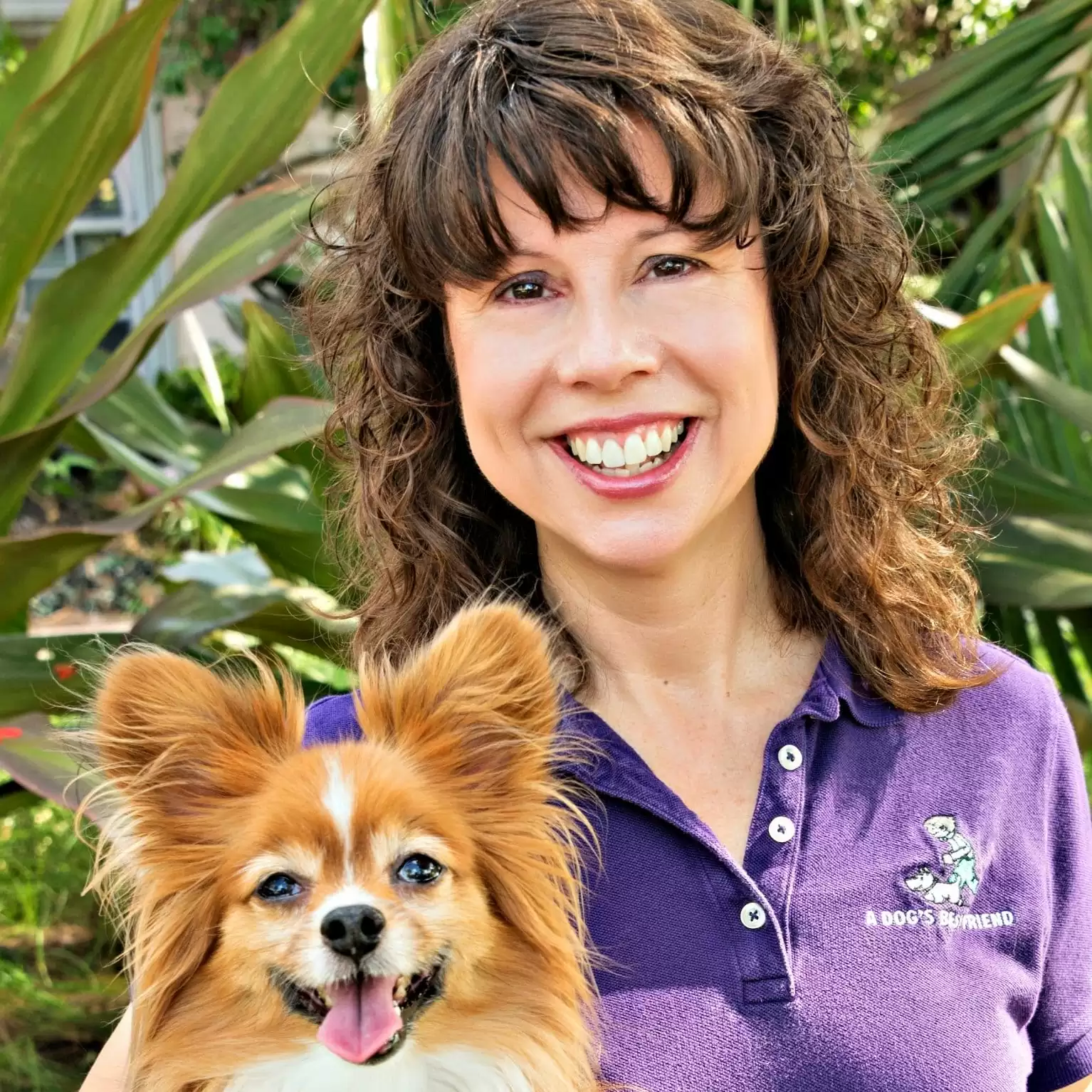
Canine Expert & Author
Teoti Anderson is the co-owner of A Dog’s Best Friend, located in Ft. Lauderdale, Florida. A professional dog trainer for more than 30 years, she is the author of The Dog Behavior Problem Solver, DogFancy Ultimate Guide to Dog Training, Animal Planet Dogs 101 Dog Training, Puppy Care and Training, The Super Simple Guide to Housetraining, and more.
She also writes for Modern Dog and Happy Paws magazines, Fear Free Happy Homes, and has been interviewed in Southern Living, New York Times, DogFancy, Puppies USA, Whole Dog Journal, Reader’s Digest, Forbes, and other national publications. A popular conference speaker, she has given presentations to pet owners, humane organizations and fellow trainers across the United States and internationally. Teoti has extensive education and experience in working with a variety of canine issues, including serious cases of fear and aggression.
Teoti served on the board of directors of the Association of Professional Dog Trainers (APDT) for six years, serving as President for three years. She serves as a consultant on canine training and behavior for local and national dog rescue groups. She has been involved with pet therapy as a volunteer, evaluator and instructor for more than 25 years.