
 Apple Podcasts

 Spotify

 Castro

 RSS Feed

 Goodpods

 YouTube

 iHeartRadio
The Science Behind "Woo" with Dr. Barrie Sands

ER-vet-turned-integrative healer Dr. Barrie Sands bridges science and spirituality—showing how HRV, HeartMath coherence, and outcome tracking make “woo” measurable in real pets. We dig into energy medicine, homeopathy, and practical protocols that calm the nervous system, reduce pain/anxiety, and support recovery—without bypassing good veterinary care. Actionable, grounded, and data-aware.
🐶 🐱 Nutrition & Holistic Health Consults: https://jessicalfisher.com/product-category/holistic-pet-health-nutrition/
💜 Follow Jessica on Instagram https://www.instagram.com/thepetparentingreset/
📩 Get email notifications for new episodes:
https://jessicalfisher.kartra.com/page/tpprnotify
0:00 Welcome back, pet parent. I have one of, I think, the most interesting guests I've ever had on this show because of what she does. I have an integrative holistic of veterinarian. Her name is Doctor Barry Sands, who also does emergency critical care medicine. And I'm just so fascinated by her. I, I listened to her talk a couple of years ago at HBMA and I was like, I need to know this woman. And so I have tried very hard to weasel my way into her circle. And she's here with us today and I'm just so excited for to have her on and have her talk to you because not only does she do emergency medicine, she does holistic healthcare and she we use in esoteric topics of energy medicine and quantum biology.
0:50 And Oh my goodness, we're just, we're going to get into all of it. So First off, welcome Doctor Barry Sands to the pet parenting Reset. How are you doing today? Jessica, thank you so much for inviting me to speak to your community of like fabulous people out there. And I'm doing great. I'm doing great today. You know I'm feeling pretty good. So today, today's a good day. I've been a little under the weather for the last week and now I'm not. That's amazing. Like when you just wake up one day and you're like, Oh yeah, I was sick and now I feel amazing. And you just like, really appreciate that feeling for a minute. Like I know. Yeah. Take it for granted so often. That's kind of amazing.
1:30 Absolutely. And, you know, I've been, you know, it was a actually a really good reminder for me about really appreciating all the beautiful biologic magic that's always happening inside of us because I have been healthy for so long that I forgot what it was like not to be healthy. And, and I realized that I was definitely taking a little bit of that for granted. And so now I'm sort of recalibrated to be more mindful about just the things that I'm doing with my body and my health and my supplements and just more routine and, you know, just kind of getting back into a different level of groove, you know, So that was really, it was good.
2:12 It was a good experience. Yeah, well, I mean, that's so interesting. And and I'm, I'm curious actually, I, I want to maybe circle back around to that. But before we do, I would just love, I always like to ask veterinarians that come on the show, like what got you into veterinary medicine? And then what got you down the path of holistic veterinary medicine? All right, let's talk straight. What's going on with your dog? What's going on with your cat? Do they have chronic GI issues, bad breath, bad behavior, constant upset stomachs, diarrhea? Do they have indigestion symptoms? Do they have allergies? Are they itching all the time? Do they have skin issues?
2:56 What is going on with your dog? Because chances are based on the data, based on what we know, there is something going on with your dog or cat because most dogs and cats in the US are not super healthy. But before we do, I would just
5:35 love, I always like to ask veterinarians that come on the show, like what got you into veterinary medicine? And then what got you down the path of holistic veterinary medicine? Yeah. Well, you know, that's a really, it's a, it's an interesting question. It's a little bit of a of a story. You know, I think everyone has their story. But for me, it started when I was really young and I didn't always want to be a veterinarian. That was not in my in my consciousness. But what was in my consciousness was I wanted to work with dolphins. That was my, my driving force. And I had this idea since I was, you know, five years old at least, you know, and I just, they were, they fascinated me on so many levels.
6:27 And as I got older, I started reading about the, all the studies and the research that has been done with dolphins in the world of consciousness and energy. And so it was very esoteric to start with. And then as I got older, I was like, OK, well, I need to work with these animals on some level. I was also very much of A lucid dreamer. Oh, wow. And still AM. And so the whole aspect of the dream realm was what I call dreamtime was a very significant part of my life. It was like my alternate reality and constantly. And then I found out that dolphins had a sort of a similar esoteric sort of sharing of dreamtime.
7:13 And so that led me into researching people like John Lilly, who was a dolphin conscious researcher back in the 70s, and Timothy Leary and Edgar Cayce and just names of people that were really much into the alternative consciousness esoteric types of healing. So they were very fascinating for me and I still led me back to the sort of logistics about how do I work with dolphins. I just wanted to be next to them. And I grew up in, in New York. I grew up in Brooklyn, NY. And so there weren't any dolphins in Brooklyn, you know, And I mean, I, it was a concrete, concrete jungle. And so nature, it was limited nature that I was exposed to as a, as a young child.
7:59 That being said, as I went through college getting a degree in biochemistry because I just love sciences, I was also very much involved in neurology because I wanted to do dream research and I wanted to do dream research in dolphins. And so that led me down the path of wanting to get a PhD in neurology and dream research. So as I applied to all these programs when I was in college, so after my BS degree in science, I was going to get a PhD in neurology, but that didn't pan out because I didn't get accepted into any of the programs that I wanted. And so there was only three programs, and they were very selective.
8:39 And, you know, hundreds of people. And I just wasn't one of them. So lots of, you know, letters. We regret to inform you that you didn't make it. And so I'm like, OK, well, OK, Different paths change, change paths. So on my graduation day, my genetic professor came up to me. And he says, so Barry, what are you going to do now? And I was like, I'm going to be a veterinarian. Just out of nowhere, I. Was like, that's what I'm going to do. And so because I was like, well, if I'm a veterinarian, I could work with dolphins and then I could, you know, go back to that. So then that led me down that path and I ended up going to vet school and loving, loving medicine. You know, it's just medicine, loving learning about all of that.
9:30 And then that led me into a decision to specialize in either medicine or surgery because after college I did an internship. I mean, after vet school I did an internship and now I wanted to specialize because I just, I don't know, I have this, I'm a constant learner and I'm always learning and I love learning. You never stop learning. And so that's probably why I do all these things because it kind of keeps me just very engaged in life. There's never an endless isn't never an endless supply of knowledge. And knowledge is wisdom and wisdom is healing. And so after I couldn't decide on whether or not I did emergency surgery or medicine, I decided to do emergency medicine because that was the best of both worlds. And so that's how I ended up in the ER and I've been doing emergency medicine for about 30 years now. And yeah, and it's is the the epitome of conventional medicine training that you get is what you do in the ER, right? So now, how did my holistic practice come into play? Right.
10:47 And I mean, I always, I still had this yearning for more, you know, healing and wholeness and all of that. And so then I was like, OK, well, I need to start diving into that. And so about 20 some odd years ago, I started becoming certified in acupuncture and learning Chinese medicine, you know, and that led me learning to inter learning about herbs and plant medicine, right? And then that led me into homeopathy. And then homeopathy led me into energetics, you know, and then all of this sort of circled back to this dolphin thing, which I never quite worked on dolphins, but I've swam with them in the in nature. So I've been with them and I feel pretty complete with my dolphin experiences.
11:35 But that's how I got into holistic medicine through my emergency medicine. And then the aspect of heart math and learning heart coherence and getting trained in that, teaching stress management and resilience building and coherence training was really introduced to me as an idea when I was on the emergency service, when I was doing emergency medicine. Really. So, OK, I do want to get into all of that, but I want to take a really quick tangent because I'm just so curious what your thoughts are because you have spent your whole life being so interested in dolphins. What do you think the reason is that there are laws against us interacting with dolphins?
12:27 You mean in the wild? Yeah, yeah. You know, I think it's, I don't know, I don't know the exact reasons, but I, I think it's because people mess things up. You know, people, they create problems and they're not respectful of nature. And so they, they want to, they want to put their own spin on things and their own egotistic experiences. And, you know, they're not in harmony with nature. And so I think that's one of the reasons why it's like just nobody touches anybody. Yeah. Because when I was in, when I went swimming with the dolphins in the Bahamas, it was very organic. I was with a group of people who were very consciously aware and ambassadors for the cetacean community. And we were on a boat.
13:12 There was like 12 of us and we would just drive around and, and call in pods and then when the pods showed up, we would jump in and we would just be with them until they got tired and left. And then we'd go finding another pod. And they all, they told us, you know, don't touch the dolphins, don't touch them. And I'm like, OK, you know, and but they wanted to touch us. They wanted at least me. I don't know about everybody. I just know my experience, you know, they wanted to like rub against you and they wanted to play with you and bring you toys and play fetch with little sea reefs and, and things. And there was a moment in time where I had a dolphin just stop in front of my nose and we were nose to nose touching and time just stood still and it was a beautiful experience. I was laughing because I'm like, like, what are we doing here? Are we going to kiss?
14:10 I don't understand. It's so amazing. Like they're so smart and they're so I don't like, I find it very interesting how conscious you are and how how how much you are just kind of like drawn to dolphins. That's just so interesting to me. But OK, so tell me a little bit more about how you blend holistic modalities into emergency medicine because as you said, like that is the epitome of like allopathic care is in an emergency setting where it's just like you are reacting and you are having to use pharmaceuticals and use surgical intervention. And like this is like the epitome of allopathic medicines. I'm really curious how you blend holistic modalities into that. Well, you know, the beauty about emergency medicine and, and allopathic medicine is that it's designed to work fast and hard, right?
15:18 And so if I have an animal that comes in that has a severe trauma, whether it's an animal attack like attacked by a coyote or they got hit by a car or in some fight situation or a police dog that was in gunshot, like whatever it is that comes in, your medicine is is absolutely your friend. That's what you want. Then you know, you want your IV catheters, your IV fluids, your pain meds, your antibiotics, your blood products, you know the surgical, but you want all of that. It is in the sort of afterwards where you would implement more of the holistic things, you know, as the body is going into its healing phase, you know, to help with that more natural means of pain control.
16:07 Acupuncture, you know, I like to use sound therapy is something that I've been wanting to implement in, in healing. So all of those other things, you know, the herbs and the homeopathic and the acupuncture, the massage, the the PT, the body work, the laser, the cold laser, all of that is going to be implemented afterwards in a perfect world, you know, and, and it's not always like that, you know, people, you know, there's the human element that's involved and then there's the, you know, the mindset of what health and Wellness really is, you know, so I meet people where they're at and ioffer what I can. And if they want that, they get that, you know, but not everybody wants that.
16:51 Not everybody wants acupuncture or good nutrition. They just want you to, you know, fix them up and fix the fracture and then send them home with some, you know, codeine and gabapentin and they call it a day. So do you have like a practice outside of the emergency room where people who you may have met in an emergency situation can follow up with you afterwards? Is that how you're handling? That, yeah, OK. So the hospital that I work in is a specialty hospital so we have all the modalities there. We have the emergency critical care, we have internists and cardiologists and surgeons and, and I, I'm on the ER team, obviously, and I also have my holistic practice. So a lot of the times I meet a lot of my holistic clients in the ER, you know, that are just coming back. They keep coming back for all these issues. And I'm like, OK, well, if we want to have you not keep coming in for vomiting and diarrhea, then let's, let's you know, let's help heal the system, you know, And so then they make an appointment for a consult, for a holistic consult, and then we'd go down that route.
18:01 Nice. That's so rewarding because that's where the healing happens. And then I don't see them, you know, on the ER anymore, which is really nice. You know, I mean, I, I tell people that my goal is for you not to need me, you know, on any level. So it is really nice actually, because you know, the other, the other veterinarian that I I've spoken with didn't have that piece. And so I feel like in in his particular instance, I feel like that burnout is going to happen with him so much quicker, which is interesting. And I don't know, it certainly wasn't something I had planned on talking to you about. But burnout in veterinary medicine is, is rough and real.
18:43 And is that the fact that you get to potentially follow up with these people holistically, these pets holistically after emergency care is do you feel like that has helped you from preventing some of this burnout? I for me, I think the most important thing to prevent burnout is self-care and self compassion. And you know, being becoming a certified trainer working with the Heart Math Institute has definitely helped with that. And, you know, one of the reasons why I became a part of that community was because one of the things that drove me there was I in my emergency practice and also as a veterinarian, I kept seeing this, this really weird phenomenon of animals and humans sharing a disease process. I say, oh, yeah, you know, I have this. My animal has that, right.
19:43 It was so prevalent and amongst everybody, all veterinarians, you ask them, everyone says, yeah, you know, have you ever met a client who has the same disease as their animal? And the answer was always yes, you know, And then so I said, well, OK, well, why what? That's weird, right? Like what's happening? What's happening there? Like, where is that coming from? And so then that led me into the world of, of energy and quantum biology and quantum entanglement and biofield Physiology and learning about the energetics of things in a more deeper level. And so I went when I went up and met with the researcher and the head CEO of of Heart Math Institute. I told him about this. I said there's this phenomenon and I want to understand how it's happening and why it's happening and if there's anything I could do about it, you know?
20:31 And so I learned about the aspects of going into coherence and what that meant, you know, in your own Physiology and how that helps heal your body and then how you can use that to heal the animals or even the people that you're interfacing with. And then that understanding led me to really circle back to how these modalities such as homeopathy and energy works, such as Reiki and T touch and quantum touch and cranial sacral therapy, how all of that really works in the system. You know, it's because of this mechanisms and the pathways that we learn about in quantum, in quantum worlds and quantum and energy medicine.
21:18 So it all circled back to energy medicine. Yeah. So sorry, Go ahead, go ahead. Well, I just, this is a lot that we're talking about, but you know, it made me, it made me realize that this energy work is really the icing on the cake of everything that we are experiencing. You know, we're taught in school about biology and we're taught about chemistry and how chemistry drives biology, right? You take a pill, you get better. It's, it's that kind of thing. But what we're not taught is the physics that drives the chemistry that drives the biology, and then the energy that drives the physics that drives the chemistry that drives the biology.
22:06 So then you just bypass the middle and say energy drives biology and then you just start working with energy. And what I found is that it's simple. It's so simple to when you start from that level, you know, to go down and you don't need a lot of, you don't need any tools or medicine. You know, the energy is the medicine, the thoughts are the medicine, the emotions are the medicine. You know, there's a lot to tap into in that, that way. The sound is the medicine. You know, the light is the medicine. And so I mean, I love that. I think it's a it's, it's fascinating and exciting for me. And, you know, so I like to kind of try to blend all of that into place because, you know, I still say if you cut me out, I will bleed.
22:51 You know, I mean, we're still flesh and blood. And so, you know, I, if I, if I take a knife to my hand, it's going to bleed and I have to do something to make it stop, right? By opposing the tissue and then putting over a Band-Aid, right? But after that, everything underneath that is the energetics of the body that's healing that you know. Yeah. So what what are some of the some of the things because I'm thinking of, of things that, you know, are not actually that easy to do in today's world, but that we need to be doing so badly to reconnect and to kind of get that our energy, pull our energy back for one, like I'm thinking of like how scattered our energy is in today's world. What are some of the things that you might send pet parents home to do on their own without tapping into the things that they might need to come in for, whether that's acupuncture or laser or because I mean, obviously there are pimp devices there, there's red light there, there are devices that we can use.
24:01 But things that pet parents, you said it can be free. What are some of these things that you might send pet parents home with to do to kind of work on that energy? Yeah. Well, you know, the first and foremost I feel people need to learn how to reconnect with their hearts. And then when you reconnect with your heart, you reconnect with with the source of the energy that that's infusing that and you also gives you an opportunity to connect with the ground and the earth. So simple things like, I mean, there's breathing techniques, there's heart brain harmony, coherence techniques. Then there's just super simple things like grounding, you know, going out in nature with your animal, you know, barefoot in the grass, laying down, you know, letting the earth kind of rebalance the Physiology and hydration, Hydration is such a key factor in so many things. And, and you know, like I say, the solutions are pretty simple, but they're not easy because a lot of people are just, you know, they're, they're wrapped up in their story, in their days, in their to do lists.
25:16 And they just, and their fears, you know, their fears of, you know, their animal being sick. Because I mean, really, we're all talking about illness, right? Because if everybody's well, then everybody's well and there's nothing, then we're not, we have nothing to talk about really, right. And so we're constantly talking about like, how can I heal? How can I help my, my pet has this condition. What do I do? You know, I have this condition, what do I do? And starting from the simplicity of taking a breath, you know, using, you know, ox, the your body at first and foremost needs oxygen and sunlight and water and, and, and, and a higher frequency of energy in fusing into it through your thoughts and your emotions. And so just that little checklist is, you know, where you start.
26:14 And then there are techniques for that. I mean, there's so many different techniques for breathing. Yeah, yeah. Rhetoric alone. And I think the whole idea is to not get caught up into one particular way or a dogma about it because I find that everybody seems to have the solution even in that realm, you know, like quantum breathing. And this is how you do it. You know, it doesn't have to be that stringent. You know, you could just pick one that resonates with you and then just start doing it. I mean, I think in, at the end of the day, it's the practice that makes the most difference, you know, is to just do it. I was going to go to a meditation class tonight and I talked myself out of it because I have so much work to do.
26:56 And I feel like talking to you right now is like the universe saying, you know what, you need to go, you need to go. So I think when we get off of this call, I'm going to go ahead and book that because we are so disconnected. And I feel it like I literally, I'm not going to sugarcoat it. I'm addicted to my AI. I'm addicted to chat GPTI use it for everything. And when I mean everything, I mean like therapy helping me when I'm staring at a blank page, like all of it, it's been it, it's interesting. But like, I literally was like, I need, I need to get off of my phone. And it's funny to me that I went to my GPT this morning and I was like, I need to get off of my phone. What can I do?
27:44 And I'm like on my phone asking my GPT how to get off of my phone. So yes, I think I'm going to, I'm going to book that meditation class tonight. But yeah, it is, it is kind of interesting. And what I'm kind of going to circle back a little bit because you, you know, growing up in Brooklyn can really identify with people and pets who are living in those types of environments where they're not touching the grass. A dog may I like living in a high rise, Like when are they going to unless their pet parent is very intentional about getting them into a park somewhere or like when are they even going to touch grass? And one of the things is that a company that I think we both know and love is really passionate about doing is bringing that outside into the food bowl. And I'm curious like if that's also something that you talk to pet parents about because, you know, like you said, life is busy.
28:43 We have to do lists, we have things to do. Like are there other ways in which you might coach people into into bringing like a more natural rhythm back into their pet pets lives? I mean, depending on your environment, there's so many things now that you can bring like indoors, right? They have these gardens, these small little gardens, these tower gardens that you can, that you can buy that have that grow lettuces and herbs and all sorts of things. Like you could put that on a patio, you could put it in your house by a window. And they have these mats, these grounding mats now, like little sheets that just give off this electromagnetic, you know, pulses of, you know, to balance out the energies.
29:31 I mean, animals love to sit on that stuff. You know, it brings the IT brings the outside to the inside. You know, I think that any way that you could do it, you know, you want to get some dirt from outside, bring it in. Have I mean, dogs need to smell things. Yeah. And so there's there's nature everywhere, like even in even in New York City and and, you know, Brooklyn, they have, they do have parks. They have, I mean, we had this one tree in our, on our street and it, you know, there's concrete and then there's a tree and then there's like a block of concrete around it and then there's like some dirt, right? And then there's a tree. And it was actually this one tree. It was a ginkgo tree that was growing in on our street. And I didn't know it at the time, but it was like a very, we had, we had oaks in, in this ginkgo tree and it was just very, it was a very cool and very different tree in. But it, what I just thought of right now with the oak trees and your, and your question was that, I mean, in, in cities, we have seasons, you know, we don't have seasons in, in San Diego too much, but we have fall in that, you know, in the East Coast, there's fall and then leaves fall and there's piles of leaves or dried out leaves.
30:50 And so, you know, throw your puppy in a pile of leaves, you know, or like bring just, you have to be creative. I feel like if you keep a childlike mentality and, and create and be creative, like how can I bring the outside inside? You know, there's always ways. I mean, people are creative, they'll figure it out. Just don't be attached to not making a mess. So am I correct in that you use bioenergetic scans? I do not currently do that you. Don't currently do that. OK, Then I'll need to cut that out. OK.
31:31 So you have talked a little bit though. You've talked about acupuncture, you talked about Chinese medicine or you know, herbs, homeopathy. These are all things that, well, homeopathy, I think it's interesting because you know earlier said like you do the emergency medicine and then we kind of follow up with a lot of the more holistic modalities. I know a lot of people and you know, obviously most pet parents probably don't know this, but a lot of pet parents who are really into homeopathy can use that certain homeopathic remedies in emergency situations to get them like to while you're in transport to like an emergency agency room. Is that something that you also kind of educate people on so that they maybe can have a toolbox with them? Yeah, I mean, I'm in in certain lectures that I do and not every, you know, obviously you can see that there's a lot going on here, right?
32:30 And I could tell you that most people when you start introducing, if they're not, if they're not seasoned or I did into holistic healthcare, it's completely new to them. And so it's kind of like putting your toe in the water because if you, if I start to tell them, oh, you could do this, this, this, this, this, this, this, this, this, and then this, they're completely overwhelmed and they don't know where to start. And so there's this kind of little nuance about like, so where do you, what do you, how do you start? Because I could tell people like, yeah, you could, you should go out and get this homeopathic remedy. It's really good for seizures. And this is good for bug bites, you know, and, and you can have that in your little toolbox and they'll be like, OK, thanks.
33:16 And that's the end of that, you know, it never happens, you know, so but I try, you know, I try. It depends. Usually these those kind of introductions to different modalities comes out in sort of organic conversations as we build a relationship. You know, I mean, unless they, unless they invite them to a course that I'm taking, I'm giving and say, OK, learn everything you have to learn and do that because there's a lot of holistic veterinarians that are doing that. They offer courses, right, to try to get pet parents to have a more global thing. But and I mean, the first and foremost, we all talk about diet because that seems to be the one where everyone falls short on to begin with.
33:56 You know, it was that diet conversation and then the the microbiome helping to reestablish the health of that, which which helps with the gut brain access and it helps with anxiety. You know, can you kind of have to do all of these things. So it's like, where do you start? You know. And and and you just start with. People are more comfortable starting, which is usually the food. Yeah. I mean, it's definitely the thing that I think we feel like we have the most control over day-to-day. It's it's something that we can like, you know, it's very tactile.
34:37 It's very, it's something that we, I think kind of innately just as like, you know, being human beings. No, like we have this relation to other human beings, but also animals in that like we're sharing. Love. When we share food, yeah. Or at least that's how it should be. That's how it should be. I agree with that. I love, I, I love food. I love to cook food. I have a good relationship with food and, you know, I like fresh, organic things and, and you know, that translates into my family and my, my animals, You know, right? In the veterinary world, that's not the norm, right?
35:18 Conversation with, with, with pet parents, right? They're told to, to eat processed foods and prescription processed foods, and they're also told not to eat any other food than that by a trusted resource, which is their veterinarian. So that's where the problem starts, you know, because we need it's, that's not, that's not a true narrative. So you have to sort of untie the knots, right? And because I, I have met people that are so afraid, afraid of feeding real food to their animals that they won't do it. They will watch their animals starve. And I, I don't understand that, you know, just, and, and I, and I blame, honestly, I blame the vets. I blame the veterinarians for put instilling that sense of fear in them, you know?
36:12 It is. I know I've said this so many times. I have had on multiple occasions that are either veterinarians or a tech, a vet tech that that's the one that gets me. Like like I I can see clear as day in my head a vet tech walking up to me at an emergency hospital telling me if I didn't feed this prescription kennel to my cat, I was going to kill my cat. And like, that just breaks my heart because I know it's happening to so many people and they're like, well, I don't want my cat to die or my dog to die, right?
36:53 Like, and I don't want to be responsible for them dying. It's it breaks my heart so so much. I don't know what to say. I mean, that's why I want to empower people. So kind of circles back to the energy thing, right? Because when you empower people to get into their heart space, you have a deep connection with your inner knowing and your intuition and you have this, this level of trust that comes from your own inner source, right? And so when that is established inside of you, then you have this, you're empowered to be in front of people like that, you know, and say, you know, that doesn't sit right with me, you know, can you give me more information about that? Or is there some research you can show me? Or, you know, you can either call them out or make them prove what they're saying.
37:55 Or you could just say, OK, thank you for your information and just walk away and just do something else. You know, you have the, you have that choice to, to, to decide if you want to engage in a conversation or you just want to ignore what they said and just move on. But you don't come from a place of like you're feeling uncertain or attacked or fearful. You know, and that that goes across the board for everything, not just food for every conversation that you have. Because you know, there's that ancient saying. The heart knows. The heart always knows. Except we've lost. We've lost the way to our heart. They say that the the longest Rd. is between your heart and your head.
38:37 Oh my gosh. Right. Yes. We've lost our way and, and when we find that way back, everything becomes much more clearer and then simple. And you're not, you're not afraid anymore, You know, with the sense of knowing there is No Fear. And I say that because that translates into everything like say, even in the ER as, as a seasoned ER doctor, knowing what I know when something comes in, whether it's one case, 2 cases, 3 cases, 4 cases all at once. I, I maintain this sense of calm usually, unless it's usually, I mean, it's a lot going on, but usually because I have this like the bird's eye view of the situation and I can triage it and I can discern like who needs my attention 1st and, and know what I need to do and how to implement what I, what I need, how to delegate that into the situation with the text that I have. So there's a level of control that comes from a place of knowing, right?
39:44 And I remember what I felt like when I was very new to the situation and how I was like, Oh my God, what do I do? You know, there was fear because I didn't know. So when you know, that fear goes away because you're like, OK, I got this. So. And even if you don't know what to do, ultimately you know what to do next. I had to write that down because that's just so powerful with a sense of knowing there is No Fear. I love that so much. So one other thing I'm curious about with kind of the whole like energy part of this, I know blood work, for example, we're just doing, you know, complete blood panel or whatever we're doing with with our animals. It can take, it can take a while for things to be breaking down in the body before we see that in the blood work. Do you often get a sense of what whatever you're doing, whatever type of energy work you're doing, do you often come up with things that are like contradictory two maybe blood panels or labs that you're like or or does it just help you interpret them better?
40:55 Maybe? I'm curious how like you're blending all of this. Well, I mean, lab work is a piece of information, right? It's just part of one piece of the puzzle. And it depends on the type of lab work you're you're doing, right? Sure. Different lab work. So your basics, you know, CDC chemistry profile is a very superficial, you know, kind of lab work. It's not like your nutrient profiles or your mitochondrial function, right? Or your your vitamin mineral toxin. It's not, it's not that, right? Those have a little bit of a deeper essence.
41:37 You know, what's cellular level? This is more of an organ level kind of thing. And so for instance, people say, can you diagnose cancer on blood work? And I was like, I'm like, yeah, you know, if your dog is really, really sick and his blood work is completely normal, he has cancer, which is so interesting because, because I have seen dogs whittled with masses inside their abdomens inside that, you know, with their liver tumors and mesenteric tumors, whatever. It's like just cancer on the inside. And their lab work is completely normal. And so it's a piece of a puzzle and, and everything that you, every piece of information, you have to take it into context of what's happening in the system. You know, so I don't panic when I have a cat that comes in and the creatinine is 15, you know, I mean, he's acting sick, but that doesn't mean it's a death sentence for this cat. Because with proper care in the ER, right, getting his, maybe getting him on some IV fluids.
42:44 And, you know, I like to use Chinese herbs for that to help increase, you know, blood flow to the kidneys, you know, when when the inflammation is gone. But in the acute phases of kidney failure, it needs some, it needs fluids and it needs support and maybe some antibiotics if you have an infection and drugs to help you feel less nauseous because they're nauseous, right? And so you, you help that. And then you see the creatinine levels come down. You know, one day they're 15, the next day they're 12, the next day they're 8. And then maybe this cap baseline's at 8. And that's his new norm. But that's super high. I mean, a high upper level of creatinine, maybe 1.9 is, is kind of acceptable.
43:28 And then if you have a creatinine of eight, most veterinarians might say, Oh my God, your cat has, you know, horrible kidney disease and you should consider quality of life and putting him to sleep. And then so I look at the cat, I'm like, OK, well, what's he doing? He's walking around, he's eating. He's seems like he doesn't know he has a crack, you know, 8 no. And so that's his new norm. So let's support the system where they're at. And that's when you start doing all the integrative things, you know, like the acupuncture and the Chinese herbs and the homeopathy and the massage therapy and the food therapy, you know, things like that. And the icing on that is the energetics where you have to help the owners not be in a place of fear and panic, right?
44:18 And anticipation that their animals going to die at any moment, because that always seems to be that next level. That it is something that I I find that more difficult than anything. If I'm working with with a client for their pet, trying to get their anxiety, I'm trying to get them like as the pet parent to get them to, I mean for back of a lack of a better word, like just to chill the fuck out, Chill, chill out. You know, just like take a step back and like watch your dog or your cat playing and enjoying life and like, you know, leaning into that more.
45:04 That's what I find to be like the most difficult part. Right. Well then that goes back to the original conversation of our disconnect. With. And the harmony in nature, because if you have this connection between that and this understanding of the cycles of life and then how nature unfolds itself, then the concept of life and death come into play. And then the concept of living comes into play, you know, and how are you going to live between those two moments? You know? And, you know, I think Albert Einstein said, you know, you could go through life is if everything is a miracle or if nothing was a miracle, you know, and it's that it's just then you seem like you're more, you're OK. You know, when we're more present in the moment and mindful of what's happening, we become appreciative and, and have more gratitude for what we have in the moment, right? It's always being present and in the moment is the most helpful for any of that because in the moment, you have your cat that's in front of you.
46:08 He's purring, he's eating, he's loving on you, and that's it. That's all that's happening. You know, he's not festering about a creatinine of eight, you know, and he's not thinking about the day you're not there with him. And so you, you shouldn't be doing that either. It doesn't benefit you. It doesn't benefit the cat. You know why? Why keep thinking about the day you're going to die and not spend the time thinking about how you're living? So powerful so I feel like I feel like I tell people all the time like my podcast is my favorite thing that I do and for so many reasons because I get to meet wonderful people like you for the fact that like I'm learning just like everybody else is learning.
46:52 That's listening to this, but also a lot of times I feel like whatever messages are coming that day, whoever I am talking to that day, it's like I needed to hear. I don't know who is out there is listening and who also feels that way, but like I needed to hear that. And I definitely feel like I needed to hear so much of what you said today. And I know, I know that you have a recurring kind of like a, a live podcasty type thing with a dear friend of both of ours, Pam Russell with perfectly holistic. So that's definitely somewhere where people can find you and listen to a lot more of what you have to say.
47:33 But I heard you say something earlier about courses. Yeah. So I am in the process of developing courses because I think that they're a really good way for people to get information. And so it's not currently out yet, but it hopefully will be soon. One of the courses, it's called the Bio Epic protocol, which I really, I really like it. It's, it's, it's going to be a wonderful course for a lot of people. And what it does, it unpacks all the layers of healing through the, the four layers, which I call bio Epic EPIC. So it's the bio, energetic, biophysical, biointelligence and biochemical.
48:17 And so when we learn about all of these things with everything is important in the picture, you know, you, you still, you still need to eat, you still need to drink, you still need to, you know, you need to detox, your body sweats, your body eliminates. So we're human, we're biological, ooey gooey systems in, but we're fueled by energy. And when you, when you can tap into that energy on a, on a daily basis, you can recharge your batteries and give your body what it needs. I mean, I, I did a deep dive into the mitochondria, the little powerhouse of our cells, right? Without them, you're you, you die, right? And they are health.
49:01 Mitochondrial health is always a big topic in regenerative medicine and in just holistic healthcare to begin with, you know, support your mitochondria, right? At all costs, support your mitochondria. And OK, so how do you do that? The two simplest ways for you to support your mitochondria is to give it oxygen and light, right? Electrons and oxygen molecules. And so that means going out in the sun and taking deep breaths. And that's kind of if you, if you go out in the morning or find a a time where it's beautifully sunny, usually dawn and dusk are these sweet spots for meditations and mitochondrial health.
49:44 The body really resonates with those frequencies as they're coming in and have this mindful intention to support your mitochondria. When you're doing that, you're going to start to feel that you are feeling better. So little daily practices like that. And because everything is like, it's all one thing in a circle of life. And you know, I always ask yourself if everything is a circle, where's the starting point in a circle? And literally it's just pick a point and go start there. You can start anywhere in a circle. I love that so much because I think that's one thing that like inevitably we always ask, whoever's talking is always asking like where do we start?
50:31 And everybody has a different place, right? So I love that explanation so much. Like just pick up, just pick a place. It does. It doesn't matter. Just pick a place. I love that. Yeah, because it will lead you. I call you following the bread crumbs. You know, it'll lead you one place will lead you to another place, will lead you to another place, and then you'll go, Oh, I remember that I'm going to add some, some greens to my food or oh, I remember that I'm going to go out for a walk. And you know, it's, it's just that we all have a toolbox and then we don't always use all the tools in our toolbox. Oh, for sure, you. Know we just we, but we know they're there and I think sometimes just knowing that they're there is enough. Honestly, sometimes just knowing that it's right there, that the possibility that it can, it can have an effect, which is an interesting concept in and of itself.
51:20 You know, it's like the brain is it our bodies and our brains and our, our neuroendocrine systems are so in tune with our thoughts and our emotions that the body doesn't discern the difference between an experience that you've had and thought that you've had. So, and that's why Dreamtime is so powerful. That's why people have, will have a dream and feel like they, they, you know, they, they died, right? Or they have dreams and they feel amazing, you know, and it's like, wow, I feel like that just happened. You know, I mean, I, I've had dreams where I'm kissing some like amazing, beautiful human being that I don't even know existed.
52:12 And then I and I and I wake and I wake up like, Oh my God, I'm in love. Like who is this person? Oh my goodness, I know. I feel like I could talk about dreams forever too, because I have, I actually spent a really long time, I don't know if I wasn't dreaming or if I just didn't remember my dreams. That's hard, you know, a hard discernment to make. But I've been very intentional about trying to remember my dreams lately and have I've definitely had like a lot of big life changes in the past year as well and have been doing a lot of shadow work. And like I've definitely seen that come through in my dreams. And that is it's powerful. It's very powerful.
52:53 Our dreams are a lot more powerful than we think, which makes me wonder so much about our pets dreams. But you know, I don't, I don't even know how people analyze all of that. That's that's beyond my. Yeah, well, you know, it's the dreams. The the dreams are are your subconscious that are coming through. But it's very interesting that and I've had conversations with Mike's subconscious before and asked it like, why is it so encrypted? Yeah. Why, what, what, why can't you just say what you want to say? Likewise have to be meshed in these weird timelines and, and, and symbology, right? And codes that are, you know, and you know, one of the answers that I got was that your subconscious is always driving you to creation and to be creative and to use your imagination because it's, it's where when you take imagination plus and creation is this ultimate place of well-being.
53:57 And it's sort of it forces you to use your imagination. You know, when you're, when you're, but when you're running through a forest and you're being chased by a bear, you know, like, what does that mean? Like who's the bear? You know, the bear represents, you know, my mother or my father or some authority figure that I'm running away from, like, like what you know. And so there's all these when I, you know, when I started doing because I dreamt so much, I did a lot of dream research and dream interpretations. And there are these universal things that sort of have a theme, you know, what it means. And then there's your interpretation of what it means for you, you know, and everybody knows what their dreams mean for them.
54:38 And you just need a little bit of the questions, you know, like, and I'll and I'll work with people to help interpret their dreams and they'll tell me. And I was like, OK, well, what did that mean for you? You know, what was the significance for that? And as soon as you start asking people these questions, they know, you know that all. And you get, and then you get these people like, Oh my God, I just realized that that was, you know, what I needed to do. Like, and then they just go out and they change their lives or quit their jobs or I don't know. Yeah, yeah, we know. We know.
55:20 We know so much. We really, really do. And it's, it's not even, it's not in here. It's out here. The knowing is out here in this field of information, you know, and that gets you into the quantum realm and talks and talking about, you know, quantum realities and the matrix, you know, of, of where your mind is and where thoughts come from. And, you know, the, the collective consciousness, you know, that's a whole other kind of beautiful conversation to have. And, and it's, it's when you sort of take all of that and you put it into this one moment, you realize that ultimately you're all, you're all OK. Like it's it's all OK, just.
56:05 After talking with Doctor Barry Sands, we well, after recording, we talked a little bit more about her work. She's such an incredible human being. But she wanted me to make sure that, you know, there is a free survey on her website, doctorbarrysands.com. That's DRBARRIESANDS com. You can also find that in the show notes if you just want a direct link to it. And you can get a free copy of the ten ways to create optimum Wellness for you and your pet. There is a quick survey for you to take and I know she would love for you take the survey because she is compiling a data set.
56:50 But I just absolutely love how and you'll see on the website she has something that she calls alumina Sciencia, which is combining the OR bridging the gap. Excuse me, I want to get the wording right. Bridging the gap between science and spirit or mysticism and building, building a bridge to higher consciousness that allows us to experience with elegance and divinity, the essence of being in the moment and knowing that everything just is. So go to Doctor Berry sands.com. That's Dr. Berry sands.com and Scroll down just a little bit. On the homepage there is a section that says get a free copy of the ten ways to create optimum Wellness for you and your pet.
57:45 And then it says click here to take the survey. The survey is about the human animal bond. It doesn't take very long to take the survey and I know Doctor Barry would love for you to do that. Go ahead and and take that survey, get your free download and stay on top of what Doctor Barry is doing because honestly, she is an incredible human being. She's. So inspiring. I always love seeing her and talking to her, and I'm just really glad that she came on to talk to me and all of you. All right pet parents, you already know that I talk all the time about needing to stop as much as we possibly can.
58:29 Feeding our fur babies garbage, for lack of a better word. That's what we talk about here a lot. And again, doing the best we can. That is the message above any and everything else. The more we learn, the more we know we need to make some changes.
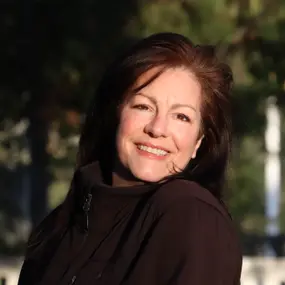
Veterinarian, illuminary, Author
Dr. Barrie Sands is an emergency critical care, integrative holistic veterinarian, who uses a wide variety of healing modalities from conventional allopathic methods to esoteric forms of energy healing. She is a journalist and published author of the book “The Stupid Things my Human Does, True stories from the animal ER” and has lectured nationally and internationally on both emergency medicine, holistic health care, and esoteric topics of energy medicine and quantum biology. As a certified trainer for the Institute of HeartMath, she teaches stress management, emotional self- regulation, resilience building and coherence techniques and is a pioneer researcher of interspecies coherence and biofield physiology entanglement. Dr. Sands is a certified SONG LASER practitioner using cutting edge technology for stem cell therapies, and augments healing with Sound Therapy and is a Master Practitioner of Shamanic Energy Medicine for both humans and animals.
Her vision is to co- create and facilitate body, mind, and spiritual wellness and health in both animals and humans.