
 Apple Podcasts

 Spotify

 Castro

 RSS Feed

 Goodpods

 YouTube

 iHeartRadio
What We Wish Dog Parents Knew About Nutrition & Health (with Emily from The Dog Who Asked for More)
What We Wish Dog Parents Knew About Nutrition & Health (with Emily from The Dog Who Asked for More) is a behind‑the‑mic conversation between two canine nutritionists who care deeply about doing better for our dogs. Emily, host of The Dog Who Asked for More, joins me to share how we each found our way into the pet space, why we decided to get formal nutrition certifications, and how that changed the way we look at dog food forever.
We talk about the biggest misconceptions we see from well‑meaning pet parents, what we wish people understood about kibble, raw, and everything in between, and how podcasting has become one of our favorite ways to get honest, nuanced education out into the world.
If you’ve ever wondered where to start with better nutrition, how to sift through all the advice online, or what it’s like to build a dog‑focused podcast, this episode will feel like sitting down with two friends who are just as obsessed with dog health as you are.
🐶 🐱 Nutrition & Holistic Health Consults: https://www.wildwellnesspet.com/collections/consultations 🐶
Get to the root cause with the Wild Wellness Bioenergetics at-home testing kit: https://www.wildwellnesspet.com/products/bioenergetic-sensitivity-testing-for-dogs-full-scan-wild-wellness-powered-by-pet-medella
💛 Follow The Pet Parenting Reset on Instagram https://www.instagram.com/thepetparentingreset/
🤍 Follow Wild Wellness Pet on Instagram https://www.instagram.com/wildwellnesspet/
📩 Get email notifications for new episodes: https://jessicalfisher.kartra.com/page/tpprnotify
0:00 Welcome back, pet parents. So today we're actually doing what we like to call a podcast swap. And I guess, I guess there are actually a couple of different ways that that could be done. But the way we decided to do it was to record 1 episode and we're both going to release the episode. And I thought this was going to be a super fun thing for both of us to do, mostly because I feel like we just had so many things like to talk about that were similar that it would have felt almost like doing duplicate episodes if we had decided to record separate episodes with each other. So you might actually hear me talk a little bit more in this episode than I normally would, but that is because she was asking me a lot of questions.
0:48 And I am actually really, really excited for how this turned out because a lot of these things that like I want to say, but I don't always feel like they're appropriate to say during a lot of the interview because I'm not interviewing myself on most of these things anyway. I think this is going to be super fun. Kim thinks it's going to be fun too. So who am I doing the podcast walk with? Well, her name is Emily Breslin and the other podcast that is going to be airing this. So who am I actually doing this podcast walk with? Well, her name is Emily Breslin and the podcast is called The Dog Who Asked for More, which I absolutely love. We could do a deep dive on what more our dogs are asking for, but I guess she is doing that over there.
1:33 So Emily is a canine nutritionist. She has a CPCN, same as I do. She is a dog trainer and the host of The Dog Who Asked For More, a podcast for dog parents navigating the messy, complicated parts of life with dogs that no one really prepares you for. And by golly, is there a lot of that going around. Anyway, I did do some deeper dives in in today's episode with Emily, and I had to appall. I actually I felt I had to apologize for her because I had to apologize to her because of the deep dives I was doing and like going so like high level with her. I think that's just where my head has been at today and you never know what's going to come out of my mouth. And I even said on the podcast that I told you, I told you guys that I really don't want to hold back anymore. And so I did go kind of high level on some of the answers that I gave her today.
2:33 And I hope that you appreciate them as much as I want to talk about them. And in fact, I would really love for you to reach out to me and let me know if you want me to dive deeper in any of these topics because. I really. I feel like we need to be talking about them. I think there are some people kind of talking about them, but they're not talking about them as they relate to our pets. And there is a connection. And I know, I know that that sounds may be hard for some people to connect and some people to hear. But there is a connection in a lot of high level things going on in our world today that absolutely have a trickle down effect into the pet food industry.
3:18 And I kind of give a little bit of insight into how that could be. So if this is the first time you are hearing some of the things that I say in today's episode, reach out to me and let me know if you would like to hear more about it. Or maybe you don't. Maybe you don't want to hear more about it. Maybe you're like, just can you keep things a little little more chill for me? I don't know. Let me know if that's what you want too, because, you know, I don't know that we really make change in the world being chill, but you know, they're they're to each their own.
3:58 So this is our podcast swap with the pet parenting reset and the dog who asked for more. Welcome to the Pet Parenting Reset podcast. If you're new here, my name is Jess and this is a space where we talk about all things health, span, and quality of life for your pets and you too. I'm so excited that you're here. Let's dive in. When I got into nutrition, it was because I had to.
4:38 I had a dog with pancreatitis and I had a dog who literally would not eat kibble. And I found out that it was because he was allergic to storage mites. And so literally he was allergic to every bag of kibble because there is no way to storage food without getting storage mites. So it was really, really difficult. But I feel like this is what happens to a lot of people. I feel like they don't start looking at nutrition or diet options until they've either tried everything and they're really, really frustrated, or they have a dog that gets sick and they don't know what else to do. Is this, Is this the same experience that you've had too?
5:20 It is the same experience. And the only thing that I keep thinking of when you were talking about that is it's so funny because we're like programmed to have this mindset of like, well, this is dog food or this is that food. And what's so interesting to me, and I actually just brought this up at a conference I was speaking at, is why is it that we when something is wrong and we go to the veterinarian, then the veterinarian says feed real food. Granted, it's not necessarily what we we want to be feeding. Like they still are saying like chicken and rice, which is not what we actually want to be feeding. But why is it that the answer is real food when something goes wrong but we're never thinking about it it to prevent anything from going right? Like this is the like mindset that is boggles my mind. Like, truly.
6:12 No, I agree with you. How are we here? Well, and it's wild too, because it seems like, you know, same thing with us when we're sick, right? We want to eat healthy, nutritious foods that fill us up but are gentle on our stomachs. So why wouldn't we be doing that for our dogs? And a lot of people when they come to me and they're like, oh, well, you feed raw, like, why do you do that? And I'm like, well, if my dog lived out in the wild like they originally did, what would he eat? I don't know. Well, that's because we have made it a convenience to feed our dogs something that's stored on a shelf. I think the thing that really did it for me though, with kibble was not only learning that Fitz was allergic to storage mites and that was like our main problem, but then learning that like bags of dog food sit on shelves in warehouses for like 12 to 18 months before they even go out in the pet store. I was I was done when I heard that. Yeah, it's pretty crazy.
7:12 I mean, really everything that we're living in right now, I feel like we're in the twilight zone. It's and, and I, I say this like tongue in cheek, but really truly like I, I just put out a clip on just before we're recording this on my Instagram. That actually got better traction than I thought it would because I said, and I feel I'm just going to keep saying this for as long as I can possibly say this until it finally catches on that kibble is a failed experiment. And the sooner that we like as a society come to this conclusion, and this is a really hard thing to say, right? Because it props up our rescues and our shelters and millions and millions of dogs and cats just in the United States alone. Like this is what they're eating. And the reality is, yes, I would rather have a fed dog than a starving dog.
8:02 Same with a cat. But like, I think we need to collectively come to the realization that this the experiment. Like if we look at the timeline of things, this is the experiment, Kimball is the experiment and it is failing phenomenally, phenomenally. But if you don't mind, I wouldn't really go on a little rant, a little tangent here with the whole like raw debate. And feel free to like jump in with us at any point that you want, but I am. I have been a raw feeder for a decade or more and I've gotten to the point with my dog where I finally have succumbed to the fact that she would rather eat gently cooked foods right now in this stage in her life.
8:46 Great. We've been through a lot. She is aging. I still try raw with her and she will eat it for short periods of time. Regards. So like at the end of the day, I, I feel like raw feeders, all of us, like we should just be on the real food bandwagon and and maybe not be so divisive amongst ourselves. I think there is, there's a, a, there's a topic, there's that we all need to really be talking about that. Some people argue that, you know, a raw food diet is biologically appropriate. It's what they would be eating in the wild, it's what wolves are eating in the wild, all the things.
9:30 Other people argue that, yeah, but can we do better to help them thrive? And I think there's something to be said for that as well, but maybe not in the way that a lot of people have brought up this topic in the past. Because I think people tend to bring up this topic as raw is not good enough, you know, and they and they want to supplement it in some way or feed cooked because they would prefer to feed cooked. I don't, I don't look at it that way. I look at it as we are. And I think this kind of fits in with the topic of your podcast a little bit more. We are asking our dogs to live in an environment that is completely foreign to them.
10:14 In our homes inside 4 walls. We are asking them to behave in manners that are completely foreign to them without really giving them instruction on what they should be doing instead. Just a whole lot of no, right. We have taken away a lot of access to the outdoors, especially for animals that are living in like city and high rises. We have taken them out of everything that they have known biologically. And so, yeah, one of the things that we can do to bring their biological needs back into perspective is I do believe feeding them a raw food diet. But I think also something you probably talked about a lot is enrichment and being very intentional about the, I'm not a huge supplement fan. Any type of supplements that I do generally recommend are going to be like food based supplements first. And I do think that we do have to supplement, but I think that that is not a fault of their biology. I think it's a fault of the human impact on the environment. So our food just doesn't have the nutrients that it used to 100 years ago.
11:26 I mean, there are bacteria that we find in the soil that we don't find anywhere else and we need it or we and our dogs and our cats need it to be able to, to even digest meat. And so if, if we don't have access to clean healthy soil, how are we getting those bacteria? So there's there's a lot of I think I think it's a very complex issue and I think I just went down a rabbit hole that you are probably not prepared for. But you're right, like it is such a layered problem to your point where, you know, 100 years ago they weren't spraying chemicals over crops and the rotation of how they farmed every year was slightly different and cows and chicken and all that kind of they weren't getting hormones. And there's just so much more to it then then I think people even think about because even as people, we don't look at how nutrition affects us until there's a problem. Like right back to the beginning of where we started this conversation, you know, like we're just eating until, you know, we're overweight or we're sick or having an allergic reaction to something.
12:35 And then, and then that's when we're like, Oh, well, I don't know if this is healthy for me or not. And maybe I need to figure out what's going on here. But you're right. It's the it's the same thing with dogs. And it's so funny that you said that about your dog kind of like liking the lightly cooked. I recently Fitz has been eating raw for gosh, about a year and a half now and he loves it. But most recently, something happened where one of my parents like cooked the meal a little bit because they didn't know. And now he would like for his meal to not be out of the refrigerator. He would like for it to be a little bit warm. So we also have been doing a little bit more lightly cooked.
13:16 But again, I don't think that it's wrong for dogs to have preferences either, right? Like it's OK if they would like their meal to be warm. And again, if he was out in the wild and he ate some kind of prey, it would be warm just because that's how bodies work. So it's interesting to me how easy it is for me to just be like, well, that makes sense. And then other people are just like, oh, I never would have thought of that. So I love that. It's a fun topic to educate on because there's so many different angles that you can come from and there are a lot of rabbit holes that you can go down. Sometimes it makes you a little crazy because there is so much to learn. But I think that that's kind of how it has to be with dogs. If you're not not always learning and you're not always evolving, you're just, you know, you're not really giving the best life to that dog that you can be. To your point about bringing a dog into your home and taking away their access and controlling everything that they do, like enrichment and choice and playing outside and having all those things, don't somebody compared it once to when we were in in the COVID lockdown and how we all kind of went a little bit crazy.
14:24 Well, your dog lives that COVID lifestyle every single day of their life. So that's just one of those areas that we could give a little bit more grace to our dogs and try to see things from their perspective to help them have a little bit better day by not forcing them to just behave in this box of a house and, and have all these requirements that are not even, you know, they're not biologically appropriate, they're not normal for them. They don't understand. We're asking them to live in a society that we don't even know how to live in most of the time. So it's really interesting to see how much growth comes from that when people start shifting into what's possible versus what the industry or what the economy or what the vet or whatever, you know, the friend next door says there's just so much room to grow and improve for ourselves and our dogs. And I think it's really cool that so many more people are starting to open up to that idea. And I want to go back to what you said about the food and the shelters because because I think that, you know, shelters are struggling as it is.
15:33 So, yeah, I totally get why they feed kibble and they hardly ever have extra money for things like that. But that is something that where if we were educating properly and helping pets transition properly into homes, it would be an easy thing to change. My dogs ate kibble for almost their entire lives and have only, you know, about the last year and a half, two years been switched to raw. So it is something that you can't transition. And it's really not that difficult to do it either actually easier than switching them on kibble to kibble to kibble to kibble. So it's it's definitely a fun thing to see that we could change, but there's going to be a lot of things I think unfortunately that take place before we get to that. Yeah, I know because there's so many reasons. What's interesting is that I, I started out in the rescue world in my early 20s and kind of made my way through doing a lot of things in rescue.
16:28 So I have a lot of empathy. You know, their burnout is real, but like, it's, it's hard. It is hard work emotionally to rescue animals. Like really, really tough. And, and so I have a lot of empathy for that, but I, you know, it has to like some, something's got to give somewhere. And one of the things that kind of changed the trajectory of where I'm at today is making a decision that I want to do better to be able to help these animals. What can I do to keep animals out of shelters? So I started dog training because I said, you know, what are the reasons that dogs wind up in shelters in the 1st place? And that was at the time something that I saw that I could make an impact with.
17:19 But what I, what I see now is that the health of our animals, yes, behavior is a big part of it, but how they feel also effects their behavior and how they feel is directly related to how healthy they are. So like there's, it's so multifaceted, it's so layered. Like we, I think, I think so many of us go through the day without giving any mental bandwidth to these kinds of thoughts with our pets, sometimes not even with children. You know, like, you know, life is tough. Life is hard. And I would, I rather, again, like I said, I would rather have a, a fed dog than a starved dog.
18:02 But you know, if people actually knew the reality of the pet food industry, I think they would ask more questions. What do you think about the Pet Nutrition Facts label changing? Because that's been like a big thing for me. I've been following that very closely. I've had a couple of conversations with Daniel Shula from Jeez, I messed up his name, Daniel Shula from Keto Natural Pet Foods, and just some really fascinating stuff that I've learned from him as well. But the fact that it's going to take like 5 years for them to change the label so that they are actually revealing truly what's in dog food, that to me, he says. Like the industry is scared of what's going to happen when they have to be honest.
18:47 They actually have a different viewpoint. Oh, I'd love. It's awesome. And not to say that that, you know, I actually don't know. I don't know him and I don't, I don't want to say that he's, I'm sure that his perspective is completely valid. The pet food industry in general doesn't want it is set up intentionally so that consumers don't know what it is. Really only big, big change that is coming is that they're going to have to list carbohydrates in the oh gosh, I can't even think of what that little panel is called. They're going to have to list carbohydrates. So now we have to do the math to figure out the carbohydrates. Most people aren't going to do that.
19:27 Do I think, I don't even know that people read the bad, the people that we want this to affect, the people that we want to wake up to what they're feeding their pets or not? I hope this doesn't age poorly, but these are not the people that are reading the labels in the 1st place. So I don't think it's going to have as huge an impact as a lot of people think it's going to. But the entire pet food industry is set up as a disposal system for the human food waste industry. So what isn't changing? I don't, I don't think that that this is providing any transparency. The people that want to know the carbohydrate percentage can already do the math to figure out the carbohydrate carbohydrate percentage.
20:15 What's not changing is what is actually in that food, because the reality is that the definitions of the words that are in the ingredient panel are defined based on feed and not what's in the human food supply. And there is a huge assumption by the entirety of the world that whatever is in that ingredient label on that pet food bag matches the ingredient that they would buy at the grocery store. And that is not true. And not only is that not true, but if you want to know what the definition of that food is, you have to pay $250 to get a dictionary. So no, there isn't any transparency.
20:57 Yeah, I think that it's it's kind of a mixed bag, right? Because I think that unfortunately there are a lot of people that don't even realize that there are carbohydrates and dog foods. And I think that that is going to be a shocker for a lot of people. I'm hoping that, you know, more people will start doing homework on things like meat meal. I'm recently started a series on YouTube where I'm breaking down. This is how you read a dog label. This is what these ingredients mean. This is what you should be looking for. And things like how ingredients are listed. So like the first ingredients are weight before like the water is removed.
21:38 And so yeah, it, it says that there's X amount of meat in it or whatever. But I think the thing that really frustrates me the most is how little education there is out there about what your dog like their requirements are. So your bag of kibble has 20 to 25% Max protein in it, and your dog should be having 60 to 65% of protein a day. So you know that that's a big difference. That's 40% of their dietary requirement that they're not getting that is affecting their health, their life longevity in ways that that people don't understand, which kind of boggles my mind because everyone's always like, oh, I want my dog to live forever. Well, where's the 1st place that you could start with that? By eliminating these sugars and starches from your dog's diet and feeding them more naturally because that's what their body requires.
22:35 And so it's it's simple to see how like some of these changes could be made and how we could have dogs live longer lives. I think prior to kibble fed diets, there is a study that shows that golden retrievers used to live something like 16 or 17 years long. And since we started the kibble industry in 1953, now they're only living like 10-12 years. That's a big chunk of time, right? Yeah. With cancer. Yeah. It's wild. It's wild. What is your like biggest frustration with like the feeding industry in general?
23:16 I think just how it's, I don't want to get too high level, but honestly my answer is very high level because the reality of all of this is that our planet is suffering. And I am a big proponent for regenerative agriculture. I truly, truly, truly believe that it will save the world. And because when our topsoil is dead, the Earth is dead and there is a huge percentage of the topsoil in our world because of things like glyphosate and monocropping that is dead. And fortunately there there is there, there are initiatives around the world to bring more regenerative farming back.
23:59 And you know, there's a lot of scare tactics in the world right now, including in our own U.S. government, which I do not want to get political at all because that is a whole other rabbit hole. But it all ties in together. Like, let's be real that, you know, we have somebody who has spent his entire life fighting glyphosate now saying, but we have to have it to be able to feed the world. That's not true at all. That's a fear tactic because it change is hard and you have to expect there's going to be discomfort to get where you want to go. And nobody wants to go through that discomfort. And does that mean we may not have strawberries in February?
24:42 Yeah, probably. Right. And that's going to suck because I love strawberries. I want to eat them in February, too. But that's not natural. And if we have to go a handful of years without strawberry and like, I realize I'm oversimplifying things, but truly we have to fix the human food supply to be able to fix the animal feed supply. And so I'm not like going on this tangent for no reason because the animal feed supply is truly set up to dispose of any and everything you can think of from dying and decomposed meats that have cancerous tumors in them that are not going to be allowed into the human food supply, all the way down to used cooking grease from restaurants like and any and everything in between. And it allows for things like metals and plastics because they're not going to pull those things off of the cattle or, or, you know, the pig or any, like none of that is being pulled off of these animals before they are disposed of. And turned into a literal pulp because that's what goes in into to pet feed and it animal feed in general. Like let's be real, like this is what is governing. You know, what's feeding our cows and our pigs and our chickens and everything else as well. The salmon that are that are farmed, all of it, you know, same governing body is regulating all of it. And so that's heavy.
26:08 And I know that that's really heavy, but that is the reality of like what I wish people would understand that is it more expensive to buy, you know, a pound of regeneratively raised ground beef versus industrially raised ground beef. It is you're going to get better nutrients from it. You're going to and, and we have to learn as consumers to be less wasteful. And that's I think where a lot of the discomfort comes from that we are so, and I'm raising my hand too, Like I have grown up this way. It is hard to not impulse buy. It is hard to not have a House of things that I don't need to be wasteful to throw things away because I wanted that when I bought it and I ate a few of it and now I don't want it right? Like I.
26:56 Get it? It's. Hard. But I think ultimately to affect change in our pet food industry, we have to affect change in the human food industry because that's where all of this is coming. From it is wild how wasteful we are as humans. And you know, I didn't know until when I just started to get into this nutrition stuff. So about the last maybe four or five years total. I didn't know that dog food was made out of basically food waste until, you know, you start doing that research. But again, that's another one of those areas we it's just not commonly educated on. People don't know because it's just not out there for everybody to find.
27:38 You really do have to dig for it. You have to take a course on it. You have to get a certification in order to really be presented with the actual materials and facts, because that's, that's how the, the market like glazes it over. They just, you know, we're here. Here's here's an easy way to feed your pet and you know, it's, it's taking care of some of the planet waste and all that kind of stuff. And you're right, they don't clean up the animals or take the tags off or, you know, and there's things like tire sealer that ends up in dog food. Like that's scary to me. It is I mean euthanasia drugs like I could even go further if you. Really want me to get. Like if you want like a really controversial episode, I, I, I know we're going to put this up on both. So I told my listeners at the beginning of this year that I'm done, like holding my tongue.
28:29 So, but none of them have even heard this from me because this is actually something that I have done it. I've started to deep dive in because as a woman, I feel that I have feminist tendencies and I have started to dive into like the origins of the feminist movement and what is actually done to our society and how it is actually very damaging not to not to just women, but to men as well. Like we're where we are in a society largely due to feminism, which was given to us. It actually was pushed on to like women did not want this. And you can even go back in like the, the books that people wrote the at the beginning of the feminist movement where they said that we have to get men on board to vote for this because women don't want it.
29:23 And that's what they did. They got men on board to vote for it for women because women didn't want it. And like our entire history of what we think women went through is not true. It it's, it's absolutely insane. But the, the whole point of this is they wanted women in the workforce to have to be able to tax both people in the household basically. And so we could, we could get an even deeper dive into because kibble was invented because women were no longer in the home and we need convenience and we need micro waivable meals and we need kibble defeat our well, I mean, if we really go back, it's because of the rations with the metal from the war. But that turned into once men came back home from the war and they pushed women into the workforce. They said, Oh, well, now you now you really need this because because it was really canned food that we couldn't have at 1st.
30:16 And then they had to, you know, they needed the metal to make ammunition and things like that in the war. But then once the men came back home for more and they were like, Nope, you women need to get get in the workforce and we are going to tax you too because what you do at home isn't, you know, we can't tax that. Then women had to have something easy to feed their pets. And it's, it's, it's a whole like rabbit hole that we could go down. It's interesting how much society as a whole pushes that you need to make it easier. You need to make it easier. Like you need this option because somebody who who raw feeds, I hear all the time, it's too expensive.
30:57 It takes too much time. You know, it's I don't have time for that. It's a lot of work. But honestly, I meal prep for 28 days at a time. I have Pyrex dishes. I portion everything out and then I freeze it and then I unfreeze day by day. It takes less time for me to meal prep one day every four months or every four weeks than it did for me to try to figure out what the heck I'm going to feed my dog every single day because stomach problems can't eat kibble. You know, do I add this today? Do I give the kibble today? Did I, you know, I'd have to keep like all these charts and everything to keep everything organized. That to me was so much more work than just being able to go put it, you know, in the defrost mode or sit it on the counter for an hour or two and then cook it in the pan a little bit and boom, like that's so much easier to me.
31:46 So I again, convenience aside, what really is convenience, you know, like what is what is actually easier to to struggle with your dog and having vomiting and diarrhea and not being able to figure out what the source of it is for weeks and months on end. Or is it just being able to just pull a meal out of the freezer and be like, there's everything you need. You know what I mean? It's it, I think that the definition of convenience changes when people's perspective of what is convenient changes. So it, it really is very interesting how much our history and our politics and even religion, like how they morph to fit whatever the message currently is within society. It's, it's, it's pretty wild, which is why I think, you know, hopefully one day there's some hope that like will actually get some change in these areas.
32:44 But I don't know. It's got to be the right message that's being pumped out to the masses for there to be any kind of significant change. Because as you said, change is hard. People don't want to change. They want to do what they know. They want to stick with the routine and they don't want to have to question anything. Which in my personal opinion, if there is ever a time in my life when I'm not changing, when I'm not growing, when I'm not learning things, when I'm not striving to do more, like what is the purpose of, you know, I don't want to just come home and watch TV or doom scroll on my phone or whatever. Like I want to be having experiences with my dogs and learning things and sharing it on the podcast and helping other people. Like I want there to be a purpose to my life. I don't want to just go to work and then come home and live behind a screen for my entire life. But I guess that's what makes you and I different than, you know, a lot of other people.
33:42 And that's kind of how you find your communities, too. Well, it goes back to how you started all of this with like, people don't even look to fresh feeding until there's something wrong, which is exactly what happened. And you're like, but it's so much now, it's so much easier. But that's because something was wrong, right? And so how do we reach people before things go wrong? That's one of the things that I've been trying to figure out, and I'm curious. You asked me what's one thing you wish people would know about the industry? What is your answer to that question? If you're here, it's because your pet isn't just a pet, your family and you can feel when something's off, even if the labs look normal. That's why I created Wild Wellness Pet and the Wild Wellness Bioenergetic Test to help you see the hidden stressors your pets body is quietly carrying and give you a clear, holistic starting point.
34:41 Head to wildwellnesspet.com to explore the Bioenergetic test and the apothecary and take the next loving, protective, proactive step for your pets healing journey. I'm curious like you asked me, what's like one thing you wish people would know about like the industry? What do you? What is your answer to that question? I wish that people just knew same thing pretty much at how much garbage is in actual dog food that it's that it's really not that great. I think that the other thing that really bothers me about it is that the palliatives, right? They add in flavoring after they've cooked the heck out of it, along with all of the vitamins that your dog can actually process and, you know, absorb because they're not bioavailable to force your dog to like be interested in it so that they want to eat it because it's gross. I don't know about you, but I've eaten dog food before, lots of different kinds of dog food, and it's it's gross, it's dry, it has a terrible flavor, and it definitely wouldn't feel fulfilling to me if that's what I had to eat every single day. Yeah, I have not.
35:55 That sounds horrible. I'm so sorry. It does sound horrible. Like I even what I feed my dog right now, I wouldn't eat just because there's no like seasoning in it. Like it still would be bland and boring. I don't think I would eat what I feed them now just because there's bones and fur in it. Not about that. Yeah, I will say like it was funny. One of the times that I I was at, oh, I was actually at one of the feed real summits and I was with Hannah at Evermore and we were just kind of being silly taking pictures and like they would when they started ever, they actually did like a whole month where they ate their food because it is all human grade. It is.
36:47 And granted that's a cooked food, but they don't, you know, they don't use synthetics or anything like that. And so just to show that like, this is actually food that we could live off of as well. Like it's not right where it's not seasoned. It's not but. And so when we were at the funeral, like we did a little shoot where I was like putting a spoonful of it in her mouth. But she was like, I'm actually not going to eat this one because it's been sitting out all day. But yeah, I think, I mean, there's so many things I want people to know. Like it's, it's so much of it comes down to the fact that like over and above anything else, one of the things that I I hear from people like we have again, going back, I'm I'm, I'm just going way too deep for you for I hope I'm not going too deep for your audience.
37:32 You're good. You're. Good. Because, you know, the reality of the public school system, the indoctrination that we go through in the public school system in the United States is to make us worker bees. Like, you know, that's very well documented. We, it is not only like taught out of us to be creative and to think for ourselves, but also to follow authority figures, right? And that truly it is not to get an education. That is what our public school system is designed to do. And it has done a really, really good job because now we also, we do this with every aspect of our lives and we look to our veterinarians as the authority for our pets. And we so many of us don't want to question it. I, I was that person that I, when I was in my early 20s, that even mid 20s, I did any and everything my veterinarian told me to do to the point where I had a house full of cats that every single one of them was getting a different Royal Canin formula because that's what my vet said to do. Of course, that's what she sold in her office as well. But I, you know, I thought I was being the best pet parent I could be when in reality, now looking back, I'm like, I did literally everything wrong.
38:46 But I did exactly what my vet told me to do. And that I think is because this is what we're being told. These are the kinds of humans we're being molded into to not think for ourselves and to just do whatever the authority figure says. And that's where we are. I'm so sorry I'm going so deep today. No, you're fine. It's funny though, that you said that because so I, I was a vet tech for like almost 10 years and it is wild to me the things that I have learned since being a vet tech because we did, we pushed, you know, certainly and tick or heart guard or food or whatever, you know, that was what we, we pushed out and vaccination schedules and all that kind of stuff. And since then, you know, being in the veterinary community and not knowing what a tighter test was, you know, and now it's like now I get tighter tests done and I vaccinated everybody just came home.
39:44 Hey, but not being able to, jeez, hang on just a second. Still getting used to that. People coming home, him not knowing what the heck he's supposed to do. You're fine. It's OK, I think. My audience is definitely used to it. Kim Kim normally barks at least one my record. My audience is used to it too, but he was like going at it. Yeah, well, what's really interesting is I did a whole episode just on titers with Doctor Lori Kosher, one of my top like 10 episodes for sure that I have done. And she even said what's so interesting is that because she has been exposed to rabies a number of times in her veterinary career. And even the AVMA will let her get a tighter to decide if she needs another rabies vaccination when she's exposed to an animal that could potentially have been rabid, but somehow that doesn't disseminate down to the animals and their care. Yeah.
40:38 It's, I actually had her name is Noga and she works for Bio Gal Labs and she came on and talked about titer testing and what it does and how it works and all that kind of stuff. It was a really fascinating episode. But she said the same thing that like you can get titer tested for everything and it will test for rabies because it's designed to do that. But because of the state laws, you can't say, Oh, well, we're skipping rabies this year even, you know, because the state laws require it. But for everything else, if your dog passes, then you can say no to that vaccination, which is really, really nice. I have had really good relationships with veterinarians for many years, obviously, because I've worked with them.
41:20 But I also have a really good veterinarian now who pretty much will do whatever she's, he will do pretty much whatever I want to do, which is amazing because there are a lot of veterinarians that are like, and I'm not about that. But if you're going to advocate for your dog, you need to be able to question what your veterinarian says and you need to talk about, you know, those kind of things. Now, the only way that I would say like I would maybe not push back in with your veterinarian is when there is an emergency. If they're telling you that something needs to be done because your dog's been hit by a car or they're having an allergic reaction to something or whatever, just let them do their job because that's what they go to school for. But when nutrition and stuff like that comes into play, they are not specialists. They don't take a ton of education. One to three hours is all that's required. That's why they have veterinary nutritionists who usually end up working for cable corporations anyway. So.
42:16 Yeah, we could. We could definitely go down that veterinary nutritionist rabbit hole too. But you know, I actually I would like to push back just a little bit because I totally agree with you that what our veterinarians are good at is emergency medicine. Like that is what they know well and they know best. And my dogs are not going to go crazy. Sorry. Hang on. No, it's fine. Maybe I don't know, we'll see. That is what they know best. So yes, I, I agree. Like we do need to kind of give them the reins in that area, but we still need to be aware of what is going on. And we still need to make sure that that we are communicating really, really well with our veterinary staff in those emergency situations. Because those are the situations where somebody is going to inject your dog with a vaccine or something because, oh, it's not in the paperwork.
43:12 And that is the last time that needs to be like your dog is already in a trauma situation. We don't need to be adding to the burden. And I have seen that happen so many times. People get home and they look at their paperwork and they're like, why did my dog get a rabies vaccine while they were in an emergency surgery? Like crazy? Stuff like that. And I'm not saying that every veterinarian is going to do that, but I'm advocating for communication transparency. And you should be getting a treatment plan with, you know, your, I don't even know your estimate, I guess is the best way to say it, that says this is what we're doing. And you should be able to say no, yes, no, yes.
43:52 I always worked with veterinarians that allowed that. My current veterinarian, it does that. But I do know people who have had that experience where they've, you know, gone to an emergency vet or they've gone to a new vet and they've come out with this ridiculous bill and they're like, I don't, we transferred all of our records. Like what happened here. It's definitely something that if you're not careful, if you're not paying attention, if you don't have the communication, that can be a problem for sure. Yeah, yeah. But yeah, they are I do think best like amazing at emergency like that. That's when I definitely want my veterinarian on board is when there's an emergency. Yeah, yeah, for sure.
44:35 Tell me a little bit about this is going to go in a totally different direction now, but tell me a little bit about what you're getting into now because you're doing some new stuff which is super fascinating and I am here to like learn all about this from you. Thank you. Yeah. So one of the things, what was my holistic pet health coaching certification that kind of opened the door for me to Start learning about Chinese medicine, which is fascinating to me. And I had a really, I mean, I'm just going to be out like I had a really hard time with it at 1st. And everything that I was doing, even working with animals at that time was not leading me down that road. Like every animal I was working with was so sick that I didn't even I didn't feel like I had breathing room to take Chinese medicine into account because these dogs couldn't eat anything.
45:32 Like my entire world all of a sudden was flooded with dogs with severe leaky gut. I have an abnormally large caseload of SIBO dogs, dogs that have small intestinal bacteria over like even my vet mentor in this program is like this is so rare. I'm so shocked you have a dog with SIBO to the point where now like every other case I get is a free end and I am trying to not make these. I'm like, Nope, this is not Nope, this is not SIBO. And I eventually get to the point where I have to realize. This is Siva. Right, And so these are animals that are just finding me and I'm like at the point where I just I'm I'm struggling or, you know, these pet parents are struggling to get these animals to eat anything without flaring their immune system. Kims like, yes, I know so to me, I was like the idea of bringing in traditional veterinary Chinese medicine was like, maybe I'll be able to get there one day, but I'm just trying to figure out something these dogs can eat today. And the point where I'm at now is that everything is energy. And yes, I do have even with, you know, with these dogs that have SIBO, I do have a really hard time initially integrating, you know, herbs and different because there's it's so hard to get a pet parent who has a dog that is this sensitive to try anything new that just to get them to try like a novel protein.
46:59 Just finding a novel protein by the time they have come to me is is difficult to the point where I kind of now know where you can get Beaver meat. This is crazy, but everything is energy and this is something we have known for a very long time. You know, it is Tesla and Einstein and all of these like people that we look on in history as being the like smartest people ever to walk this earth. Everything is energy. We can't create it. We can't destroy it. It only transforms. And so when I take take that into account and I really look at Chinese medicine, which I am still learning, like honestly, like this is very new to me. And I'm not, I'm very upfront about that. But even veterinarians that I have talked to that have been studying Chinese medicine for 20 and 30 years are like, I'm still learning.
47:48 Like this is a lifelong pursuit type thing, which I think is also true of so many things like herbalism and homeopathy. And, you know, there are things that are a little bit more finite that you can learn. And like, yeah, maybe in 10 years we'll figure out something new that we need to learn about it. But like, these topics are so broad. And I think they're so broad because they are kind of the fundamentals of life and things that we can't possibly know. I think not to get like too existential with, with, with your listeners. But like, you know, we search and we, we can't possibly, I think our, the human brain just can't possibly know some things, which is why we, you know, believe and a God or we, you know, whatever we believe in the universe, like all it like, because it is so complex that our brains can't handle it.
48:41 And I feel like Chinese medicine, homeopathy and herbs are all in that same realm of like this is what the world is made of and we can't comprehend it, which is why it is like a lifelong pursuit and something we'll never fully understand. But we try our best while we're here. And so the more and more I do learn about Chinese medicine and I do implement with my own clients, I have gotten really, really into bio resonance and bio energetic testing. So it's something that I have used for a number like 4 years now, but I kind of used it with a grain of salt.
49:22 Like, yeah, we'll, we'll, we'll see if this is like, we'll use it as a baseline. And that's why I tell, tell my clients, I'm like, this is just giving us a starting off point. We're still going to have to do some testing, blah, blah, blah. And I still believe that. But I look at it so differently now. When I get, when I, when I have an animal that does an energetic test and I get the results back, I look at it differently now. I look at it through the lens of Chinese medicine versus, you know, when we look at a CDC or when we look at an HDMA or what we look at it even like an Omega or a vitamin D testing. These are all physiologic data points that we can say this is wrong.
50:03 We need to do this to get it back where it needs to be or we can't if it's a kidney or whatever, like so I don't think I and I think that's where most people get bioenergetic testing wrong is that they're looking at it as a physiological data point and you cannot do that. When I shift lifted my mindset to this is energy and I have to look at it through the lens of energy. And so for me, that's Chinese medicine. Everything changed and I'm like, I get it now and I can apply it so much better. And so when I reached out to pet Medela to interview them on the podcast and Samantha, who was just a beautiful, beautiful human, was like, you know, I think we might want to work with you. And I'm like, okay, cool.
50:51 So I went down and I this like rabbit hole with her and I talked to some people that she was already working with that I already knew these people. And I was like, how has it been working with Samantha? What do you think of this testing? And I did a test and I compared it to another company that I had previously been using. And the reality of energetic testing is that these companies are tech companies. And I think that's also kind of hard to put into perspective because these are technology companies. These are not some of these companies make supplements and things like that. And that's wonderful. But it's the technology that we're looking for that is differentiating.
51:33 Like there, there are a lot of energetic tests out there now. And it's the technology that you're that they're using that is differentiating them. And so I do think some are better than others. Of course, they're very wildly different price points as well. So we kind of have to look in technology is also always updating. So we kind of have to stay on top of the, we're like in in this position right now where we have to realize one that it is a technology company and we have to stay on top of that technology. And so I was just really, really pleased with the work that they had done in their testing and the technology that they have and the results that they are providing. And then when I then take my lens of Chinese medicine to that, I'm just seeing some really, really, really amazing results in my clients when we combine those two. Also, just to not leave this out, like I'm not completely woo woo.
52:28 I do also like to use HDMA testing and combine them and look at the energy and the physiological data point and like see how we can make adjustments on either side. I do think that is important. I don't want to leave that out, but I don't do HTMA testing that. I have AI, have somebody else that I know and I love who does it. And I think she does a really amazing job and I want to leave that to her. And so with this test, I have seen, again, applying Chinese medicine principles to the results is a game changer. And yeah, I don't know what to say. You're muted. I think anything that we can do to give ourselves any kind of edge, right, like looking at both tests or adding in some herbal modification like whatever. It doesn't matter if it's going to help, if it's going to layer the success, it doesn't matter, right? Like if, if we're giving ourselves an edge, if we're giving our dogs an edge, we are making, you know, a step forward in, in how we progress.
53:33 I'm, I'm a Reiki practitioner, so it's not something that I talk about a whole lot. I have done an episode or two on it, but everything is energy. And, you know, I work, I specialize in working with dogs who are reactive dogs who have big feelings, who, who most of the time is stemming from some kind of gut problem that people don't know about. And it's just funny how those things kind of tend to come full circle. And and then I meet people like you where it's like, oh, OK, yes, we completely resonate with each other. And now, you know, I learned something because of that, that. So I just think that if, if you're open to, again, the multifaceted solution situation that is out there, it's not going to hurt anything.
54:17 All you're doing is finding out what works for that dog. It's going to be different for every single dog because they're unique individuals. And it, if anything, all it does is give you benefit, right? Like there's nothing wrong with giving your dog extra benefit. So I just think it's really cool that you have gotten so deep into it and that you're learning, I mean, something that not a ton of people really know about. I mean, I think I've met maybe one other person and I follow one other person in addition to that who do Chinese herbs on Instagram. And that's that's like, really it because it is a topic I feel like it's harder to educate on because it is very complex.
54:57 Yeah. But also it's in, again, one of those places right back to the beginning of the conversation again, where unless something happens, most people don't even think about it being an option. It's kind of like, oh, we've gone through all this stuff and now like you said, you have to source Bieber, right? Like novel protein. OK. What is something that this dog hasn't had? And most people have had the crazy amounts of things. I know somebody who ended up using kangaroo as a novel protein because that was the first thing that they found that that they hadn't been exposed to. So it's it really is interesting to see how deeply you can go just by adding a tiny little thing in that's actually very complex.
55:39 So I'm interested to continue following your journey with this and and continuing to learn about it, because I also think that it is fascinating and it's just one of those things that it's it again, not talked about enough. I don't think people know that it's a solution, that it's something that does help remedy a lot of situations. So I'll definitely, I think we'll have to have you come back and we'll have to really get into the Chinese medicine part of it and the bio resonance part of it. Once you really have everything kind of developed and maybe we can do like a little test or something on one of my dogs and and then talk about it. I think that'd be super fun. Yeah, that would be fun. I am curious though, because being a Reiki practitioner, I know a handful of people who are, I know actually know a lot more animal communicators and I know Reiki practitioners. But one of the things that I do kind of still struggle with a little bit with some of my clients. And I'm wondering how you handle this is I don't think people understand how much their emotions and their stress and their worry and their anxiety is affecting their animals. And you have to feel that when you're like moving energy through these dogs, like, how do you how do you handle that with with, with the humans in their lives? Well, what's wild about it is, is that like, I would say that I, I'm definitely a multi layered, multi faceted practitioner as well, right?
57:02 Because you can come to me for training, you can come to me for nutrition, you can come to me for enrichment, you can come to me for, you know, all these things, But I often find that I usually end up combining all of them anyway. Anybody who's going to be open to letting their dog have Reiki is usually pretty open to that conversation of like, hey, I can feel like your dog is stressed like in this area specifically, and that's probably caused by this or this. And then, you know, let's tie in the nutrition piece, but also like you're pretty stressed about this too. So now we've got like a whole 7 layer cake with sprinkles and what can we do to like mitigate on both sides? So I don't really have much of a problem talking to people if we get that far into it. It's the people who are stuck in like the training or only the nutrition or only the enrichment part, then I'm like, OK, you know, we're doing enrichment.
57:57 This is helping your dog. Do you see how like the stress levels and like the dopamine and all that stuff is, is helping kind of regulate your dog. If you regulate your emotions, when you're helping your dog regulate their emotions, you know you're going to be 10 times more successful than you are. So it's it really is just finding the right angle I think to come in at. Yeah, see, I see. I don't, People don't come to me for the energy stuff. So they are coming to me with like my dog has kidney disease or my dog can't eat anything and all these food sensitivities and Apoquel and blah blah blah. And I'm like, by the way, you're so stressed you need to chill the F out. Yeah, the Apoquel man, the bane of my existence.
58:41 It's like, yeah, Fitz has allergies. He had again from the storage mites. I didn't know that that was part of it. But he's also allergic to cedar trees and pine trees, which are very prevalent in the area that I live in. So it's like trying to mitigate all of that stuff. Now we do do the cyto point injection, but it's because I, if I don't do it, he'll chew on his feet and then he'll scratch his ears and then we get a ear infections. And so it's like one way or the other. But my entire existence has literally been for the last two years keeping him off of Apoquel and diet change was a huge part of that. And I mean, he doesn't have the same issues that he used to as extremely, but you know, he's allergic to trees and I can't control the.
59:29 Yeah, yeah, that is tough. Quercetin and Nettles could help. I'm sorry you were not asked. No. Yeah, this is where my brain goes. Like quercetin and nettles because he's got, you know, we need to control the histamine response, liver support to flush out the histamines. Yeah. So there, I mean, there are definitely hopefully some things you could do because I, you know, cyto point. Definitely works and the unfortunate part of cytopoint is that usually before you start seeing like the long term side effects, it just it stops working cuz the immune system gets used to it and. Yeah, we used to only have to get it like every six or eight months and now we have to get every four weeks.
1:00:09 So it it's it's time for us to have a conversation about some other options because I'm getting to the end of my rope with it, unfortunately. Yeah, sorry. No, my dog is. No, you're fine. It's their dinner time, so she's starting to get a little antsy. Well, I have one more question for you. It's like my, and you can cut this part out of when you share it on your podcast if you want to, but this is something that I call answering the ask. So let me move it over to the screen so that I can read it because I had, it's like a really long one for whatever reason. OK, before we wrap up, I want to pause for something that I call answering the ask. This is a part, this is the part of dog parenting where things stop being about fixing and start being about understanding what's actually going on beneath the behavior, the gut problems, all the kinds of things.
1:01:01 Can you tell me an example of a time you worked with a client that was something that you had never seen and the dog was asking you for a different kind of approach? And what happened when you listened and changed your your treatment plan for that dog, I think. One of the biggest things I had to overcome at the very beginning? Well, not the very beginning, but when I, after I got certified for health coaching, pet health coaching, I had only ever worked with raw feeding and before that and my vet mentor in this program was very much is very much about cooked feeding. And I was really, really struggling with that. And so for a little while I was kind of bouncing back and forth with my clients.
1:01:52 My dog is whining. I'm sorry, where I really, really want like the end result. I would very much like if my clients would wind up on a raw food diet and it was actually my very first like real client. After graduating the certification program. I tried to go the cooked food route because that is what my training had taught me, that this dog had such severe gut issues that I needed to alleviate as much as a burden as possible with digestion and cooking was going to help and blah blah blah. Well, come to find out, this dog had what I believe was actually a true histamine intolerance. We worked for a year with this dog and I got to the point where I was like, I just really like this. This is so super rare.
1:02:45 I cannot believe my first case is an actual histamine intolerance. And we did go and switch to a raw food diet for this dog and that made all the difference because every step of processing adds histamines to a food. So I think what that taught me was that it reminded me to look at every dog as an individual and I have to sometimes speak up for the animal even when a client either I have clients who want to feed raw and they're like, no, I want to continue to feed raw. And then I have clients who are just scared to death of raw. And while I want to honor that for them, I think it's my job to honor what the animal is needing. So that I think, I hope that answers your question, question as to like one of the biggest lessons I have learned is that I am supposed to be that animals advocate regardless of my preconceived notions and regardless of what the pet parent wants or doesn't want.
1:03:45 While I try to work with that, obviously they're the ones paying the bill. Just trying to be that animals advocate. I think that's a great answer because you can't change the gut situation, the health situation, unless the pet parent is actually truly willing to try something different, different because just switching to another brand of kibble never fixes the problem. And unfortunately that's kind of the solution that's always plastered on there. So no, I think that's, that's wonderful that you advocate for your clients, the dogs, even though you're still trying to work with the pet parents and, and finding those happy mediums is, is the most important thing. Because if you can find an easier way, let's start with lightly cooked, then it's easier to kind of for them to see, Oh, this is helping and then progress them to what the dog actually needs. So I love that you step them through that. By the way, that dog made such a huge transformation and a year later, a year after, because it took us about a year to get there.
1:04:45 A year later, that dog saved his family from a house fire. Wow, Yeah. Wow. That's incredible. What a cool story. I know. Such a cool story. Oh, my gosh. Well, will you tell everyone how they can find you, connect with you, all the things? Yeah, I think the best place to find me. Well, it depends on where you are. I like, I wanted to be like go to my website, but honestly, I think most people find me on Instagram. I have two Instagram accounts. The primary one is the pet Parenting Reset because that's my podcast. You can of course, go to the pet parentingreset.com or you can just go to Wild Wellness Pet and that will lead you everywhere. So yeah, I try to be where you are.
1:05:27 What about you? Because I need that too. Where can we find you? You can find me on Instagram either at MEM under Score Loves Dogs, or you can find us at The Dog Who Asked for More, which is my podcast, and you can also find us at The Dog Who Asked for more.com. Awesome, yay. Before you go, if today's episode got you thinking about what's really going on beneath the surface for your pet, don't forget to check out Wild Wellness pet.com. You'll find the Wild Wellness Bioenergetic test to help uncover hidden stressors, plus a curated apothecary of holistic remedies to support true root cause healing. Visit wildwellnesspet.com to start building a calmer, more vibrant pet from the inside out.
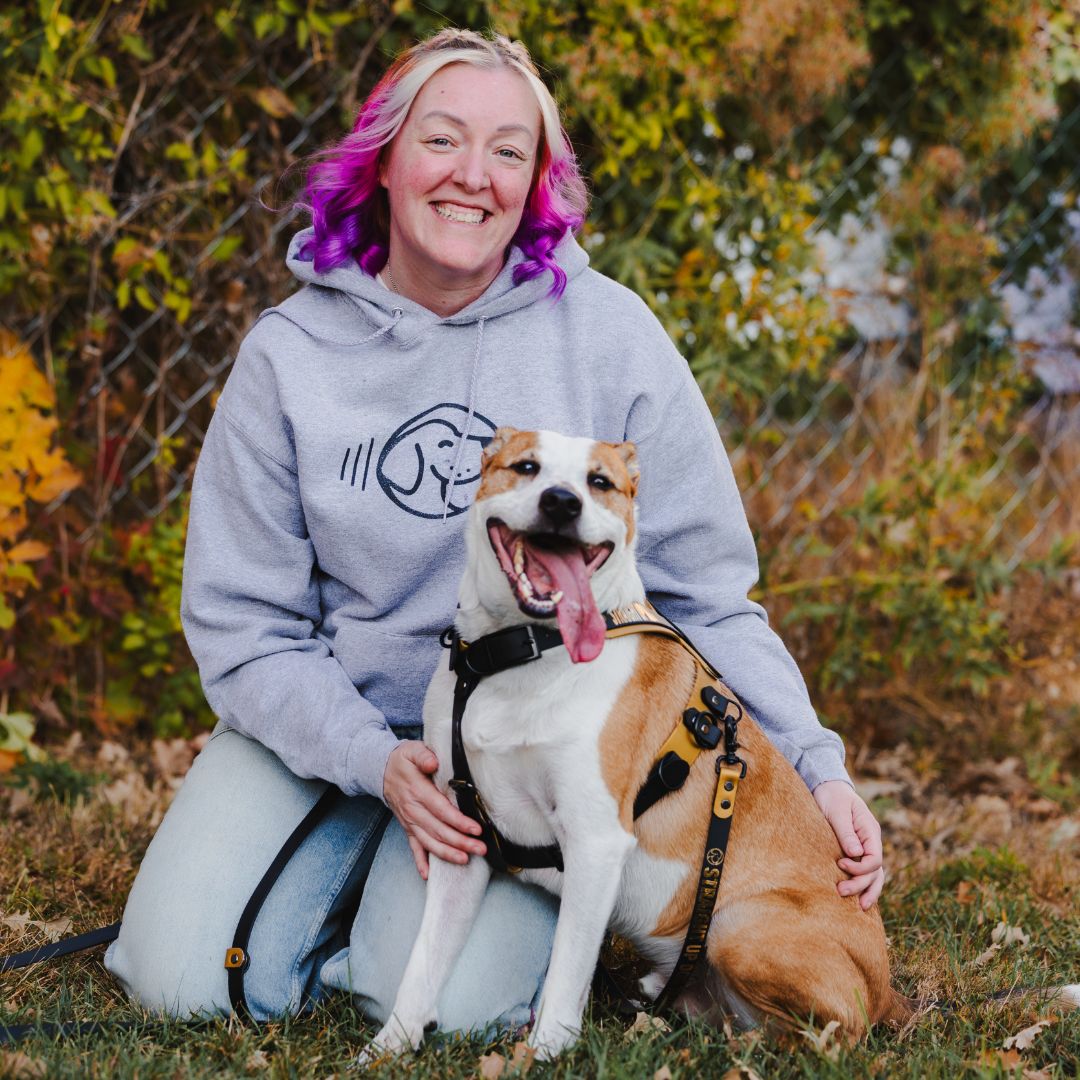
Canine Nutritionist, Dog Trainer & Podcast Host
Emily Breslin is a canine nutritionist, dog trainer, and host of The Dog Who Asked for More, a podcast for dog parents navigating the messy, complicated parts of life with dogs that no one really prepares you for.
After working as a veterinary technician and later navigating her own journey with reactive and sensitive dogs, Emily shifted her focus toward helping overwhelmed dog parents make sense of behavior, nutrition, and daily life with their dogs.
Her work centers on simplifying what often feels confusing — from feeding decisions to training approaches — while creating space for pet parents to feel seen, supported, and confident in the choices they make for the dog in front of them.
Through her content and podcast, Emily helps dog parents move away from pressure and perfection, and toward a calmer, more sustainable life with their dogs.