
 Apple Podcasts

 Spotify

 Castro

 RSS Feed

 Goodpods

 YouTube

 iHeartRadio
197. How Independent Pet Stores Are Saving Pets from Chronic Health Issues – with Toni Shelaske

Toni Shelaske is a podcast host, seasoned entrepreneur, and a holistic pet wellness expert. She's the dynamic female founder and former owner of Healthy Pet Products, Pittsburgh’s premier natural pet supply retailer. Today, Toni shares her expertise in the pet industry on her popular podcast Toni Unleashed. She serves on the board of IndiePet, supporting the growth and innovation of independent pet retailers, and has launched her own line of private label, Pittsburgh-themed dog toys, combinin...
Toni Shelaske is a podcast host, seasoned entrepreneur, and a holistic pet wellness expert. She's the dynamic female founder and former owner of Healthy Pet Products, Pittsburgh’s premier natural pet supply retailer. Today, Toni shares her expertise in the pet industry on her popular podcast Toni Unleashed.
She serves on the board of IndiePet, supporting the growth and innovation of independent pet retailers, and has launched her own line of private label, Pittsburgh-themed dog toys, combining her love of pets and hometown pride.
Toni is passionate about helping pet owners make healthier choices and guiding fellow entrepreneurs on how to stand out authentically in a big-box world.
In this episode, we talk about the important role that indie pet stores play in our pets healthcare - and so much more!
🐶 🐱 Nutrition & Holistic Health Consults: https://jessicalfisher.com/product-category/holistic-pet-health-nutrition/
💜 Follow Jessica on Instagram https://www.instagram.com/thepetparentingreset/
📩 Get email notifications for new episodes:
https://jessicalfisher.kartra.com/page/tpprnotify
0:00 Welcome back pet parent. I have such an interesting guest for you today. Her name is Tony Schlasky and not only is she a podcast host, which is so fun, she has been an entrepreneur for so long, a holistic pet Wellness expert. She is also the founder and former owner of Healthy Pet Products in Pittsburgh, which is a natural pet supply company there, which is amazing. We all know how much we love Indie Pet, which brings me to the next point. She actually serves on the board of Indie Pet and she has a private label where she creates Pittsburgh Being Dog Toy Toys. So obviously she's a big fan of Pittsburgh.
0:41 Thank you so much for being here, Tony. Your passion for helping pet parents and pets is incredible and I'm just really excited to have you on the Pet Parenting Reset. Thank you. I'm thrilled to be here and I'm thrilled that we've made this connection and can help them together. Yes, I know it takes it takes a village. I was just talking to somebody yesterday, very popular in in the pet space and I finally was introduced to her. She's like, people ask me all the time why I teach what I do to other people and she's like, because we need more educators out there. And it's like that exactly percent. That's actually exactly why I created the podcast in the 1st place, because I feel like as a business owner, like put your best stuff out there for free for people and like that's how your tribe is going to find you and be gravitated towards you. And I feel like as a podcaster, you must feel in some way the same.
1:46 So I would just love to start off by hearing kind of a little bit about your journey because you've done so much already. Yeah, I noticed that you gave us an hour and a half, but I will keep it brief. So I have been in the pet space for 25 years. I started pet sitting. So I had my own pet sitting business. I was really like one of the first pet sitters in Pittsburgh. My pet sitting business was started in 2000, the year 2000. And I had it for eight years and you know, it was it was awesome.
2:28 And I loved doing it, but I burned myself out of it. But what was cool is I really learned a lot just from being with dogs, with cats, and just being present with them, watching their behavior, noticing things they did. I really, I really feel like I connected a lot of dots and noticed a lot of common problems with dogs and cats that my my dog at the time was not experiencing. So I was seeing a lot of issues with my customers pets like obesity and diabetes and skin issues, hot spots, ear infections, you know, you know all of the things.
3:16 And I knew diet and supplementation. Could. Help these pets and I had already been a raw feeder, so I knew that that was the end. I I mean, we, we think it's the end all be all right. So I'm glad my dog is not the only one making noise. But then so I had been doing that. I burned myself out of pet sitting and literally in my backyard was a little tiny pet food store called healthy pet products. It was about 1000 square feet. They carried all natural products. So they carried, you know, grain free kibble, which was like a big thing then. And you know, knew it was Evo.
3:57 Evo was their brand and California natural and all of those. And but they didn't carry raw food. I still though would shop there, I'd get treats, I'd walk my dog, create a relationship, all that sort of thing. And then one day they said to me, we're selling, we're moving out of state, and we really don't want to move the business. So I have an extensive retail management background. I was already a raw feeder. I knew a lot about natural pet food. So I just bought the business and then grew it to three stores within Pittsburgh and then opened one location in Port Charlotte, FL So I did that for 16 years, yeah.
4:40 So now you, you touched on something that we, we talked about previously on your podcast about being a raw theater and people thinking it's like the end all be all. But I want to, I want to get to that a little bit later in the conversation, because I, I want to talk first about some of the things you have seen in that 16 years being an indie pet store owner, seen all of the, all of the things, all the people that have been coming through your doors, the issues with their pets. For me, you know, I think people oftentimes come in and they're just like, tell me what supplement to give to fix X, right.
5:21 And that's a very like, that's just how we've been trained by, by the Pharmaceutical industry. But, but that's also a big opportunity to, you know, begin educating. So like how how do you view all of that? So the core diet is, is where you have to start. You can't just add in a supplement and think the world is going to change and these symptoms are just going to go away. There's more to it than that. There's way more to it than that. And the amount of change I've seen over the 16 years in the pet food industry, I can't even begin. I mean, you know, when I started, people looked at me like I had three heads when I told them I said raw food. So you know, and then I grew the the raw food market in Pittsburgh and went from single door freezer to double door freezer to multiple double doors to everyone of my stores had walk in freezers. So tons of raw food moving through the door and now gently cooked is all the rage.
6:18 And freeze dried came onto the market and it's great. We have all these new categories that are options. It amazes me that freeze dried continues to be the fastest growing category. Even though I tell people over and over and over again, you realize this is the most expensive way to feed your pet. They don't care. Yeah, well, it's convenient. It's more convenient, especially. It gives them that feel good feel. Similar to kibble. You scoop it and put it in the bowl. You can hydrate it or you can't, it doesn't matter. So went through DCM, you know, and how bad grain free food is.
7:05 I I mean, it's, I could go on and on. Well, since you brought up DCMI still have people coming to me telling me their vet said you need to feed a grain inclusive diet like this is this has persisted for so long. And I think one of the reasons not obviously the the fear mongering initially when it all happened was strong. But the FDA updating that they couldn't find anything one way or the other was like hush hush. They just like updated the page and didn't tell anybody about it. So there's no it just it boggles my mind.
7:49 Are you? I assume you're still seeing this too? Same, and I recently just had a trainer friend reach out to me. She had a new client with a giant breed dog and the vet was telling her she has to feed great inclusive food to protect the heart and to I can't remember if it was a male or female but basically spay or neuter the dog by 6 months old. And the trainer reached out to me because she knows she knows better especially with a giant breed dog and she said can you give do you have some white cheese? Do you have some data that I can provide to her? And I, I, I did. And then I literally said to her, I mean, vets are not recommending these early span neuters anymore for the most part, right? And I said if her vet is that, that is not keeping up with new research that's being done.
8:42 Absolutely. I mean, again, like you said, especially for a large breed dog, because there is so much of it and, and this is a hard topic to talk about honestly. And I, I have covered it multiple times on this podcast because we do, we don't, in my opinion, we don't have an overpopulation issue. We have a human irresponsibility issue. It's just not being addressed properly. It's not being looked at. It's, it's like, no, I'm not going to say what I was going to say, but we're looking at the symptom and saying that that's that's the problem. That's what we have to address. Just like with everything else. Instead of looking at like what is causing it, which is us, which is humans being so incredibly irresponsible in my opinion, I'll just throw that out there. That's not the issue.
9:32 And the idea that we can remove any organ from the body and say you're totally fine, especially at such a young age, and that there are no negative repercussions from it, is just burying your head in the sand. Right. I mean, and it doesn't even, I mean to me, it's common sense. It's like for a female it's like giving an infant a full hysterectomy. Yeah, absolutely. And when I find. Other people, then they're like, like, and I'm like and and you say hormones do good things. We need hormones. Yeah, yes.
10:12 Oh my gosh, it is. It's tough because I know, you know, I, I actually just very recently posted something else on social media about this. And I mean, people just came after me with like, well, you know, my dog got pyometra and this is the worst thing that could ever happen. And like, first of all, that's not the worst thing that could ever happen to a dog. It is bad. Like, obviously we don't want that happening, but it's very my understanding I have not had a dog with it. But I mean, just listening to like somebody like a doctor Judy Morgan, she's like, if we catch this early, this is very easily treatable. Same. Yeah, yeah. And a friend that it actually happened to, because she didn't, they didn't want to spay her dog and she did end up with pyometra and but they caught it early and everything. She's totally fine.
10:58 She's so healthy. It's amazing. And a giant breed dog. Yeah. So another reason why she wanted to keep. They wanted to keep everything intact and just let nature take its course. So, you know, yeah, the amount of cases of and these, and I really think it's just scare tactics and, you know, just just following the same thing we've always been doing because that's the easy way to go. And we all, as a village of our own house, have to just keep making those connections and having these conversations, even if we get shit about it. Yeah, Oh for sure. And I I love that you not only grew your freezer space in the store, but that you also grew it to including Florida 4 stores.
11:46 Is that correct? So I mean you really when when you have, you know, you can't do that if people aren't buying the. Product. Oh my gosh, yeah. And people aren't buying the product unless you're educating them to buy that product because the marketing in the mainstream is serious like it. I don't know about you, but I before I got into this space, I was that pet parent that I went to the vet for everything. I trusted my vet wholeheartedly. I did everything my veterinarian told me to do for all of my animals, which led me to I was buying multiple different kinds of prescription food that was being sold at the veterinarian's office.
12:32 They were getting annual vaccines. They were getting quarterly dewormers. They were getting everything my vet said to do. And they were the sickest they've ever been in their lives during that very young period of their lives when they should have been thriving the most. They're way healthier today. So that marketing of one or the indoctrination of blindly trusting authority number one. And then the marketing on the products that are out there. I'm just like one of the things I'm curious about is, is how you kind of overcome the whole, everybody buys everything online.
13:13 And two, there's such a shiny object syndrome with especially supplements, but still with foods to kind of help people understand that like really your caring. You are doing your job by researching, by finding the best products that are out there and that, like coming into your indie pet store, really is in your best interest. So every indie pet store across the nation, I mean, I would say nearly 100% of them carry smaller brands are more educated on natural products. They are a resource. We all shop online. We're always going to shop online, but use them as a resource, support their business. They're your neighbor.
13:57 They are spending tax dollars in your community to keep your schools open and your kids in sports and your kids in the musicals and the band and all of those things. It's so important. And yes, we need the Internet. Yes, we're going to shop online, but we also need relationships. Again, COVID divided us. I think we're really, I think we've really made some ground getting back to having relationships with people, but I think we still have quite a ways to go because they, I mean, the, the amount of people I've I've counseled and developed relationships with over 16 years are, I can't even begin to count.
14:42 And these are relationships like these people, these, these pet store owners and the people that work there, they love your animals and they get connected to them no different than a pet sitter does. They're vested in their health. You know, you take your dog or your cat into the store with you and they make a big fuss over them. And you know, it's just a win, win for everyone. I, I mean, sometimes I feel like I'm old school, but I just, I just don't want to, I, I just don't, I want to hold on to that human connection, even though I mean, I hate some people. I mean, I don't hate, you know what I mean? Like, yeah, you know, I mean, it's hard. It's hard. It's hard sometimes, but it's important to work through like adverse situations too.
15:29 Mm hmm. Yeah. Oh my gosh. I think that it is so funny. Like that's some who was I talking to the other day? I don't even remember, but that came up with, there's this whole, like, generation of children who have been coddled that anytime adversity entered their life, their parents handled it, shielded them from it, protected them from it. And I mean, as a parent, I can imagine that you do want to protect your children to some degree, but also that you, you know, they, they need adversity to build character and to learn life lessons and to be able to like actually go out into the world and be a productive member of society.
16:12 And that's a whole tangent I just went. I'm Gen. X, so you can't get me started on that. I will go on and on and on. I am as successful as I am because I had amazing parents that pushed me to be independent and pushed me to think for myself. And if I fell down, I got up by myself. They made sure I was OK, but I got up by myself. Yeah, yeah. I'm, I'm an elder millennial, so not too far off. I'm like right there in that cusp of like, I don't know if I'm Gen. X or a millennial because it's right there at the beginning, but I remember that so vividly that like it, I, I did grow. You know, it's this, I did grow up where you went outside in the morning and you came home when the street lights were on. But also, you know, we got the Internet before I, I was, I think I was in middle school when we got the Internet. You know what I said?
17:14 Like living through both of those times was definitely, definitely interesting. But yeah, like you, you learn to ride a bike, you're going to fall down. And I don't know where I'm going with any of this. I'm just like getting angry about it and. I leave it to us to get on a tangent. Yeah. Yeah, so well. Yeah, talking to people, communicating and building connections. That is so important because I have another one of my really good friends on another podcast that I do. She's one of my Co hosts on that other podcast. She owns an Indy pet store in Georgetown, TX. And that's one of the biggest complaints that she has is that a new customer will come in the door and come in with an attitude, right?
18:03 Because they probably just left the vet's office and paid a crap ton of money. And we're told that their pet needed to be on this food and these three medications or whatever it is. And then they walk in and the people in the pet store genuinely care. They want to help. They want to hear the story. They want to offer more healthy, aligned suggestions, but that pet parent, one, just spent a crap ton of money at the vet. And two, you have to overcome everything that veterinarian just said. And then three, it's like you're wanting me to spend more money on these foods and supplements.
18:43 That has to be so difficult. How did you manage that for so long? So I can totally relate and had those conversations thousands of times and I really feel like that the best way I did it was I just listened. Yeah. I really just let them get it all out. And then I said, OK, I'm not saying that your vet's wrong, but what I'm telling you, I'm going to tell you the opposite of what your vet just told you. If you want to hear it, I'm going to tell you. And then you're going to be more confused than you ever were. But ultimately it's your decision what path you take. So whatever makes the most sense to you health wise for your pet is the direction you need to go health wise and budget wise, you know, because we have to take budget into account.
19:33 And 9, I would say 98% of the time I would have success. And a lot of times it's just, let's just start with one thing because I don't like to change more than one thing at a time. I'm sure you're the same way. So let's just start with one thing. And a lot of time like this is 1. I would love when they would. They would come in and say, oh, well, my dog was dying or my dog or cat was diagnosed with IBDIBD, stands for irritable bowel disease. OK, you know what my first question is? So they did a biopsy of the colon. 50% of the time the customer would say no. Well, then you can't call it a disease.
20:16 Yeah, it's a syndrome. So we really don't know what's going on. Right, yeah, it's that cluster of symptoms that are is so easy to for a veterinarian to just be like, oh, they have IBD and I actually have dealt with that in multiple cat, my own cats and I can't tell you how many clients animals, especially cats and so. Hard with that. It's almost, it's almost guaranteed in my opinion that if it isn't, by the time the veterinarian is quote, quote, UN quote diagnosing IBD, if it's not already lymphoma, it's yeah, intestinal lymphoma. It's it's especially with cats specifically like it's that's where it's going.
20:58 I can't tell you how many even my own cats, because they were raised very conventionally for the first half of their lives. I've I've lost to what a veterinarian called IBD. So then did you have? Did you end up knowing the reason they passed? Yeah, yeah, My first one was the first time it happened. The first cat that it happened with was before I was in this space at all. I was in the pet space, but not in the like what I call the healthy pet space. I hadn't found functional medicine or holistic modalities or anything like that. And so he was on all of the everything that the vet wanted him on and it it they never diagnosed it as lymphoma.
21:48 But yeah, he wound up in the hospital and went septic. And it was horrifying. But it let me realize like what what was happening in the next couple of cats that I had that went through it and helped me make better informed decisions for them. Because now even with my clients cats, and I say cats specifically because I think that it's just we do in veterinary medicine especially, we do so much less for cats in these cases. And so there's a whole lot of question around it. I just assume lymphoma from the from the very beginning. That's interesting because a conventional veterinarian is going to treat them the exact same way.
22:32 Even if they know it's lymphoma, their treatment plan is exactly the same. Yeah, so do you want to know something scary about my pets all died of cancer. I'm so sorry. Yep, Yep. Now the first, my first dog, I don't know what she died. She lived till she was 18. She died quite a few years ago, but it and and all of them were rescues. Some of them like a couple of them when I was with a boyfriend. He had two labs that came. So part of their life, yes was conventional but all of them switched to raw food. None of you know I don't use any chemical flea and tick. I don't do heart guard.
23:13 I don't do any vaccines. And they still are dying of cancer. It's amazing, it really is. I mean, I, it's, it's mind boggling to me. And I get when, when, when you do what we do and then we're still seeing it happen. There's really some shit going on that needs to change in this world. There, Oh my gosh, there is and I mean the first thing there are two things come to mind 1 is that there is just so much that we can't control in our environment. There are so many toxins. It's, you know, glyphosate at this point is ubiquitous. I mean, that we could get into so many things. People would think I'm an absolute lunatic. I'm not, I swear.
23:58 But I certainly don't trust our government. And so there are so many things that we can't control. But one thing that I talked to EC Henson about this was a little over a year ago and because we were talking about the whole Purina thing, that was a thing that the FDA never really followed up on. But I believe in my heart was a real thing. And we were talking about the fact that there are some things that you as much as you do, you're just not going to be able to overcome genetically because we are so many generations into our dogs eating crap food, being, you know, injected with who knows what constantly throughout their lives. All of the chemicals, all of the pesticides, all of the everything that has gotten worse and worse and worse from generation to generation to generation that they're born not being able to handle what a dog 100 years ago could handle. A. 100% true.
24:59 And I just, I truly like and that's not a very. Customers ask me why is this happening? My childhood dog, exactly this didn't happen. We didn't see any of this. And I say exactly what you just said, Jess. It is just a combination of all of the shit in our food system, in our air, in our water, everything that is out of our control. We just have to fight harder for what we can control. Absolutely. And that brings me back to at the beginning you were talking about kind of I feed raw food. Everything's great now because we did talk about this a little bit on, I think it was on your episode or on your podcast.
25:42 It was either that or after we stopped recording, I don't remember which, but ten years ago, 15 years ago, you could switch a dog or a cat to a species appropriate diet, especially, you know, a raw food diet, whether it's bar for prey model or even if you're doing an 8010 ten, which that's a whole other thing. And very, very probably see all of their symptoms go away and everything's wonderful and everything's great. And that's just not the case anymore. And that's, I think some people are running with that and saying, see, raw food diets don't work. But that is a much deeper issue I think. What do you think? It's a much deeper issue. And when I have customers come back to the store and say, well, I switched to raw food, I'm doing goat's milk, I'm doing that.
26:29 I'm doing everything you told me to. And my dog just broke out in horrible hives and I'm still seeing this happen and I'm like, it's hot. It was hard. It's hard at first to think, to not think. Are you really doing everything I told you to do? Right. You know what? I. Mean and then you know, what's going on in the household is there, stress is there. And that's an even harder topic to do to get into because then we're like asking people to really open up. But ultimately it's not changing things as quickly as it used to. It's really not. And that terrifies me. Yeah, it does Me too, because I have I don't, I didn't go out and ask for all the leaky gut dogs to come find me, but the universe has sent them to me.
27:25 And not only that, but I would say half of my current cases that I'm working with are not just leaky gut, but SIBO. And I'm just like, this is amazing. This is how do we get, like I understand logically how we get here, but like we are letting these symptoms go on for so long. Our veterinarians are suppressing the immune system without addressing the underlying issues, and it just gets worse and worse and worse and it is so frustrating to me. So 100% agree. And these food sensitivity tests that come back page after page after page after page that how can, how can these pets not have leaky gut and have all of these issues and have all of these sensitivities? So you have, you have to, you have to, I feel address both issues at the same time, right?
28:26 Absolutely. Yes, yeah. And it is hard. It's hard. It's hard that veterinarians push back so much on sensitivity testing. It's not perfect. It's not, and I'm not going to tell anybody that it is, but it gives us a place to start for sure. And we do have to address, we do have to remove everything that we possibly can that's causing inflammation in the body. I mean, we just have to. And so how else do we do it? I mean, we can sit here for six months or more and just individually test food after food after food. A veterinarian certainly doesn't have time to sit there and do that with a patient with how many patients do they have coming through the door. It's not going to happen, but that's what needs to be done, I think.
29:13 You have a preferred sensitivity test that you like. You don't have to tell me now if you don't want to. I have one that I I have. So there is a company that is working on one that I think is going to be amazing and I think is going to be a lot more accurate because it's actually going to be using blood, which is going to be another hurdle for pet parents to do at home. But it is possible, you know, to prick their paw pad or whatever. Like it's possible to do this. It'll be hard for people to do, you know, like it would be hard for me to like sit here with my dog and be like, Ah, I'm going to make you. We have. To get the drops in that certain little, yeah. Right, like I've done. For myself.
29:54 That's like super top secret. I can't. OK, I'm really, really excited for when that may come out on the market. Maybe next year. In the interim, I mostly use Glacier Peak. Again, it's not perfect, but none of them are. And it also depends on what the dog's symptoms are. I may not even do a sensitivity. I may go straight for an HTMA test. Those are a lot more scientific in my opinion, a lot more scientific and accurate. And we are, we're not going to sit here and get like, oh, you shouldn't be eating beef or pork or whatever. But we can look at a lot of other things in the body. We can look at heavy metals, which actually resemble heavy metal toxicity actually resembles leaky gut in a dog.
30:40 So there's, I mean, there's a lot, there's a lot. Thoughts on seasonal eating? Seasonal. Love it. Yeah, I love it. So an interesting thing just happened with my puppy, Layla. She has been a beef dog. She's been picky since day one. She's a Great Dane, but she's been a beef dog. And about a month ago, she started turning her nose up to beef. And I, I still rotate. I will not take with one protein. I refuse. I literally have a conversation with her and say, Layla, this is not going to be, I don't care how much you like it, We're getting another one in here. So she is losing her mind over pork, which she's had before, but now she's losing her mind over it.
31:28 So I'm talking to myself. I wonder if this is her just switching herself seasonally. Yeah, she needs to cool down a bit. Yeah, absolutely. I I love that. And I love the idea of letting our animals choose if we can, if we have that. No, they're not so sick that we have to restrict them a lot. I love the idea of letting them choose. My dog tends to eat more cooling proteins and. But even in this like just normally all year long. But I do go for more like rabbit more often in the summer for her and then I will also I know it's it's terrible. Let her eat her food a little bit cooler in the summer too.
32:12 Like I don't let it. Get to room temperature. Yeah, like I, I, I won't necessarily even let it get to room temperature. Sometimes in the summer, I'll just like, you know what? It's so hot. Like I'm sweating. You're panting. Here's some cool, you know, cool food. Yeah. Not frozen, but like also not room temperature. Yeah, I, I love that. And I also love the ideas if you're doing it, if you're making your own food, which I do not do. But if you're making your own food to like, you know, feed what is growing seasonally in your area from the farmers market or wherever our grocery stores kind of, you know, I, I would, I would be willing to bet there are people out there that have no idea that foods grow seasonally because of the way grocery stores. I guarantee it.
32:58 And people are starting to talk about it in the human space. But I, I don't know if you've ever had an episode just on seasonal eating, but I, I feel like I need to have an episode just on seasonal eating. I haven't, but that's a good one. Yeah, that's a really good one. Yeah, that's a really good one. And when you said Rabbit, you just made me remember I offered Layla Rabbit a couple months ago. So I think I need to try to offer it again to her and see if she eats it. That would be a fascinating little. It would because it's cooler than pork. That would be very interesting to see. Yeah. And my cats. So I mean, I think it is more common for dogs to be on the warmer side, generally speaking. Of course there are dogs that live cooler, but I think it's the opposite for cats.
33:51 And so it's it. But it's interesting to me that most of my cats are are very into rabbit as well. They're like, Yep, that's but that's a that's a natural. It's yes like very species appropriate food for them to be eating anyway, regardless of like taking into account Chinese medicine. Yes, yes, and they would not be in in lakes fishing for fish. No, no, no, it's, it's it is to me so interesting how addicted to fish cats get. And it's not really a natural natural food source for them. No. Maybe some of the bigger cats in some areas, you know, will fish, but I can't imagine what we think of as a traditional house cat to be out there fishing.
34:39 OK, so back to the pet store. Everything you're doing, your podcast, I mean, I feel like you're doing something similar to what I do here on the pet parenting reset and educating pet parents. Do you? Did it start out? I'm curious because you were so like Philadelphia focused. Did it start out that way, like the podcast too? No, So the podcast started because I knew this message had to reach further than Pittsburgh. So that's. I'm sorry. That's OK. It happens all the time. And we hate each other.
35:19 Yeah, it and yeah. And it's Pennsylvania, so how could we not? Yeah, we are. We actually like hate each other so, but that's why the podcast started because I felt like this message had to get further than just Pittsburgh and Port Charlotte, FL. And I am an entrepreneur and I always like to be creating and doing different things. So after having the business for so long, I was like, I got to do something different here. I started the podcast in 2022. The grand plan was to get the podcast off the ground and, you know, let Healthy Pet Products, my executive management team, take it over and, you know, take the wheel. And I could just do the podcast, but it just didn't work that way.
36:10 Podcasts take a lot of work. So yeah, they take a lot of work. So that's that's how it happened. And then just like with pet sitting, I kind of burned myself out of retail so I decided to sell and fortunately there's another store, there's another company in Pittsburgh called Pedagogy. They have two locations and but have freezers and the same brands and everything. And they're like 15 years younger than me. So I went to them. There's 5 owners. I was a single owner and said, hey guys, I'm thinking it's time for me to move on. Do you have any interest in buying?
36:52 And they did and they were, they were honored that I went to them. So we had a fantastic experience with selling the business and, you know, taking, you know, taking things over and working together through it. We just really meshed well. And it wasn't, no egos were involved. It was a really unbelievable experience. Thank God. Because like this, you know, yeah, it's a, it's a mission driven business and my heart and soul for 16 years and that I worked very hard building. But it's in good hands. And now I have more time for the podcast and a lot of other things. And being on the Indie Pet board is very fulfilling because I am a huge believer and supporter in those independent pet stores. So when I go on vacation, the first thing I do is figure out what what stores I'm going to go visit. That's awesome.
37:45 What? Talk to me about Indie Pet a little bit so. Indy Pet was, is it a nonprofit association organized by other Indy pet stores to create this association to make us stronger in numbers, to make our voice heard to manufacturers. And also we are working on providing tools for them. So like Open Catalog, which is a one stop shop for them to download SKUs and pictures of products and keep up to date on pricing. And because a lot of times as an indie pet, a manufacturer will raise prices and we don't even know it and we're losing money because we didn't raise prices. So there's a big disconnect between manufacturers and the amount of indie pet pet stores in the country. So, so we're and we do a lot of things at Global Pet Expo and Super Zoo to help educate and create those relationships with manufacturers.
38:51 And I could go on and on and on. So, but Indy and, and we're not competitors, you know, just like the other pet food store in Pittsburgh, like we weren't competitors because we're in different parts of the city. So we really were colleagues. So we just share information and really strengthen, strengthen network because if we don't have them, I don't know what's going to happen. Yeah, I mean, and that again is such an interesting, I believe that too. I, I can also see where it may be hard for someone who owns a business to have someone else in close proximity with a similar or exact same almost business. How that could be hard, but also like especially in in a niche like this where again, it's not just pet products, but you're really focused on the healthier pet products. The more people see it, the more the more they're more likely they are to be like, I guess I really should check this out regardless of what store they go into. And it that actually reminds me, earlier I was thinking it online when you're marketing something online. There are so many touch points like in the statistics vary depending on the study.
40:16 You know who, who's whoever study your, your reading. But like how many times you have to like hit somebody's feed before they engage, before they start saying yes to whatever it is you have to offer. And I, I would imagine in a brick and mortar location, those like, I wonder how many times they have to hear about you before they walk in the door. Because generally speaking, once, once they walk in the door, I think those touch points dramatically like dramatically reduce before they actually purchase from you. This is probably way more than like the average listener who's caring to listen to me talk about this right now.
40:57 But it is a very interesting thing because I know a lot of people that listen are trying to build their businesses as well in in the pet space, whether they are pet sitters or, or or health coaches or whatever they're doing. But knowing that, you know you do have to have so many touch points before somebody starts saying yes to you. Absolutely. And but but those stores, they have a reputation. They have like I grew the reputation and most of them do across the country that, you know, you've got issues. Go talk to someone. Go talk. To toe. Unhealthy pet products, she will, she can help you. She can help you and our businesses are grown through word of mouth for that reason. So you know, again, another reason to just and Chewie's not going to give you advice.
41:52 Amazon is not going to give you advice and buyer beware, buyer beware. If you're jumping on the Internet. I was helping. I mean, I just have a follower on Instagram and I was they posted this horrible picture and skin issues going on and and I started AI said DM me. I can help you And well, I'm yes, I'm doing a bottom line is yes, I'm doing. I think it was a probiotic and I said, well, send me which one you're doing and I'll check it out. It was fucking made by Amazon. I was like, no. I had no idea they, I mean, I'm sure they're white labeling it, but still. Yes.
42:33 I was like, no, don't you? So anyhow, yeah, yeah, you have to. Another reason an indie pet is going to help you. They are really vetting the products. They are making sure it's not made in China. They are making sure that their supplements are NASC certified, National Animal Supplement Council certified, so third party verified. I mean, there's so many, there's so many things to it that it puts a customer, I feel, at a comfort level walking into an indie pet that you really, for the most part, don't have to. Look at a label. Yeah, I mean. Unless there's allergies or whatever. I still want people to look at labels, but yeah, I mean, I like, I think that's how people educate themselves.
43:15 But yes, I completely agree with you. I think walking into a big box pet store versus walking into an indie pet store, I am absolutely much more likely to be like, walk into an indie pet store. You know, tell somebody, walk into an indie pet store and you're like shop to your heart's content. But if I send somebody to, I would never send somebody to a big box, But I just personally would be like, I don't trust anything that's in there. No, no. Even even if they had one or two products that I'd be like, that's actually a good one. Like I feel like if I sent somebody there for it, they would get distracted by all these other things and start buying things that like, no, that's not going to help your pet at all. And yes, I want people to read labels too, and to do some research and, you know, understand the philosophy here. But there are so many people that don't do that. And I, I will say to them, do you want me to tell you everything about every one of these brands? I will.
44:19 How long do you have? I am happy to provide you with all of the information. And then you can walk out and think about it and come back tomorrow. And sometimes people want to know it all. And sometimes, sometimes I would. I would hear. Just tell me what to get. Just tell me what to do and I'll do it. Yeah. So. I mean, I appreciate that too, because certainly, you know, a lot of us just only have so much bandwidth. Well, we all only have so much bandwidth. But you know, it's, it's a matter of like where you can focus your time and energy. And if you really do walk it, you know, walk into any pet store and just like jive with somebody and decide you're going to trust them.
45:02 That's amazing. That's amazing. I would much rather you do that than to like, I don't know, you're not going to walk into Home Depot and like have somebody tell you to. No, you need to RIP, RIP out the insulation in your walls and replace it with this one. That's not going to happen. A different department all the time. Did you know that? Yes, that's why I never know anything. They never know anything. Isn't that like, I think that's a foolish business business decision? It is so foolish. Yeah. Because they're like, for like receptionists. I talk to people all the time. And it, it, it drives me absolutely insane that generally speaking in any company, a receptionist is like the lowest paid person.
45:45 And yet they are the face of your company. Like, they should know everything everybody knows to be able to answer anybody's question. And they should be very highly paid. And we just don't like, respect that at all. And we should. Yeah. I'm on so many tangents today. It's a tangent day and I'm I'm half watching my puppy make sure that she continues to chew on my Birkenstock and that she already got like a month ago, of course, right after I resold it. Yeah, yeah. Oh well, I mean how puppy problems. She she's already, she's 15 months. She's. Still, she's still every once in a while we'll get into something so.
46:30 Yeah. So bottom line, I think first of all, your podcast Tony Unleashed you are you still have a store in Florida, but I know from talking to you, you're like really, really heavily focused on doing a lot more with the Tony Unleashed podcast moving forward. And I know you know your passion with Indy pet. I obviously I don't own a store. I will never there's I shouldn't say never. I highly doubt I would over own a store. I just don't like to be tied to a brick and mortar of any sort. Like I want to travel. I want to do all the things like I don't want to be tied to to brick and mortar, but I just have so much like respect and appreciation for people that are in Indy Pet that like I'm just like, accept me, please, because I love you guys so much.
47:20 Thank you. I appreciate that. We appreciate that. I just think it makes such a big difference in in a pet parent's life to have an indie pet store that they can walk in and trust that who they're talking to is going to be leading them in the right direction again. I want them to do their own research and I want them to try things. Because nobody is going to know your dog or your cat like you do. But like, y'all are on the front lines, yeah. We are on the front lines working hard and trying to educate because education is going to is going to be ultimately what tips that needle and we need the needle to tip.
48:01 We do so badly. Yeah. So, Tony, thank you for what you're doing. I know I do block an hour and a half because sometimes we go over, but I try to keep it at an hour. I appreciate you. I appreciate you for being here. I want everybody to go follow Tony Unleashed wherever you get your podcast. But where? Where you at there? Tony unleashed So my website istonyunleashed.com Instagram is Tony dot unleashed, Facebook is Tony unleashed. So pretty easy Tony Unleashed And if I can share real quick, I just became a board member for a charity that currently is local, but I think will it will soon be nationwide. It's called the Izzy Fund and we provide grants to pets currently just dogs.
48:52 We haven't branched in the cats yet that need medical care. So it really can because a lot of people might not realize this, but a lot of dogs and cats are surrendered in shelters because the pet parents can't afford the health care. So it's a very great organization and also very passionate about nonprofits. So I kind of do an educational series, like an educational episode, and then I'll do a nonprofit and then I kind of, I kind of bounce through through all of them. So thanks for having me, Jeff. Of course, thank you so much for being here and all right guys, I will talk to you next week again, make sure to check out Tony Unleashed Everywhere You Are, whatever social media platform you are on and on your podcast app.
49:42 Tony, I hope to see you later this year at Super Zoo. And until then, you know, just keep recording. Thanks. I will you too. Bye guys. Bye.
Toni Unleashed
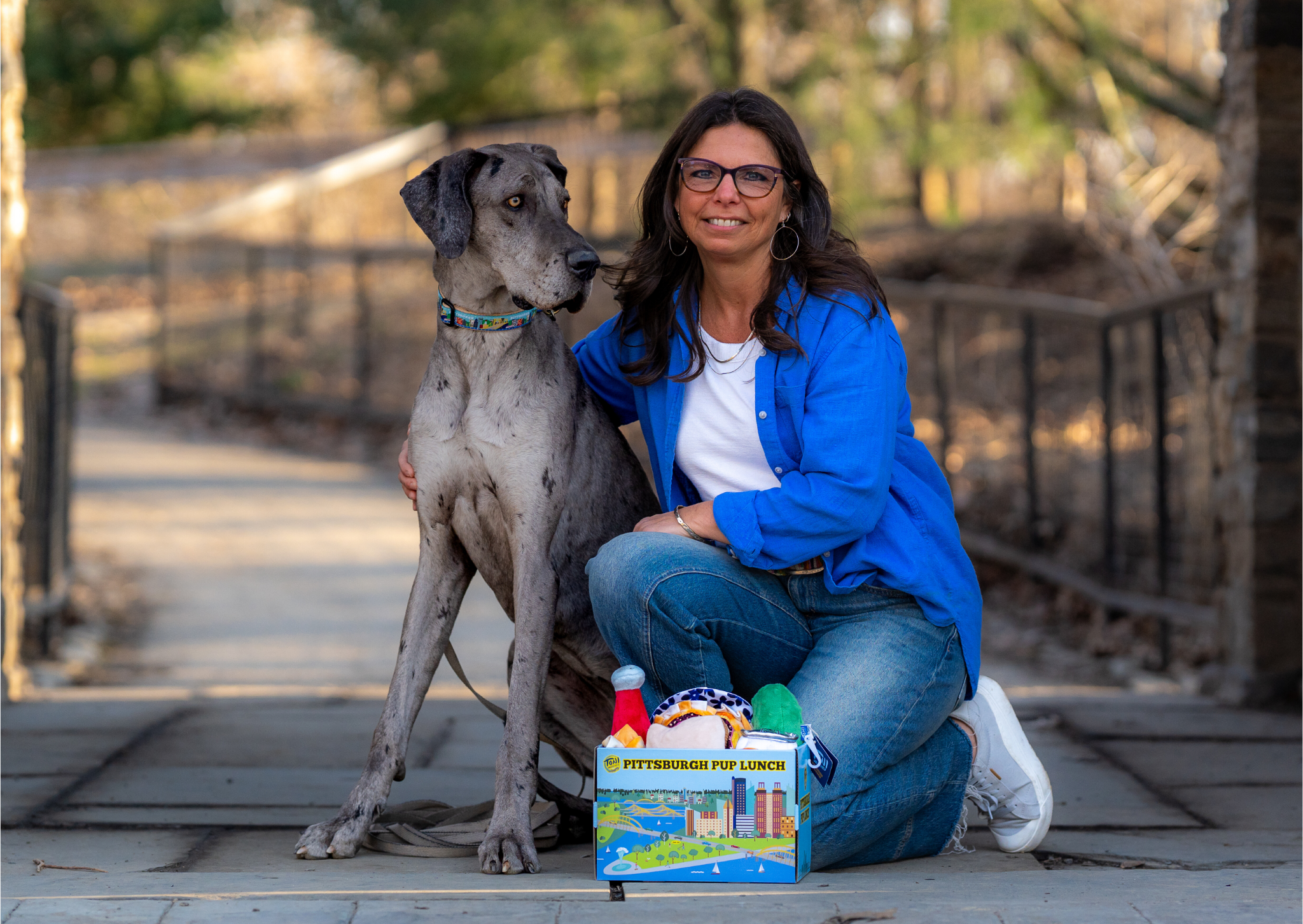
Toni Shelaske is a podcast host, seasoned entrepreneur, and a holistic pet wellness expert. She's the dynamic female founder and former owner of Healthy Pet Products, Pittsburgh’s premier natural pet supply retailer. Today, Toni shares her expertise in the pet industry on her popular podcast Toni Unleashed.
She serves on the board of IndiePet, supporting the growth and innovation of independent pet retailers, and has launched her own line of private label,
Pittsburgh-themed dog toys, combining her love of pets and hometown pride.
Toni is passionate about helping pet owners make healthier choices and guiding fellow entrepreneurs on how to stand out authentically in a big-box world.